Tibetan Hand-Painted Thangka "Four-Faced Vairocana": A Visual Vehicle for Esoteric Buddhist Practice

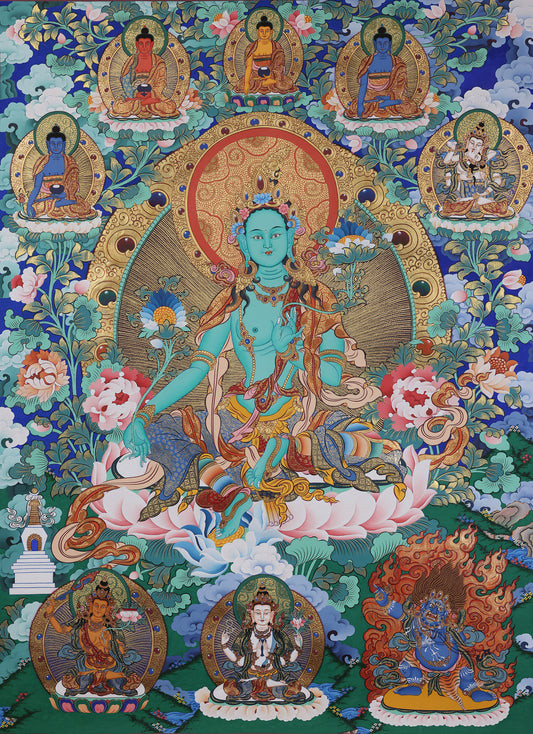
In the Tibetan Buddhist art system, thangkas are not merely exquisite visual artworks but also sacred objects serving as “supports for the body and mind” for devotion and meditation. Especially, the hand-painted thangka titled "Four-Faced Vairocana" embodies profound religious symbolism and cultural value. Centered on the esoteric Buddhist concept of the “Golden Womb and Diamond Womb Mandala” (Kumari and Vajra Mandalas), this thangka transforms Vairocana Buddha’s Dharmakāya wisdom into concrete visual symbols. It is a typical vehicle for the esoteric teaching method of “expressing the Dharma through form” and exemplifies the fusion of faith and craftsmanship characteristic of the Hedong (or Rebgong) Thangka School.
In Tibetan cultural context, a thangka is not simply an art object; it is a sacred medium whose depiction, color, and craftsmanship carry a highly codified religious symbolism. Every detail points to the core esoteric teaching that all sentient beings inherently possess Buddhahood.
I. Theme and Principal Deity: The Symbolism of the “Five Wisdoms” of Four-Faced Vairocana
The central deity of this thangka is Four-Faced Vairocana, corresponding to the Five Dhyani Buddhas system in esoteric Buddhism. The figure represents a visual manifestation of Dharmakāya wisdom, making abstract teachings accessible to the practitioner.
1. Iconography and Religious Basis
-
Body color and posture: The principal deity is depicted in pure white, symbolizing the innate purity of Dharmakāya wisdom. The golden radiating halo behind the figure represents the Buddha’s wisdom illuminating all realms.
-
Crown and facial expression: The deity wears the Five-Buddha Crown, signifying governance over Akshobhya (East), Ratnasambhava (South), Amitabha (West), Amoghasiddhi (North). Each face is in the “calm serenity expression”, with lowered brows and gentle lips, combining compassion and majesty.
-
Hand gestures and lotus seat: Both hands form the Dhyana Mudra, holding either an eight-spoked dharma wheel or a vase. The eight-petaled lotus seat corresponds to the Eight-Petaled Womb Mandala (Tathāgatagarbha), representing sentient beings’ innate bodhicitta. The dharma wheel signifies the Buddha’s vow to turn the wheel of Dharma for sentient beings’ liberation.
2. Esoteric Symbolism of the Four Faces
The four faces of Vairocana are not literal multiple heads but symbolic of the Buddha’s pervasive wisdom:
-
East - Akshobhya: Mirror-like wisdom, illuminating reality and eliminating anger.
-
South - Ratnasambhava: Equality wisdom, equalizing merit and eliminating pride.
-
West - Amitabha: Discriminating wisdom, compassionate discernment and eliminating desire.
-
North - Amoghasiddhi: Accomplishing wisdom, benefiting beings and eliminating jealousy.
This visual representation transforms abstract concepts of the Five Wisdoms into a perceivable system, embodying the esoteric practice logic of “form as Dharma”.
3. Philosophical Meaning of the Name
Vairocana (Dharmakāya Buddha) means “the Buddha whose light pervades all realms.” The white body and golden radiating halo symbolize wisdom illuminating the Dharmadhatu. As stated in the Mahavairocana Tantra Commentary:
"The sunlight of the Tathāgata illuminates all realms, developing the virtuous roots of sentient beings and accomplishing worldly and spiritual activities."
II. Retinue Deities and Environmental Symbolism: The Mandala as a Cosmic Visualization
The background and decorative elements of this thangka are not mere aesthetic details but representations of the Womb Mandala’s retinue deities and symbolic structures, creating a complete visualization of Vairocana’s sovereign Dharma realm.
1. Implicit Retinue
Although no direct attendant bodhisattvas are painted, the Four Paramita Bodhisattvas (Diamond, Jewel, Dharma, Karma Paramita) are symbolically represented on the four faces. These bodhisattvas signify Vairocana’s power to guide beings with the Four Wisdoms, turning the Five Wisdoms into compassionate action.
2. Environmental Symbolism
-
Lotus and auspicious flowers: Pink flowers and lotus thrones correspond to the Lotus Section of the Womb Mandala, symbolizing great compassion and the principle that afflictions are the path to enlightenment. The lotus growing pure from mud symbolizes sentient beings attaining bodhi amid defilements.
-
Auspicious clouds and Mount Sumeru base: The yellow auspicious clouds at the top and mountains with jewels at the bottom represent heavenly and natural deities in the Outer Vajra Section, reflecting the principle of non-duality of mundane and sacred.
-
Halo and radiance: The golden radiating body light and the yellow-white gradient circular halo of the head visualize wisdom illuminating all realms, with gold representing the imperishable Dharmakāya and the gradient indicating the transition from mundane to sacred.
III. Painting Techniques: Hedong Thangka’s Faith-Based Creation
This thangka follows the Hedong (Rebgong) School’s hand-painted tradition, where every step is a meditative practice for the artist.
1. Canvas Preparation: Purifying Karma
The base is linen cloth, coated with 3 layers of 5%-7% bone glue and polished with chalk powder to ensure it does not absorb pigment or decay. The process is accompanied by sutra recitation, reflecting the teaching: “a pure mind is the foundation for practice.”
2. Pigment System: Sacred Natural Materials
All pigments are natural minerals or plants:
-
White: Rinpoche white powder, symbolizing purity.
-
Yellow: Orpiment or gold powder, symbolizing nobility and wisdom.
-
Red: Cinnabar or saffron, symbolizing compassion and vitality.
-
Green: Malachite, symbolizing great compassion and growth.
Layering is done thinly, allowing each layer to dry before adding the next. The crystal structure of mineral pigments protects colors for millennia, symbolizing the eternality of the Dharma.
3. Gold Leaf Technique: Meditative Craft
Details such as crowns, dharma wheels, and halo patterns are rendered with 24K gold leaf, ground with bone glue 20+ times, then painted with fine brushes. This process requires days of focused concentration, with gold symbolizing the pure and imperishable Dharmakāya.
4. Eye-Opening Ceremony: Infusing Divinity
Finally, a qualified master or high lama uses cinnabar to dot the pupils, performed after seven days of retreat, fasting, and mantra recitation, with offering of butter lamps. This transforms the painting into a consecrated object, allowing practitioners to connect with the Buddha’s presence. As a Rebgong heritage master says:
"Eye-opening is not a technical task; it is practice—the hand seems no longer your own, guided by a higher power."
IV. Cultural Significance: The Symbiosis of Doctrine, Craft, and Faith
1. Value to Practitioners
The thangka serves as a tool for visualization of Vairocana, enabling contemplation of the Five Wisdoms and cultivation of bodhicitta and compassion.
2. Artistic Value
The thangka reflects Hedong thangka’s style of ornate yet solemn aesthetics. Colors are saturated but not garish; lines are precise yet fluid. It blends canonical guidelines with the artist’s creativity, representing a pinnacle of sacred art.
3. Cultural Value
As a “mobile Buddhist temple”, the thangka communicates esoteric teachings visually, allowing viewers to understand Vairocana’s comprehensive wisdom and benevolent guidance without textual explanation.
4. Summary
From the four-faced principal deity to retinue symbols, from mineral pigments to gold leaf, every detail carries the cultural gene of expressing Dharma through form and art. This thangka is not merely a painting but a portable Dharmadhatu, enabling sentient beings to resonate with the Buddha through visual contemplation, achieving harmony of body, mind, and wisdom.
#TibetanThangka #Vairocana #FourFacedBuddha #HedongThangka #EsotericBuddhism #BuddhistArt #MeditationTool #FiveWisdoms #DharmakayaWisdom #HandPaintedThangka #SacredArt #BuddhistCraftsmanship #VisualMeditation #FaithAndArt #PortableDharmadhatu
Schlagwörter:
Vorherige
Tibetan Buddhist Black-Gold Green Tara Thangka: In-Depth Analysis of Theme, Iconography, and Craftsmanship
Nächste
The Wealth Guardian in Thangka Art: The Belief and Wisdom of Vaishravana in Tibetan Buddhism