Hand-Painted Tibetan Blue Thangka of the Pure Land of Medicine Master Lapis Lazuli Buddha: An In-Depth Analysis of Theme, Deities, and Craftsmanship

Tibetan thangka painting, as an essential visual art form of Tibetan Buddhism, not only carries profound religious beliefs but also showcases the exquisite craftsmanship of Tibetan intangible cultural heritage. Among them, the hand-painted Blue Thangka of the Pure Land of Medicine Master Lapis Lazuli Buddha stands out as a representative masterpiece. This article will provide an in-depth interpretation of this thangka from five perspectives: theme, principal deity, attendant deities, painting techniques, and cultural value, presenting a comprehensive view of Tibetan Buddhist visual art.
1. Theme: A Healing Spiritual Vehicle of the Eastern Pure Lapis Lazuli World
The core theme of the hand-painted Blue Thangka is the depiction of the Pure Land of Medicine Master Lapis Lazuli Buddha, belonging to the classic subject matter of the Tibetan Buddhist “Medicine Buddha” faith system. In Tibetan culture, the Medicine Buddha, known in Tibetan as “Sangye Menla,” is regarded as the principal deity of “dispelling disasters, prolonging life, and healing the body and mind.” His faith originates from the Bhaisajyaguru Vaidurya Prabha Raja Sutra, emphasizing “cleansing the suffering of sentient beings with the clarity and brilliance of lapis lazuli.”
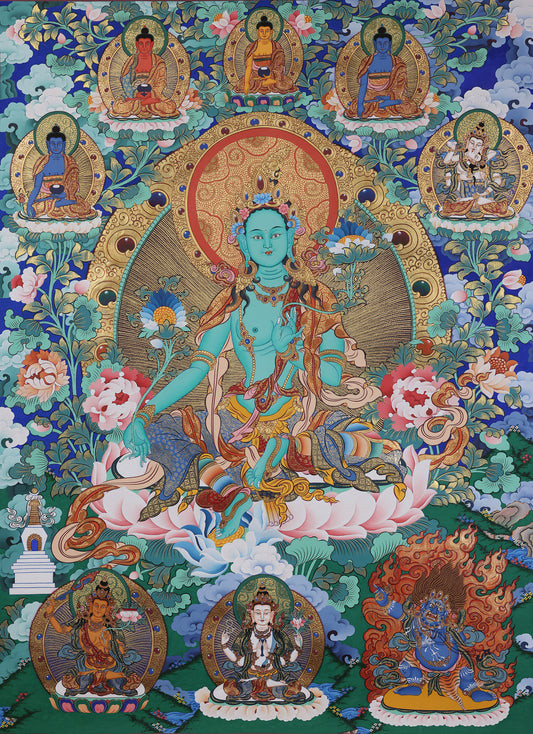
The thangka uses Blue Thangka (Tibetan: Nya Thang) as the background color, symbolizing the “Lapis Lazuli Pure Land.” In Tibetan aesthetics, blue represents space, clarity, and healing energy, harmonizing with the Buddha’s “Lapis Lazuli Light” nature. The artwork is organized in a three-layer structure: Buddha—Attendant Deities—Pure Land, fully illustrating the religious significance of the Medicine Buddha constructing a healing sacred realm through his vows. This structure provides a visual aid for meditative contemplation and serves as a spiritual carrier for Tibetan devotees seeking health, peace, and the alleviation of misfortune.
2. Principal Deity: Decoding the Iconography of the Medicine Master Lapis Lazuli Buddha
The central figure of the thangka is the Medicine Master Lapis Lazuli Buddha, painted according to the precise ritual rules in the Sutra on the Measurement of Buddha Images. Every detail carries deep symbolic meaning.
Posture and Mudra
The Buddha is depicted in full lotus posture, symbolizing the union of concentration and wisdom. Both hands hold the Medicine Bowl, containing “nectar-like medicine,” which represents the Buddha’s central function of healing the suffering of sentient beings. The body color, Lapis Brown, blends blue and brown tones, symbolizing a harmony of wisdom and compassion. The high cranial bump and elongated earlobes reflect the Thirty-Two Marks of a Buddha, demonstrating the perfection of the dharmakaya.
Halo and Lotus Throne
Behind the Buddha is a circular halo in deep blue, surrounded by golden flame patterns, symbolizing the eradication of ignorance and karmic fire. The surrounding scrolling vines and lotus motifs are traditional Tibetan auspicious symbols of the Pure Land. The lotus throne is double-layered: the upper lotus receives the virtuous roots of sentient beings, and the lower lotus carries the vow power of the Pure Land. The Sumeru base is adorned with peacock patterns, a symbolic creature in Tibetan culture that “devours poisons,” reflecting the Buddha’s power to eliminate disease and suffering.
3. Attendant Deities: The Sacred Arrangement of the Pure Land
The attendants of the Medicine Buddha’s Pure Land are arranged according to the traditional Medicine Buddha Mandala, forming a complete supportive structure.
Left Attendant: Sunlight Bodhisattva
The Sunlight Bodhisattva is painted in yellow or gold, holding the Sunlight Banner (in this thangka, a lotus branch supporting the sun), symbolizing “dispelling darkness and alleviating suffering through light.” The attire represents the bodhisattva path: wearing a Five Buddha Crown and adorned with jewelry, symbolizing aiding the Medicine Buddha in saving sentient beings.
Right Attendant: Moonlight Bodhisattva
The Moonlight Bodhisattva is painted in blue, holding the Moonlight Vase (lotus branch supporting the moon), symbolizing “soothing the body and mind with cool nectar and extinguishing afflictions.” Together, the Sun and Moon Bodhisattvas form a complementary yin-yang pairing, representing the doctrine of the Medicine Buddha’s Pure Land illuminated by sun and moon light for the protection of sentient beings.
Auxiliary Symbols: Eight Auspicious Treasures and Offering Beasts
Elements beneath the lotus throne, including the Medicine Bowl, peacocks beside the Sumeru base, and lotus flowers held by deities, are all offering symbols of the Medicine Buddha’s Pure Land. Peacocks represent devouring all poisons, and the Medicine Bowl represents nectar healing. Together, these elements construct a Pure Land imagery free from illness, suffering, and calamity, enhancing both spiritual resonance and devotional experience.
4. Painting Techniques: Mastery and Tradition of Tibetan Blue Thangka
This thangka is a pure hand-painted mineral blue thangka, integrating the three core techniques of Tibetan thangka painting, representing the pinnacle of Tibetan intangible cultural craftsmanship.
Base Preparation: The Sacred Canvas
The canvas is made of pure cotton (Tibetan: “A-dang”), treated with a three-glue and three-powder process: first brushing 5–7% bone glue, then coating white clay or plaster, followed by repeated rolling until smooth. This process, called “preparing the base,” ensures long-lasting color fidelity. After preparation, outlines are sketched with charcoal or cinnabar according to the Measurement Sutra, a key step in maintaining ritual precision.
Pigment System: Minerals and Precious Metals
-
Blue tones: Derived from lapis lazuli, processed through water-sieving to produce three shades (coarse, medium, and fine) for gradient effects; color stability exceeds 300 years.
-
Gold tones: 98% pure gold powder mixed with bone glue, applied using gilding and burnishing techniques, symbolizing the eternal nature of Dharma.
-
Other pigments: Yellow from realgar, red from cinnabar, white from seashell powder; all natural minerals capable of reflecting high-altitude UV, ensuring longevity.
Techniques: Shading, Outlining, and Eye-Opening Ceremony
-
Shading: Using the Tibetan “tongue-blending method” for smooth gradient transitions, requiring the artist’s mind, eye, hand, and breath to be unified.
-
Outlining: Iron-line technique applied to clothing and lotus contours, using a single-hair wolf brush, each stroke executed in meditative focus.
-
Eye-Opening: Final step where the pupil is delicately painted with gold, symbolizing the infusion of divinity, transforming the thangka from an artwork into a sacred object.
5. Cultural Value: Tibetan Spirit and Artistic Heritage Behind the Blue Thangka
The hand-painted Blue Thangka of the Pure Land of Medicine Master Lapis Lazuli Buddha is not only a religious artifact but also a concentrated expression of Tibetan culture.
-
Faith Aspect: Visually manifests the healing vows of the Medicine Buddha, carrying devotees’ prayers for health and peace.
-
Art Aspect: Strict iconometric regulations combined with mineral pigment shading and gold detailing reflect the ultimate craftsmanship of Tibetan artists.
-
Cultural Transmission: Continues thousand-year-old techniques documented in the Measurement Sutra and traditional thangka pigment preparation, serving as a vehicle for the preservation and global dissemination of Tibetan culture.
Today, such pure hand-painted mineral blue thangkas are recognized internationally as symbols of Tibetan culture, not only for their religious function but also for the aesthetic beauty of “Lapis Blue” and their spiritual connotation of healing.
Conclusion
The hand-painted Blue Thangka of the Pure Land of Medicine Master Lapis Lazuli Buddha perfectly integrates Tibetan Buddhist visual art and spiritual belief. With profound thematic significance, a majestic principal deity, carefully arranged attendant deities, and meticulous mineral-based painting techniques, every stroke and color embodies religious symbolism and cultural value. For practitioners, it serves as a meditative aid; for enthusiasts, it is a masterpiece of intangible heritage; for collectors, it is a unique sacred artwork. This thangka not only conveys the sacred and healing power of the Medicine Buddha’s Pure Land but also allows the world to perceive the depth of Tibetan Buddhist faith and the height of its artistic tradition.
#TibetanThangka #MedicineBuddha #LapisLazuliBuddha #HandPaintedThangka #BuddhistArt #TibetanBuddhism #SacredArt #HealingBuddha #MineralPigmentThangka #BlueThangka #SpiritualArt #MeditationAid #TibetanCulture #PureLand #BuddhistMeditation
Schlagwörter: