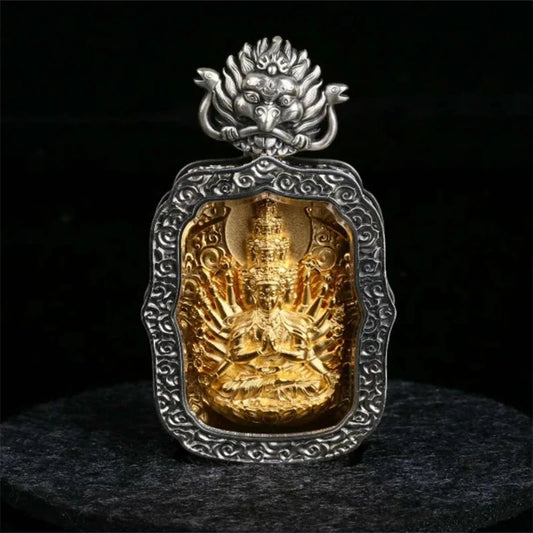
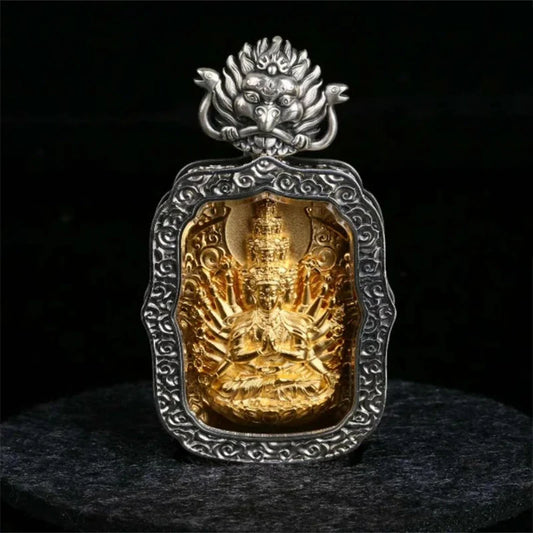
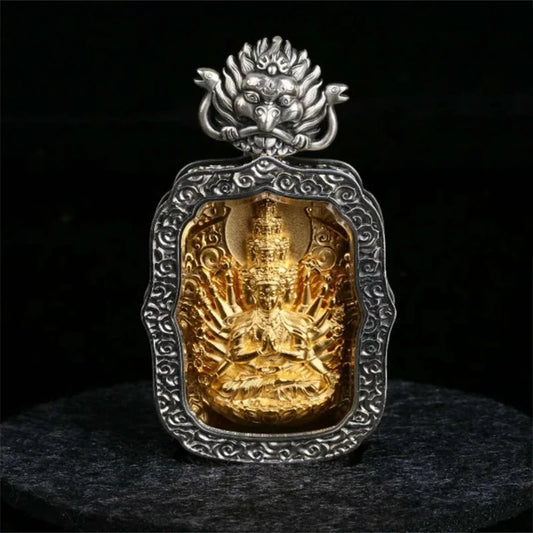
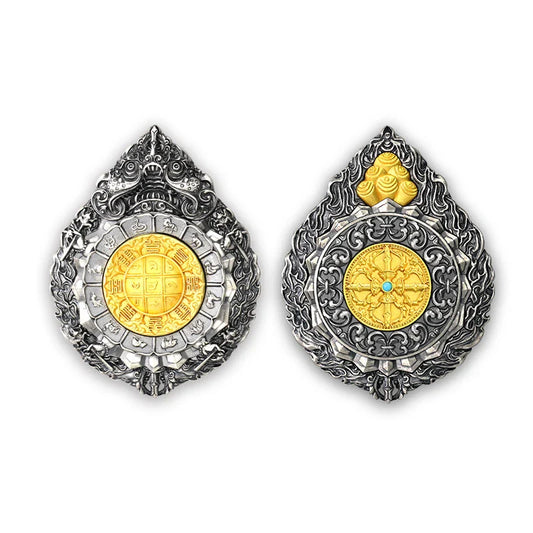
Tibetan Buddhist Gold Thangka: The Compassionate Icon of Green Tara and the Secrets of Reigong Carved Gold Technique

In the spiritual universe of Tibetan Buddhism, thangkas are far more than decorative artworks—they serve as vital tools for meditation, visualization, and devotional practice. The Gold Thangka of Green Tara combines the symbolic imagery of the “Swiftly Rescuing Deity” with the centuries-old Reigong school carved gold technique, resulting in a masterpiece where religious significance and exquisite craftsmanship merge seamlessly.
1. Core Theme: The Compassionate Manifestation of Swift Rescue
The central figure of this thangka is Green Tara (Tibetan: Dolma Nyegu), depicted in her nirmanakaya form, classified as a “rescue deity” in Tibetan Buddhist iconography. She is recognized as the foremost of the Twenty-One Taras and revered as the “Swiftly Rescuing Tara”, responding immediately to the prayers of sentient beings.
Green Tara is specially honored for alleviating the “Eight Difficulties and Sixteen Sufferings,” making her one of the most venerated female deities among Tibetan practitioners and female devotees.
This thangka is not a mere illustration of a deity. Through the contrast of gold background and green body, it embodies the profound teachings of Vajrayana:
-
The gold background symbolizes the unchanging radiance of Buddha-nature.
-
The green body of Tara represents the emergence of liberation from the darkness of suffering.
-
The composition as a whole serves as a visual vessel of aspiration and compassionate rescue, allowing observers to experience Tara’s mercy and protective power during contemplation.
2. Main Deity: Symbolism in Green Tara’s Nirmanakaya Form
The Green Tara depicted here is a two-armed, green-bodied figure seated in lalitasana (relaxed posture), crafted with strict adherence to the Sutra of Measurements for Images and the Root Tantra of Tara. Every detail carries profound symbolic meaning.
Body Color and Posture
Her emerald-green body, ground from natural turquoise and azurite, represents growth and rapid rescue. The half-lotus pose, with the left leg folded and the right foot resting on a lotus, illustrates her readiness to rise and save sentient beings, reflecting the Praise of Tara description: “the right foot extends to subdue obstacles.”
Mudras and Attributes
-
Right hand in the wish-fulfilling mudra: Palm facing outward, fingers slightly curved, symbolizing immediate fulfillment of prayers.
-
Left hand holding the utpala lotus: The stem extends to her shoulder, showing a bud, bloom, and fruit, representing the continuity of Dharma across past, present, and future and her ability to embrace beings across the three times.
Ornaments and Aura
Tara wears a five-buddha crown and the Eight Auspicious Jewel ornaments. Her robes feature the classic Reigong style of “U-shaped triple folds with nine pleats,” blending softness with strength. The golden halo and body aura use concentric circles, symbolizing the all-pervasive light of the Buddha. The overall design conveys both solemnity and the subtle power of compassionate rescue.
3. Attendant Deities: Protective and Supportive Network
The thangka adopts the classic Vajrayana layout of “principal deity with attendants”, forming a symbolic network of blessings and protection.
Upper Attendants: Three Times Buddhas and Five Directions
Above Tara’s head are five Buddhas, integrating the Three Times Buddhas with the Five Directions:
-
Center: Amitabha Buddha, representing Tara’s dharmakaya origin.
-
Sides: Shakyamuni Buddha (teacher of worldly Dharma) and Bhaisajyaguru (healer of suffering).
-
Ends: Akshobhya (subjugation of obstacles) and Ratnasambhava (bestowal of merit).
All five Buddhas are depicted in meditative postures, symbolizing the support of the dharmakaya for Green Tara’s compassionate activity.
Lower Attendants: Protectors and Healers
Flanking her lotus seat are:
-
Vajrapani incarnation, holding a vajra, safeguarding the Dharma and subduing negative forces.
-
White Tara incarnation, holding a vase, assisting Green Tara in healing and longevity functions.
Together, they extend Tara’s compassionate power into a complete cycle of protection and merit, forming a holistic representation of relief, guardianship, and benefit.
4. Artistic Craftsmanship: The Reigong Carved Gold Technique
This thangka exemplifies the Reigong school “Carved Gold Thangka” technique, considered a pinnacle of material mastery and craftsmanship in Tibetan Buddhist art. The creation process involves three core steps:
1. Gold Base: Finger-Polished Seven-Layer Application
24K gold leaf is polished using the artist’s fingerprints into a fine powder (~5 μm), mixed with ox bone glue, and applied layer by layer to a pure cotton canvas. Each of the seven layers is dried for 72 hours. The total thickness of 0.12mm ensures durability for carving while preventing cracks. The base preparation alone takes 49 days, distinguishing this gold thangka from ordinary thangkas.
2. Carving and Line Work: Agate Brush Technique
After drying, the gold surface is outlined with a single-hair brush and then engraved using agate tools (hardness 6.5):
-
Distant clouds are carved with flowing curved lines;
-
Robes and ornaments with straight deep cuts for solemnity;
-
Lotus bases and halos use combined point and line engraving to create layered depth.
Each centimeter of line requires 3–5 precise cuts with an error margin below 0.05 mm. Carving alone can exceed 200 hours per thangka.
3. Mineral Pigments and Face Opening
Tara’s emerald body is painted in five layers using natural turquoise and azurite, with highlights of lapis lazuli and pearl powder for a gemstone-like glow. The face is painted after a three-day meditative retreat, following the “three courts, five eyes” measurement (≤0.5 mm error). Eyebrows, eyes, and lips are delicate yet strong, with the lotus dimple shaded in three layers, symbolizing spiritual connection rather than mere painting.
5. Cultural Significance: Dual Value of Devotion and Heritage
This carved gold Green Tara thangka functions both as a meditative resource and a living representation of intangible cultural heritage.
-
Religious Dimension: Observers can contemplate life and rescue through her green body, Buddha-nature’s permanence through the gold background, and the attendants’ support as a manifestation of aspirational protection, turning abstract vows into concrete visualization objects.
-
Artistic Dimension: Representing 700 years of Reigong school tradition, every process—from fingerprint-polishing to agate carving—is a living non-material cultural heritage. The combination of gold and mineral pigments ensures the colors remain vivid for centuries, making this thangka a true legacy of time and craftsmanship.
In essence, the Green Tara carved gold thangka is not merely a painting—it is a timeless vow of compassion, an icon of spiritual rescue, and a masterpiece of sacred artistry.
Conclusion
From the “compassionate rescue” symbolism to the “intangible cultural heritage craft,” from “religious devotion” to “artistic legacy,” the Green Tara gold thangka embodies profound spiritual and artistic value. Each glance, each moment of contemplation, connects viewers to Green Tara’s compassionate vows and honors the centuries-old Reigong school carving tradition. It is not just a thangka—it is a timeless transmission of mercy across generations.
#GreenTara #GoldThangka #TibetanBuddhism #BuddhistArt #ReigongArt #SacredArt #MeditationArt #Vajrayana #Bodhisattva #SpiritualArt #TibetanThangka #ReligiousArt #HandmadeThangka #IntangibleCulturalHeritage #TibetanArtCollectible
Schlagwörter:
Vorherige
Tibetan Buddhist Black-Gold Thangka: Interpreting the Wrathful Form of Vajrapani and the Hidden Codes of Sacred Craftsmanship
Nächste
Yellow Dzambhala as the Main Deity: The Five Directions Wealth Deities in Tibetan Buddhism – Origins, Symbolism, and Spiritual Connotations