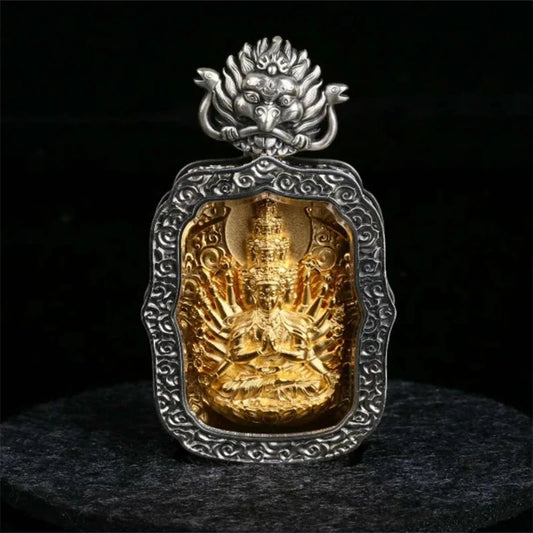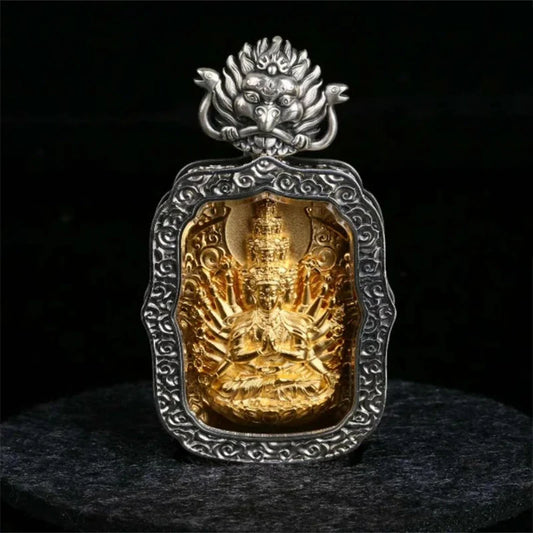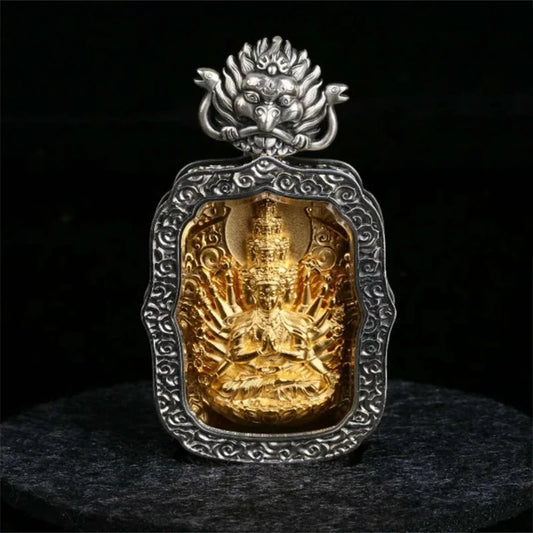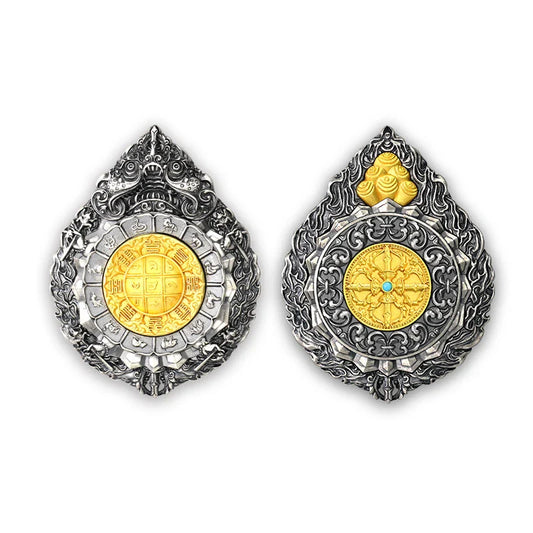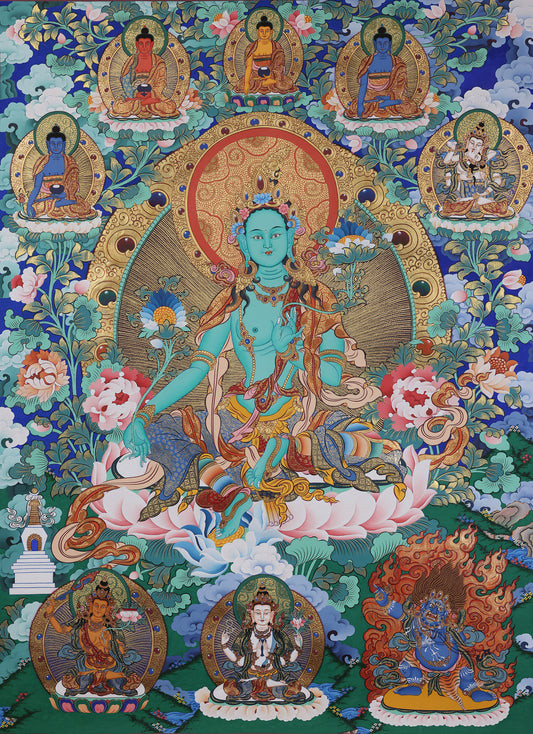
Hand-Painted Yellow Jambhala Five Wealth Deities Thangka: A Dual Reflection of Tibetan Buddhist Wealth Philosophy and Regong Art

Within the artistic and spiritual system of Tibetan Buddhism, a Thangka is never merely a painting. It functions simultaneously as a contemplative support, a visual expression of doctrine, and a sacred cultural text that carries wisdom across generations.
Among the many Thangka themes, the Five Wealth Deities (Five Jambhala) stand out as one of the most profound subjects addressing both worldly life and spiritual cultivation.
This hand-painted Yellow Jambhala Five Wealth Deities Thangka, created in the Regong (Rebkong) painting tradition, places Yellow Jambhala at its center and integrates the complete Five-Family Wealth Deities system. It unites Vajrayana wealth teachings with the highest level of Regong craftsmanship, serving both as a devotional object for practitioners and as a visual condensation of Tibetan wisdom regarding wealth and merit.
I. Core Theme: The Vajrayana Path of Entering the Dharma Through Wealth
In modern contexts, wealth deities are often misunderstood as symbols of material gain. In Tibetan Buddhism, however, wealth is never promoted as an object of greed, but understood as a supportive condition for practice and ethical living.
According to Vajrayana teachings, wealth is the visible manifestation of merit (punya). Poverty is not only material lack, but also a source of fear, instability, and attachment that can obstruct spiritual progress. Therefore, the role of Yellow Jambhala and the wealth protectors is not to indulge desire, but to relieve scarcity, stabilize life conditions, and allow practitioners to focus on the path.
Historically, Tibetan Buddhist wealth deities trace their origins to the Indian god Kubera, later integrated into Buddhism and associated with Vaishravana (Vaiśravaṇa). Through localization in Tibet, this lineage evolved into the structured Five Wealth Deities system. By the Yuan dynasty, it had become deeply embedded in both monastic and lay traditions, serving as spiritual protection for families, trade, and communal prosperity.
This Thangka depicts Yellow Jambhala together with the four directional wealth deities, forming a complete five-direction cosmology aligned with the Five Elements:
-
Yellow Jambhala (Center · Earth) – Merit, stability, and foundational wealth
-
Red Jambhala (South · Fire) – Relationships, attraction, and benefactors
-
Green Jambhala (East · Wood) – Health, vitality, and career growth
-
White Jambhala (West · Metal) – Wisdom, clarity, and removal of obstacles
-
Black Jambhala (North · Water) – Authority, protection, and subjugation of negativity
Together, they symbolize the fulfillment of the Five Blessings, reflecting balance between material sufficiency and inner cultivation.
II. Yellow Jambhala: The Embodiment of Compassion and Wealth
At the center of the composition sits Yellow Jambhala, known in Tibetan as Dzambhala Serpo, the foremost deity among the Five Wealth Deities. His form strictly follows the Scriptures of Iconometric Proportions and tantric ritual manuals, with every detail carrying symbolic meaning.
Physical Appearance
His golden-yellow body represents the Earth element, signifying wealth that is stable, enduring, and inclusive like the land itself. His exposed torso and rounded belly are not symbols of indulgence, but of boundless compassion, capable of absorbing the suffering of impoverished beings. The five-Buddha crown signifies the wisdom blessings of the Five Directional Buddhas.
Attributes and Symbols
In his right hand, Yellow Jambhala holds a wish-fulfilling jewel, representing the granting of legitimate material and spiritual needs. In his left arm rests a jewel-spitting mongoose, from whose mouth treasures continuously flow—clearly teaching that generosity is the true source of wealth. His right foot presses upon a white conch, symbolizing “entering the ocean to retrieve treasures,” or understanding wealth through wisdom rather than blind pursuit.
Posture and Aura
Seated in a relaxed royal posture upon a lotus throne, Yellow Jambhala radiates authority without distance. Behind him appear two layers of aura: an inner ring of flames symbolizing the destruction of obstacles, and an outer halo representing awakened radiance. Auspicious clouds and jeweled blossoms form a dignified sacred realm.
III. The Retinue Deities: A Complete Network of Wealth Protection
Surrounding the central deity are the four directional Jambhalas, forming a complete Vajrayana wealth protection system that reflects the Tibetan principle of coordinated enlightened activity.
-
Red Jambhala governs harmonious relationships and benefactor support
-
Green Jambhala safeguards health, vitality, and professional growth
-
White Jambhala enhances wisdom and removes misfortune
-
Black Jambhala protects authority, resources, and subdues obstacles
Additional protective figures, sacred animals, and offering elements further enrich the composition. Dragon-mounted guardians symbolize the protection of wealth from negative forces; offering heaps of jewels, fruits, and treasure vases represent the cultivation of merit; mythic birds such as Garuda symbolize the subjugation of inner afflictions, reminding viewers that wealth must always be guided by awareness.
IV. The Art of Regong: Absolute Devotion to Hand-Painted Tradition
This Thangka is a pure hand-painted Regong masterpiece, created through a rigorous process that unites religious discipline with extraordinary craftsmanship.
The process begins with aged cotton canvas, repeatedly coated with animal-hide glue and polished with shells until mirror-smooth. Drafting is executed using precise proportional tools, ensuring millimeter-level accuracy according to canonical texts.
The pigments come from 108 natural mineral materials, including cinnabar, lapis lazuli, malachite, and gold leaf. These are hand-ground for days and mixed with traditional Tibetan binders, producing colors renowned for their brilliance and resistance to fading for centuries.
Painting proceeds in strict stages: backgrounds before deities, cool tones before warm, with layered techniques of stippling, combing, and shading. Facial features alone require multiple rounds of delicate gradation to achieve lifelike serenity.
Gold application includes both large-area gilding and fine gold outlining using 24K gold, bringing splendor while maintaining compositional harmony.
The final stage, known as “eye-opening” (consecration), is completed in a meditative state. In the Regong tradition, this step is believed to awaken the spiritual presence of the Thangka, embodying the principle that every brushstroke is a prayer.
Conclusion: More Than a “Wealth Painting”
This hand-painted Yellow Jambhala Five Wealth Deities Thangka is not merely a symbol of fortune. It is a visual expression of the Tibetan Buddhist understanding that wealth itself is a form of spiritual resource.
Yellow Jambhala’s flowing treasures do not promise limitless accumulation, but teach a deeper lesson:
wealth arises from generosity, is sustained by wisdom, and finds its true value in inner stability.
Through the uncompromising discipline of Regong craftsmanship, belief is woven into every line and color, transforming the Thangka into a portable sacred space—a living vessel of Tibetan cultural and spiritual wisdom.
#TibetanBuddhism
#TibetanThangka
#BuddhistArt
#SacredArt
#RegongThangka
#HandPaintedThangka
#YellowJambhala
#FiveWealthDeities
#WealthDeityThangka
#BuddhistWealthPhilosophy
#MeritAndCompassion
#ShrineArt
#MeditationArt
#SpiritualPractice
#BuddhistShrine
#ThangkaCollectors
#SacredHomeDecor
Schlagwörter:
Vorherige
Tibetan Yellow Dzambhala Thangka: Decoding Faith and Art as a Visual Mandala of Wealth and Protection
Nächste
Hand-Painted Four-Armed Avalokiteshvara Thangka: A Spiritual Mirror of Tibetan Compassion and the Art of Rebgong