Hand-Painted Four-Armed Avalokiteshvara Thangka: A Spiritual Mirror of Tibetan Compassion and the Art of Rebgong

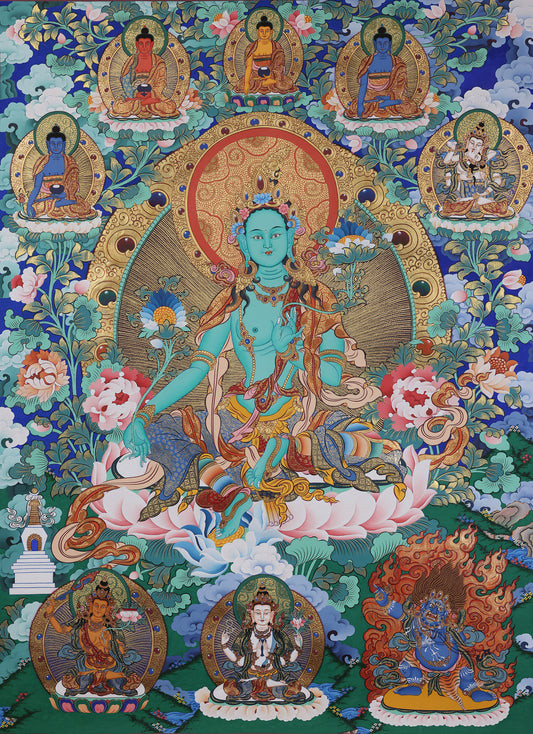
In the vast artistic system of Tibetan Buddhism, thangkas are not only carriers of visual aesthetics but also tangible expressions of faith. The “Four-Armed Avalokiteshvara with Retinue Mandala” hand-painted thangka is a Rebgong masterpiece that embodies the core of Tibetan Buddhist teachings: “Compassion as the heart, merit and wisdom as wings.” It preserves centuries of Avalokiteshvara devotion in Tibet while encapsulating Rebgong thangka’s artistic philosophy of “ritual as the skeleton, craftsmanship as the soul.”
I. Core Theme: Integrating Compassion and Wisdom in Tibetan Practice
The central theme of this thangka is the “Compassionate Salvation System of the Four-Armed Avalokiteshvara.” In Tibetan culture, the Four-Armed Avalokiteshvara is revered as the “Protector of the Snowy Region,” a tangible embodiment of great compassion. Depicting Avalokiteshvara alongside the retinue deities constructs a spiritual pathway centered on compassion, supported by wisdom and power. This arrangement follows the Tibetan mandala tradition of “principal deity – retinue”, addressing devotees’ spiritual aspirations of relief from suffering and the growth of merit and wisdom.
From a doctrinal perspective, this theme conveys three layers of meaning:
-
Symbolism of the four arms: Representing the Four Immeasurables—pacifying, increasing, embracing, and subduing—manifesting Avalokiteshvara’s compassion in relieving suffering, increasing merit, embracing beings, and subduing obstacles.
-
Arrangement of retinue deities: Featuring the Guru, Bodhisattvas, and Protectors, reflecting the practice logic of “Guru guides, Bodhisattvas assist, Protectors safeguard.”
-
Meditation tool: As an object of contemplation, devotees can focus on the thangka to recall Avalokiteshvara’s compassionate vows, achieving mind-to-deity correspondence during practice.
Through these layers, the thangka is both a work of visual art and a vessel for Tibetan Buddhist spiritual cultivation.
II. Principal Deity: The Four-Armed Avalokiteshvara
At the center sits the Four-Armed Avalokiteshvara (Tibetan: Chik Muge), sculpted according to the Canon of Proportions and Avalokiteshvara Ritual Texts, with every detail visually translating doctrinal meaning:
-
Body and Symbolism: Entirely white like the full moon, representing intrinsic purity, free from afflictions and conceptual obscurations; adorned with the Five Buddha Crown, signifying the wisdom blessings of the Five Buddhas; black hair tied in a topknot with Amitabha Buddha on the apex, pointing to the aspiration of rebirth in the Pure Land.
-
Hand Gestures and Implements:
-
Two central hands hold a mani jewel, symbolizing the integration of wisdom and skillful means—seeing reality clearly and aiding beings compassionately.
-
Upper right hand holds a crystal rosary, each bead representing the liberation of one sentient being from cyclic existence.
-
Upper left hand holds an eight-petaled white lotus, signifying purity of body and mind and Avalokiteshvara’s manifestation in the world.
-
-
Posture and Lotus Throne: Seated in vajra posture on a thousand-petal lotus with a moon disc, representing stability in meditation, freedom from afflictions, and serene compassion, embodying the bodhisattva ideal of remaining pure amid worldly suffering.
The principal deity serves as the spiritual and visual focus for contemplation, connecting devotees to the essence of compassion.
III. Retinue Deities: Support Network of Compassion
The surrounding retinue forms a complete salvation system adhering to the Tibetan mandala’s threefold cosmic order:
-
Upper Deities: Amitabha Buddha (root guru) and Tara (compassion manifestation) illustrate lineage transmission and the extension of Avalokiteshvara’s compassionate vows. Tara, believed to be formed from Avalokiteshvara’s tears, embodies the physical manifestation of compassion.
-
Lower Protectors:
-
Yellow Jambhala: Guardian of merit and abundance, aligning with the Tibetan Buddhist principle of wealth as conducive to spiritual practice.
-
Wrathful Protectors (e.g., Mahakala): Subdue obstacles and negative forces, balancing Avalokiteshvara’s serene compassion with the power of wisdom.
-
-
Side Attendants: Manjushri (wisdom) and Vajrapani (power), collectively with Avalokiteshvara known as the “Three Protectors”, representing great compassion, great wisdom, and great power, visually expressing the three essential elements of Tibetan practice.
This retinue ensures the thangka functions as a comprehensive spiritual system, safeguarding and enhancing the practitioner’s meditation experience.
IV. Painting Technique: Ritual and Art in Rebgong Mastery
Rebgong thangka painting is renowned for its precision, ritual fidelity, and material dignity. This thangka’s creation involves five core steps, each reflecting faith and craftsmanship:
-
Canvas Preparation: Three-year-aged pure cotton is treated with layers of glue, lime, and polishing to form a durable, sacred surface for pigments and iconography.
-
Sketching: The artist recites prayers, uses a red string tool to mark proportions, and follows canonical measurements strictly. Deviations are limited to less than 1 mm to preserve spiritual efficacy.
-
Color Application: 108 natural pigments, including cinnabar (red – compassion), lapis lazuli (blue – wisdom), malachite (green – vitality), and gold leaf (divine), are ground for seven days and mixed with Tibetan herbal glue. The white body of Avalokiteshvara is layered with pearl powder and chalk to create a luminous, moonlike texture. Background clouds and lotus motifs are color-blocked with contrasting tones for a rich, vibrant effect.
-
Linework and Gold Detailing: Iron-line and gold-line techniques trace garments and ornaments, with each square inch requiring over 2,000 strokes of 24K gold, emphasizing sacredness and illuminating wisdom.
-
Eye Opening (Consecration): The final stage, performed in meditation, involves drawing facial features in vermilion and inking the eyes, imbuing the thangka with life and spiritual resonance. Subtle expressions convey compassion gazing upon beings and serene joy amidst suffering.
This meticulous craftsmanship ensures the thangka is not only an object of art but also a ritual and meditative tool, integrating aesthetic beauty with spiritual potency.
V. Conclusion: Beyond Art, a Vessel of Compassion
The Four-Armed Avalokiteshvara Thangka transcends mere religious painting, embodying Tibetan Buddhism’s concept of compassion:
-
Principal Deity: Tangible representation of compassion.
-
Retinue Deities: Support and assist the flow of compassionate energy.
-
Rebgong Craftsmanship: Medium through which devotion and culture are transmitted.
Displaying this thangka in homes, meditation shrines, or cultural spaces not only creates an atmosphere of serenity, compassion, and wisdom but also guides observers to internal reflection, accumulation of merit, and spiritual growth, making it a rare blend of visual splendor and spiritual significance.
It is a testament to the Tibetan people’s embracing suffering with compassion and transcending obstacles with wisdom, a living mirror of the spiritual and artistic soul of the Himalayas.
#FourArmedAvalokiteshvara #TibetanBuddhistArt #HandPaintedThangka #RebgongThangka #BuddhistCompassion #MeditationArt #SpiritualThangka #Avalokiteshvara #TibetanCulture #BodhisattvaArt #ThangkaCollectors #SacredArt #TibetanCraftsmanship #MindfulnessArt #BuddhistMeditation
Schlagwörter:
Vorherige
Hand-Painted Yellow Jambhala Five Wealth Deities Thangka: A Dual Reflection of Tibetan Buddhist Wealth Philosophy and Regong Art
Nächste
Hand-Painted Four-Armed Avalokiteshvara Mandala Thangka The Spiritual Essence of Tibetan Compassion and Regong Sacred Art