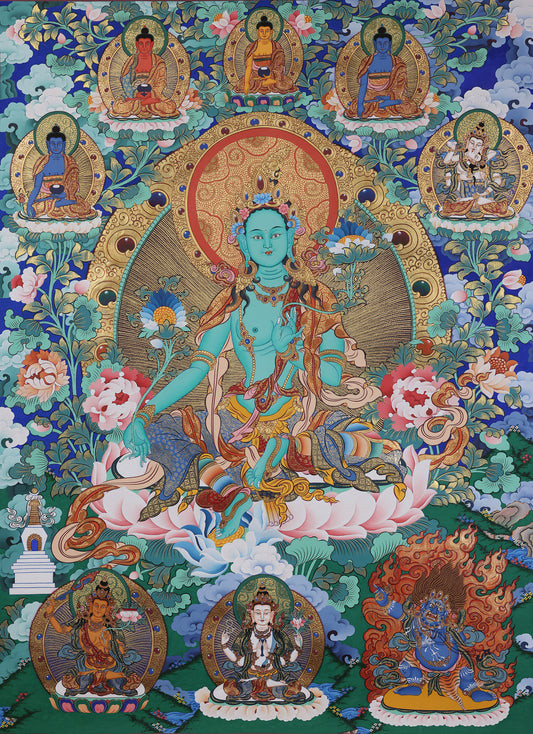
Tibetan Buddhist Culture: The Meaning & Significance of Yellow Jambhala (Zhambhala) Thangka Art
wudimeng-Dec 05 2025-
0 comentarios
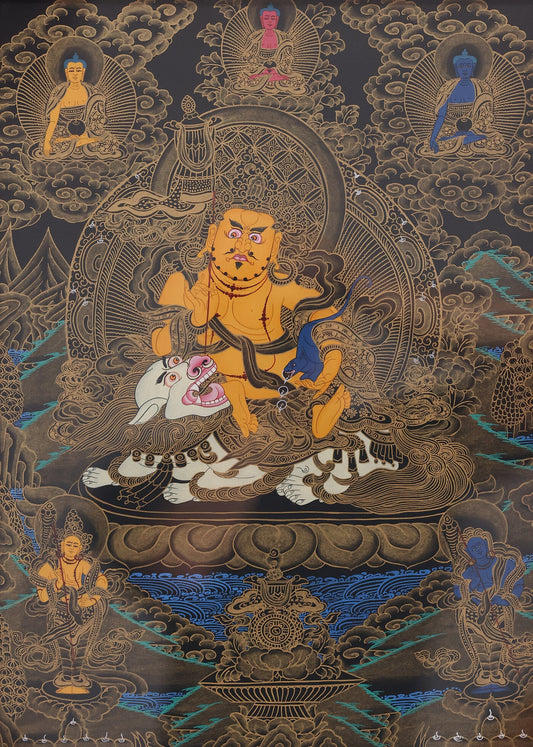
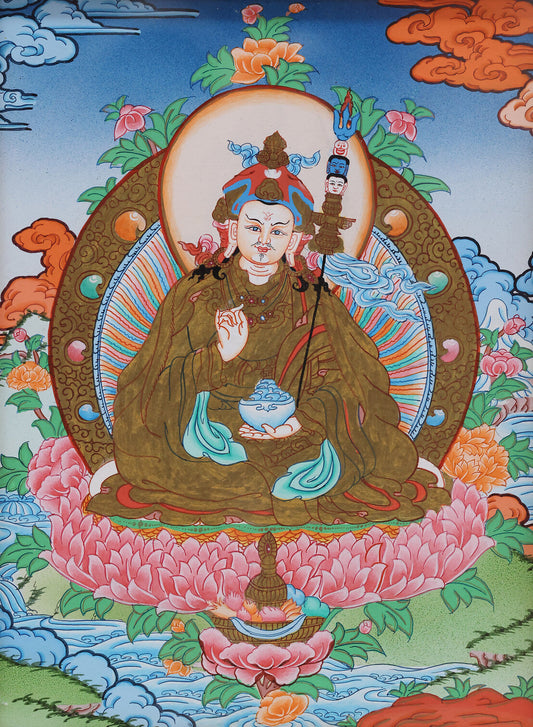
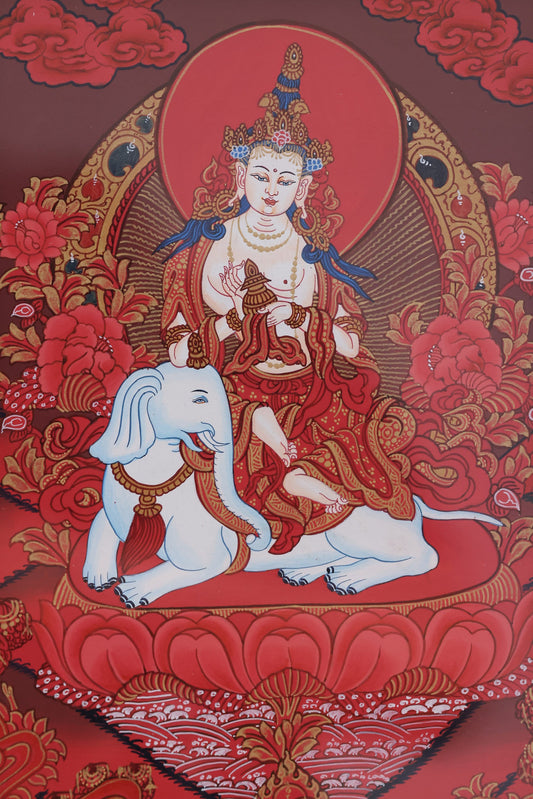
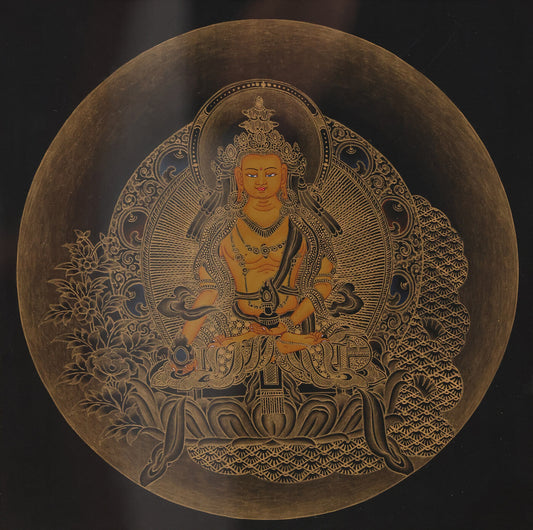
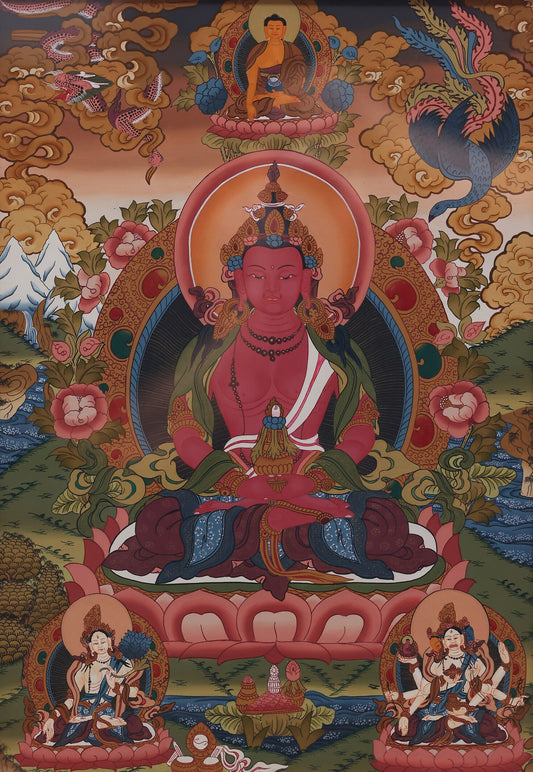
Yellow Jambhala (known as Zhambhala in Tibetan Buddhism) is more than a “wealth deity”—he’s a symbol of merit accumulation and compassionate abundance. Rooted in Himalayan spiritual tradition, Jambhala Thangkas are handcrafted artworks that carry deep religious significance, from their iconography to their creation process.
At the center of these Thangkas, Yellow Jambhala appears in golden hues (representing stable, nourishing wealth), holding a wish-fulfilling gem (to grant virtuous desires) and embracing a treasure rat (a symbol of endless prosperity—not greed, but the flow of resources to support spiritual practice). Surrounding him are companion deities (like other Wealth Gods and Dharma Protectors), forming a complete “blessing system” for both worldly stability and spiritual growth.
The craftsmanship of a traditional Jambhala Thangka is equally sacred: artisans use mineral pigments (for lasting color) and gilded details (to honor the deity’s sacredness), following centuries-old guidelines from texts like the Iconometry Sutras. These artworks aren’t just decor—they’re “spiritual companions” for altars, meditation spaces, and anyone seeking to align abundance with compassion.
#TibetanBuddhistCulture #YellowJambhala #Zhambhala #ThangkaArt #HimalayanSpiritualArt #BuddhistWealthDeity #HandpaintedThangka #TibetanArt