Padmasambhava
The Founder: Establisher of the First Complete Monastery
With compassion and power, he purified the world and illuminated the path to liberation.
A Comprehensive Introduction to Padmasambhava in Tibetan Buddhism
Guru Rinpoche · The Lotus-Born Master
Padmasambhava—widely known in Tibetan as Guru Rinpoche (“Precious Master”)—is one of the most influential enlightened figures in Tibetan Buddhism. He is revered as:The Second Buddha of TibetA supreme Vajrayana vidyadhara (holder of intrinsic wisdom)The founding master of the Nyingma SchoolThe bringer and protector of Buddhism in TibetThe originator of the Terma (treasure teaching) traditionNo spiritual figure has shaped the cultural, religious, and mystical landscape of Tibet more profoundly than Guru Rinpoche.
According to traditional accounts, Padmasambhava did not enter the world through ordinary human birth. He:
- Emerged miraculously from a lotus flower
- Appeared in the legendary kingdom of Oddiyana (linked to present-day Pakistan/Kashmir)
- Manifested complete wisdom and supernatural power from childhood
Thus he is called:
“Padmasambhava—the Lotus-Born One.”
In his youth, Padmasambhava displayed extraordinary spiritual insight. Renouncing worldly life, he embarked on a path of deep practice.
1) Studying under great Indian masters
He received teachings from India’s eight great vidyadharas and many yogis, mastering:
- Dzogchen (Great Perfection)
- Highest Yoga Tantra
- Subtle channels and winds practices
- Wrathful deity yoga
- Mantra and dharma protector rituals
He eventually achieved complete realization of Vajrayana.
2) The Nine Attainments
Guru Rinpoche perfectly accomplished:
- Levitation and miraculous movement
- Transformation and emanation
- Clairvoyance and clairaudience
- Subjugation of outer and inner demons
- Dissolution of obstacles
Attaining the states of rainbow body and adamantine body.
Guru Rinpoche’s arrival in Tibet marks the most important moment in Tibetan Buddhist history.
1) Building Samye Monastery (8th century)
Invited by King Trisong Detsen, Padmasambhava and Śāntarakṣita established Samye Monastery, Tibet’s first Buddhist monastery and the foundation of all later practice.
During the process, Guru Rinpoche:
- Subdued countless local deities and obstructing spirits
- Converted mountain gods and guardian beings to Dharma protectors
- Ensured Buddhism could take root in Tibet
- Created the spiritual infrastructure for Tibet’s future
2) Establishing the Sangha and Teaching Vajrayana
He transmitted:
- Core Vajrayana teachings
- The essence of Dzogchen
- Red, yellow, and white tantra lineages
- Sky-dancer (dakini) teachings
- Dharma protector practices
These form the unbroken heart of the Nyingma tradition.
To preserve pure Vajrayana teachings for future generations, Guru Rinpoche hid countless terma in:
- Mountains and lakes
- Caves
- Temples
- Rocks and sacred sites
- Even the minds of future masters
He appointed future tertöns (treasure revealers) such as:
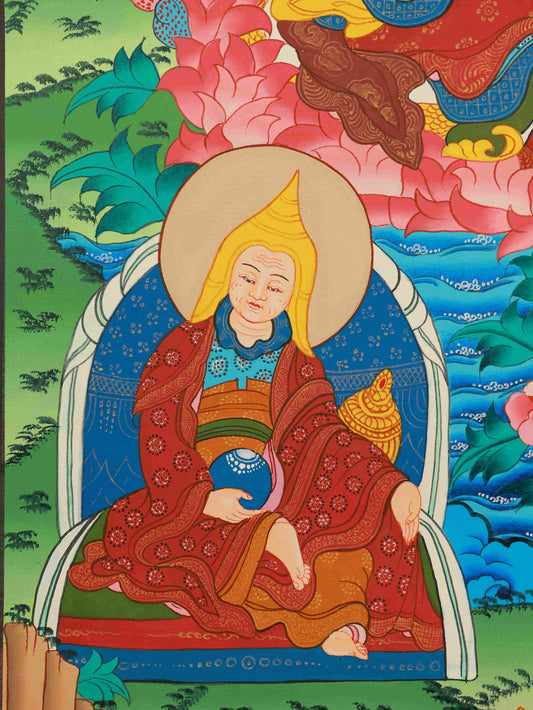
- Yeshe Tsogyal
- Chokgyur Lingpa
- Dudjom Rinpoche lineage
- Kathok and Palyul masters
The terma tradition ensures that Padmasambhava’s teachings remain fresh, living, and renewed across centuries—unique in world religious history.
Guru Rinpoche appears in eight principal forms, each expressing a different enlightened activity:
- Guru Shakya Sengé – Lion of the Śākyas
- Guru Vajrasattva – Embodiment of purity
- Guru Padma Gyalpo – Lotus prince
- Guru Nyima Özer – Rays of the sun
- Guru Dorje Drolö – Wrathful subjugator
- Guru Sengé Dradrok – Lion’s roar
- Guru Loden Chokse – Seeker of supreme knowledge
- Guru Pema Jungné – The Lotus-Born
The most famous is:
Dorje Drolö, the wrathful form that conquers negativity and protects practitioners.
1) The “Second Buddha”
For Tibetan Buddhists:
“Without the blessings of Guru Rinpoche, there can be no attainment in Vajrayana.”
2) Honored by all schools
Not only Nyingma, but Kagyu, Sakya, and Gelug also venerate him.
3) The central deity of Vajrayana practice
He embodies:
- Blessings
- Wisdom
- Protection
- Subjugation power
- Spiritual accomplishment
He is one of the most frequently invoked masters in Tibetan Buddhism.
Guru Rinpoche articulated key Vajrayana principles:
1) The Three Roots: Guru, Deity, Protector
He is simultaneously:
- The Guru (root of blessings)
- The Yidam (root of accomplishment)
- The Protector (root of enlightened activity)
2) The Essence of Dzogchen
His teachings emphasize:
- Primordial purity
- Intrinsic luminosity
- Wisdom within emotions
- Instantaneous liberation
Forming the philosophical foundation of the Nyingma school.
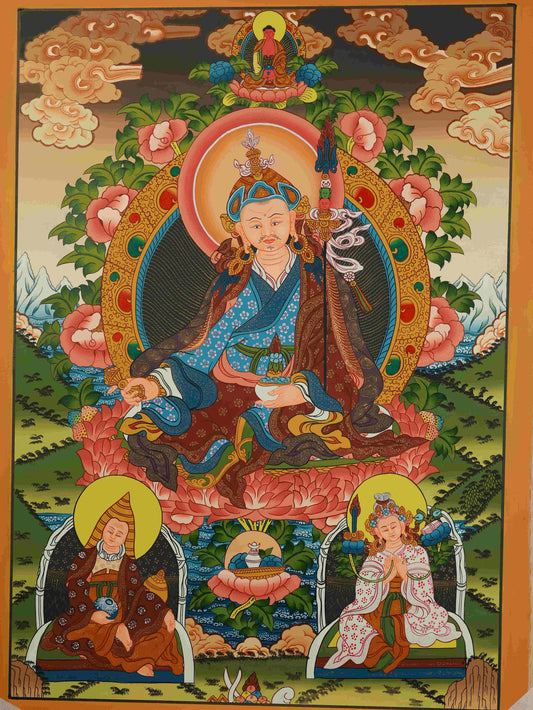
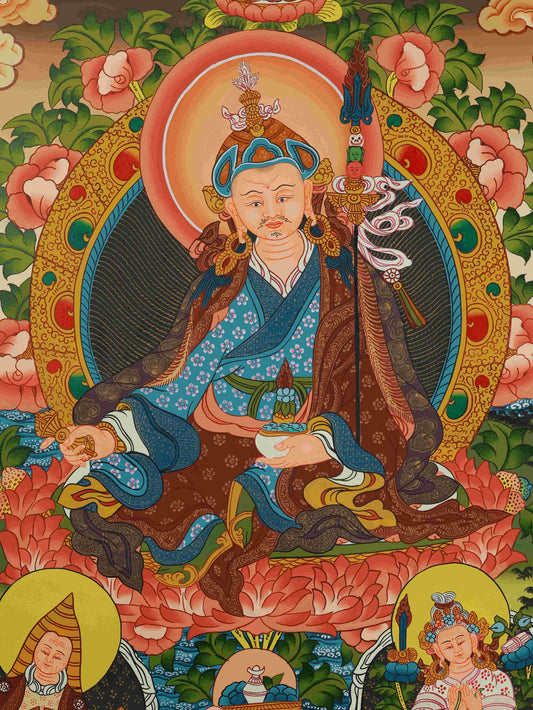
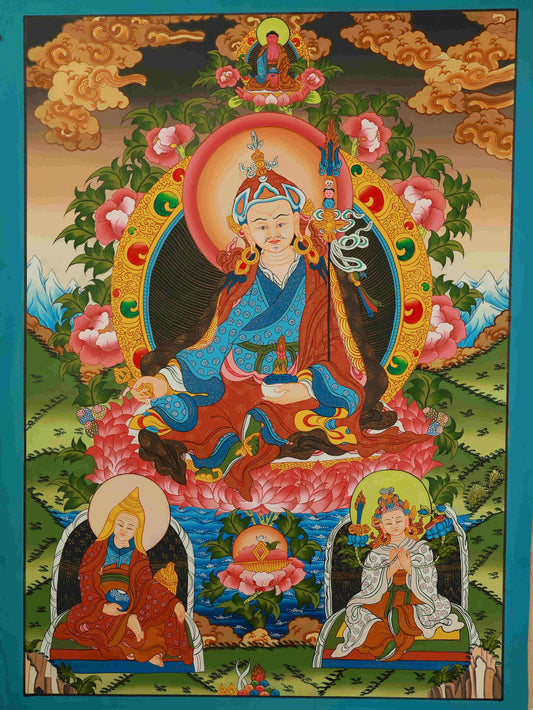
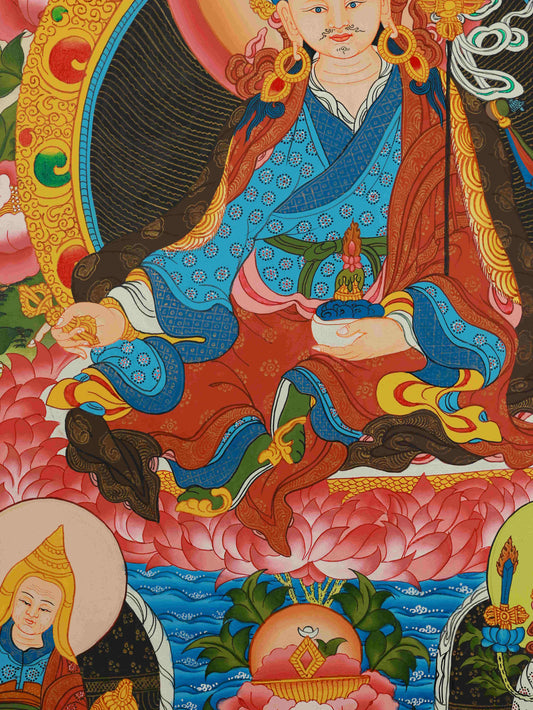
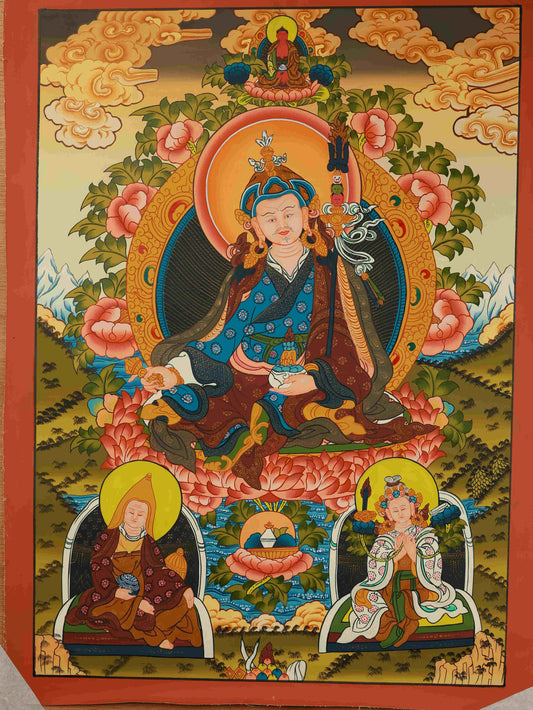
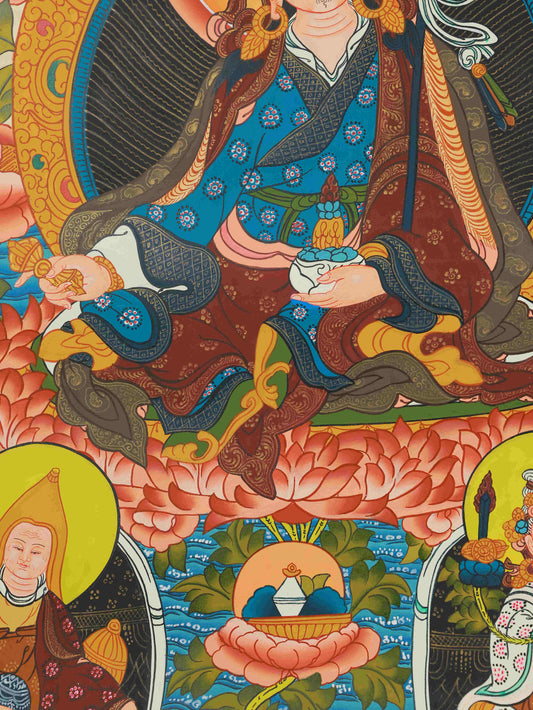
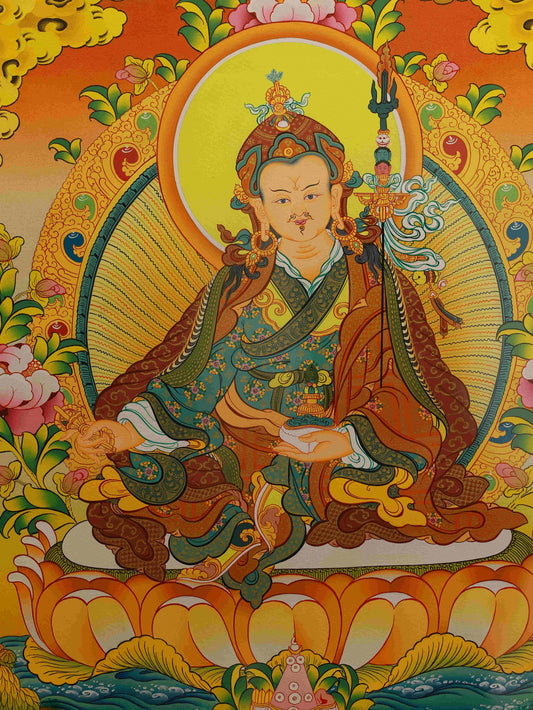
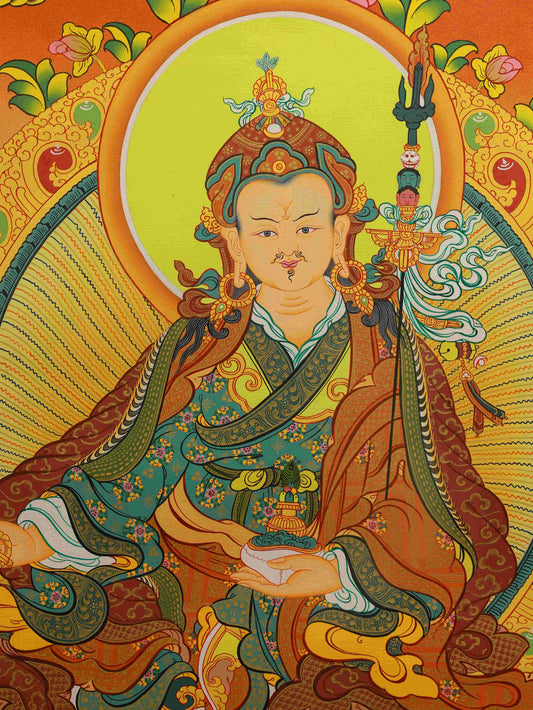
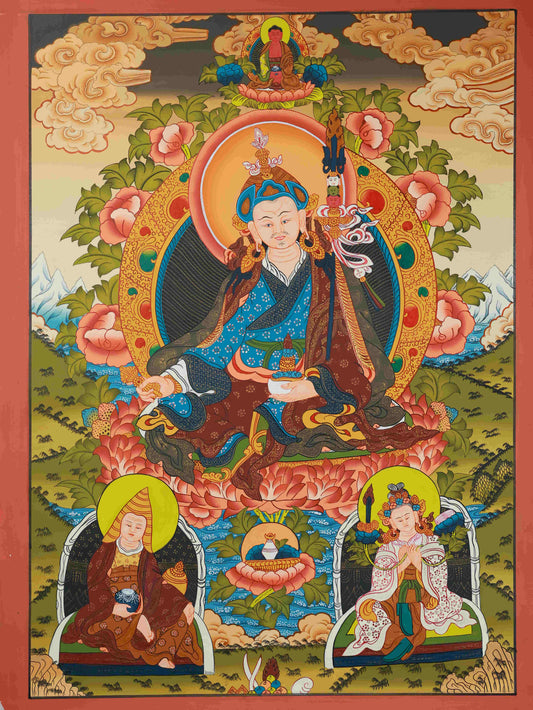
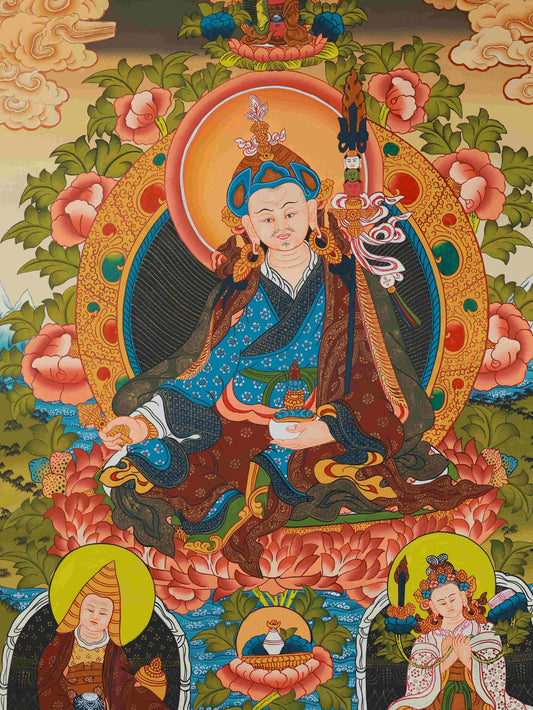
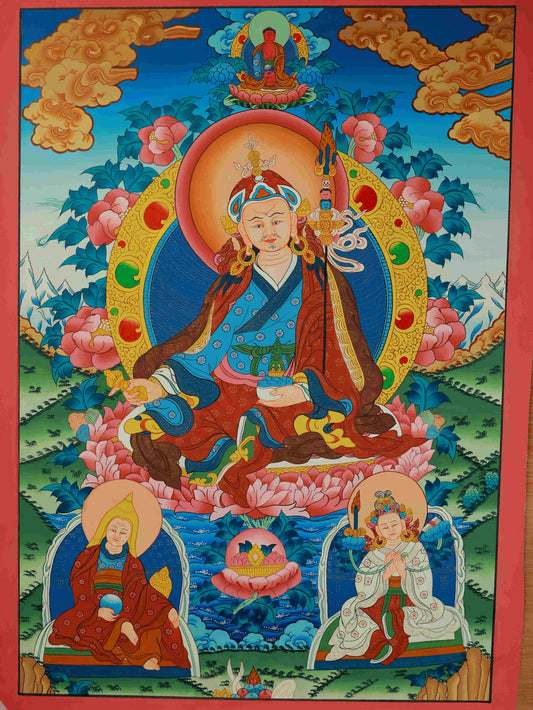
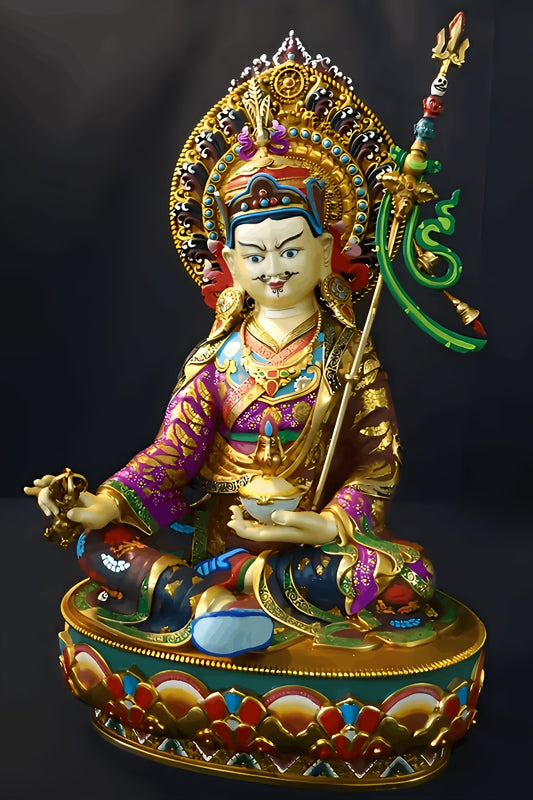
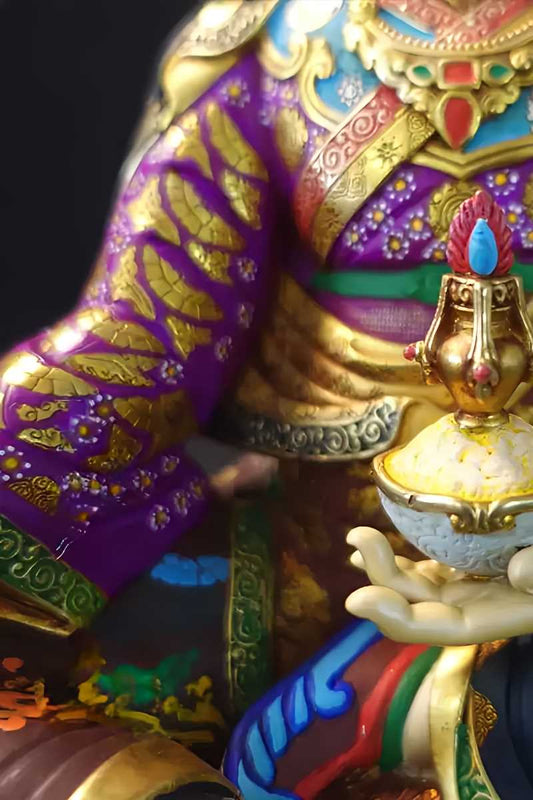
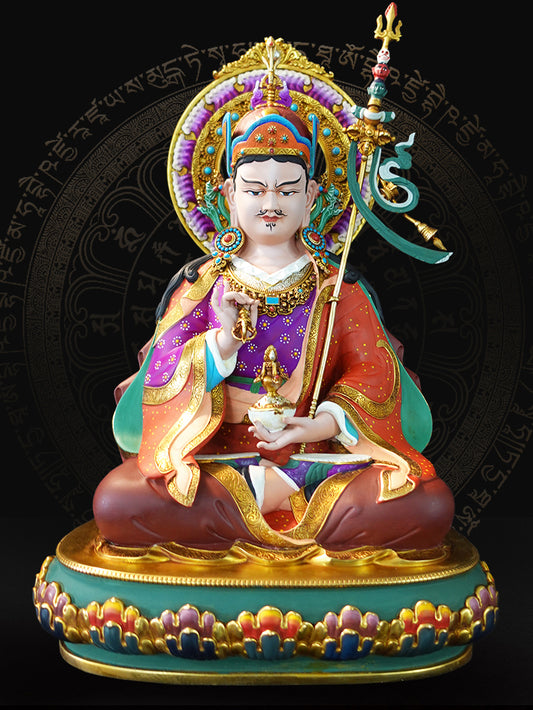
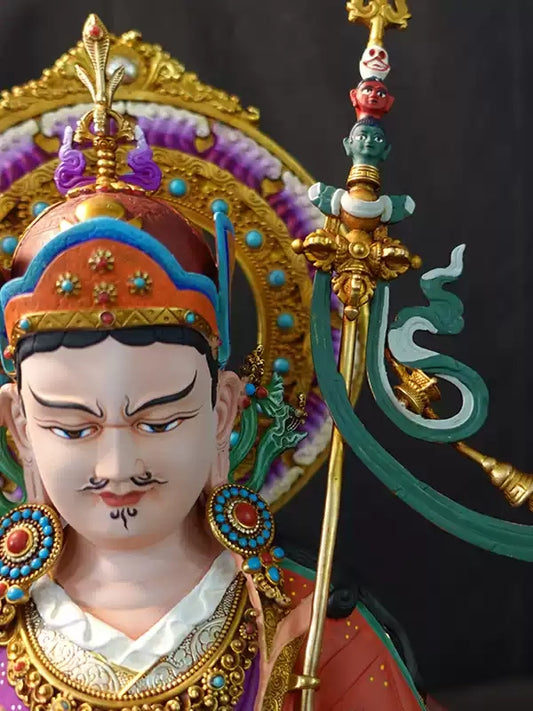
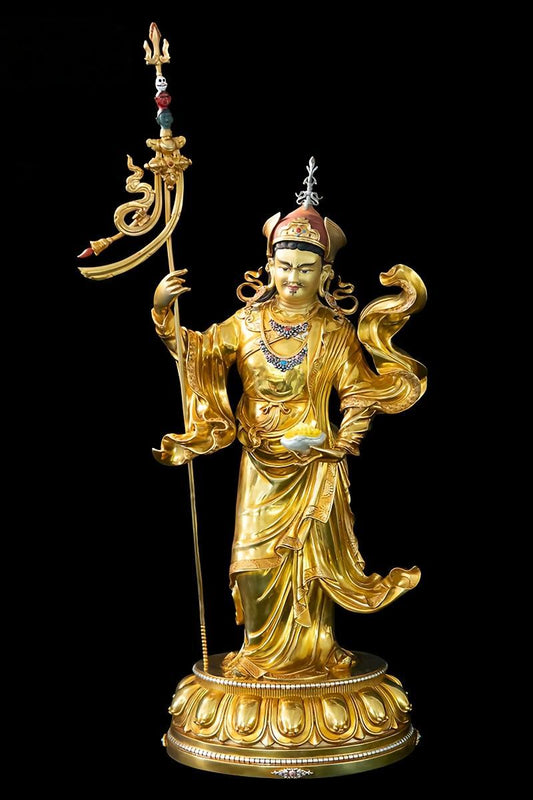
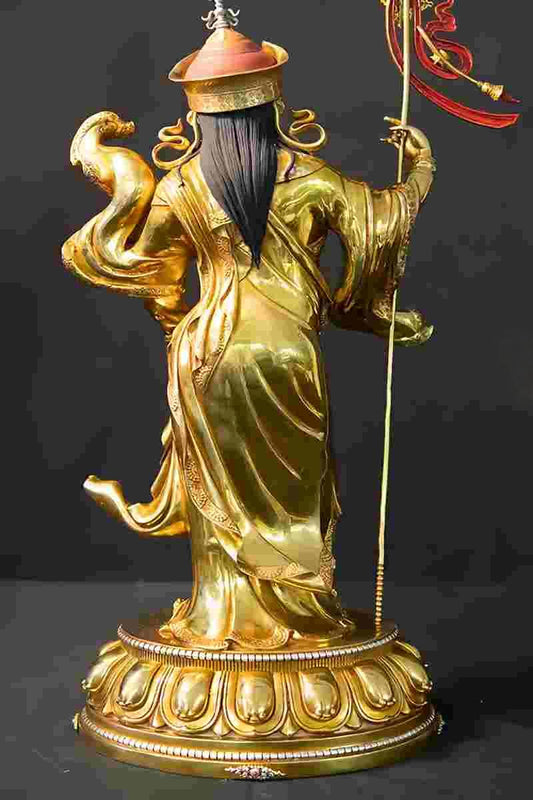
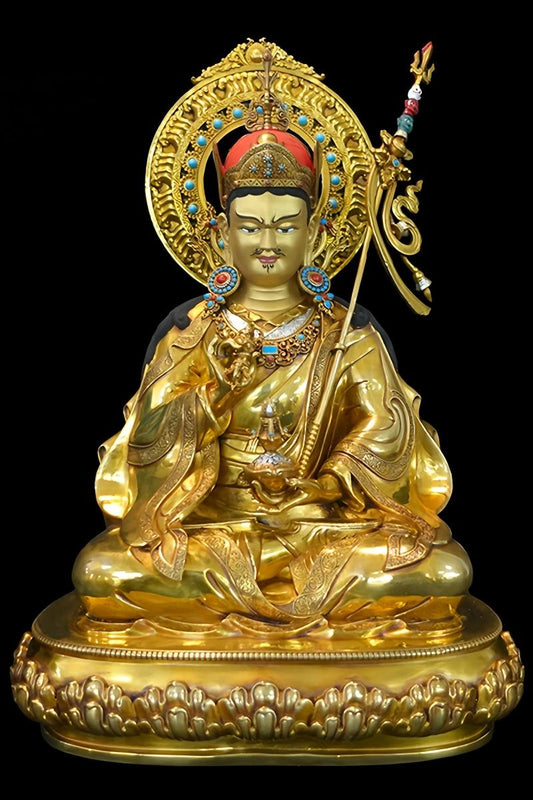
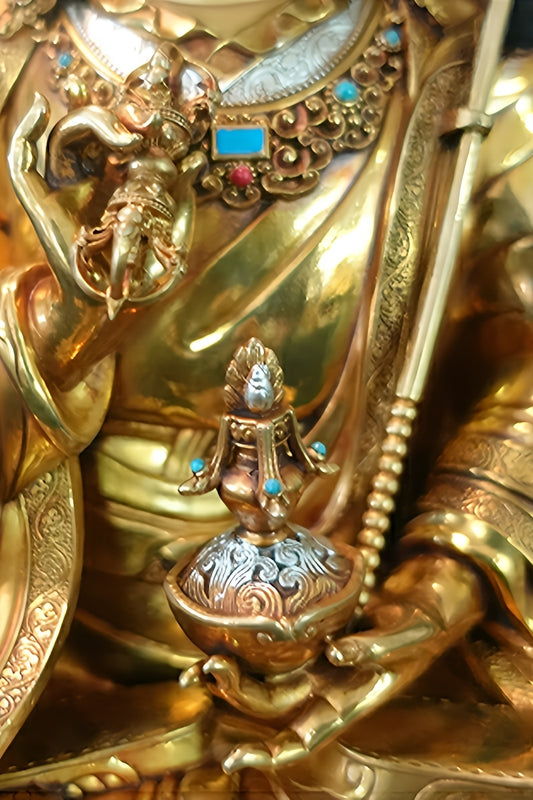
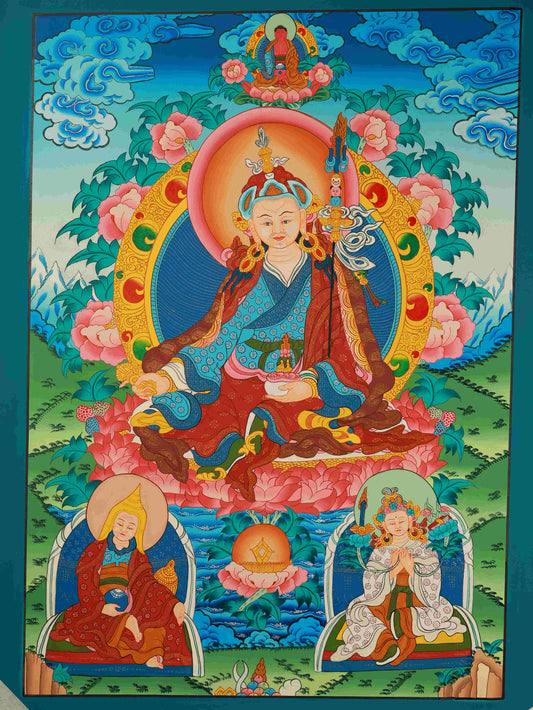
Guru Rinpoche’s image is rich in symbols:
- Five-petal lotus crown – five wisdoms
- Vajra in right hand – indestructible clarity
- Skull cup in left hand – realization of emptiness
- Khatvanga trident – tantric accomplishment
- Tiger skin – mastery over fear and ego
- Lotus seat & rainbow aura – purity and realization
Often accompanied by dakinis, representing ultimate wisdom.
The Vajra Guru Mantra
“Om Ah Hum Vajra Guru Padma Siddhi Hum”
This mantra is believed to:
- Remove obstacles
- Bring blessings
- Heal illness and misfortune
- Protect against negative forces
- Increase wisdom and merit
It is one of the most recited mantras in the Himalayas.
Architect of Tibetan Buddhism
He established:
- The monastic system
- Vajrayana frameworks
- Protector deity systems
- The terma tradition
- Dzogchen transmission
- Guru yoga practices
These continue as the backbone of Tibetan Buddhism.
2) Spread across the Himalayas
His influence expands to:
- Nepal
- Bhutan
- Sikkim
- Mongolia
In Bhutan, he is regarded as a national protector.
3) Inspiration for art and culture
He is the subject of countless:
- Thangkas
- Sculptures
- Wall paintings
- Ritual dances
- Liturgical texts
He is the spiritual soul of Tibetan art.
Padmasambhava Thangka Painting
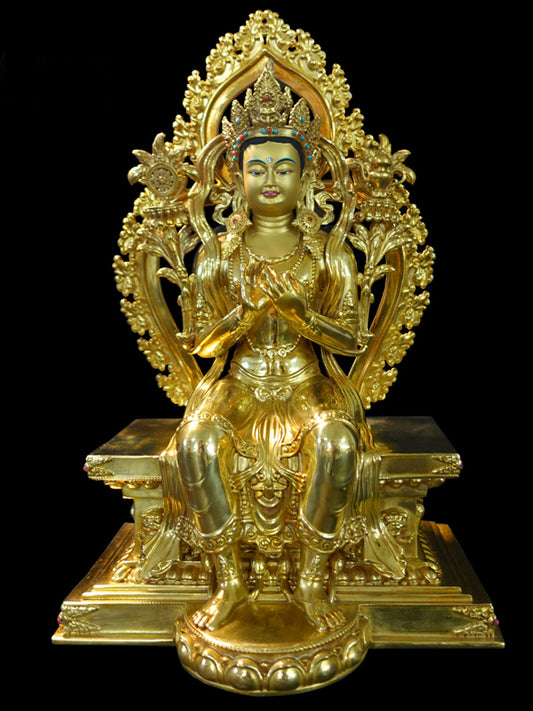
Padmasambhava Buddhist Statue
Blog posts
Nuevo verano
Estas son las personas que te hacen la vida más fácil. Grandes azulejos se colocaron en la encimera, cerca de la ventana de la sala, y se conectaron con la cocina...
Nuevo verano
Estas son las personas que te hacen la vida más fácil. Grandes azulejos se colocaron en la encimera, cerca de la ventana de la sala, y se conectaron con la cocina...
Nuevo verano
Estas son las personas que te hacen la vida más fácil. Grandes azulejos se colocaron en la encimera, cerca de la ventana de la sala, y se conectaron con la cocina...
Nuevo verano
Estas son las personas que te hacen la vida más fácil. Grandes azulejos se colocaron en la encimera, cerca de la ventana de la sala, y se conectaron con la cocina...