1. Core Theme: The Dialectical Faith of “Merit and Wealth”
The Yellow Jambhala (Tibetan: Zang La Serpo) is one of the most representative deities in the Tibetan Buddhist Five Jambhala system, symbolizing both material wealth and spiritual wisdom. Unlike the secular understanding of “wealth gods” as mere providers of money, in Tibetan Buddhism, Yellow Jambhala embodies a dual role: it not only fulfills worldly prosperity but also supports the practice of Buddhism through wealth as a means and wisdom as the foundation.
In Tibetan teachings of “merit and wisdom cultivation”, wealth is not the goal of practice but a resource for it. Without material support, spiritual practice is difficult; excessive attachment leads to greed and ignorance. Therefore, this Thangka represents a visual ritual of wealth accumulation and awakening of wisdom. The main deity symbolizes the power to overcome poverty, while the attendant deities represent the supportive forces that protect and sustain wealth. Together, the composition creates a sacred space where wealth becomes a vessel to spiritual liberation, bridging worldly needs with the principle of non-attachment.
2. Main Deity: Iconography and Esoteric Symbolism of Yellow Jambhala
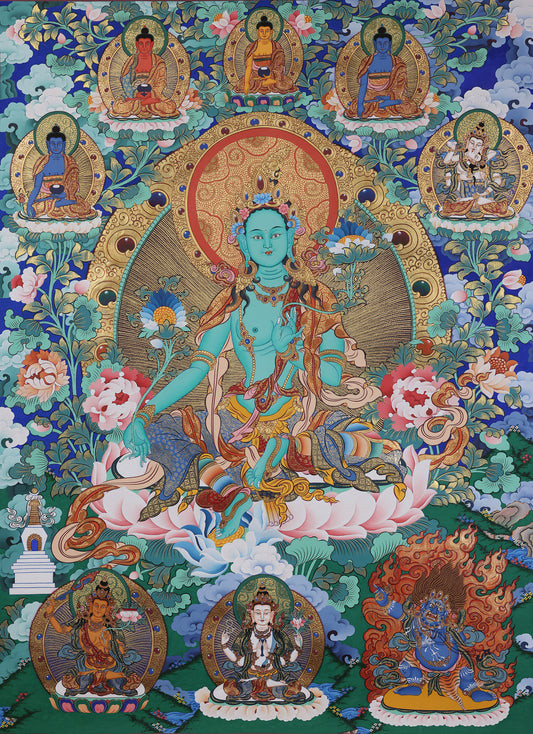
The central figure of the Thangka depicts Yellow Jambhala in the form of Vaiśravaṇa (Treasure-Bestowing Buddha), strictly following the Canonical Measures for Iconography and Jambhala Ritual Texts. Every detail conveys deep esoteric meaning.
Body Color and Symbolism
The deity’s bright earth-yellow body corresponds to the Five Dhyani Buddhas’ Ratnasambhava, symbolizing equanimous wisdom. It conveys that wealth is not a tool for discrimination or disparity. The rounded, exposed chest and belly indicate abundance while subtly teaching generosity and non-hoarding.
Ritual Implements and Mudras
-
Left hand holding the treasure mongoose (Tibetan: Nülie): Continuously spitting jewels, representing an endless flow of material wealth. The mongoose also symbolizes the transformation of greed into spiritual resources.
-
Right hand in the gift-giving mudra (or holding the wish-fulfilling jewel): Grants fearlessness and fulfills all virtuous aspirations.
-
Cintamani vase at the side: Filled with nectar and treasures, symbolizing the perfection of merit and wisdom; wealth must be purified by wisdom to become beneficial karma.
Headdress and Attire
-
Five-Buddha crown: Represents the blessings of all Five Dhyani Buddhas, highlighting the spiritual dimension of wealth.
-
Jeweled ornaments: Gold bracelets, jade earrings, and gem necklaces signify noble status and are worn as non-attachment symbols, reflecting the principle of managing wealth with a pure mind.
Posture and Lotus Throne
The deity sits in half-lotus posture on a thousand-petaled red lotus, symbolizing purity arising from worldly conditions. The Mount Meru pedestal below the lotus emphasizes that wealth must be rooted in bodhicitta; only wealth obtained altruistically is considered pure and meritorious.
3. Attendant Deities: Supportive Forces for Wealth Protection
The attendants are functional elements, not mere decorations, each corresponding to aspects of wealth management in Tibetan esoteric practice.
Left Attendant: Sudhana or Treasure-Holding Deity
Depicted as a youthful or female figure holding a treasure plate, symbolizing skillful accumulation of wealth through virtuous means. This emphasizes that wealth should be earned through right livelihood and good intentions, not through shortcuts.
Right Attendant: Wealth Protector or Black Jambhala
Dark blue and wrathful, holding a vajra and treasure bag, representing protection against theft and depletion of wealth. As the wrathful emanation of Yellow Jambhala, this figure reminds practitioners that wealth requires protection from greed, hatred, and ignorance.
Background Elements
-
Auspicious clouds and treasure umbrella: Symbolize pure protection of wealth.
-
Seven Treasure Piles (coral, agate, crystal, etc.): Represent the dual nature of worldly wealth and transcendent wisdom, corresponding to the seven types of resources (faith, diligence, mindfulness, concentration, wisdom, shame, and humility).
4. Artistic Craftsmanship: Natural Materials and Ritualized Creation
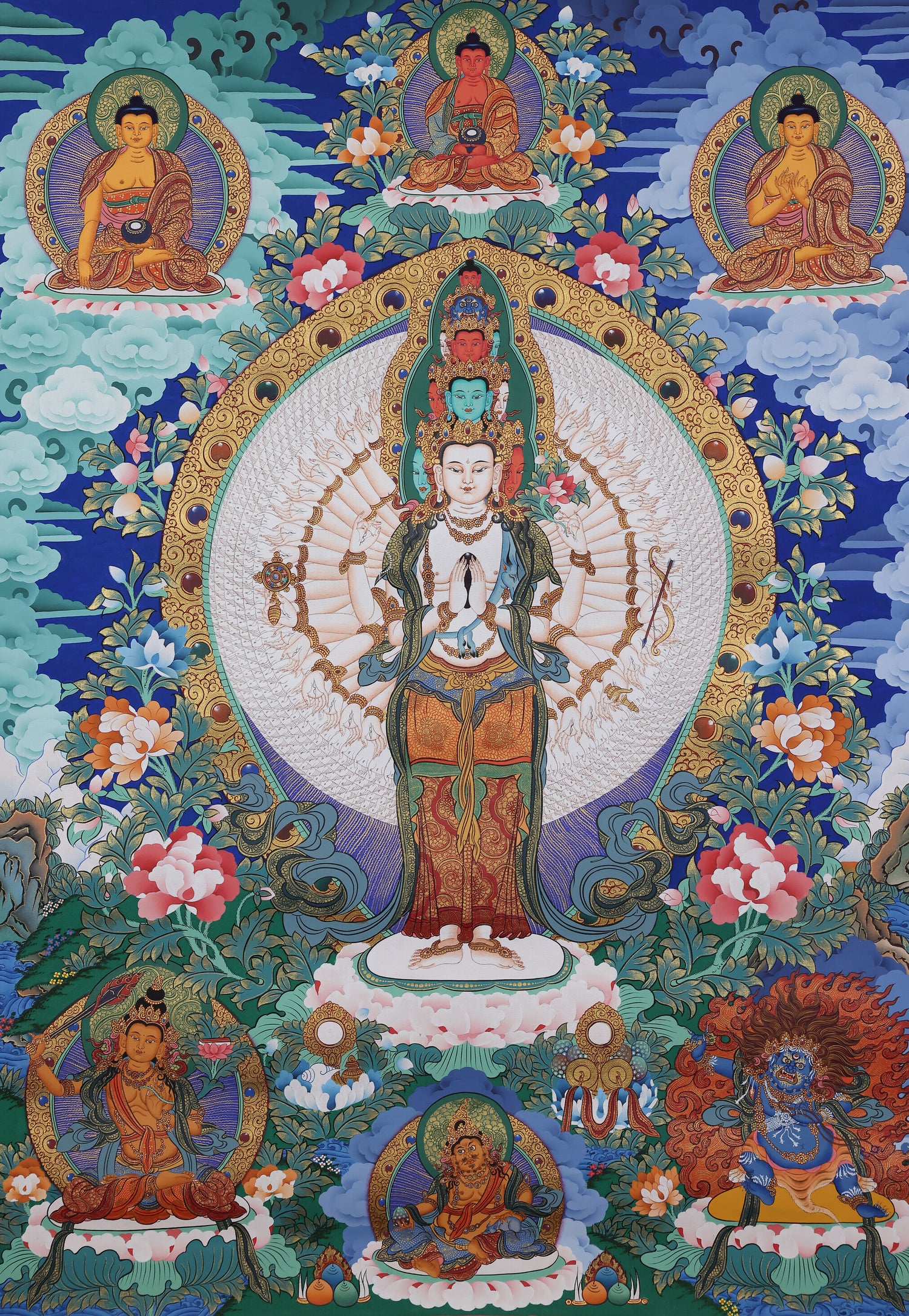
This Thangka is a hand-painted masterpiece from the Rebgong or Menri School, where art and religious practice converge.
Materials
-
Yellow pigment: Orpiment mixed with 24K gold powder, refined through twelve steps, conveying both richness and sacred radiance.
-
Blue pigment: Lapis lazuli and malachite, ground to extremely fine particles to produce a deep “space-like” blue, symbolizing the vastness of wisdom.
-
Red pigment: Cinnabar and Tibetan safflower juice, vibrant and symbolically tied to compassionate generosity.
Ritual Painting Process
The creation involves 12 core ritualized steps, each accompanied by mantra recitation: canvas preparation, sketching, mineral grinding, layered shading, gold line outlining, facial detailing, and installation of consecrated objects for empowerment. These ensure that the Thangka is not merely an image but a sacred presence.
Style
-
Composition: Central deity with symmetrical arrangement of attendants and background elements.
-
Linework: Bold iron lines for robes and implements, delicate filigree for hair and jewels, creating a “powerful yet serene” aura.
-
Coloring: High saturation, multi-layer blending; yellow with seven layers for depth, background gradients of blue and green convey cosmic openness.
-
Gold embellishment: Fine gold lines (0.045 mm) and gold leaf enhance sacredness and visual richness.
5. Cultural Significance: Thangka as a Medium of Wealth and Wisdom
This Yellow Jambhala Thangka is more than art; it is a medium for practitioners to connect with the deity.
Meditation Tool
Practitioners meditate by visualizing the deity’s form, implements, and esoteric meaning:
Offering and Maintenance
Offerings follow the Three Purities (water, flowers, incense) and emphasize generosity. Regular charitable acts align practitioners with the deity’s blessings.
Spiritual Symbolism
The mongoose conveys transforming attachment into merit, reflecting the Tibetan Buddhist principle: afflictions themselves are the path to enlightenment. Wealth is neutral; proper use supports spiritual practice, while misuse generates suffering.
6. Conclusion
This Yellow Jambhala Thangka encapsulates Tibetan Buddhist wealth philosophy:
-
Esoteric symbolism: Every hand gesture, implement, and color carries teaching.
-
Sacred craftsmanship: Natural minerals, meticulous painting, and consecration rituals.
-
Dialectical teachings: Wealth and wisdom, accumulation and generosity, practice and support are intertwined.
It serves as both a devotional object for domestic altars and a cultural artifact demonstrating philosophy through art. Wealth here is not mere material pursuit but a support for compassionate and wise practice, bridging aesthetic appreciation, spiritual guidance, and practical teaching.
#TibetanBuddhistArt #YellowJambhala #WealthDeityThangka #TibetanThangka #HandPaintedThangka #BuddhistArt #SpiritualArt #MeditationTool #HomeAltar #EsotericBuddhism #WealthAndWisdom #BodhisattvaThangka #TantricDeityThangka #SacredArt #CollectibleThangka