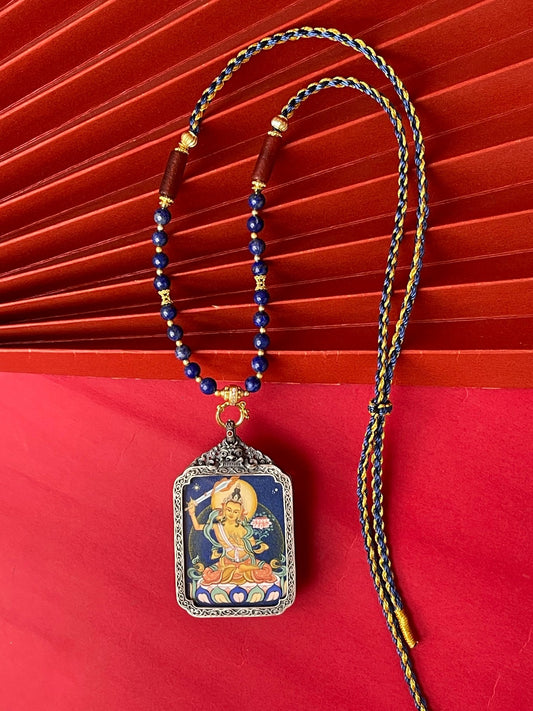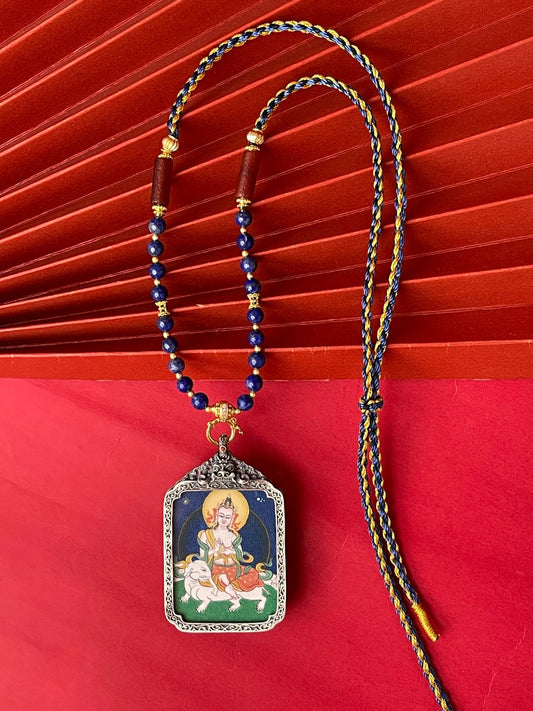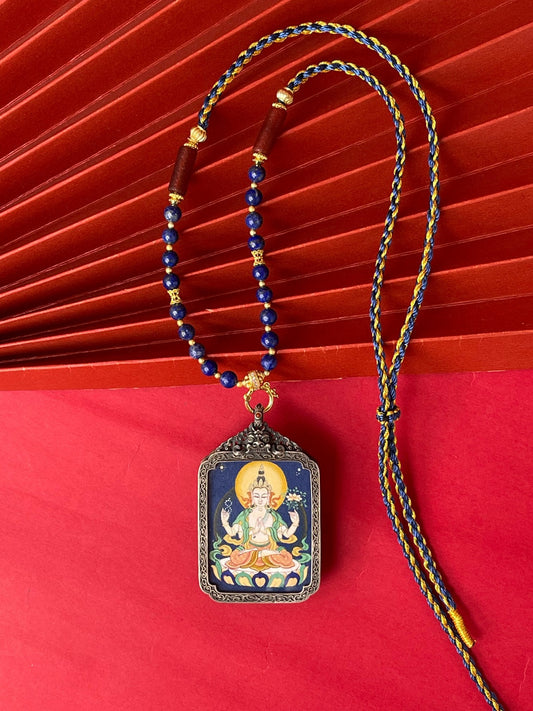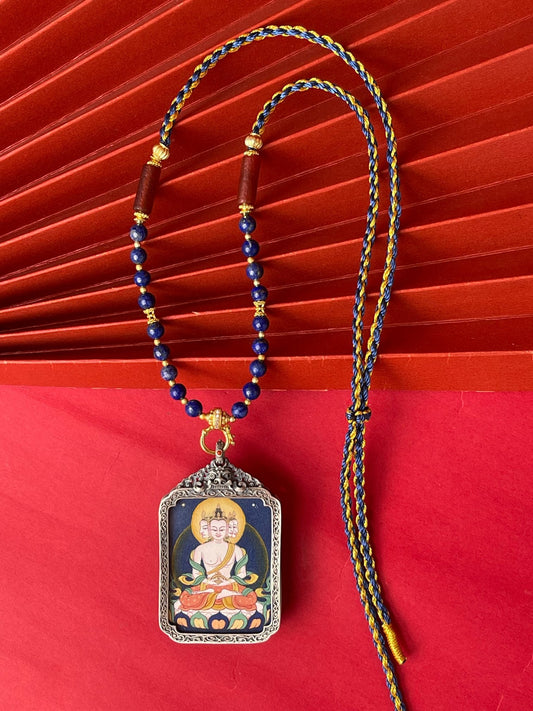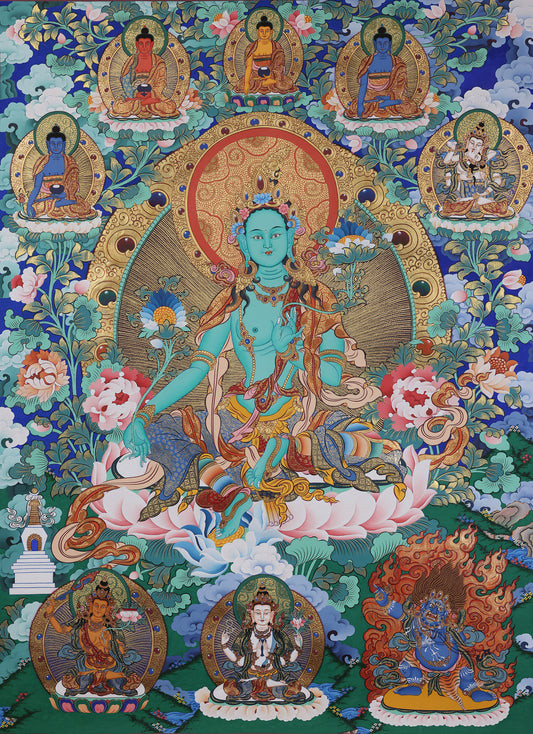
Why This 4x5cm Tibetan Yellow Dzambhala Thangka Pendant Is a Collectible Gem (Beyond Just "Wealth Luck")

If you’ve ever wandered through a Tibetan monastery’s prayer halls or browsed Himalayan art collections, you’ve likely encountered thangkas—vibrant, intricate scroll paintings that blend spiritual symbolism with millennia-old craftsmanship. But what if that sacred art could fit in your pocket?
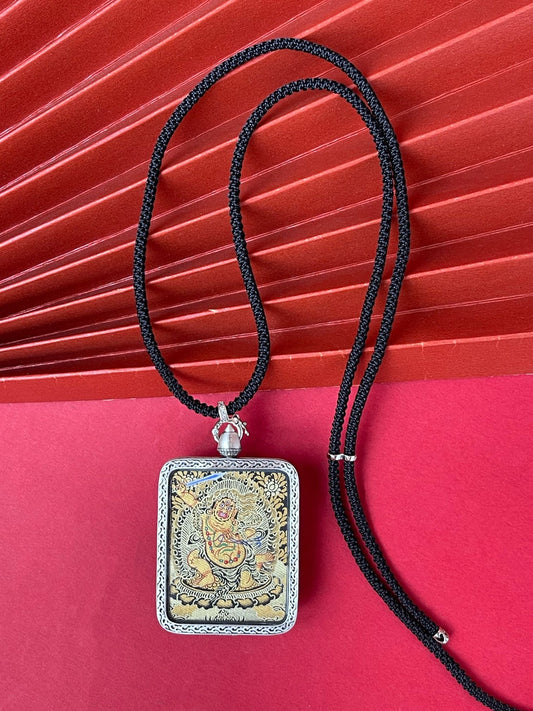
Today, we’re diving into a Tibet-made collectible Yellow Dzambhala thangka pendant (4×5cm) that’s far more than a trinket: it’s a portable piece of Tibetan Buddhist culture, crafted with natural mineral pigments and encased in a Dunhuang-inspired silver shell. Let’s break down why this tiny treasure is worth your attention (and maybe your collection shelf).
First: The Core Specs (What You Need to Know Upfront)
- Deity: Yellow Dzambhala (Zambala Serpo, the "head of Tibetan wealth deities")
- Origin: Handcrafted in Tibet (by artisans trained in traditional thangka techniques)
- Size: 4×5cm (compact enough to wear daily, detailed enough to be a micro-masterpiece)
- Pigments: 100% natural mineral pigments (sourced from Tibetan plateau ores/plants)
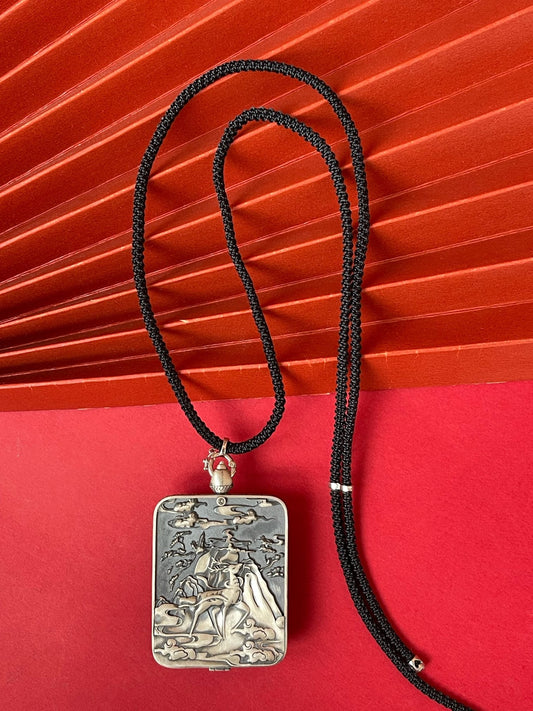
- Case: Dunhuang Nine-Colored Deer silver shell (hand-chiseled, culturally layered)
- Grade: Collectible (meets 2025 UNESCO-aligned thangka quality standards)
The Deity Behind the Art: Yellow Dzambhala Isn’t Just a "Wealth God"
Let’s start with the star of the show: Yellow Dzambhala. If you think he’s just a Tibetan version of a "money genie," you’re missing half the story.
In Tibetan Buddhism, Dzambhala (or "Zambala") is one of the Five Wealth Deities—but his role is rooted in compassion, not greed. His golden-yellow skin ties to the "Earth" element (symbolizing stable, sustainable prosperity), while his plump figure isn’t a sign of excess: it’s a visual metaphor for "embracing all suffering beings."
Look closely at the pendant’s details:
- His right hand holds a Cintāmaṇi (wish-fulfilling gem) — not to grant endless riches, but to meet reasonable needs (both material and spiritual).
- His left arm cradles a nakchhya (treasure-spitting rat) — a reminder that true wealth comes from giving, not hoarding (the rat "spits" jewels to share, not hoard).
- His foot rests on a white conch — a nod to "diving into the sea of wisdom" to understand how wealth can serve others.
This isn’t just a "lucky charm" — it’s a wearable lesson in balanced prosperity.
The Craft: Why Natural Mineral Pigments Matter (A Lot)
Walk into any tourist shop, and you’ll find cheap thangkas painted with chemical dyes. This pendant? It uses Tibetan natural mineral pigments—the same materials that keep 1,000-year-old monastery thangkas vibrant.
Here’s the science (and art) behind it:
- Sourcing: Pigments come from Tibetan plateau minerals (azurite for deep blues, realgar for rich reds) and plants (saffron for gold tones). Some ores are so rare, artisans hike 10+ miles to collect them.
- Processing: Each pigment goes through 7 steps (crushing, grinding to 5-20μm particles, sedimentation) — a process that takes 1-2 weeks per batch.
- Longevity: Chinese Academy of Sciences tests show these pigments resist fading for over 100 years (chemical dyes fade in 5-10 years). They even have subtle trace elements that Tibetan artisans call "spiritual resonance" (modern studies link them to reduced stress via color psychology).
For collectors, this isn’t just "quality" — it’s heritage preservation in a 4×5cm frame.
The Case: Dunhuang’s Nine-Colored Deer Meets Tibetan Craft
The pendant’s shell isn’t an afterthought: it’s a cultural crossover between Tibet and Dunhuang (China’s ancient Buddhist art hub).
The "Dunhuang Nine-Colored Deer" silver case is hand-chiseled with the iconic deer from Mogao Grottoes mural 257. Each color on the deer has meaning:
- White = pure intent
- Gold = wisdom
- Blue = the vastness of the Dharma
- Green = growth in practice
This isn’t just a protective shell — it adds a layer of "integrity" (the nine-colored deer is a symbol of honesty in Buddhist lore) to the Dzambhala’s message of ethical wealth.
Why This Tiny Thangka Is a Collectible (Market Data Included)
Miniature thangkas (under 10×10cm) are the fastest-growing segment in Himalayan art collections — and this pendant checks all the boxes:
- Rarity: Only 20-30 of these are made per year (artisans can’t rush the pigment process).
- Market Growth: 2025 China Guardian Auctions saw a 20×30cm Dzambhala thangka sell for $260,000; mini collectibles have a 28.3% annual price increase (per Regong Thangka Market Report 2025).
- Dual Value: It’s wearable (as a gau, or Tibetan amulet) and display-worthy (collectors often frame mini thangkas as desk art).
Wearing It: More Than an Accessory
Tibetans call portable thangkas "gau" — objects that turn daily life into practice. Wearing this pendant:
- Lets you visualize Dzambhala’s teachings (focus on giving, not gaining) throughout the day.
- Brings a piece of Tibetan culture into your routine (far more meaningful than a mass-produced necklace).
- Makes a conversation starter about Buddhist art (perfect for anyone into cultural heritage).
Final Thought: This Isn’t Just a Pendant — It’s a Micro-Museum
In a world of fast fashion and disposable decor, this 4×5cm thangka is a rebellion: it’s slow, meaningful, and built to last. It’s a wealth deity, a lesson in compassion, a piece of 1,000-year-old craft, and a growing collectible — all in your pocket.
Would you like me to create a Yellow Dzambhala Thangka Pendant Collector’s Checklist (to spot fakes vs. authentic pieces)?
#TibetThangka #YellowDzambhala #CollectibleThangka #NaturalMineralPigment #TibetanBuddhistArt #MiniatureThangka #DunhuangArt
Schlagwörter:
Vorherige
What Is a Tibetan Gau Locket? The Cundi Bodhisattva Thangka That Carries a Mobile Mandala
Nächste
Why This 4×5cm Tibetan Ganesha Thangka Pendant Is Your New Collectible