What Is a Tibetan Gau Locket? The Cundi Bodhisattva Thangka That Carries a Mobile Mandala

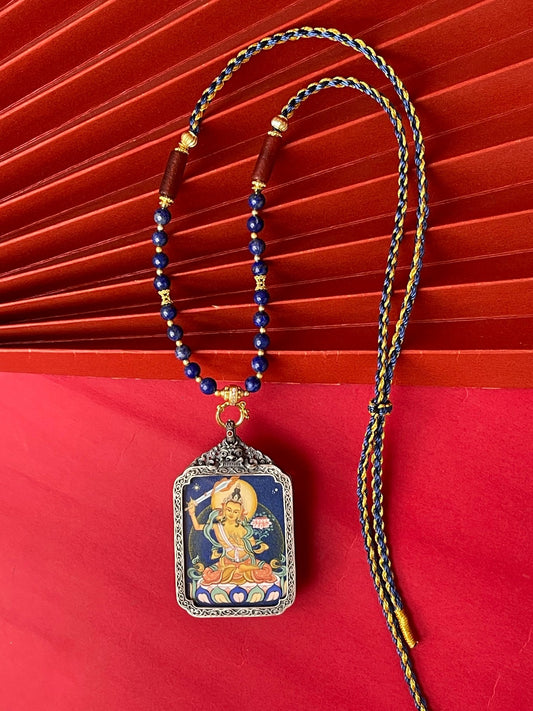
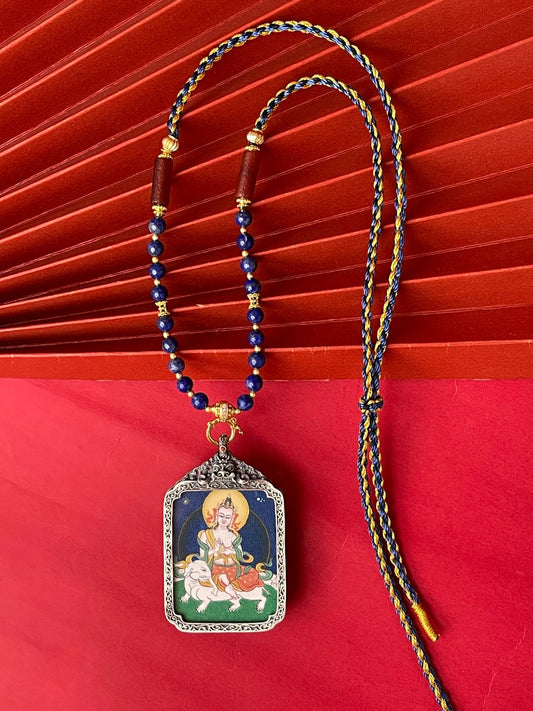
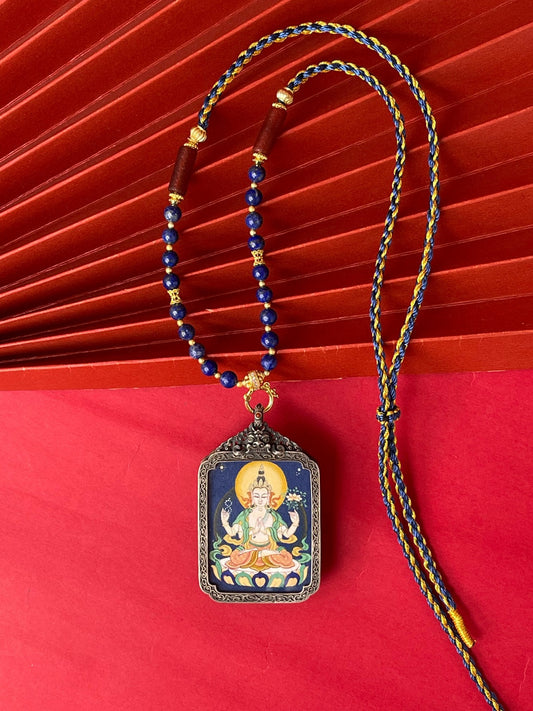
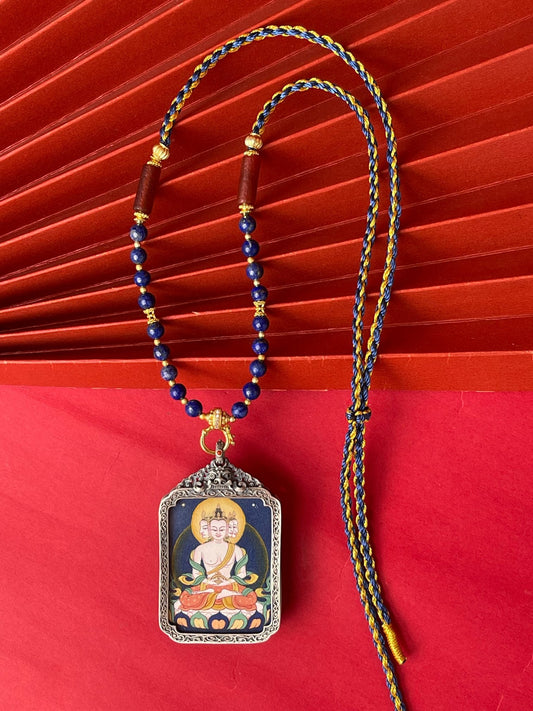
If you’ve ever wandered through a Tibetan market or browsed spiritual jewelry, you’ve likely seen a gau locket—but few realize this small accessory holds a millennium of Vajrayana Buddhist wisdom. Today, we’re diving into the Cundi Bodhisattva Thangka Gau: a portable shrine that condenses the compassion of three generations of Buddhas into a piece you can wear daily.
What Is a Gau Locket? More Than a Jewelry Piece
In Tibetan Buddhism, a gau (pronounced "gow") isn’t just a pendant—it’s a mobile mandala. Mandalas are sacred geometric spaces that represent the Buddha’s realm; a gau takes that realm and shrinks it into a locket you can carry. For Tibetan herders, travelers, and practitioners, it’s a way to keep spiritual connection close, even when far from temples.
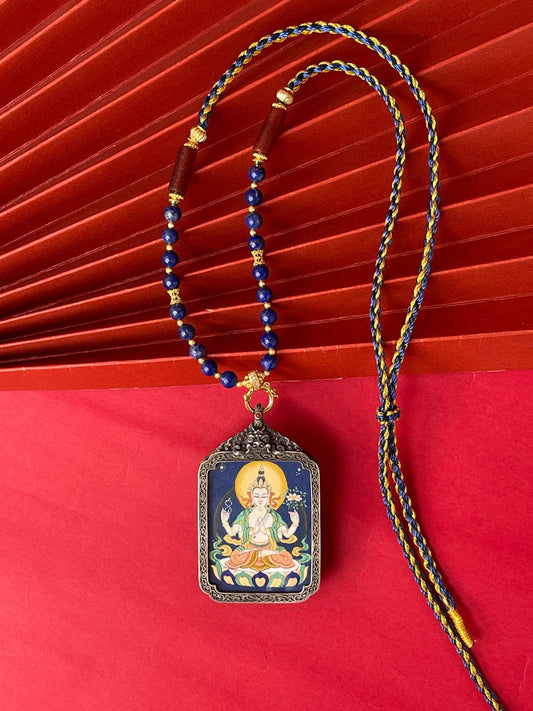
The gau we’re exploring centers on Cundi Bodhisattva (also called the "Bodhisattva of Seventy Million Buddhas")—a figure unique in Vajrayana: she’s an incarnation of Avalokiteshvara (the Bodhisattva of Compassion) and revered as the "Mother of All Buddhas." This dual identity makes her a "universal yidam" (meditation deity) that unites the core teachings of the Buddha, Vajra, and Lotus divisions of Tibetan Buddhism.
Decoding the Cundi Bodhisattva Thangka: Symbols in Every Detail
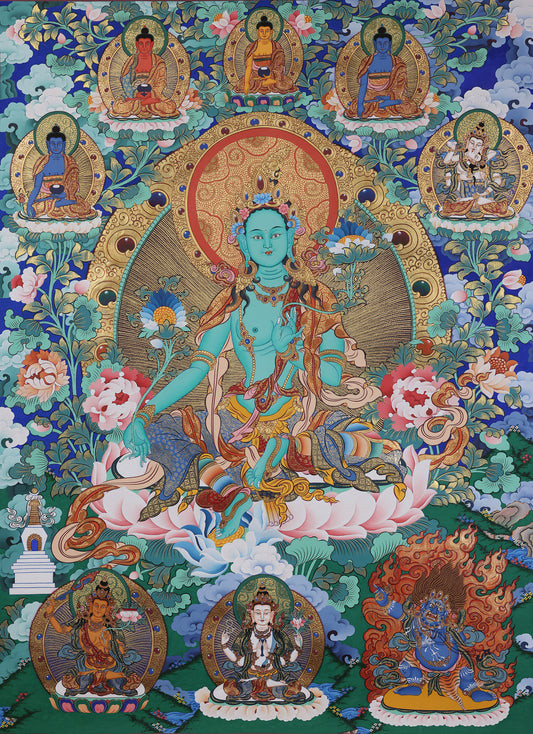
The art inside this gau is a traditional thangka painting, and every element carries symbolic weight:
- Three Eyes: Cundi’s third eye (on her forehead) sees the perfect Buddha realm; her left eye (the Dharma eye) perceives the true nature of reality; her right eye (the wisdom eye) cuts through worldly karma. Together, they represent "equality of wisdom, principle, and action"—a reminder that enlightenment is accessible, not just for monks.
-
Eighteen Arms: Each arm holds a tool that maps to a "skillful means" for overcoming suffering:
- The central Dharma-teaching mudra (hand gesture) breaks greed, anger, and delusion.
- The wisdom sword (right hand) slices through ignorance.
- The lotus (left hand) symbolizes innate pure Buddha-nature (we’re all "unstained by suffering," like a lotus in mud).
- The 108-bead mala (prayer beads) corresponds to the 108 human afflictions—each bead is a step toward liberation.
These aren’t just "decorations": they’re a visual guide to Vajrayana practice. When you wear this gau, you’re not just accessorizing—you’re carrying a "visual mantra" that aligns you with Cundi’s wisdom.
The Craft: How a Gau Becomes a Sacred Object
Authentic gau lockets blend traditional materials and spiritual intention:
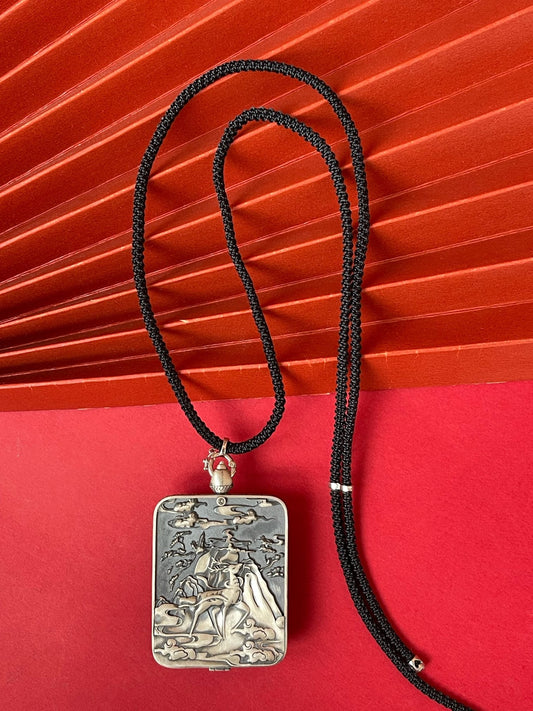
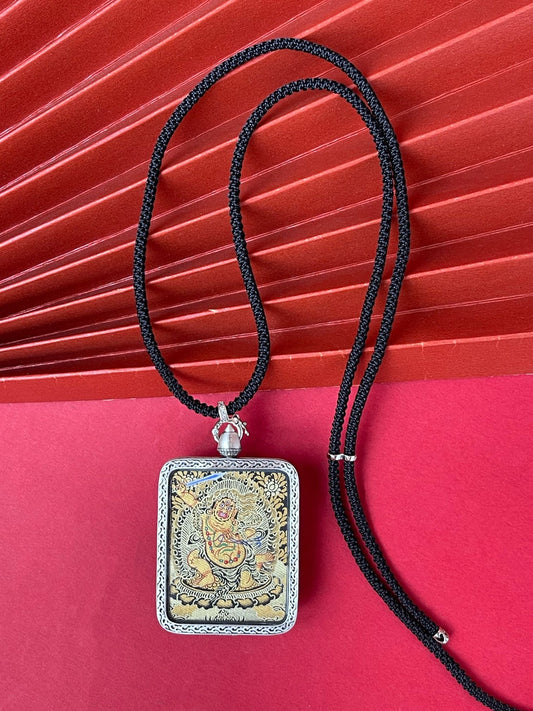
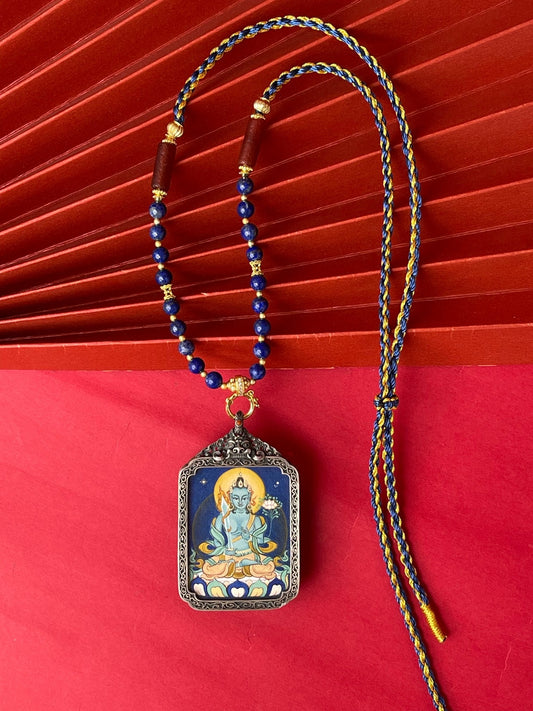
- Frame: This piece uses aged silver, hand-chiseled with interlocking lotus patterns (a Tibetan symbol of purity). The patina of the silver isn’t accidental—it represents the "wear of time" that deepens spiritual connection.
- Thangka Painting: The art is done with mineral pigments (lapis lazuli for the robes, cinnabar for the lotus seat, orpiment for clouds). These pigments don’t fade—they’re meant to last, just like the teachings they represent.
- Function: Inside the locket, Tibetans traditionally place scriptures or nectar pills (blessed items). Today, it’s a space for your own intentions: a reminder to breathe, let go of anger, or trust your path.
Why Wear a Cundi Bodhisattva Gau Today?
In modern life, we’re often disconnected from spiritual practice—but the gau bridges that gap:
- Secular Benefit: In Tibetan culture, Cundi is a "wish-fulfilling yidam." Wearing her gau is believed to ward off negative energy (like astrological imbalances) and support daily peace.
- Spiritual Reminder: When you glance at the thangka, you’re called back to the Vajrayana truth: afflictions (stress, anger, worry) are not permanent. Cundi’s three eyes remind you to see beyond the chaos to your inherent purity.
It’s not about "magic"—it’s about presence. The gau turns a busy commute or stressful workday into a moment to reconnect with what matters.
Final Thoughts: The Gau as a Modern Spiritual Tool
The Cundi Bodhisattva Thangka Gau is more than a trend—it’s a living tradition. It takes the grand, intricate mandalas of Tibetan temples and makes them portable, so anyone can carry wisdom, compassion, and intention through their day.
Whether you’re a Buddhist practitioner or someone seeking a meaningful accessory, this gau is a reminder: spirituality doesn’t have to be grand. It can be a small locket, a quiet glance, and a moment to remember your own goodness.
#TibetanGauLocket #CundiBodhisattva #PortableMandala #VajrayanaJewelry #SpiritualAccessories
Schlagwörter: