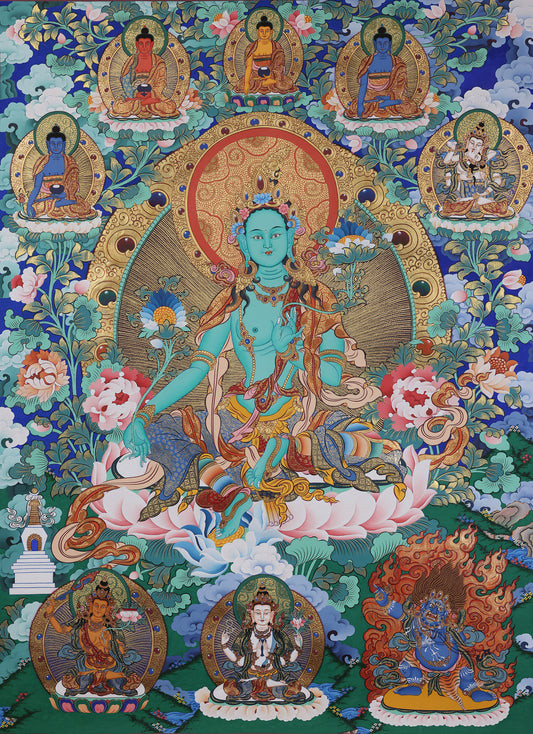
When a vibrant, intricately detailed Yellow Dzambhala thangka unfolds before you—its golden-bodied main deity holding a treasure-spitting rat, feet resting on a conch, surrounded by the Red, White, Green, and Black Wealth Gods—you may see a "lucky charm for wealth," but Tibetan Buddhist practitioners will tell you: this is a three-dimensional scripture about the balanced path between wealth and spiritual practice.
In Tibetan, Yellow Dzambhala is called "Zambhala Serpo," meaning "Holder of Treasures." His identity is far more than just a "wealth god":
Legend has it that Yellow Dzambhala was originally a fully realized bodhisattva. When Shakyamuni Buddha preached the
Great Prajñāpāramitā Sūtra at Vulture Peak, demons caused landslides and earthquakes. Yellow Dzambhala stepped forward to protect the monks, and the Buddha then instructed him to take refuge in the Dharma, serving as a Dharma protector to liberate the poor and suffering.
This legend hides Tibetan esotericism’s definition of wealth:
Wealth is a tool to uphold virtuous karma, not capital for indulgence.
Yellow Dzambhala’s prototype traces back to Kubera, the wealth god of ancient Indian Brahmanism (also an incarnation of the Buddhist Vaishravana). After spreading to Tibet, he merged with local beliefs. In the Yuan Dynasty murals of the Alxa Grottoes, Yellow Dzambhala first appeared as the main deity, with attendants replaced by patrons of Genghis Khan’s family—marking his evolution from a religious protector to a folk guardian of "ethnic prosperity."
Every detail of this thangka is a Tibetan esoteric "visual mantra":
-
Golden Body: Corresponding to the "Earth" element in the Five Elements, it symbolizes wealth as stable as the earth, capable of bearing all things;
-
Five-Buddha Crown: Represents the wisdom blessings of the Five Dhyani Buddhas, implying that wealth must be rooted in wisdom;
-
Large Belly, Small Frame: Not a sign of gluttony, but a compassionate heart that embraces the poor and suffering, aligning with the idea that "a broad heart attracts good fortune";
-
Right Hand Holding a Wish-Fulfilling Gem: The Cintāmaṇi satisfies sentient beings’ reasonable wishes, including both material wealth and spiritual blessings;
-
Left Arm Holding a Treasure-Spitting Rat: The rat holds treasures in its mouth, symbolizing that wealth should be given outward, not hoarded inward—the core Tibetan esoteric teaching that "generosity is the source of wealth";
-
Feet Resting on a Conch: Symbolizes "retrieving treasures from the sea," using wisdom to master the laws of wealth, rather than relying on speculation.
The Red, White, Green, and Black Wealth Gods surrounding the main deity in the thangka form the "Five Wealth Gods (Five-Color Wealth Gods)" system, corresponding to the five directions and elements, each with distinct duties:
-
White Dzambhala (West · Metal): Manifested from the tears of Avalokiteśvara, he governs healing poverty and illness, and purifying the mind—he is the "practice method for the penniless faithful";
-
Red Dzambhala (South · Fire): A core wealth god in Sakya School esotericism, he governs gathering connections and sustenance—he is the "method of loving-kindness";
-
Black Dzambhala (North · Water): An incarnation of Akshobhya Buddha, he dispels bad luck, especially protecting spiritual practitioners from humble backgrounds;
-
Green Dzambhala (East · Wood): Also an emanation of Akshobhya Buddha, he governs career success, agriculture, and legitimate industrial wealth.
This system is not a simple "superposition of five wealth sources," but an expression of Tibetan esotericism’s "complete five blessings": wealth, health, connections, career, and virtuous karma—none can be missing.
In Tibetan Buddhism, Yellow Dzambhala practice is by no means a "shortcut to getting rich," but a convenient spiritual practice that uses "wealth" as a medium. Its core is the Bodhicitta (awakening mind)—practicing with greedy intentions will not bring wealth, but instead attract karmic obstacles.
-
Body Mudra: Form the Yellow Dzambhala hand seal (vase seal or wish-granting seal), or hold the Cintāmaṇi and treasure-spitting rat ritual tools;
-
Oral Mantra: Recite the heart mantra "Om Zambhala Zhāntāndāyē Soha," visualizing the mantra syllables transforming into golden light to benefit sentient beings;
-
Mind Esotericism: Visualize oneself as Yellow Dzambhala, with the syllable "Om" in the heart emitting golden light to eliminate the karma of poverty—not "begging the wealth god for money."
Even those without empowerment can practice:
- Recite the mantra 108 times daily, paired with visualizing Yellow Dzambhala, but vow to "use the gained wealth for virtuous giving";
- Offer clean water, rice grains, or flowers to the thangka, not expensive offerings—Tibetan esotericism holds that "sincere intention is more important than material things";
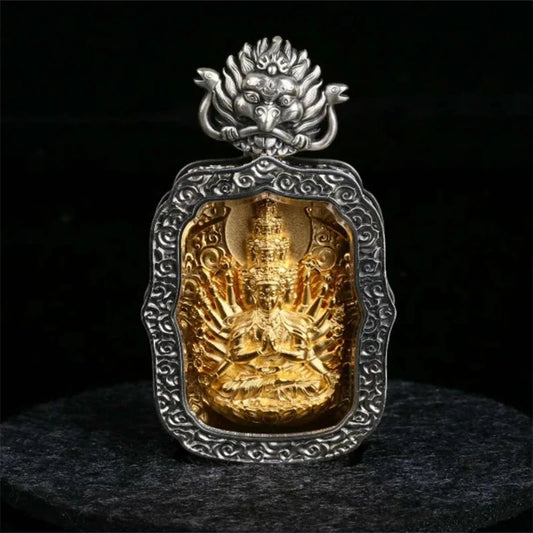
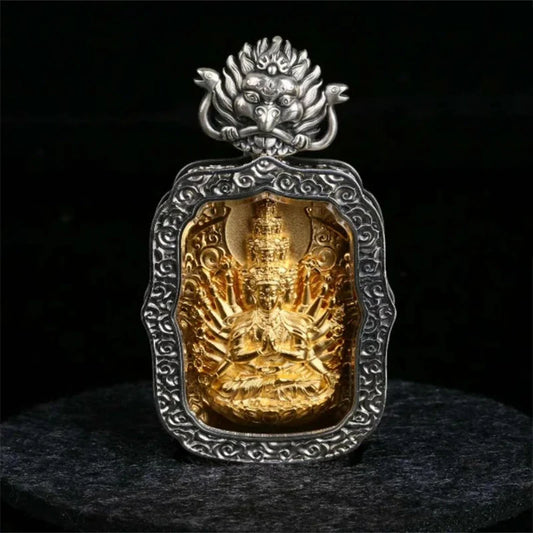
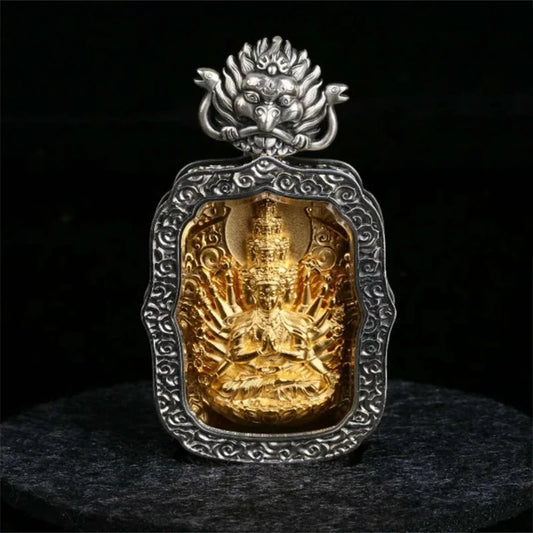
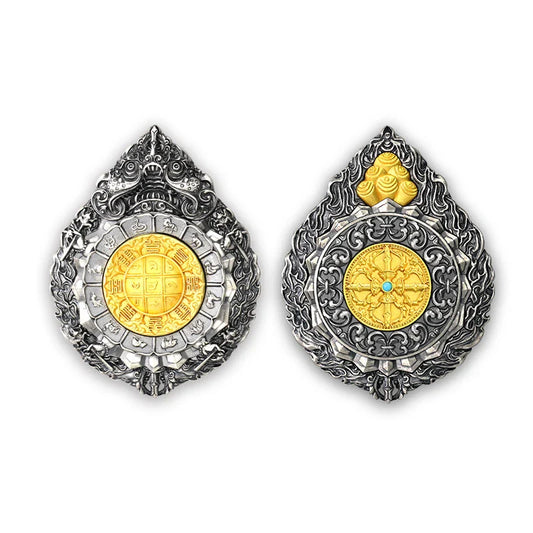
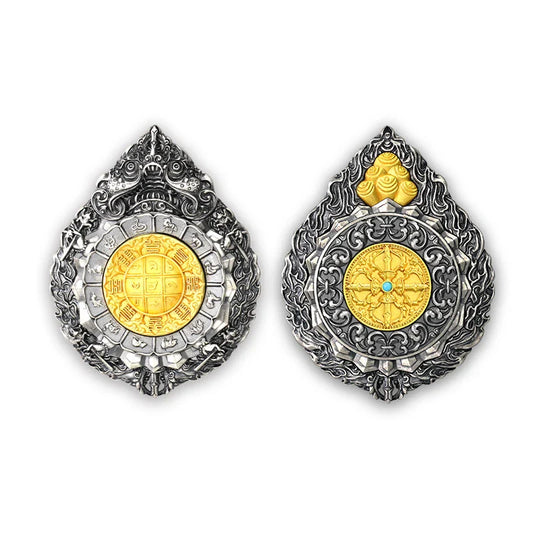
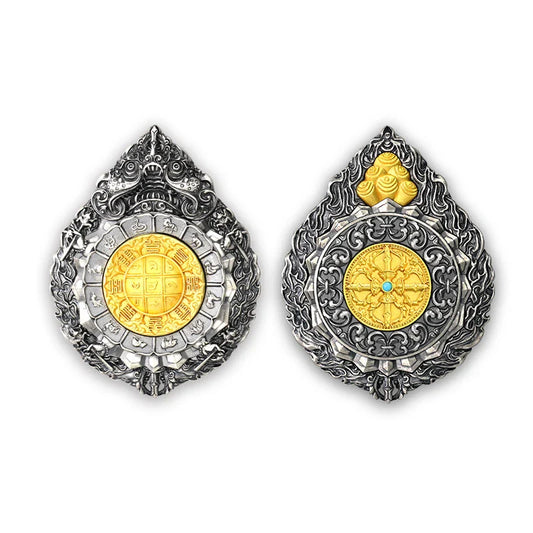
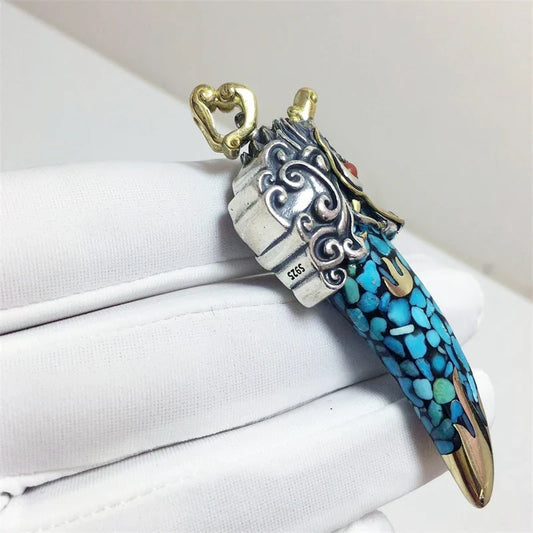
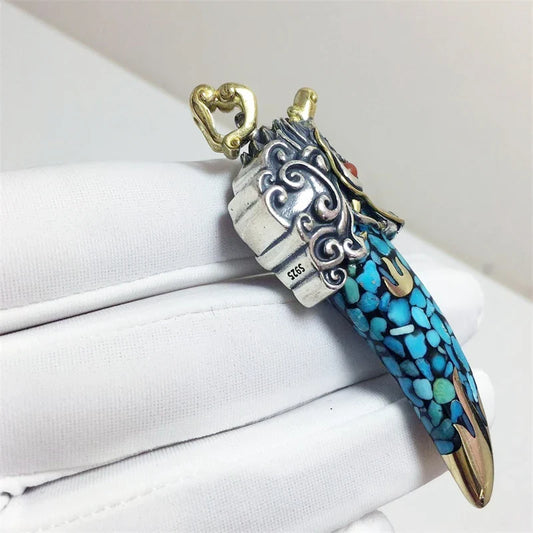
- Wear a Yellow Dzambhala amulet not as a "wealth charm," but as a reminder to "use wealth to benefit sentient beings."
Today, Yellow Dzambhala is often seen as a "Buddhist wealth charm" in cultural and creative products and social media, but Tibetan esotericism’s view of wealth is precisely a balance to "materialism":
-
Wealth as the Manifestation of Blessings: Tibetan esotericism holds that wealth stems from past-life generosity and precept-keeping; Yellow Dzambhala is a "guide of wealth karma," not a "giver of wealth";
-
Sustainability of Wealth: The treasure-spitting rat symbolizes "resource circulation," reminding people that wealth should flow, not be hoarded;
-
The Ultimate Meaning of Wealth: As Master Pabongkha said: "Practicing wealth god dharma is not for accumulating wealth to indulge, but to cut off the mind of poverty and widely engage in activities that benefit sentient beings."
When we gaze at this Yellow Dzambhala thangka, we should not see a "get-rich-quick dream," but Tibetan Buddhism’s ultimate definition of "wealth": Wealth is a tool to uphold virtuous karma, a favorable condition that enables us to help others, and spiritual provisions on the path of practice—not the destination.
#YellowDzambhala #FiveWealthGods #TibetanBuddhism #ThangkaArt #WealthWisdom #TibetanEsotericPractice #FiveColorWealthGods #PathThroughWealth #Generosity #SpiritualCulture