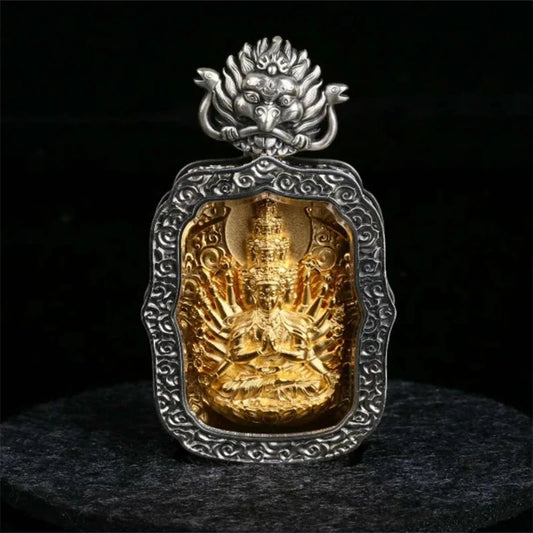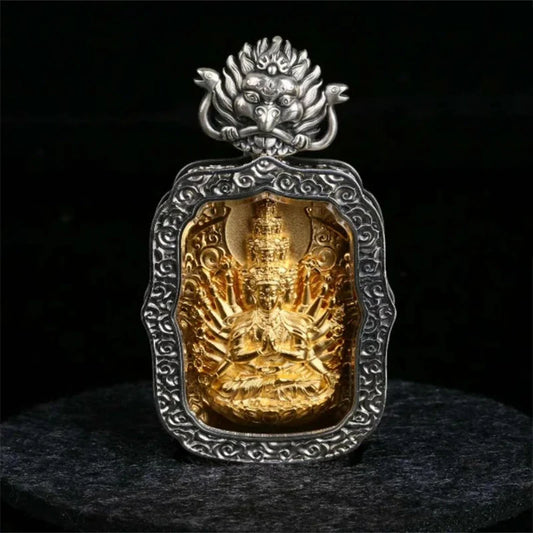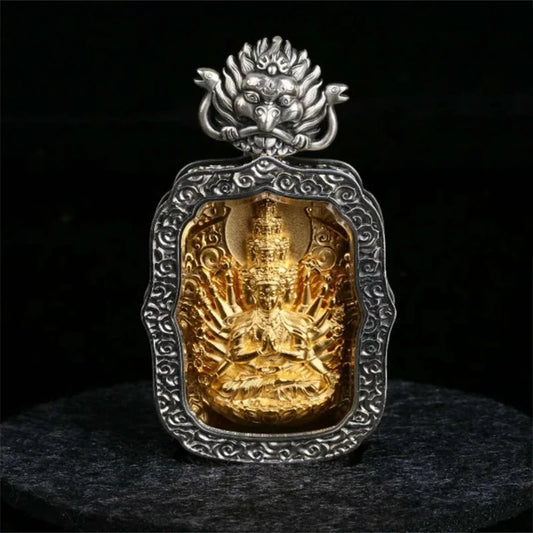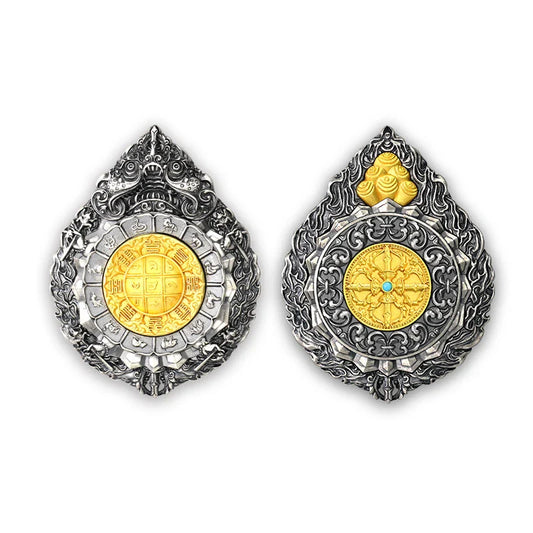
Tibetan Buddhist Green Tara Silver Thangka: A Threefold Analysis of Faith, Iconography, and Craftsmanship

In the spiritual universe of Tibetan Buddhism, thangkas are regarded as “visible Dharma.” They are not only visual art forms but also mediums for devotion and practice. Through intricate craftsmanship and the symbolic system of tantric rituals, thangkas embody the eternal presence of faith. This hand-painted Silver Thangka of Green Tara combines meticulous techniques of the Rebgong art tradition with the profound logic of Tibetan tantric iconography, exemplifying the harmonious coexistence of faith, art, and craftsmanship in Tibetan culture.
1. Theme: Feminine Manifestation of Avalokiteshvara’s Compassion and Swift Salvation
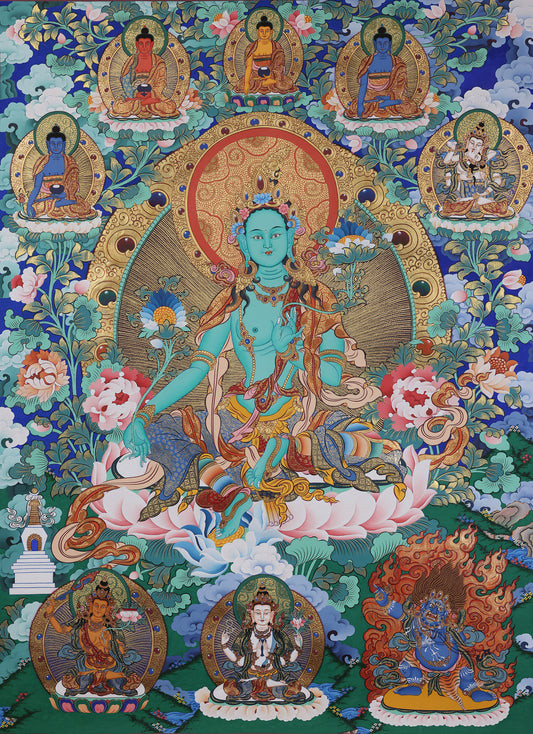
The core theme of this thangka is the “compassionate power of the Holy Mother who swiftly saves beings.” Green Tara (Sanskrit: Tara) is considered the embodiment of Avalokiteshvara’s “tears from the right eye” and is revered as the “Swift Mother of Salvation” in Tibetan Buddhism. She symbolizes the integration of wisdom and compassion in feminine form.
The worship of Green Tara inherits the Indian tantric tradition of the “Dharani Mother” while integrating local Tibetan female devotion, such as the belief that Princess Wencheng incarnated as Green Tara. This synthesis makes Green Tara a dual vehicle of worldly rescue and ultimate liberation.
From the tantric ritual perspective, this thangka is not merely an object of veneration but constructs a “field of salvation.” The main deity, Green Tara, represents the “core of aspirational power,” while the attendant deities symbolize the “support of merit.” Silver leaf and mineral pigments endow the field with permanence, allowing viewers to resonate spiritually with the deity, achieving wishes of protection, blessing, loving-kindness, and overcoming obstacles.
2. Main Deity Green Tara: Symbolism and Iconographic Codes
The central figure of Green Tara follows the strict standards of the Measurement Sutra of Iconography and the Tara Source Continuation Text, with each detail containing tantric significance:
-
Body and Color: Entirely emerald green, corresponding to the “Activity Section” of Tibetan Tantra (the color of Amoghasiddhi Buddha), symbolizing the removal of obstacles and the fulfillment of endeavors. Her youthful sixteen-year-old form represents the purity of Bodhicitta, and her exposed upper body embodies the unobstructed nature of Dharmakaya.
-
Posture and Mudras: Right leg extended in a “stepping lotus” posture and left leg crossed, forming the iconic half-lotus of Green Tara, symbolizing her readiness to rise and save beings at any moment. Right hand forms the “Abhaya Mudra” holding a blue utpala lotus, symbolizing fearless giving and protection, while the left hand forms the “Three Jewels Mudra” with thumb and ring finger touching, representing the union of wisdom and compassion. The lotus stem extends to her shoulder, illustrating the growth of Bodhicitta from aspiration to full enlightenment.
-
Ornaments and Aura: She wears a crown of Five Buddhas (forehead, crown, ears, back of neck), symbolizing the integration of wisdom from the five directions. Her body is adorned with Eight Auspicious Symbols necklaces, and flowing ribbons enhance the Rebgong aesthetic of dynamic beauty, also alluding to liberation from attachment and affliction. The halo appears as a concentric rainbow circle, and the body aura is engraved with silver filigree vines, symbolizing the eternal growth of Bodhicitta, creating a hierarchical visual sacredness.
3. Attendant Deities: Lineage and Merit Matrix
The thangka features attendant deities in an organized matrix around the central deity, forming a “main deity – attendants” merit network:
-
Upper Deities: Symbol of Lineage
Two seated Buddhas at the top represent Amitabha and the Longevity Buddha:-
Amitabha (left): Supreme Buddha of the Western Pure Land, the source of Avalokiteshvara’s lineage, symbolizing ultimate wishes for blissful rebirth.
-
Longevity Buddha (right): Red-colored, holding a longevity vase, representing Green Tara’s merit of prolonged life and blessings, integrating worldly wisdom and future bliss.
-
-
Lower Attendants: Merit Extension
Two female figures at the bottom represent White Tara and the Goddess of Music:-
White Tara (left): Coexistent form of Green Tara, with seven eyes across forehead, hands, and feet, symbolizing observing all suffering, holding a vase and lotus, representing protection and blessing, and revered by Tibetan female devotees.
-
Goddess of Music (right): Adorned with string instruments, symbolizing wisdom and artistic blessings, protector of scholars and artists, adding worldly merit to the thangka’s spiritual significance.
-
-
Background Elements
Engraved clouds, intertwining lotus vines, and flames represent emptiness, Bodhicitta growth, and subduing obstacles, transforming the composition into a sacred space beyond the mundane.
4. Craftsmanship: The Pinnacle of Rebgong Silver Thangka Art
This thangka exemplifies Rebgong silver leaf engraving, representing the pinnacle of Tibetan painting:
-
Base Preparation: Cotton canvas is soaked in cowhide glue (aged 5+ years), stretched, coated with white clay and bone glue mixture, and polished ten times with agate stones, creating a smooth, color-absorbing surface, durable for centuries.
-
Silver Leaf Engraving: Pure silver leaf, 0.12 μm thick, hammered over 2,000 times, then engraved with agate tools (~300 strokes per square centimeter), filled with mineral pigments: malachite green, cinnabar red (detoxified), and Afghan lapis lazuli blue. The metallic luster and muted pigments create cold-warm contrast with layered visual depth.
-
Gold Line Detailing and “Eye Opening”: Fine lines (0.15mm ±0.02mm) painted with 24K gold powder represent flowing clothing and dynamic form. The eye-opening ritual, performed on an auspicious day by a master artist with 500+ strokes per eye, infuses the image with spiritual vitality, making the thangka a “living Green Tara.”
5. Cultural Value: The Symbiosis of Faith, Art, and Heritage
The Green Tara Silver Thangka embodies three overlapping values:
-
Faith Dimension: It is a portable shrine, allowing devotees to meditate on Green Tara’s compassionate presence and align mind with the deity.
-
Artistic Dimension: A masterpiece of Rebgong fine art, combining the hardness of silver leaf with the softness of pigments, solemnity with fluidity.
-
Heritage Dimension: With high-quality mineral pigments like lapis lazuli becoming scarce, and Rebgong master-apprentice lineages challenged by modern markets, this hand-painted thangka is a living relic of traditional craftsmanship and a reminder of the need to preserve intangible cultural heritage.
#GreenTara #TibetanBuddhism #SilverThangka #HandPaintedThangka #RebgongArt #BuddhistArt #SpiritualArt #MeditationTool #FaithAndArt #IntangibleCulturalHeritage #TibetanArt #Bodhisattva #CompassionAndWisdom #ReligiousArt #CollectibleThangka
Schlagwörter:
Vorherige
Tibetan Buddhist Green Tara Silver Thangka: An In-Depth Analysis of Theme, Deities, and Regong Craftsmanship
Nächste
Vaishravana in Tibetan Buddhism: The Cultural Code of a Protector Deity Turned Wealth Guardian