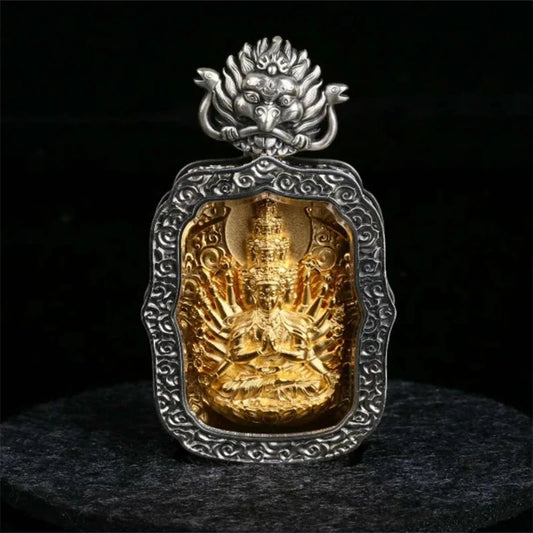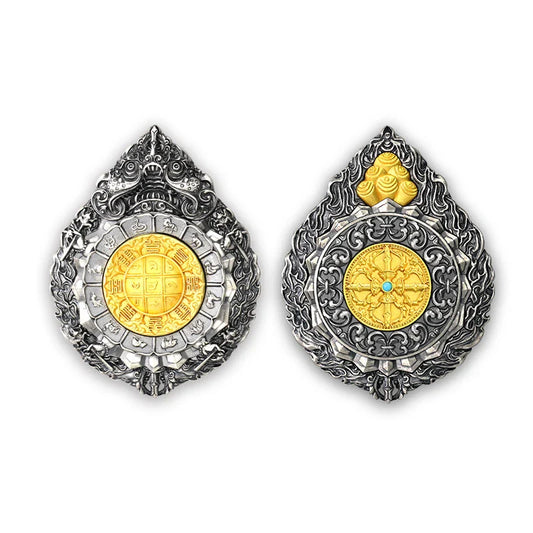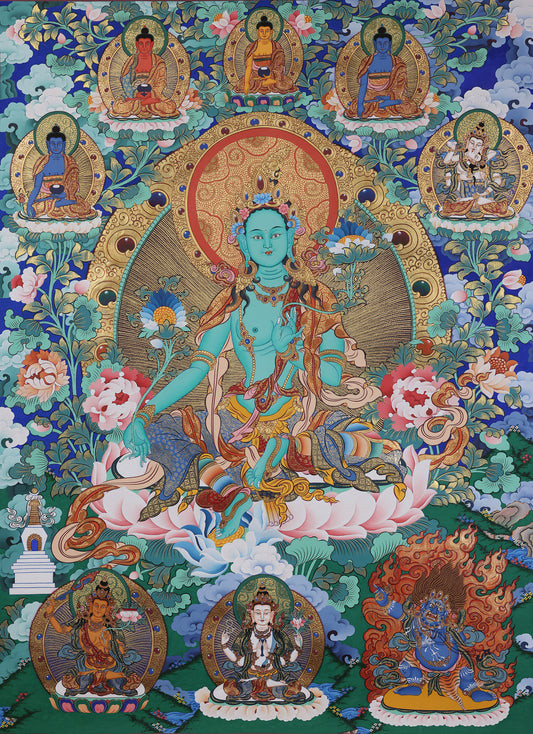
Hand-Painted Four-Armed Avalokiteshvara Compassion Mandala Thangka A Spiritual Symbiosis of Tibetan Esoteric Faith and the Regong Artistic Tradition

Within the artistic system of Tibetan Buddhism, a thangka is far more than a religious painting. It is a sacred visual mandala—a spiritual space in which practitioners can stabilize the mind, cultivate devotion, and engage in contemplative practice. Among all thangka subjects, depictions of Avalokiteshvara (Chenrezig), the embodiment of compassion, hold a uniquely central place.
This hand-painted Four-Armed Avalokiteshvara Compassion Mandala Thangka, created in the traditional Regong style, represents a profound synthesis of Tibetan Buddhist doctrine, ritual symbolism, and refined craftsmanship. It serves simultaneously as a sacred visualization support for practitioners and as a tangible expression of the Tibetan cultural principle that faith and art exist in mutual interdependence.
I. The Core Theme: A Compassion-Centered System of Esoteric Practice
The essential theme of this thangka can be understood as “the compassionate vow-power of Four-Armed Avalokiteshvara and the complete network of spiritual protection.”
In Tibetan Buddhism, Four-Armed Avalokiteshvara is revered as the “Protector of the Snow Land,” a personification of boundless compassion and the collective essence of all Buddhas’ mercy. Depicting Avalokiteshvara as the central deity, accompanied by attendant figures, protectors, and auspicious symbols, is not merely a decorative choice. Rather, it constructs a ritual mandala structured around compassion, supported by wisdom, merit, and protective forces.
This compositional structure follows the tantric logic of “main deity, retinue, and guardians,” while simultaneously addressing practitioners’ real-world aspirations—freedom from suffering, mental stability, and harmonious external conditions.
From a doctrinal perspective, the theme carries three interconnected layers of meaning:
-
The Symbolism of the Four Arms
The four arms correspond to the four enlightened activities in Vajrayana Buddhism—pacifying suffering, increasing merit, magnetizing beings, and subduing inner obstacles. Together, they signify compassion that responds skillfully to every condition of sentient beings. -
The Mandala-Based Spatial Order
With the main deity at the center and supporting figures arranged harmoniously around him, the thangka visually expresses a path of practice in which the practitioner anchors the mind in the deity while relying on supportive conditions. -
The Thangka as a Visualization Tool
In Tibetan esoteric practice, thangkas function as aids for visualization. Through focused contemplation of the image, practitioners align their inner awareness with the compassionate vow of Avalokiteshvara—embodying the principle of “using form to reveal the Dharma.”
II. The Central Deity: A Ritualized Image of Compassion and Purity
At the center of the composition sits Four-Armed Avalokiteshvara (known in Tibetan as Chenrezig), depicted strictly in accordance with the Iconometric Treatises and traditional Avalokiteshvara sadhanas. Every visual element is a precise translation of Buddhist doctrine.
1. Body Color and Crown Symbolism
The deity’s body is rendered in luminous white, like moonlight, symbolizing innate purity and freedom from mental defilements. This whiteness is achieved through layered shading rather than flat pigment, giving the figure a soft, radiant presence that reflects compassionate serenity.
He wears a five-Buddha crown, representing the wisdom of the Five Dhyani Buddhas. This signifies that Avalokiteshvara’s compassion arises from awakened wisdom, not emotional attachment. At the crown’s center rests Amitabha Buddha, Avalokiteshvara’s root teacher, pointing to the Pure Land lineage and the aspiration for rebirth in Sukhavati through compassionate practice.
2. Hand Gestures and Sacred Implements
-
Central hands holding the wish-fulfilling jewel symbolize the union of wisdom and skillful means.
-
The upper right hand holding a crystal mala represents ceaseless compassionate activity, rescuing beings from cyclic existence one by one.
-
The upper left hand holding an eight-petaled white lotus signifies purity untouched by worldly defilements, embodying compassion that remains unstained by suffering.
3. Posture and Lotus-Moon Seat
Seated in vajra posture upon a thousand-petaled lotus and moon disc, Avalokiteshvara embodies unwavering meditative stability. The lotus signifies transcendence over samsaric suffering, while the moon disc represents cooling compassion that soothes the burning afflictions of sentient beings.
III. Attendant Deities and Auspicious Elements: A Complete Network of Compassionate Protection
Surrounding the central deity is a carefully structured ensemble of enlightened figures, forming a complete mandala of protection and support.
1. Upper Deities: Lineage and Vow Continuity
At the top appear Amitabha Buddha, White Tara, and Green Tara. Amitabha establishes the lineage source, while the two Taras—emanations of Avalokiteshvara’s tears—extend his compassionate activity into longevity, healing, swift assistance, and enlightened action.
2. Lower Protectors: Merit and Obstacle Removal
Below appear Yellow Jambhala and a wrathful protector deity. Yellow Jambhala represents the accumulation of merit and material support for spiritual practice, while the wrathful protector embodies the forceful removal of inner and outer obstacles. Together, they balance compassion with wisdom-driven power.
3. Decorative Motifs as Doctrinal Language
Unfading lotus scrolls symbolize unceasing compassion, verdant foliage reflects life-sustaining vitality, and blue-and-gold clouds signify the union of pure space and radiant merit. These elements function not as ornamentation, but as visual expressions of Buddhist teachings.
IV. Regong Hand-Painted Craftsmanship: The Union of Ritual Precision and Artistic Excellence
This thangka is a masterwork of the Regong tradition, where artistic creation itself is regarded as a form of spiritual discipline.
From the preparation of aged cotton canvas, to precise iconometric drafting, to the use of natural mineral pigments and 24K gold line work, each step follows strict ritual protocols. The final “eye-opening” ceremony is performed with focused meditation, aligning the image with sacred intention and ritual empowerment.
Conclusion: A Living Vessel of Compassion
The Hand-Painted Four-Armed Avalokiteshvara Compassion Mandala Thangka is not merely a religious artwork. It is a multidimensional embodiment of Tibetan Buddhist compassion—where iconography, ritual structure, and craftsmanship converge.
As an object of meditation, it supports inner transformation. As a cultural artifact, it preserves the Tibetan tradition of expressing faith through art. To contemplate this thangka is to encounter the Tibetan spiritual ideal: meeting suffering with compassion, and transcending affliction through wisdom.
#FourArmedAvalokiteshvara
#ChenrezigThangka
#CompassionMandala
#TibetanBuddhistArt
#HandPaintedThangka
#RegongThangka
#Avalokiteshvara
#BodhisattvaThangka
#TibetanBuddhism
#SacredBuddhistArt
#MeditationThangka
#TantricMandala
#BuddhistCompassion
#SpiritualArt
#HimalayanArt
Schlagwörter:
Vorherige
Hand-Painted Four-Armed Avalokiteshvara Mandala Thangka The Spiritual Essence of Tibetan Compassion and Regong Sacred Art
Nächste
Tibetan Buddhist Green Tara Silver Thangka: An In-Depth Analysis of Theme, Deities, and Regong Craftsmanship