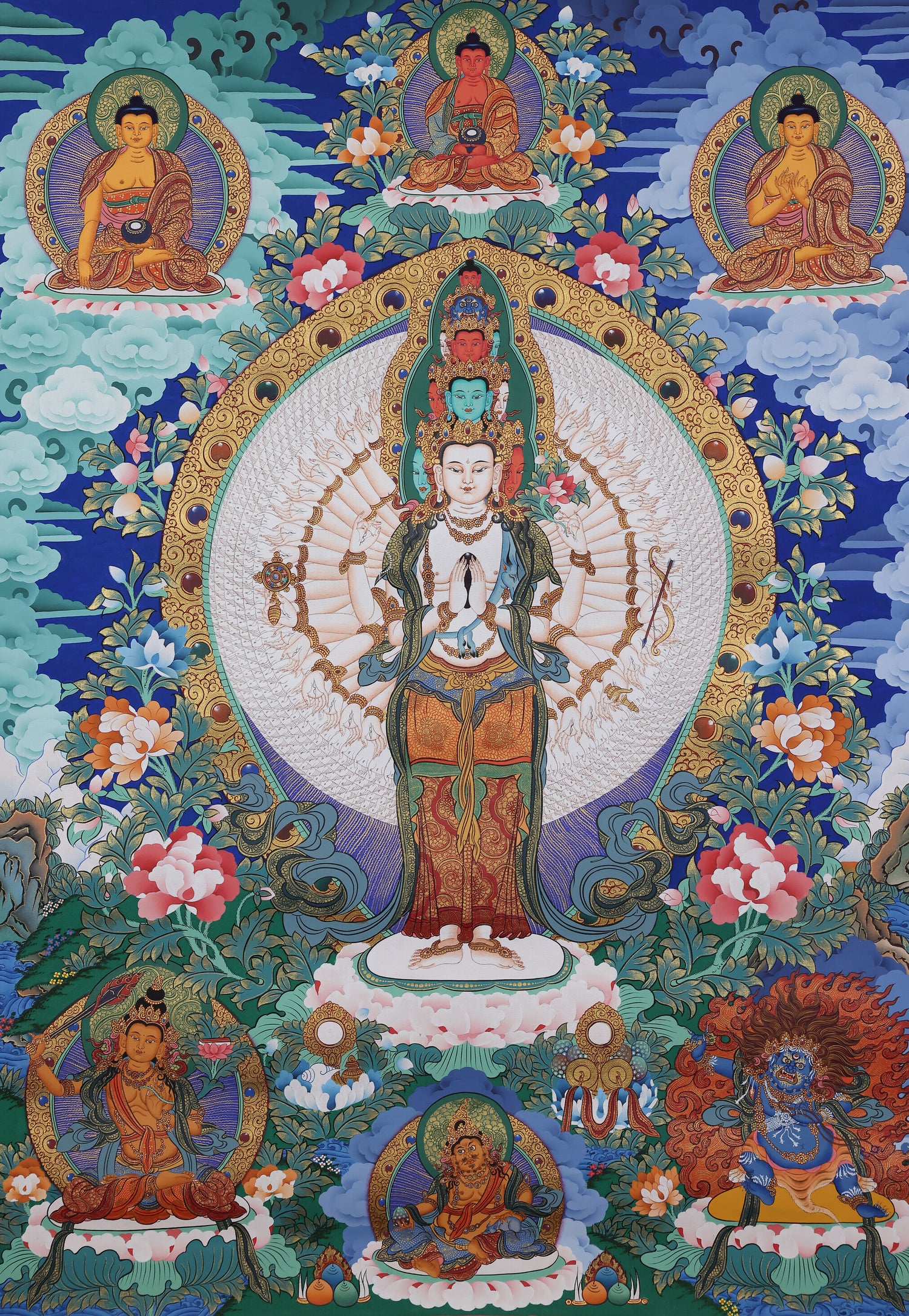
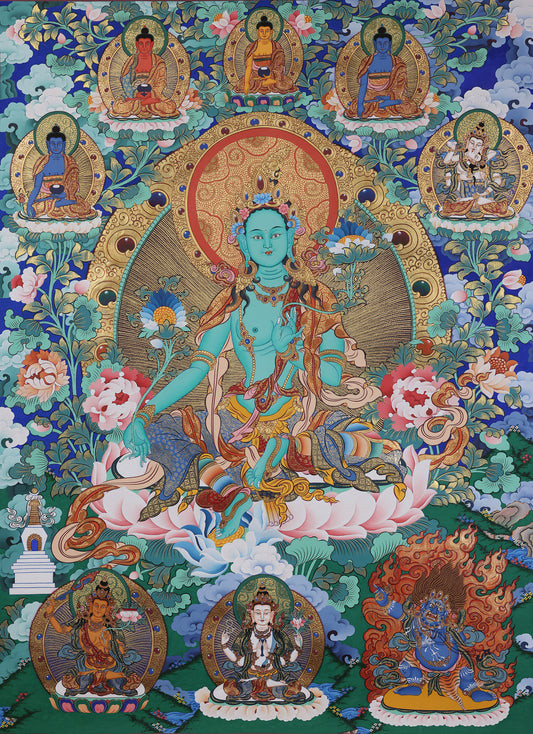
In the spiritual universe of Tibetan Buddhism, Thangkas are often referred to as “portable Buddhist temples”. They are not only visual carriers of Buddhist teachings but also the perfect fusion of faith and art. This hand-painted Thangka centers on the theme of “Shakyamuni Buddha’s Enlightenment and Transmission of Teachings”, integrating the iconographic rituals, symbolic system, and exquisite craftsmanship of the Qinghai Rebgong (Mentang) painting school. It is a representative contemporary Thangka that balances religious significance with aesthetic value.
1. Core Theme: Sacred Narrative of “Enlightenment and Protection”
The theme of a Thangka is never a mere collection of images; it is a visual representation of complete religious logic. The central theme of this Thangka is Shakyamuni Buddha’s fundamental teachings and the protective support of attendant deities, following the Tibetan Buddhist “Three-Level System”: Principal Deity – Attendants – Dharma Realm.
-
Central Narrative: The principal deity, Shakyamuni Buddha, is depicted in the “Enlightened Form,” symbolizing the fundamental awakening of Buddhism.
-
Spatial Narrative: The Buddhas above represent the “perfection of the Dharma Realm,” while the disciples and offerings below signify the “transmission of teachings in the human world.”
-
Spiritual Narrative: Through lotus throne, halo, and ritual implements, the Thangka illustrates the cycle of “Affliction → Enlightenment → Protection.”
This thematic structure aligns with the ritual requirements of the Sutra on Measurements for Iconography—“principal deity as core, attendants as auxiliary”—and reflects the fundamental Tibetan Buddhist faith of taking refuge in the Three Jewels (Buddha, Dharma, Sangha).
2. Principal Deity: Shakyamuni Buddha’s “Enlightened Form” and Symbolism
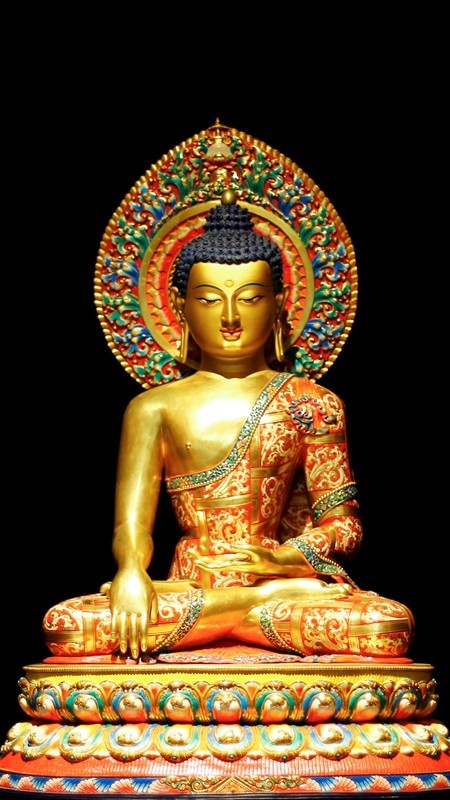
The central figure is Shakyamuni Buddha (Sanskrit: Gautama Siddhartha), depicted according to the Sutra on Measurements for Iconography’s “Eight-Foot Golden Body” standard. Every detail carries profound religious meaning.
Physical Features
-
Skin Tone: Saffron-gold, representing one of the “Thirty-two Marks of a Buddha,” symbolizing transcendence and sacredness.
-
Head Features: Right-twisted ushnisha and urna (white tuft of hair between eyebrows), signifying wisdom and perfect compassion.
Mudras and Ritual Implements
-
Right Hand: Bhumisparsha Mudra (“Earth-Touching”): Symbolizes conquering the forces of ignorance at enlightenment.
-
Left Hand: Dhyana Mudra (Meditation Gesture): Holding a bowl of nectar, symbolizing the Dharma as sweet and purifying for sentient beings.
Lotus Throne and Halo
-
Lotus Throne: A thousand-petal red lotus, representing purity in the midst of worldly defilement.
-
Halo: Inner radiating gold lines symbolize the Buddha’s illuminating wisdom, while the outer lotus-and-vine gold foil design reflects the perfection of the Dharma Realm and the ornate style of the Rebgong painting school.
3. Attendant Deities: Visual Representation of the Dharma Realm
Attendant deities are not merely decorative; they are key elements in the “Dharma Protection System.”
Buddhas Above
-
Left Blue Buddha: Medicine Buddha or Amoghasiddhi, symbolizing health, longevity, and protection from suffering.
-
Center Red Buddha: Amitabha Buddha, representing compassion and guiding beings to the Pure Land.
-
Right Light-Yellow Buddha: Dipankara Buddha (Past Buddha), symbolizing the historical continuity of Buddhist teachings.
These Buddhas illustrate the timeless nature of the Dharma Realm, emphasizing that Shakyamuni Buddha’s teachings embody universal perfection.
Disciples Below
Two monks flanking the principal deity are Buddha’s main disciples:
-
Shariputra (wisdom foremost): Holding a staff and alms bowl, symbolizing propagation of teachings through wisdom.
-
Maudgalyayana (supernatural powers foremost): Holding a bowl, symbolizing protection of the Dharma through spiritual abilities.
This layout completes the “Buddha (awakened one) – Sangha (transmitter)” chain of faith, consistent with Tibetan Buddhist monastic traditions.
Offerings and Symbols
-
Treasure Mirror, Fruit Plate, Conch Shell: Represent the “Five Senses of Delight,” transforming worldly offerings into causes for enlightenment.
-
Eight Auspicious Symbols: Such as double fish and dharma wheel, signify blessings and perfection of the teachings.
4. Painting Craftsmanship: Devotion and Precision of the Rebgong School
This Thangka is a hand-painted masterpiece from the Qinghai Rebgong (Mentang branch), combining traditional ritual observance with contemporary aesthetic refinement. Its production involves five key stages:
1. Canvas Preparation
-
Fine cotton fabric is stretched, coated with glue, and polished.
-
Bone glue mixed with chalk is repeatedly applied to achieve a smooth surface, symbolizing purification and preparation for sacred art.
-
This process takes 3-5 days, reflecting the principle of “slow work produces exquisite results.”
2. Preliminary Sketch
-
Drawn according to the “Three Courts and Five Eyes” method, ensuring the principal deity is perfectly centered.
-
Proportions of body, mudras, and implements are accurate within 1 mm, reflecting the belief that correct iconography brings spiritual blessing.
3. Coloring
-
Mineral Pigments: The saffron-gold of the Buddha is made from real minerals; blues and greens are layered for jewel-like brilliance.
-
Gradation Techniques: Clothing folds are shaded with gradient effects, enhancing depth while retaining the traditional flat Tibetan style.
4. Gold Detailing
-
Lotus vine halo is created using gold leaf and engraving, producing shimmering textures.
-
Details on the ushnisha and implements use gold paint mixed with glue, highlighting sacredness and devotional offering.
5. Eye-Opening Ceremony and Mounting
-
Eye-Opening: The artist, after purification and recitation, paints the pupils, transforming the Thangka from a mere image into a sacred vessel.
-
Mounting: Traditional silk borders and top-bottom rods allow hanging, maintaining the “portable temple” function.
5. Cultural Value: Faith and Art in One
The value of this Thangka lies in its dual role as a religious instrument and art treasure:
-
Religious Dimension: Visualizes taking refuge in the Three Jewels and following the Dharma; meditating on the principal deity and attendants brings blessings of awakening.
-
Artistic Dimension: Reflects the Rebgong School’s precision, richness, and adherence to ritual, combining tradition with contemporary artistic innovation.
-
Cultural Dimension: Embodies the Tibetan Buddhist principle of “expressing faith through art,” where every detail transforms belief into aesthetic experience.
6. Suitable Uses and Collectibility
This Shakyamuni Buddha Thangka is suitable for religious devotion, meditation, high-end home décor, or art collection. It enhances spiritual practice while adding cultural and aesthetic depth to any space.
-
Personal Practice: Meditation, visualization, devotional offering
-
Home or Office Decoration: Adds artistic and cultural atmosphere
-
Collectible Investment: Hand-painted with mineral pigments and gold leaf, combining religious and artistic value
7. Conclusion
This hand-painted Shakyamuni Buddha Thangka, centered on Enlightenment and Protection, embodies iconographic precision, attendant systems, and the exquisite craftsmanship of the Rebgong School. It is both a tangible expression of Tibetan Buddhist faith and a masterpiece of fine art, making it an invaluable treasure for believers and collectors alike. Every brushstroke, color, and gold embellishment reflects devotion and deep cultural understanding.
#ShakyamuniBuddha #BuddhistThangka #TibetanBuddhism #HandPaintedThangka #RebgongArt #SpiritualArt #MeditationArt #BuddhaWallArt #BuddhistDecor #SacredArt #Enlightenment #DharmaProtection #TibetanArt #GoldLeafThangka #CollectorThangka