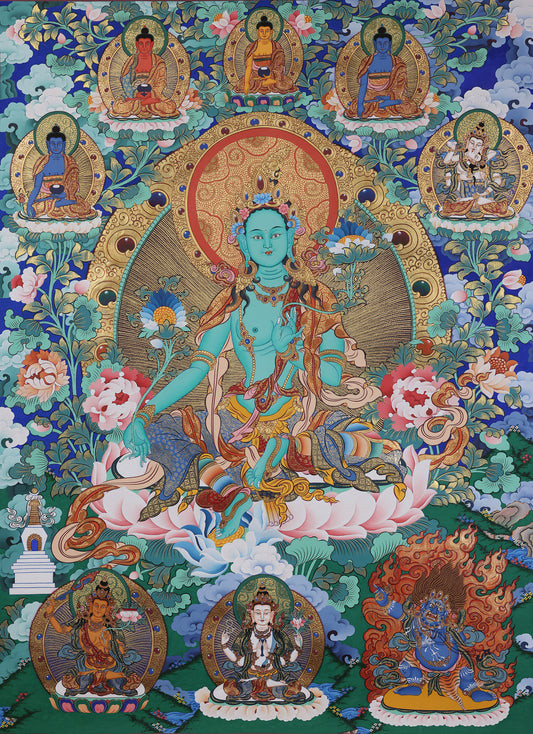
Hand-Painted Tibetan Buddhist Yellow Jambhala Thangka Decoding the Sacred Art of Wealth and Spiritual Protection

Within the visual and ritual system of Tibetan Buddhism, Yellow Jambhala Thangka paintings occupy a uniquely important position. Far beyond a decorative image associated with material gain, a Yellow Jambhala Thangka represents a complete spiritual framework—one that integrates material stability, ethical wealth, and the path toward liberation.
In Tibetan Buddhist tradition, Yellow Jambhala is not a worldly “god of money,” but a Vajrayana wealth deity whose vow is to relieve poverty, protect sincere practitioners, and transform material resources into spiritual support. This article explores the deeper religious meaning and artistic structure of a purely hand-painted Yellow Jambhala Thangka, examining its mandala composition, iconography, retinue deities, and the symbolic craftsmanship of Rebgong Thangka art.
I. The Central Theme: The Mandala of Wealth Protection Led by Yellow Jambhala
The core theme of this thangka is a Wealth-Protecting Mandala with Yellow Jambhala as the principal deity. In Tibetan Buddhism, a mandala is not merely an artistic layout—it is a visual map of enlightenment, illustrating how awakened wisdom manifests within the worldly realm.
Historically, the Tibetan plateau faced harsh environmental conditions and material scarcity. As a result, Tibetan Buddhism did not deny material needs but instead integrated them into the spiritual path. Yellow Jambhala (Tibetan: Dzambhala) emerged as the chief deity among the Five Wealth Jambhalas, embodying the principle that:
-
Wealth can eliminate fear and material insecurity
-
Prosperity should support Dharma practice
-
Material abundance must be guided by compassion and merit
Thus, this thangka does not promote greed. Instead, its mandala structure teaches that true prosperity arises when wealth is ethically cultivated and used to benefit others—a harmony between worldly accomplishment and ultimate liberation.
II. The Principal Deity: Iconography and Vajrayana Symbolism of Yellow Jambhala
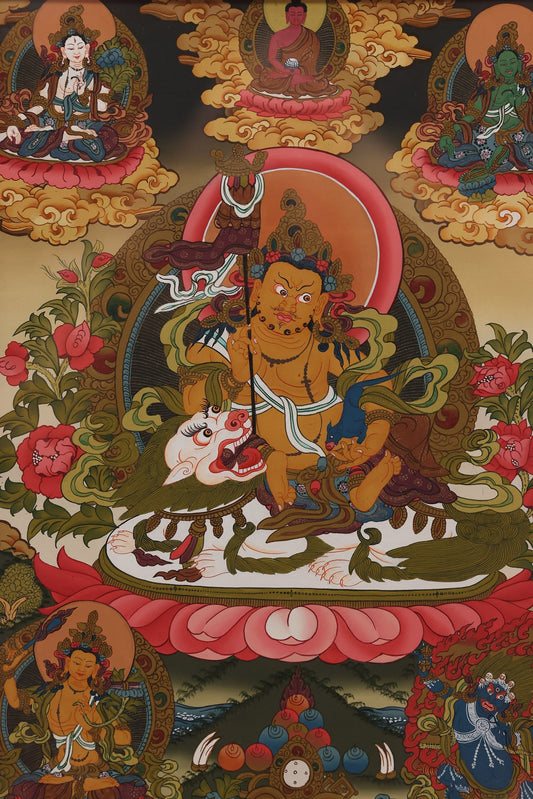
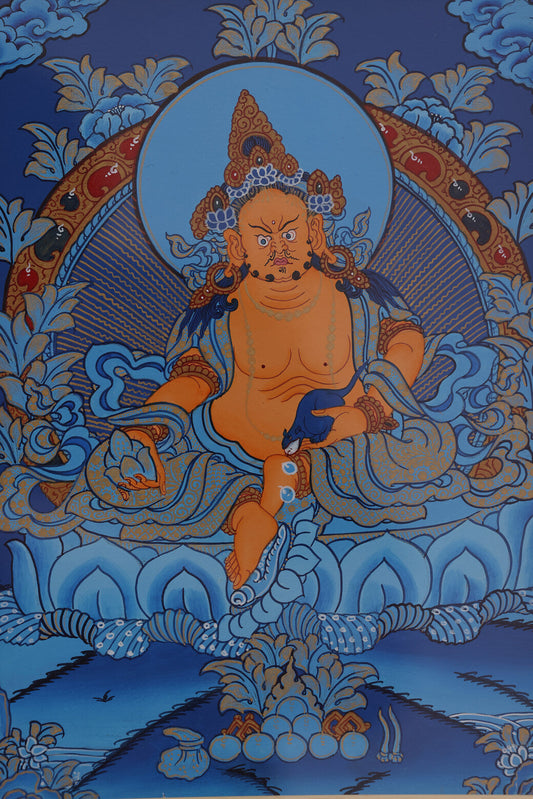
At the center of the composition sits Yellow Jambhala, rendered in strict accordance with traditional ritual manuals. Every visual detail conveys both protective power and compassionate generosity.
1. Physical Form and Color Symbolism
Yellow Jambhala’s body radiates a rich golden-yellow hue, symbolizing luminous wealth, stability, and abundance. His robust physique reflects not indulgence, but the Vajrayana concept of inherent completeness and perfected merit.
He wears a five-leaf jeweled crown, large earrings, and layers of precious ornaments. These adornments are not displays of luxury, but visual metaphors for accumulated virtue and spiritual richness—aligned with Tibetan aesthetic ideals of fullness and harmony.
2. Facial Expression: Power Balanced with Compassion
Yellow Jambhala’s expression is slightly wrathful, his gaze intense yet controlled. This conveys his ability to destroy karmic causes of poverty and obstacles to prosperity. At the same time, the gentle curve of his brows and lips reveals his compassionate intention to protect sentient beings. This union of wrath and mercy is a hallmark of Tibetan Buddhist deity imagery.
3. Mudras and Sacred Attributes
-
Right hand in the gesture of generosity and fearlessness, relieving beings from anxiety caused by lack
-
Left hand holding the jewel-spitting mongoose (Nyule)—a defining symbol of Yellow Jambhala, representing the inexhaustible flow of wealth through generosity
The jewel-spitting mongoose distinguishes Buddhist wealth deities from worldly gods: wealth is something to be given, not possessed.
III. Retinue Deities: A Complete System of Wealth Protection
This thangka presents a fully developed mandala hierarchy of principal deity, attendants, and protectors, illustrating a comprehensive system of wealth cultivation and safeguarding.
1. Upper Register: Lineage Masters and the Five Jambhalas
At the top center appears the lineage master—often Padmasambhava—emphasizing the Vajrayana principle that blessings flow through authentic transmission. Without lineage, wealth practice lacks spiritual grounding.
Flanking figures represent the remaining Wealth Jambhalas, corresponding to the five directions and elements. Together, they ensure holistic prosperity for beings of diverse karmic conditions.
2. Lower Register: Protectors and Attendants
-
Wrathful protectors (such as Black Jambhala) destroy obstacles, karmic debt, and negative interferences
-
Beneficent attendants, like Sudhana or Sarasvati, symbolize wise use of wealth and accumulation of merit
-
Treasure mounds and jewel vases at the base visually manifest the blessings of abundance
This structure teaches that wealth must be protected, purified, and ethically directed.
IV. Rebgong Thangka Craftsmanship: Minerals, Gold, and the Symbolism of Permanence
This thangka is created in the traditional Rebgong (Amdo) Thangka style, where craftsmanship itself becomes spiritual expression.
1. Canvas Preparation and Sacred Proportions
A pure cotton canvas is treated with bone glue and mineral gesso, then polished until mirror-smooth—symbolizing stability and longevity. The initial drawing strictly follows classical iconometric texts, ensuring cosmic order and visual harmony.
2. Mineral Pigments as Symbols of True Wealth
All colors are derived from natural minerals and precious substances:
-
Yellow from orpiment and gold powder: luminous wealth
-
Blue from lapis lazuli: purity and clarity
-
Red from cinnabar or coral: vitality and merit
These rare, enduring materials reflect the Buddhist view that authentic wealth is precious, stable, and cultivated over time.
3. 24K Gold Techniques
The use of gilding, gold outlining, and gold engraving brings the deity’s blessings into tangible form. The jewel held by the mongoose is delicately highlighted in gold, symbolizing continuous generosity and inexhaustible prosperity.
Conclusion: Wealth as a Support for the Dharma
This hand-painted Yellow Jambhala Thangka is not merely a painting for prosperity wishes. It embodies a central Vajrayana insight:
Worldly success gains meaning only when it supports spiritual awakening.
In Tibetan culture, such a thangka serves as a sacred object in home shrines, a contemplative aid for practitioners, and a bridge between daily life and the Dharma. Through its imagery, materials, and lineage-based symbolism, it teaches that wealth—when guided by wisdom and compassion—becomes a powerful force for both personal growth and collective benefit.
#YellowJambhala
#TibetanBuddhistThangka
#WealthDeityThangka
#VajrayanaArt
#BuddhistMandala
#SacredBuddhistArt
#HandPaintedThangka
#RebgongThangka
#MineralPigmentArt
#GoldLeafThangka
#SpiritualProsperity
#BuddhistWealthPractice
#HomeShrineArt
#MeditationArtwork
#CollectibleThangka
Etiquetas:
Anterior
Hand-Painted Tibetan Buddhist Mahavairocana Thangka: Mandala of the Dharmadhatu and Artistic Decoding
Próximo
Yellow Jambhala Thangka: Cultural Significance and Artistic Craftsmanship in Tibetan Buddhism