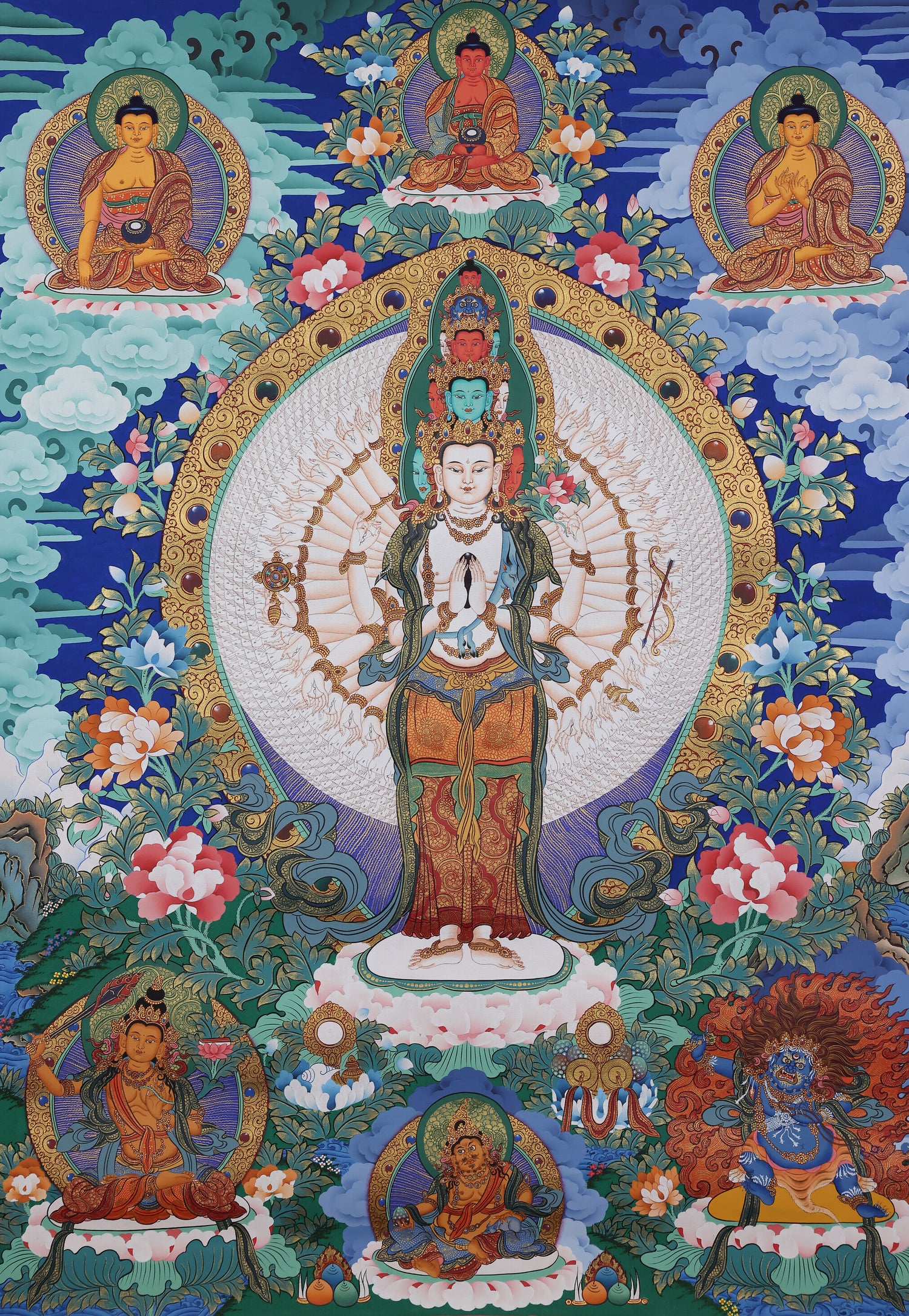
Tibetan Buddhist Yab-Yum Thangka: The Visual Secret of Compassion and Wisdom – Vajrasattva in Union with His Consort

$1,199.00 USD
Thangka Name: Vajrasattva
Size: 50cm*70cm
Orgin: Nepal
Eine Frage stellen

Beeil dich! Nur noch [Anzahl] auf Lager!

Geschätzte Lieferzeiten: 12–26 Tage (International), 3–6 Tage (USA).

Rückgabe innerhalb von 45 Tagen nach dem Kauf. Zölle und Steuern werden nicht erstattet.

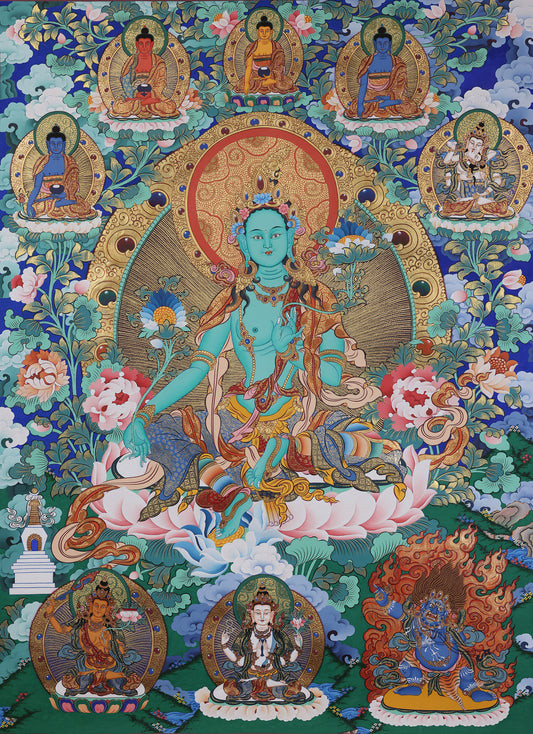
Hand-painted Tibetan Buddhist Vajrasattva thangka depicting the deity for purification and spiritual cleansing.
Tibetan Buddhist Yab-Yum Thangka: The Visual Secret of Compassion and Wisdom – Vajrasattva in Union with His Consort
$1,199.00 USD

In the visual system of Tibetan Buddhism’s Highest Yoga Tantra, the yab-yum (father-mother union) thangka represents the ultimate expression of “form revealing the Dharma.” Although it may appear as a worldly embrace, this sacred depiction encodes profound teachings on emptiness and great bliss. This hand-painted thangka portrays Vajrasattva (or Hevajra) in union with his consort, illustrating the union of compassion and wisdom. Its theme, iconography, and craftsmanship exemplify the materialization of tantric doctrines and demonstrate Tibetan Buddhist art’s highest ideal of “skill conveying the path.”


I. Core Theme: The Ultimate Expression of Compassion and Wisdom

At the heart of this thangka is the tantric principle of “union of bliss and emptiness”. In Highest Yoga Tantra, yab-yum does not represent mundane sexual union; rather, it symbolizes the inseparable integration of upāya (compassionate skillful means) and prajñā (wisdom).

  • The male deity (Vajrasattva) embodies compassion, capable of skillfully embracing sentient beings.

  • The female consort (Wisdom Dakini) embodies wisdom, illuminating the nature of emptiness and dispelling ignorance.

Their union is the visual manifestation of bodhi through non-duality, where joy and emptiness, compassion and wisdom, form a singular enlightened reality. Practitioners use this thangka for contemplation, internalizing the principle that “defilements are enlightenment, samsara is nirvana”. Every duality—male/female, compassion/wisdom, pleasure/emptiness—is shown as a single field of dharmic truth.

This artwork is intended for advanced practitioners of esoteric tantra, not merely for general devotional use, as it conveys subtle symbolic layers that require corresponding spiritual capacity to comprehend.


II. The Deities: Tantric Iconography and Symbolic Codes

The principal deity is Vajrasattva in a serene form, often depicted with four or six arms (sometimes two), in union with his consort. Every element adheres strictly to the Iconometric Scriptures and tantric ritual prescriptions:

1. Body Color and Attributes

  • The male deity’s body is white or saffron, symbolizing purity and freedom from defilement.

  • Four arms hold: vajra, bell, nectar bowl, and lotus:

    • Vajra: indestructible compassion and skillful means.

    • Bell: omnipresent wisdom.

    • Both entwined with the consort at the waist, symbolizing the union of compassion and wisdom.

    • Nectar bowl and lotus: purification of afflictions and nourishment of beings.

2. Female Consort (Wisdom Dakini)

  • The consort’s colors complement the male deity, and her upward gaze toward Vajrasattva represents the tantric metaphor: wisdom infused with compassion.

  • Her gestures mirror the deity’s, signifying inseparable origin of wisdom and skillful means.

  • Her seated position entwined around the deity’s waist on a lotus throne symbolizes realization amidst samsara.

3. Posture and Lotus Throne

  • Vajrasattva sits in half or full lotus on a multi-tiered lotus.

  • The eight-petaled lotus represents the Eightfold Path, the moon wheel symbolizes transcendence beyond duality.

  • Beneath the throne, ocean wave motifs and treasure piles signify transformation of defilements into merit and ignorance into wisdom.


III. Retinue Deities and Hidden Blessing System

This thangka subtly integrates attendant deities into the background, following the tantric principle of “main deity as core, retinues as assistants.”

  • Background motifs: Eight Auspicious Symbols (wheel, umbrella, vase, etc.) and Seven Treasures are symbolic, representing blessings of the deity’s retinue—guardian deities and treasure deities.

  • Flowing clouds symbolize dharmapalas (protective spirits), omnipresent yet invisible.

  • Seed syllables (“Om Ah Hum”) along the border represent the unity of body, speech, and mind in tantric practice.

  • Subtle depictions of offering goddesses express the principle of non-duality between worldly offerings and spiritual wisdom.


IV. Craftsmanship: A Meditation in Creation

This thangka follows the traditional techniques of the Men Tang (or Rebgong) school, where painting itself is a meditative and devotional practice:

1. Canvas and Pigments

  • High-altitude Tibetan cotton canvas, stretched and coated with yak glue and chalk, polished to mirror-like smoothness—symbolizing purified mind.

  • Pigments are natural minerals and plants:

    • White: white conch powder (purity)

    • Saffron: orpiment (merit accumulation)

    • Red: cinnabar (transformation of anger)

  • Gold: 24K gold leaf ground for 36 hours and mixed with 5-year-aged yak glue—symbolizing imperishable Dharma.

2. Line Work and Shading

  • Iron-line technique: extremely fine lines for clothing folds, conveying both elegance and dignity.

  • Thirty-two color gradient shading on the consort’s face: layered pigments create a natural 3D effect, symbolizing inseparability of compassion and wisdom.

  • Raised-gold technique: embossed lines catch light differently, representing wisdom manifesting according to practitioners’ capacity.

3. Facial Painting and Consecration

  • The “opening of the face” is a sacred ritual. The artist bathes, recites mantras, and meditates on the deity for three days before painting.

  • Precise proportions of three courts and five eyes are observed (error < 0.5 mm).

  • After painting, a high lama recites the Vajrasattva mantra and applies a hand seal on the back, consecrating the thangka as a spiritual support for visualization practice.


V. Cultural Significance: From Esoteric Tool to Cross-Cultural Symbol

This yab-yum thangka embodies the Highest Yoga Tantra principle of “enlightenment in the body” and Tibet’s philosophical integration of dualities into non-duality:

  • Bön to Buddhism: The duality motif integrates the Bön cosmological principle of black-white duality while the Buddhist view of emptiness resolves it.

  • From meditation tool to art: While originally meant solely for tantric visualization, contemporary hand-painted thangkas now serve as a window for cross-cultural understanding of tantric philosophy.

Through its exquisite craftsmanship, the thangka constructs a spiritual space where compassion and wisdom are inseparable:

  • The deity-consort embrace embodies “afflictions are enlightenment”.

  • Natural mineral pigments symbolize the unchanging nature of Dharma.

  • Every gold line and detail manifests skill conveying the path, making this thangka both a sacred object and a masterful work of Tibetan art.


This hand-painted Vajrasattva yab-yum thangka is perfect for:

  • Advanced practitioners seeking a meditation and visualization support

  • Collectors of Himalayan sacred art

  • Cultural institutions or boutique stores emphasizing authentic Tibetan Buddhist craftsmanship

  • Home or shrine spaces for devotional practice or aesthetic appreciation

It represents the profound teaching of Highest Yoga Tantra, the union of compassion and wisdom, and the living tradition of Tibetan Buddhist artistry.


#TibetanBuddhism
#VajrasattvaThangka
#YabYumThangka
#TantricArt
#HighestYogaTantra
#HandPaintedThangka
#HimalayanBuddhistArt
#EsotericBuddhism
#BodhisattvaArt
#SacredIconography
#MeditationArt
#TantricVisualization
#SpiritualArt
#RebgongThangka
#CompassionAndWisdom
Entdecken Sie das perfekte tibetisch-buddhistische Thangka, das zu Ihren Wünschen, Ihrem Lebensstil und Ihrem Raum passt. Jedes Thangka hat eine spirituelle Bedeutung und bringt Segen, wenn es richtig platziert wird.

1. Definieren Sie Ihre Absicht

Reichtum & Erfolg → Gelber Dzambhala (Gottheit des Reichtums)

Mitgefühl und Frieden → Avalokiteshvara, Grüne Tara

Weisheit & Lernen → Manjushri

Gesundheit & Heilung → Medizinbuddha

Langlebigkeit und Familienschutz → Weiße Tara

2. Wählen Sie nach Identität

Unternehmer und Geschäftsinhaber → Reichtumsgottheiten für Wohlstand.

Studenten und Gelehrte → Weisheitsgottheiten für Konzentration und Klarheit.

Heiler und Yoga-Praktizierende → Medizinbuddha für Energie und Gleichgewicht.

Familien und Hausfrauen → Tara-Gottheiten für Harmonie und Sicherheit.

Sammler und Kunstliebhaber → Seltene Mandalas oder Meisterwerk-Thangkas.

3. Passen Sie Ihren Raum an

Heimschrein / Meditationsraum → Mittlere Thangkas (60–80 cm).

Büro / Geschäftshalle → Große Thangkas für Wohlstand und Autorität.

Wohnzimmer / Arbeitszimmer → Dekorative Thangkas für Frieden und Schönheit.

4. Authentische Handwerkskunst

Jedes Thangka ist mit natürlichen Mineralpigmenten und feiner Leinwand handbemalt und spiegelt tibetische Kunstfertigkeit und spirituelle Kraft wider. Überprüfte Quellen gewährleisten Qualität und Respekt für die Tradition.

✨ Wählen Sie Ihr Thangka mit Herz – es ist nicht nur Kunst, sondern ein Segen für Ihr Leben.

Jeder Mensch hat unterschiedliche Bedürfnisse. Die Wahl des richtigen Thangkas kann spirituelle Unterstützung, Schutz, Glück und Segen bieten. Nachfolgend finden Sie Thangka-Empfehlungen für verschiedene Rollen:

1. Unternehmer

  • Bedürfnisse : Weisheit, Reichtum, Gesundheit, beruflicher Erfolg.
  • Empfohlene Thangkas :
    Manjushri : Verbessert die Entscheidungsfindung und Geschäftsweisheit.
    Gottheit des Reichtums : Bringt Reichtum und Wohlstand.
    Medizinbuddha : Unterstützt die Gesundheit und reduziert Stress.
    Mahakala : Schützt Unternehmen vor Konkurrenz und Herausforderungen.

2. Erfolgreiche Einzelpersonen

  • Bedürfnisse : Innerer Frieden, Familienharmonie, Langlebigkeit.
  • Empfohlene Thangkas :
    Amitabha Buddha : Bringt inneren Frieden und Ruhe.
    Avalokiteshvara (Guanyin) : Fördert Harmonie und Glück in der Familie.
    Amitayus (Langlebens-Buddha) : Betet für gute Gesundheit und ein langes Leben.
    Manjushri : Stärkt weiterhin die Weisheit.

3. Hausfrauen/Ehemänner

  • Bedürfnisse : Familienharmonie, Schutz, Gesundheit.
  • Empfohlene Thangkas :
    Avalokiteshvara : Steigert das Familienglück und die Harmonie.
    Schutzgottheiten : Beschützen die Familie vor äußeren Störungen.
    Weiße Tara : Segnet die Familie mit Gesundheit.

4. Studierende und Wissenschaftler

  • Bedürfnisse : Weisheit, Konzentration, akademischer Erfolg.
  • Empfohlene Thangkas :
    Manjushri : Fördert Lernfähigkeit, Gedächtnis und Weisheit.
    Shakyamuni Buddha : Hilft bei der Konzentration und spirituellen Praxis.
    Jixiang Tianmu : Bringt akademisches Glück und Prüfungserfolg.

5. Künstler und Kreativprofis

  • Bedürfnisse : Inspiration, Kreativität, künstlerische Leistung.
  • Empfohlene Thangkas :
    Manjushri : Regt kreatives Denken und Inspiration an.
    Vajrapani : Hilft, kreative Blockaden zu überwinden.
    Maitreya : Sorgt für eine entspannte und optimistische Einstellung und baut Stress ab.

6. Reisende und Abenteurer

  • Bedürfnisse : Schutz, Glück, Erfolg bei Abenteuern.
  • Empfohlene Thangkas :
    Hayagriva : Bietet starken Schutz auf Reisen und beseitigt Hindernisse.
    Mahakala : Bringt Glück und Schutz, insbesondere für Abenteurer.
    Vajrasattva : Hilft, Schwierigkeiten und Herausforderungen während der Reise zu überwinden.

7. Ältere Menschen

  • Bedürfnisse : Gesundheit, Langlebigkeit, spiritueller Frieden.
  • Empfohlene Thangkas :
    Amitayus : Betet für ein langes Leben und gute Gesundheit.
    Medizinbuddha : Fördert Heilung und körperliches Wohlbefinden.
    Avalokiteshvara : Bringt Mitgefühl und inneren Frieden in späteren Jahren.

8. Führungskräfte

  • Bedürfnisse : Führung, Weisheit, Teamarbeit und geschäftlicher Erfolg.
  • Empfohlene Thangkas :
    Manjushri : Verbessert Führungsqualitäten und Entscheidungsfindung.
    Gottheit des Reichtums : Bringt dem Unternehmen und dem Team Erfolg und Wohlstand.
    Avalokiteshvara : Fördert Harmonie und Gleichgewicht innerhalb des Teams.

9. Gesundheits- und Fitnessbegeisterte

  • Bedürfnisse : Gute Gesundheit, Vitalität, Energie.
  • Empfohlene Thangkas :
    Medizinbuddha : Verbessert die körperliche Gesundheit und Vitalität.
    Weiße Tara : Bringt Gesundheit und Verjüngung.
    Vajrasattva : Beseitigt gesundheitliche Probleme und steigert die Energie.

10. Politiker

  • Bedürfnisse : Führung, Weisheit, Frieden.
  • Empfohlene Thangkas :
    Manjushri : Verbessert Führungsqualitäten und Entscheidungsfindung.
    Vairocana Buddha : Hilft, inneren Frieden und Weisheit zu bewahren.
    Avalokiteshvara : Fördert den gesellschaftlichen Frieden und die Harmonie in der Familie.

Für alle Bestellungen über 100 USD ist der Versand kostenlos.

Rücksendungen werden bis zu 10 Tage nach Erhalt des Kaufbelegs bzw. der Sendungsnummer (bei ungetragenen Artikeln) akzeptiert. Sie als Kunde sind verpflichtet, uns vor der Rücksendung des Artikels per E-Mail zu informieren.

Andernfalls fallen die Standardversandkosten an. Weitere Informationen finden Sie in unseren Lieferbedingungen .

Rücksendungen werden bis zu 10 Tage nach Erhalt des Kaufbelegs oder der Sendungsnummer (bei ungetragenen Artikeln) akzeptiert. Sie als Kunde sind verpflichtet, uns vor der Rücksendung des Artikels per E-Mail zu informieren, nur in folgenden Fällen:

– Den falschen Artikel erhalten.
– Artikel kam nicht wie erwartet an (z. B. beschädigte Verpackung).
– Artikel hatte Mängel.
– Über die Lieferzeit hinaus.
– Der Spediteur gestattet keine Besichtigung der Ware vor der Bezahlung.

Die zurückgesendeten Produkte müssen in der Originalverpackung, sicher verpackt, unbeschädigt und ungetragen sein. Dies bedeutet, dass die Artikel zum Schutz während des Transports sicher in einem Karton verpackt sein müssen, möglichst im selben Karton, in dem sie an Sie als Kunde versendet wurden.

Kürzlich angesehen

Nicht vergessen! Die Produkte, die Sie angesehen haben, legen Sie jetzt in den Warenkorb.

Passt gut zu

Erweitern Sie Ihre Auswahl mit perfekt abgestimmtem Zubehör und ergänzenden Produkten.

Leute kauften auch

Hier sind einige unserer ähnlichsten Produkte, die die Leute kaufen. Klicken Sie hier, um den Trendstil zu entdecken.