A Deep Deconstruction of Theme, Main Deity, Retinue, and Sacred Craftsmanship
Within the artistic lineage of Tibetan Buddhism, black-ground gold thangkas serve as a powerful visual vessel for purification and awakening.
The profound black background symbolizes the darkness of ignorance and karmic affliction, while the radiant gold figures represent the penetrating light of wisdom.
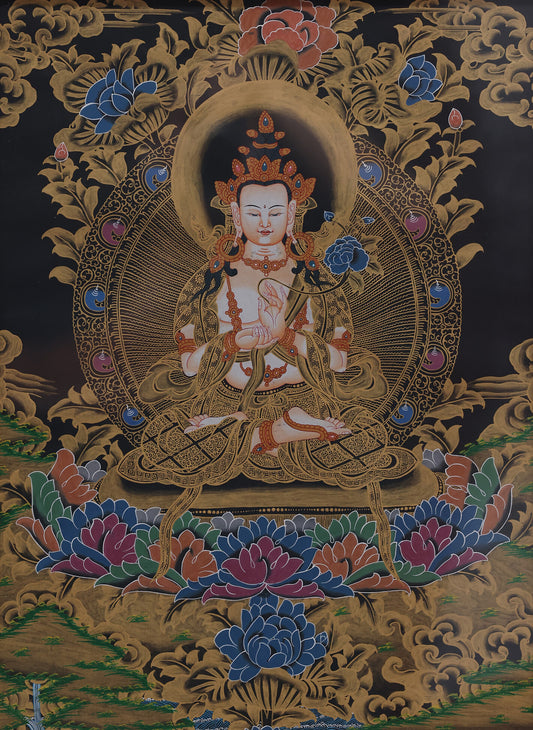
This pure hand-painted thangka, centered on Vajrasattva, embodies the core Vajrayana aspiration of purifying negative karma and attaining complete enlightenment.
Every aspect of its iconography, retinue system, and artisanal technique reflects the Tibetan Buddhist principle of “using art as a vehicle for the Dharma.”
I. Theme: Purification and Awakening — A Mirror of Inner Practice
The central theme of this thangka is Vajrasattva’s practice of confession and karmic purification.
In Tibetan Buddhism, Vajrasattva is revered as the supreme deity of purification.
According to traditional teachings, Vajrasattva vowed:
“If sentient beings contemplate my form or recite my name, all negative karma and obscurations shall be purified.”
For this reason, Vajrasattva thangkas serve as essential visualization supports for the practice of the Hundred-Syllable Mantra.
Their spiritual function points toward transforming afflictions through wisdom and restoring the mind’s innate purity.
The black-ground gold style itself is a profound symbolic language:
-
The deep black background represents the ocean of ignorance and karmic darkness.
-
The luminous gold Vajrasattva pierces this darkness, symbolizing wisdom that dispels obscurations.
-
Accents of lotus blossoms and auspicious clouds signify the blossoming of bodhicitta after purification.
Functionally, this thangka is both:
At its essence, it represents the purification of body, speech, and mind through union with Vajrasattva’s enlightened presence.
II. The Main Deity: Iconography and Doctrinal Essence of Vajrasattva
At the center of the composition sits Peaceful-Form Vajrasattva, depicted in strict accordance with the Iconometric Scriptures.
Every visual detail is a direct embodiment of purification teachings.
1. Form and Sacred Implements
Held together, they symbolize the inseparable union of wisdom and compassion, the essential force of karmic purification.
2. Body Color and Ornaments
-
Pure white body: Like moonlight, symbolizing innate purity beyond karmic stain.
-
Five-Buddha crown: Signifies the blessings of the Five Wisdoms.
-
Jewelled ornaments and armlets: Express the teaching that worldly adornments can manifest transcendent wisdom.
-
Hair intertwined with red and gold:
3. Crown and Throne Symbolism
Together, they represent abiding in awakening through purity.
4. Facial Expression and Meditative Guidance
Vajrasattva’s gaze is gently lowered, his expression utterly serene—
neither joyous nor sorrowful.
This conveys the Middle Way of purification:
-
Confession is not self-denial,
-
But a wisdom-based recognition of the illusory nature of karma,
-
Allowing return to the mind’s original purity.
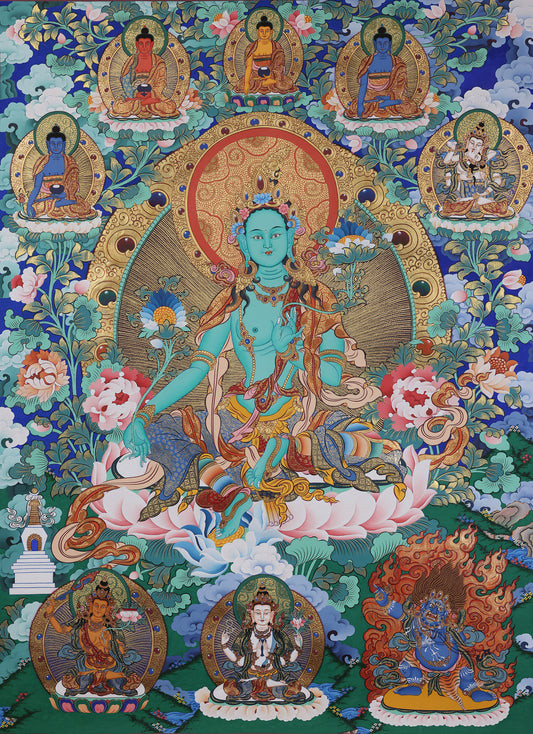
III. Retinue Deities: Functional Extensions of Purifying Power
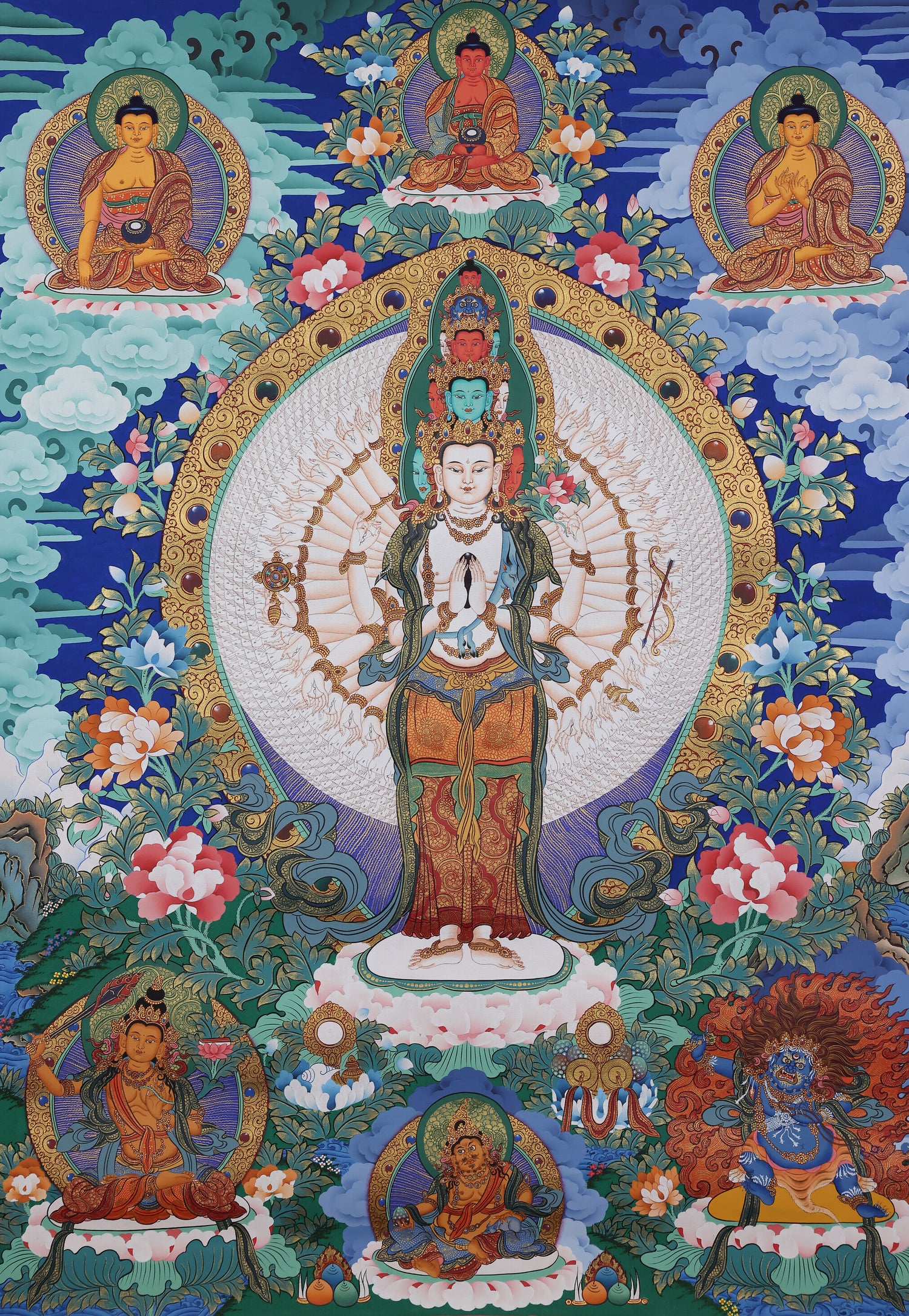
In Tibetan thangka tradition, retinue figures extend the vows and functions of the main deity.
This Vajrasattva thangka’s retinue system supports purification, empowerment, and protection.
1. Principal Retinue: Sources of Enlightened Purification
Together with Vajrasattva, they form a three-body blessing network—
Dharmakaya, Sambhogakaya, and Nirmanakaya unified.
2. Supporting Retinue: Wisdom and Merit in Balance
-
Eight Great Bodhisattvas (such as Manjushri and Avalokiteshvara) flank the composition, representing diverse wisdom methods assisting purification.
-
Vajrapani or Ksitigarbha below:
Together, they strengthen the effectiveness of karmic purification.
3. Hidden Retinue: Symbolic Protective Forces
Thus, the entire painting becomes a multi-layered purification field, integrating visible deities and symbolic forces.
IV. Sacred Craftsmanship: “Gold Emerging from Darkness”
This thangka employs pure hand-painted black-ground gold techniques, one of the most demanding methods in Tibetan sacred art.
Each stage mirrors the spiritual process of purification itself.
1. Foundation and Ground Preparation
-
Canvas preparation: Thick linen layered with barley paste and lime, polished over 7–10 layers until mirror-smooth—symbolizing preparation of the mind to receive wisdom.
-
Black ground: Created using mineral charcoal ink applied in over five layers, forming a deep, flawless black—symbolizing the fundamental field of ignorance to be transformed.
2. Gilding and Line Drawing: Light Dispelling Darkness
-
Gold application:
24K gold leaf is hand-ground with agate stone into fine powder, mixed with yak-bone glue and saffron water.
-
Vajrasattva alone requires 3–4 layers of gold.
-
Artisans recite Vajrasattva mantras while painting, each stroke symbolizing the dissolution of a karmic obscuration.
-
Matte and luminous gold variations reflect the gradual unfolding of wisdom.
-
Line techniques:
-
Vajra lines: Strong, decisive contours breaking obstacles.
-
Flowing cloud lines: Soft garment lines expressing compassion.
These lines embody the union of wisdom and compassion.
3. Color Accents and Eye-Opening Ritual
-
Selective mineral pigments (lapis blue, malachite green, cinnabar red) are applied sparingly to lotuses and jewels, symbolizing awakened qualities without attachment to form.
-
Eye-opening (ka-nyen) ritual:
The final step, performed after purification rites and mantra recitation, uses an ultra-fine brush to complete the eyes.
This moment is believed to activate the thangka’s spiritual presence, transforming it from artwork into a living support for practice.
- #VajrasattvaThangka
#TibetanBuddhistArt
#BlackGoldThangka
#HandPaintedThangka
#PurificationThangka
#KarmicCleansing
#VajrayanaArt
#SacredBuddhistArt
#MeditationThangka
#SpiritualAwakening
#TibetanSacredArt
#BodhisattvaThangka
#TantricBuddhistArt
#ShrineArt
#ThangkaCollectors