In Tibetan Buddhism, thangkas are far more than decorative paintings—they are ritual objects, spiritual tools, and living cultural heritage. Among the five traditional Tibetan Jambhalas (yellow, white, red, black, and green), Yellow Jambhala holds a special position as the supreme deity of wealth and prosperity, embodying the principle of using worldly abundance to support spiritual practice. This article explores a hand-painted golden thangka of Yellow Jambhala, analyzing its thematic significance, symbolic iconography, attendant deities, craftsmanship, and cultural value.
I. Theme and Significance: The Guardian of Wealth and Merit
The core theme of this thangka is the “Yellow Jambhala (Zangbala) – Enhancing Wealth and Merit”, a visual ritual tool within Tibetan Buddhism’s wealth-protecting deities system.
Unlike common “prosperity symbols,” this thangka is not purely ornamental or materialistic. It functions as a spiritual medium through which devotees cultivate merit while aligning worldly wealth with Buddhist practice. According to Tibetan belief, wealth, when used wisely, supports Dharma propagation and aids others, reflecting the maxim: “Use worldly merit to attain transcendent wisdom.”
The thangka’s gold-dominant color palette, combined with classic wealth symbols such as treasure vessels, precious stones, and auspicious animals, underscores the harmony between material prosperity and spiritual cultivation. It also meets the practical needs of practitioners who seek both spiritual and worldly benefits.
II. Principal Deity: Yellow Jambhala’s Symbolism and Iconography
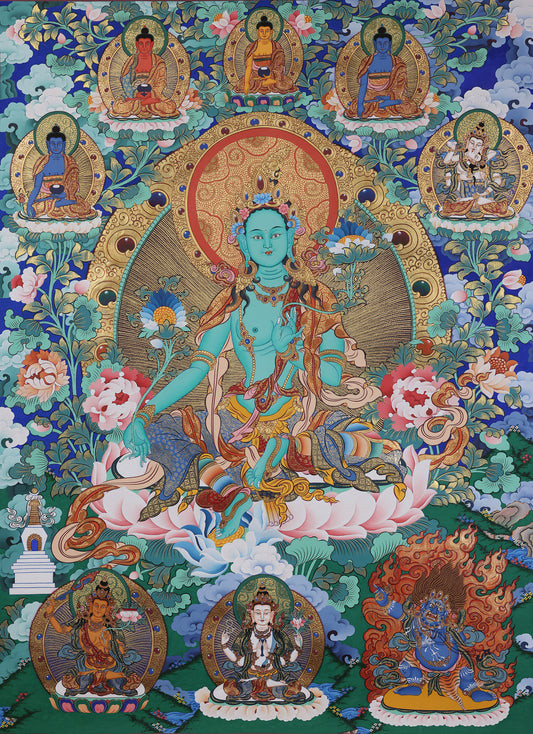
At the center of the composition sits Yellow Jambhala (Zangla Sepo in Tibetan), painted in accordance with the Iconometric Guidelines for Wealth-Protecting Deities (32 defining features and 80 auspicious traits). Every element carries a distinct symbolic meaning:
-
Body Color: Radiant yellow represents the element of earth, symbolizing stability and growth of wealth. The skin is painted using a 7:3 ratio of orpiment to gold powder, producing a warm golden texture. Facial hair—long side whiskers with a short mustache ring—reflects the sanctification of ordinary forms, making the deity approachable yet divine.
-
Mudras and Attributes:
-
Right hand: Holds a mani jewel (Razhiza), symbolizing the radiance of treasure and the fulfillment of virtuous intentions.
-
Left hand: Embraces a treasure mouse (Nyule) with a jewel in its mouth, representing inexhaustible wealth and generosity.
-
Right foot: Steps upon a conch shell (Dongga), symbolizing the retrieval of hidden treasures and the removal of obstacles to prosperity.
-
Attire and Ornamentation:
-
Wears a Five-Buddha Crown, representing the wisdom of the five directions.
-
Adorned with lapis lazuli necklaces and turquoise bracelets, combining intelligence, purity, and protection with the golden theme.
-
Seated Posture: Ruyi (half-lotus) posture, characteristic of wealth-protecting deities, responsive to worldly conditions and accessible to devotees.
III. Attendant Deities: Hierarchy and Functional Roles
Yellow Jambhala thangkas follow a three-tiered configuration of deity-attendant-offering system, ensuring both ritual completeness and symbolic richness.
Upper Attendants
Two miniature Yellow Jambhala images flank the top corners, representing emanations of the main deity. These “treasury retinues” supervise different directions of wealth, symbolizing merit filling the three realms.
Lower Attendants and Offerings
-
Left Guardian (Red Body): Holds a vajra and steps on malicious spirits, acting as the protector of career and wealth accumulation, breaking obstacles to financial and spiritual growth.
-
Right Guardian (Black Body): In subjugating demon mudra, wrapped in serpents, serves as treasure guardian, ensuring acquired merit is preserved.
-
Central Offerings: Seven precious treasures (vase, umbrella, banner, etc.) and a treasure bowl embedded in the lotus throne signify the endless resources of the Pure Land.
IV. Craftsmanship: Mineral Pigments and Gold Leaf Mastery
This thangka is a Regong School golden thangka, one of the most labor-intensive and costly types of Tibetan thangka, featuring 15 core procedural steps that embody the principle “materials as devotion.”
Canvas Preparation
-
Double-layered white cotton from Yushu, Qinghai, soaked in aged yak bone glue for 3 years (protein ≥ 85%), stretched on a sandalwood frame and polished with agate stone until translucent and smooth, ensuring long-term adhesion of gold leaf.
Gold Leaf Work
-
24K gold leaf hammered to 0.1 μm (1/700th the thickness of a hair).
-
Layered techniques: adhesive gold base, drawn gold outlining, engraved lotus patterns, producing richly layered golden brilliance.
Mineral Pigment Highlights
-
Blue lapis lazuli, green malachite, and red cinnabar provide subtle contrast, enhancing the visual depth while maintaining the symbolic resonance of cool vs. warm tones.
Line Work and Facial Detailing
-
Iron-wire outline technique, gold line precision ±0.005 mm, creating delicate yet firm lines.
-
Seven-layer facial rendering: gold base, orpiment, coral red, cinnabar, producing a serene, commanding yet compassionate expression.
-
Eye-Opening Ritual: 5 Gelug monks perform a 7-day consecration retreat, applying a cinnabar dot on the deity’s brow, transforming the painting from artwork to sacred ritual object.
V. Cultural Significance: From Wealth Symbol to Spiritual Vehicle
The Yellow Jambhala thangka transcends mere decoration:
-
Spiritual Dimension: Essential for merchants and practitioners, enabling wealth accumulation as a form of generosity, and aligning material gains with Buddhist ethical practice. Devotees meditate on the deity, recite heart mantras, and visualize prosperity for the benefit of Dharma propagation.
-
Artistic Dimension: Showcases Regong School golden thangka mastery. Gold leaf usage reaches 12 grams (market value > ¥12,000), mineral pigments ≥ 99.95% purity, meeting highest traditional craft standards.
In Tibetan Buddhism, the Yellow Jambhala is not a symbol of greed, but a tool to transform worldly merit into spiritual wealth, embodying the principle: “use worldly blessings to cultivate transcendent wisdom.” This thangka, with golden foundation and mineral highlights, vividly transforms wealth into visual spiritual capital, exemplifying the coexistence of material needs and spiritual aspiration in Tibetan culture.
#YellowJambhala
#TibetanBuddhism
#TibetanThangka
#GoldenThangka
#WealthDeity
#Jambhala
#HandPaintedThangka
#RegongThangka
#MineralPigments
#GoldLeafArt
#TraditionalCraftsmanship
#BuddhistArt
#BuddhistCulture
#RitualArt
#SpiritualPractice
#ProsperityBlessings
#MeditationAid
#SacredArt
#TraditionalArt
#CulturalHeritage
#EasternArt
#SpiritualHeritage
#VisualMeditation
#ArtCollectibles