In the artistic system of Tibetan Buddhism, a Thangka is far more than a visual artwork. It is a sacred support for practice — a consecrated image through which doctrine, lineage, and realization are transmitted. Through iconographic precision and mineral-based pigments, Tibetan Thangka painting transforms spiritual teachings into a visible, contemplative form, allowing faith to be preserved across generations.
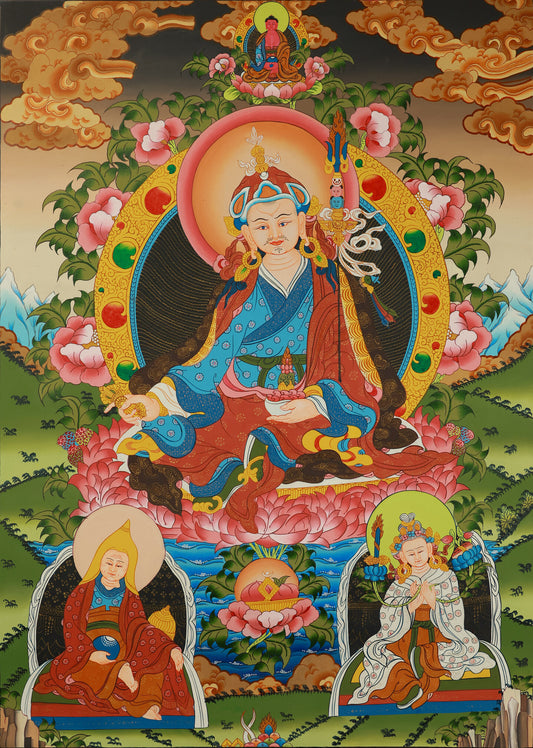
This pure hand-painted Thangka of Guru Padmasambhava—the central enlightened figure of the Nyingma tradition—faithfully embodies Tibetan Buddhist cultural logic in its theme, iconography, and craftsmanship. It is a classical work that integrates religious lineage, ritual symbolism, and sacred aesthetics.
I. Core Theme: Guru Padmasambhava and the “Three Roots” of Nyingma Faith
The central theme of this Thangka is “The Manifestations of Guru Rinpoche”, which corresponds directly to the Three Roots of the Nyingma school:
Guru (Lama), Yidam (Meditational Deity), and Dharma Protector.
Guru Padmasambhava, the great Indian tantric master of the 8th century, was invited to Tibet by King Trisong Detsen. He founded Samye Monastery, ordained the first Tibetan monks, and successfully integrated Buddhist teachings with indigenous Tibetan spiritual traditions. For this reason, he is revered as the Founder of Tibetan Buddhism.
In Thangka iconography, Padmasambhava is not portrayed merely as a historical figure, but as a fully enlightened emanation of Buddhahood. Through the combined imagery of the principal deity, attendant figures, and symbolic surroundings, this Thangka establishes a dual spiritual function:
-
The central figure bestows guru blessings
-
The retinue provides protection and lineage continuity
-
The background elements recall Guru Rinpoche’s subjugation of negative forces and establishment of the Dharma
II. Iconography of the Principal Deity: The “Royal Minister Form” of Guru Rinpoche
At the center of the composition stands Guru Padmasambhava, rendered strictly according to the Iconometric Scriptures and Nyingma ritual standards.
1. Physical Appearance
The master is depicted with a square face and beard, presenting the dignified appearance of a middle-aged sovereign—a defining feature of the “Royal Minister Form.” This distinguishes him from the idealized Buddha marks or the gentle expressions of bodhisattvas.
The white urna at the brow symbolizes transcendent wisdom, while jeweled earrings represent his identity as a universal spiritual monarch.
2. Sacred Attire
Guru Rinpoche wears a blue inner robe adorned with golden patterns, over which rests a red monastic shawl draped over one shoulder:
-
Blue symbolizes emptiness and primordial wisdom
-
Red represents compassion and enlightened activity
-
A green sash decorated with miniature stupas signifies the eternal presence of the Dharma
This attire embodies the historical and spiritual bond between Indian tantric Buddhism and Tibetan monastic culture.
3. Ritual Implements
-
Skull Cup (Kapala) in the left hand, containing nectar, symbolizing the union of wisdom and skillful means
-
Khatvanga staff cradled in the arm, adorned with symbolic elements, representing mastery over negative forces
-
Vajra held in the right hand in the gesture of fearlessness, expressing the power to dispel ignorance and protect practitioners
4. Halo and Lotus Throne
The green head halo and gold-patterned body aura visually unite worldly authority with transcendent realization.
The double-layered lotus throne beneath the master signifies liberation from samsaric defilements and affirms his status as an enlightened emanation.
III. Retinue Deities: Lineage Transmission and Protective Structure
The accompanying figures in this Thangka are essential components of a complete doctrinal system, not decorative additions.
1. Left Attendant: Yeshe Tsogyal, the Dakini of Wisdom
Depicted in monastic form, Yeshe Tsogyal holds a treasure vase and symbolizes the pure transmission of esoteric teachings. As Guru Rinpoche’s foremost disciple in Tibet and an emanation of the Wisdom Dakini, her presence affirms the purity and continuity of the lineage.
2. Right Attendant: Devotional Disciple or Bodhisattva Figure
Shown in an attitude of reverent offering, this figure represents devoted discipleship and the future continuation of the Dharma through sentient beings.
3. Upper Deity: Amitabha Buddha
Above Guru Padmasambhava appears Amitabha Buddha, reinforcing the Nyingma understanding of Guru Rinpoche as an emanation of Amitabha and symbolizing the ultimate aspiration toward Pure Land rebirth.
4. Lower Offerings: Treasure Vessels and Auspicious Fruits
These offerings visualize the accumulation of merit and spiritual resources necessary for enlightenment.
IV. Sacred Painting Craftsmanship: Eternal Materials for Timeless Dharma
This Thangka is a pure hand-painted masterpiece, blending techniques from the Newari painting tradition of Nepal with the Tibetan Mentang school.
1. Canvas Preparation
Fine cotton canvas undergoes multiple applications of aged animal glue and chalk powder, creating a smooth, sacred foundation that ensures longevity and ritual purity.
2. Natural Mineral Pigments
-
Lapis Lazuli Blue for the robes, offering exceptional depth and lightfastness
-
Cinnabar Red for monastic garments, valued for both sanctity and preservation
-
24K Gold applied as gold powder and burnished by hand, symbolizing the unchanging nature of Buddhahood
These pigments are chosen not merely for beauty, but for their symbolic alignment with eternal truth.
3. Traditional Techniques
-
Iron-wire line drawing for authority and clarity
-
Silk-thread line work for ornamental elegance
-
Layered shading (fenran) for three-dimensional form
-
Ultra-fine gold detailing, controlled to fractions of a millimeter
Each stroke reflects disciplined practice and devotional intent.
4. Eye-Opening and Consecration
The final stage involves the Eye-Opening Ceremony, in which the pupils are painted on an auspicious day accompanied by mantra recitation. Afterward, the Thangka is consecrated by a qualified lama, transforming it from an image into a living support for practice.
V. Living Dharma: The Thangka as a Sacred Teaching
The value of this Guru Padmasambhava Thangka extends far beyond artistic appreciation. It embodies the Tibetan Buddhist tradition of “teaching through image”, allowing practitioners to connect with the guru’s blessings through visualization and contemplation.
Every line, pigment, and ritual step reflects a commitment to purity, continuity, and timeless wisdom. In an age of industrial speed, this hand-painted Thangka preserves the spirit of slow practice and authentic lineage transmission.
It is not decoration—it is a silent yet ever-present spiritual guide.
#TibetanThangka
#GuruPadmasambhava
#GuruRinpoche
#TibetanBuddhistArt
#HandPaintedThangka
#AuthenticThangka
#NyingmaTradition
#TibetanBuddhism
#SpiritualArtwork
#MeditationSupport
#GuruBlessing
#TantricBuddhism
#MineralPigmentArt
#GoldThangka
#SacredArt
#BuddhistIconography
#ThangkaPainting
#HimalayanArt
#BuddhistArtCollection
#SacredBuddhistArt
#LuxuryThangka
#MindfulnessDecor
#SpiritualHomeDecor