1. Theme: Healing Faith in the Eastern Lapis Lazuli Pure Land
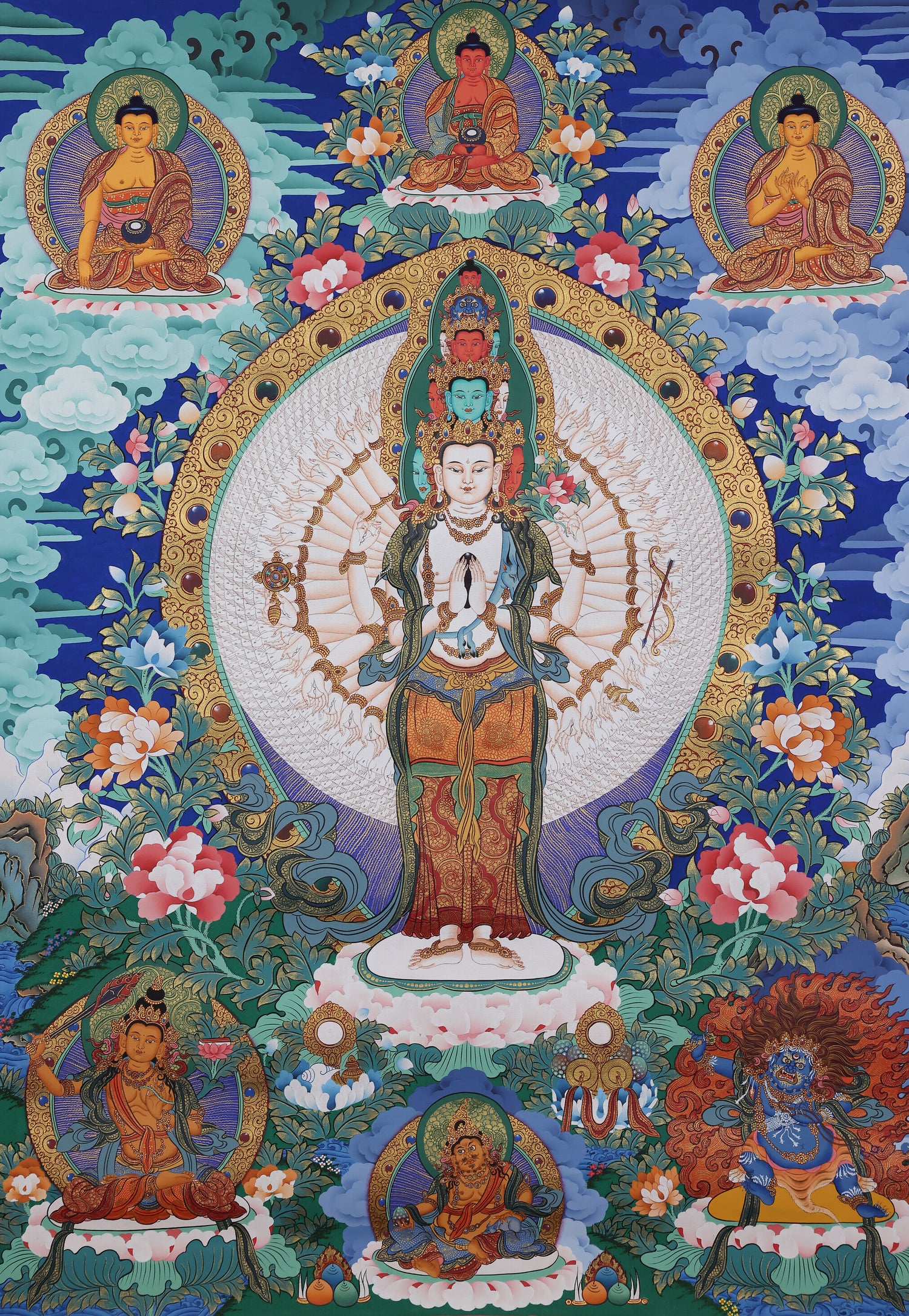
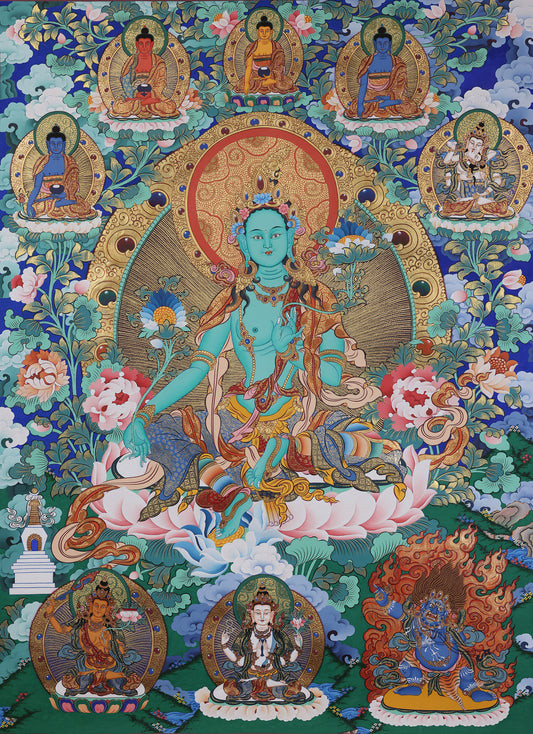
The core theme of this Thangka is the visual manifestation of the Pure Land of Medicine Buddha, Bhaisajyaguru, a classic subject within the Tibetan Buddhist “Medicine Buddha” faith tradition. In Tibetan culture, the Medicine Buddha (Tibetan: Sangye Menla) is regarded as the principal deity for disaster elimination, longevity, and physical and mental healing. The belief system originates from the Bhaisajyaguru Vaidurya Prabhāraja Sutra, which emphasizes the use of clarity and purity of intention, like lapis lazuli, to dispel suffering and disease among sentient beings.
This Thangka employs a blue background (Tibetan: Natar), symbolizing the Lapis Lazuli Pure Land. In Tibetan aesthetics, blue represents space, clarity, and healing, aligning perfectly with the “Lapis Light” nature of Bhaisajyaguru. The painting follows a three-tiered structure: Buddha – Attendant Deities – Pure Land, fully embodying the religious meaning of healing and creating a sacred realm through vow power. For practitioners, it serves not only as a visual aid for meditation and contemplation but also as a spiritual carrier for Tibetan devotees seeking health, well-being, and the removal of misfortune.
2. Main Deity: Symbolism of the Medicine Buddha
Body and Mudra
The central figure is Bhaisajyaguru, the Medicine Buddha, depicted according to the strict guidelines of the Sutra on Measures of Images. Every detail carries profound religious symbolism.
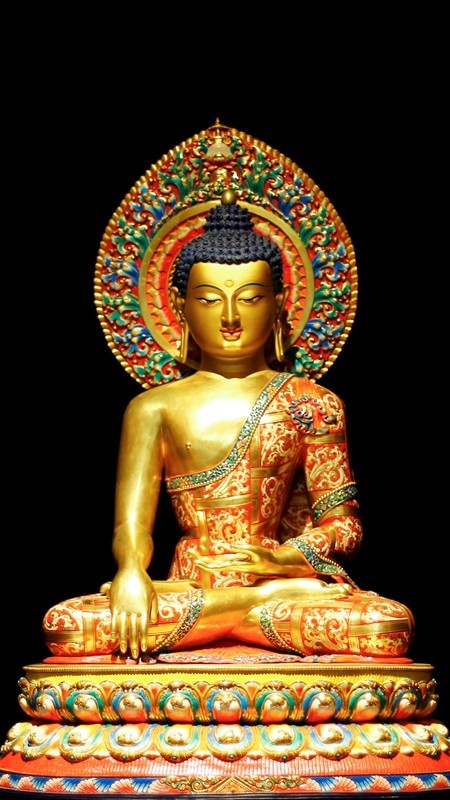
The Buddha is seated in full lotus posture, representing the unity of meditation and wisdom. Both hands hold the Medicine Bowl, containing the “nectar of healing,” representing the deity’s core power to heal the suffering of sentient beings.
The body color is lapis-brown, blending blue and brown tones, symbolizing the integration of compassion and wisdom in healing. The high cranial bump (ushnisha) and elongated earlobes conform to the Thirty-Two Marks of a Buddha, expressing the perfection of the dharmakaya.
Halo and Lotus Seat
The halo behind the Buddha’s head is deep blue, surrounded by golden flame motifs, where blue signifies the Lapis Light, and the flames represent the destruction of ignorance and karmic afflictions. Outside the halo, decorative vine and lotus motifs are classic symbols of auspiciousness and purity in Tibetan Thangka art.
The lotus seat is double-layered with upturned and inverted petals, shaded in blue and gold. The upturned lotus symbolizes receiving the virtuous roots of sentient beings, while the inverted lotus signifies supporting the power of the Pure Land vows. Beneath the lotus, the Tibetan-style Mount Meru seat features peacock motifs, symbolizing the mythical bird that consumes all poisons—aptly reflecting the Buddha’s power to remove illness and suffering.
3. Attendant Deities: Sacred Configuration of the Pure Land
Left and Right Attendants
The lower left and right sides of the Thangka depict the core attendants of the Medicine Buddha’s Pure Land:
-
Left: Sunlight Bodhisattva
Golden or yellow in color, holding a Sun Banner (here shown with a lotus branch supporting a sun disc), symbolizing the dispelling of darkness and suffering. The Bodhisattva wears a five-Buddha crown and jewelry, representing the aid of Bodhisattva practice in liberating sentient beings.
-
Right: Moonlight Bodhisattva
Blue in color, holding a Moon Vase (here shown with a lotus branch supporting a moon disc), symbolizing soothing and cooling energy to pacify suffering and agitation. Together with the Sunlight Bodhisattva, they create a yin-yang complementary harmony, illustrating the doctrinal principle that the Pure Land is protected and illuminated by sun and moon light for all beings.
Additional Symbols
Beneath the lotus, the Medicine Bowl, Peacocks, and Lotus flowers function as offering symbols. The peacock represents the consumption of all poisons, the Medicine Bowl signifies nectar healing, and the lotus represents purity of the Pure Land. These elements collectively create the vision of a Pure Land free of illness, suffering, and calamity.
4. Painting Craftsmanship: Mastery of the Tibetan Blue Thangka
Canvas Preparation
The Thangka is painted on pure cotton fabric (Tibetan: ‘Adang’), treated with a process called “Three Glues and Three Powders”. First, 5–7% concentration of cow bone glue is brushed on, followed by white chalk or gypsum powder, and repeatedly polished with a stone roller to create a smooth and delicate surface. This ground preparation ensures long-lasting color stability.
After the canvas is prepared, a preliminary sketch is drawn using charcoal or cinnabar according to the Sutra on Measures of Images, a process known as “outlining”, which ensures precise proportions and maintains ritual correctness.
Pigments
This is a mineral-based blue Thangka, using only natural minerals and precious metals:
-
Blue: Derived from Tibetan azurite, ground by the traditional water-sifting method into three gradations (coarse, medium, fine), creating a deep-to-light gradient for skies and lotus petals. Lightfastness exceeds 300 years.
-
Gold: 98% pure gold powder, mixed with cow bone glue, applied via gilding and polishing techniques, including fine brush outlines and burnished or matte effects on halos and details, symbolizing the eternal Dharma.
-
Other Colors: Yellow from realgar, red from cinnabar, white from conch powder, each reflecting ultraviolet light of the high plateau, ensuring centuries-long color fidelity.
Technique and Detail
-
Shading (Gradation): Employs the Tibetan “tongue-shading” method, controlling pigment with the tip of the tongue to achieve natural color transitions, such as on lotus petals, requiring the painter’s mind, eyes, hands, and breath to be in harmony.
-
Line Drawing: Outlines of robes and lotus petals are drawn with iron-line technique, using a single-hair wolf brush. Lines are thin yet strong, painted in a meditative state, with no room for error.
-
Eye Opening Ceremony: The final step is painting the pupils with gold, symbolizing the infusion of divinity. The artist recites sutras and maintains reverence, transforming the Thangka from a craft to a sacred object.
5. Cultural Significance: Tibetan Spirit and Artistic Heritage
This Thangka is not only a religious artifact but also a concentrated carrier of Tibetan culture:
-
Faith Dimension: Serves as a visual medium for the Medicine Buddha’s vow to heal sentient beings, embodying Tibetan devotees’ prayers for health, peace, and well-being.
-
Artistic Dimension: The strict iconographic standards ensure sacredness, while mineral pigments and gold application showcase the highest craftsmanship of Tibetan painters.
-
Heritage Transmission: Hand-painted mineral Thangkas continue the thousand-year-old techniques outlined in Sutra on Measures of Images and traditional pigment preparation, ensuring non-material cultural continuity.
-
International Recognition: The unique Lapis Blue aesthetic and healing symbolism are increasingly recognized globally as a distinctive hallmark of Tibetan culture.
In conclusion, this hand-painted blue Thangka of the Medicine Buddha’s Lapis Lazuli Pure Land combines artistic excellence, religious function, and spiritual utility. It serves both as a meditative visual aid and as a symbol of Tibetan cultural heritage, exemplifying the core Tibetan Thangka principle that art is inseparable from spiritual practice.
#TibetanThangka #MedicineBuddha #LapisLazuliBuddha #BlueThangka #HandPaintedThangka #TibetanBuddhism #BuddhaArt #HealingBuddha #PureLand #TibetanArt #MineralPigmentArt #SacredArt #BuddhistMeditation #CulturalHeritage