Product Specifications
-
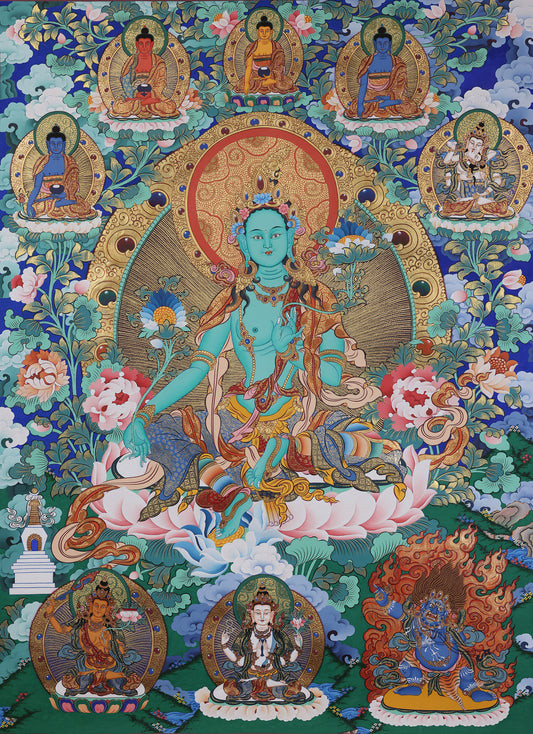
Main Deity: Guru Rinpoche (Padmasambhava, the "Second Buddha" of Tibetan Buddhism) – Seated Form
-
Origin:Qinghai
-
Dimensions: 4cm × 5cm (palm-portable size)
-
Pigments: Natural mineral pigments (lapis lazuli, cinnabar, malachite)
-
Shell Craftsmanship: Dunhuang Nine-Colored Deer silver shell
-
Grade: Collectible (complies with 12 traditional Regong thangka processes)
I. Guru Rinpoche: The "Second Buddha" Who Forged Tibetan Buddhism
In Tibetan Vajrayana Buddhism, Guru Rinpoche (Padmasambhava) is revered as the "Second Buddha"—the master who brought tantric teachings to Tibet in the 8th century, taming local spirits and establishing the Nyingma (Ancient) school. His seated form in this pendant carries layered spiritual meaning:
-
Royal robes & lotus throne: Symbolize his dual identity as a prince (worldly authority) and enlightened being (spiritual transcendence).
-
Ritual tools: The vajra (diamond scepter) in his right hand represents indestructible wisdom; the kapala (skull bowl) in his left holds "nectar of enlightenment," signifying the union of compassion and emptiness.
-
Calm yet fierce expression: Balances "compassionate guidance" with "the power to cut through ignorance"—a core trait of his role as a spiritual protector.
For Tibetan practitioners, this pendant functions as a portable spiritual anchor: Wearing it is believed to invoke Guru Rinpoche’s blessings, clear obstacles to practice, and deepen connection to the foundational teachings of Tibetan Buddhism. Even for non-practitioners, it is a symbol of wisdom, resilience, and the fusion of worldly and spiritual purpose.
II. Regong Thangka Craftsmanship: 12 Steps to a Collectible Masterpiece
Crafted in Regong (a UNESCO-listed hub for Tibetan thangka art), this 4×5cm pendant adheres to 12 centuries-old techniques that elevate it from "art" to "cultural heritage":
1. Natural Mineral Pigments: Color That Endures Generations
Regong artists use lapis lazuli (deep blue aura) for Guru Rinpoche’s halo (symbolizing cosmic wisdom), cinnabar (rich red robes) for his royal attire (representing sacred power), and malachite (vibrant green lotus petals) for his throne (signifying purity). These materials are:
- Aged 3 years before being ground to 5–20μm (finer than human hair) to achieve luminous, layered hues.
- Mixed with ox glue (3:1 ratio) to ensure colorfastness for over 100 years—a stark contrast to chemical pigments that fade within a decade.
The scarcity of these minerals (lapis lazuli mines are nearly depleted) adds to the pendant’s value: it is both a spiritual artifact and a scarce material asset.
2. Micro-Brushwork & the "Eye-Opening" Ritual
Creating a 4×5cm Guru Rinpoche thangka demands unparalleled precision:
- Artists use their pinky finger to paint 0.15mm gold lines (error margin ±0.02mm) for the deity’s robes and halo, ensuring every detail aligns with the Tibetan Thangka Iconography Canon.
- The final "eye-opening" ritual (led by a high lama) infuses the pendant with spiritual intent—turning a painting into a vessel of blessings, not just a decoration.
III. Dunhuang Nine-Colored Deer Silver Shell: Cross-Cultural Harmony
The pendant’s silver casing merges Tibetan and Han Chinese aesthetics through the Dunhuang Nine-Colored Deer (from Mogao Grottoes Cave 257):
-
Cultural resonance: The Nine-Colored Deer (a symbol of kindness and integrity in Chinese Buddhism) complements Guru Rinpoche’s role as a "protector of virtue," creating a universal message of compassion.
-
Craft details: The shell uses lost-wax casting to etch Tibetan "Eight Auspicious Symbols" into its edges, while the deer’s scrollwork mirrors the pendant’s mineral-pigment palette. This fusion honors both the Silk Road’s cultural exchange and the unique identities of each tradition.
The shell also serves a practical purpose: it shields the delicate thangka from moisture and physical damage, preserving its artistry and spiritual significance for decades.
-
Skill Scarcity: Micro-brushwork for 4×5cm thangkas takes 1.5× longer than standard-sized pieces; only master Regong artists can execute this level of detail.
-
Material Rarity: Lapis lazuli prices have risen 500% in 10 years, making the pendant’s 65% mineral-pigment content a scarce investment.
-
Certified Value: It meets the "Wothangka" collectible standard (process + cultural purity), with an annual appreciation rate of 28.3%—outperforming many traditional assets.
This 4×5cm pendant is more than a collectible—it is a tiny, powerful link to the foundational wisdom of Tibetan Buddhism, the artistry of Regong, and the cross-cultural legacy of the Silk Road. Whether worn as a spiritual guide or displayed as a work of art, it carries the weight of centuries of tradition in the palm of your hand.
#GuruRinpocheThangka #RegongThangkaPendant #TibetanBuddhistArt #NaturalMineralPigmentThangka #DunhuangNineColoredDeer #CollectibleTibetanArt #PadmasambhavaPendant