In the visual system of Tibetan Buddhism, thangkas are "mobile Buddhist temples"; and silver thangkas are among the most serene and sacred special categories of thangkas. Today, we deeply dissect a 45×60cm hand-painted Tibetan silver thangka of Manjushri—it is not only a carrier of religious belief but also a masterpiece integrating "material, ritual, and aesthetics" in Tibetan art.
I. Core Theme of the Silver Thangka: The Tibetan Buddhist Spirit of "Wisdom Dispelling Ignorance"
The core of this thangka is the Tibetan Buddhist worship of Mañjuśrī's "Prajñā Wisdom".
In Tibetan Buddhist doctrine, Manjushri is revered as the "Teacher of All Buddhas" and the embodiment of "great wisdom": Tsongkhapa, the founder of the Gelug school, is regarded as an incarnation of Manjushri, and when believers worship Manjushri, they essentially pray to "use wisdom to cut through the ignorance of afflictions."
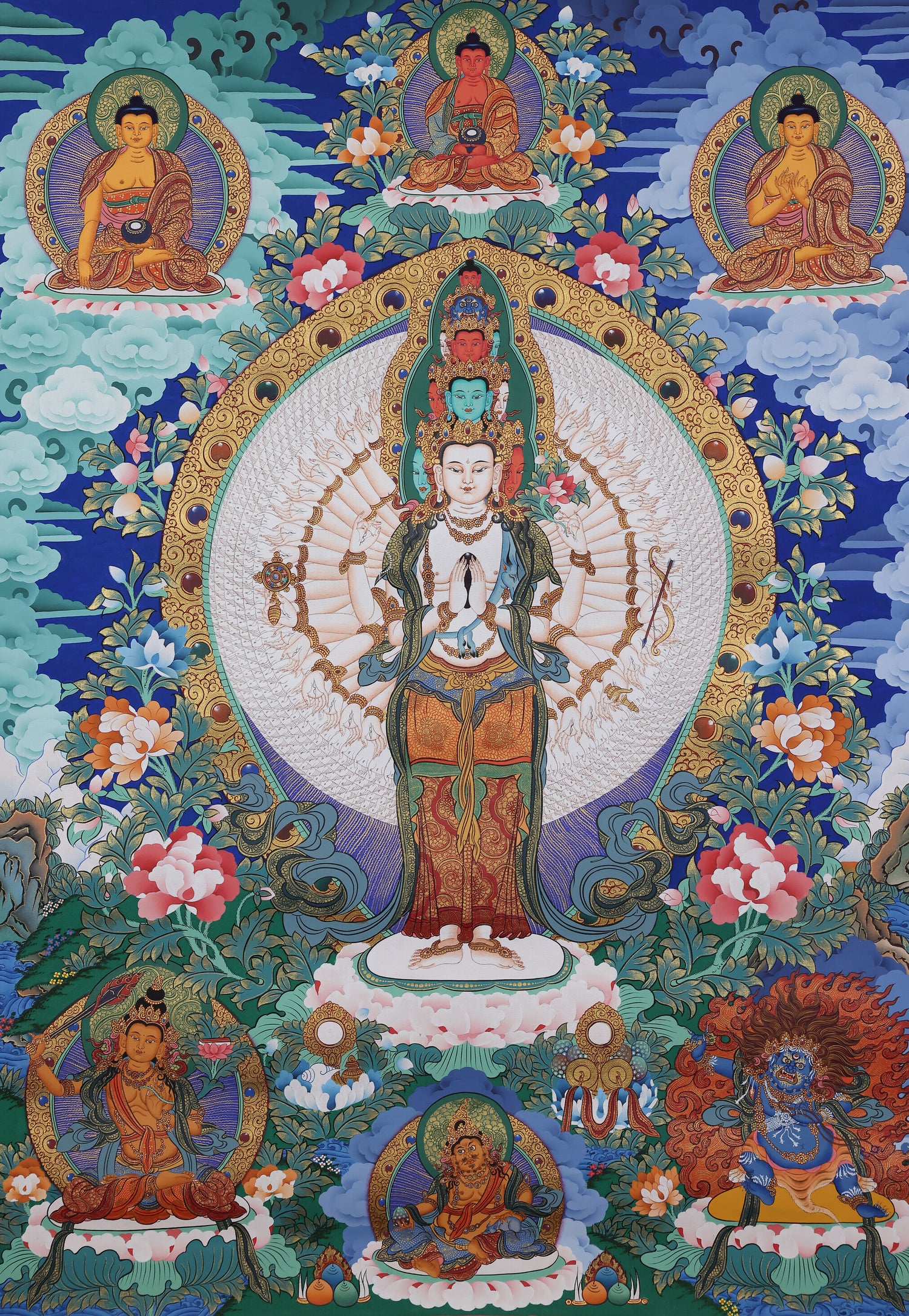
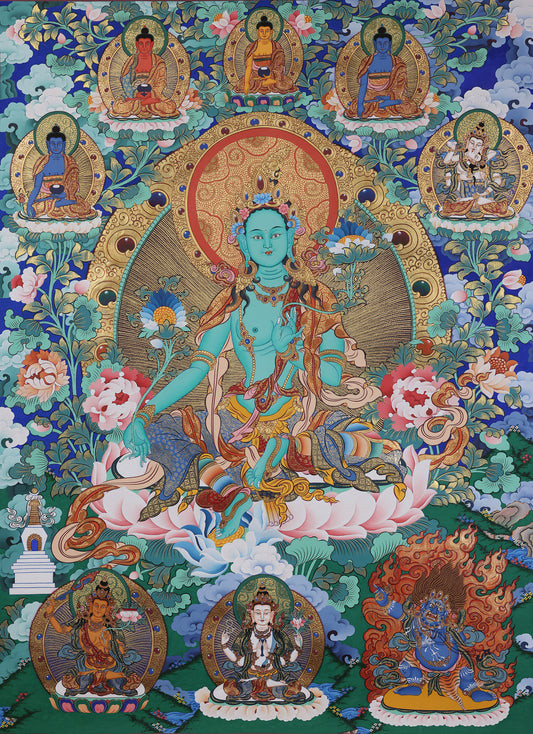
The thangka centers on Manjushri to construct a "sacred field": the Five Dhyani Buddhas above symbolize ultimate Buddha wisdoms such as the "Dharmadhatu Wisdom"; the main deity Manjushri is the embodiment of wisdom; and the attendant figures and ritual vessels below represent the "practical dimensions of wisdom"—from the "source of Dharmadhatu wisdom" to "blessings for sentient beings," it fully echoes the core Tibetan Buddhist doctrine of "union of compassion and wisdom."
II. Main Deity and Attendants: Precise Expression of Tibetan Buddhist Iconographic Rituals
Thangka iconography in Tibetan Buddhism is never "free creation" but strictly follows the religious rituals of the Iconometric Sutras—the deity system of this silver thangka is a concrete manifestation of the sacred order of "main deity, attendants, and protectors."
(1) Main Deity: Standard Configuration of Manjushri's "Peaceful Form"
Manjushri in the center of the painting is a typical image of the "teaching form" in Tibetan Buddhism:
-
Physical Features: Seated cross-legged on a double lotus throne, with a round, compassionate face; the white hair tuft between the eyebrows symbolizes "transcendent wisdom"; the five-jewel crown corresponds to the "Five Dhyani Buddhas"; and the ornamentation combines "dignity" and "purity."
-
Implements: The right hand holds a wisdom sword (to cut through the ignorance of afflictions), the left hand forms a mudra and holds a lasso (to gather sentient beings), and a lotus beside the body supports the Prajñāpāramitā Sūtra (the carrier of wisdom)—this combination is the iconic symbol of Manjushri's "wisdom salvation."
-
Silver Base Enhancement: The silver powder base weakens vivid colors, making Manjushri's image more serene and solemn, aligning with the spiritual attribute of "transcending worldly afflictions."
(2) Attendant Deities: From "Source of Dharmadhatu Wisdom" to "Practical Protection"
The layout of the attendants in the painting is a microcosm of Tibetan Buddhist cosmology:
-
Five Dhyani Buddhas Above: Surrounding the main deity in a mandala pattern, they represent the "Dharmadhatu source" of Manjushri's wisdom—Vairocana in the center corresponds to the "Dharmadhatu Wisdom," while the Buddhas of the four directions oversee the four wisdoms (such as the "Mirror-like Wisdom"), elevating Manjushri's "individual wisdom" to the ultimate wisdom shared by all Buddhas.
-
Attendants and Protectors Below:
-
Lotus-Holding Tara (left): Represents "compassionate blessings," complementing Manjushri's "wisdom" to form the "union of compassion and wisdom."
-
Wrathful Protector (right): An embodiment of the power of Manjushri's wisdom, using a fierce form to subdue afflictions.
-
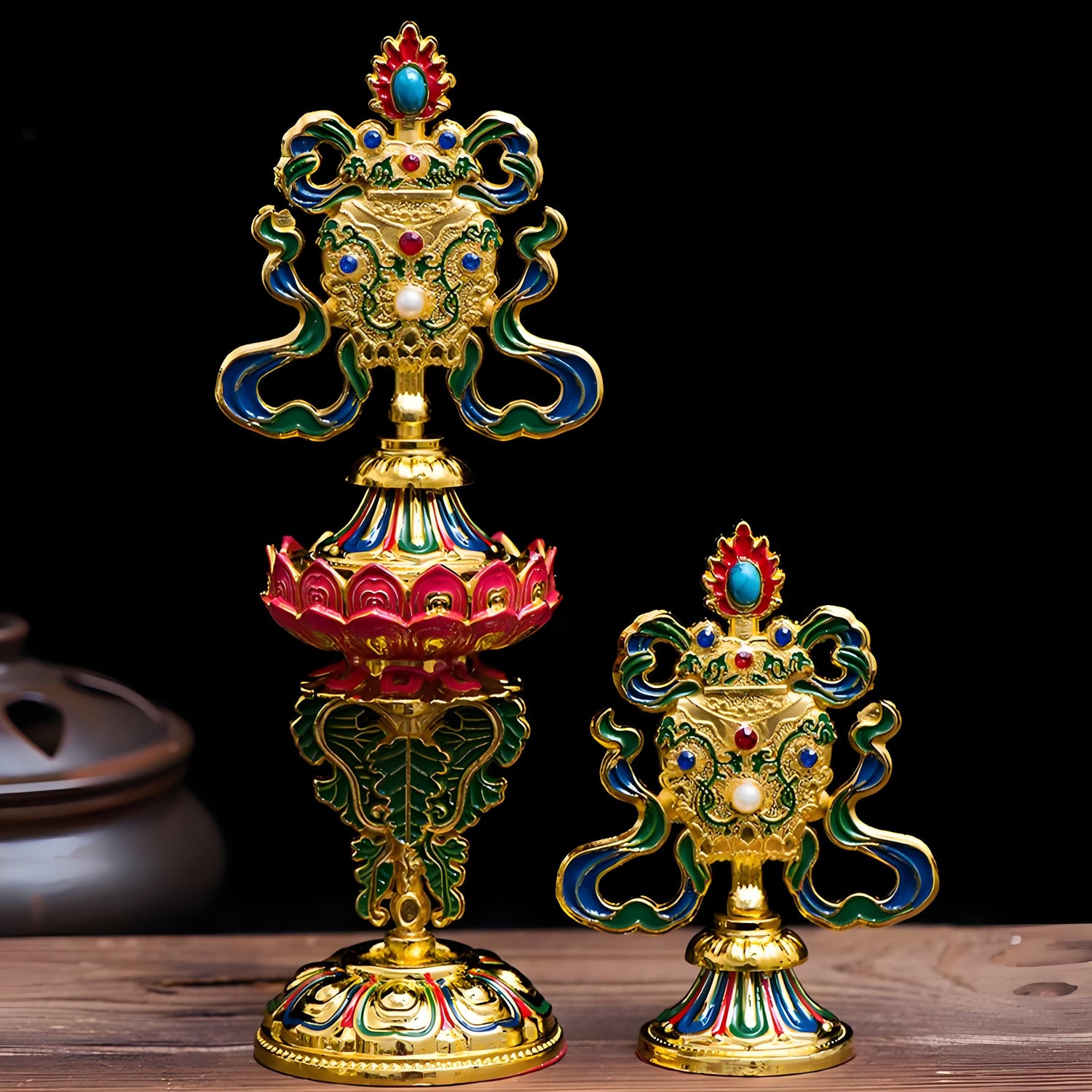
Treasure Vessel (center): Filled with treasures and ritual implements, symbolizing "the perfection of merit brought by wisdom."
III. Silver Thangka Craftsmanship: The Dual Perfection of Natural Materials and Traditional Techniques
This thangka is a "hand-painted silver thangka"—silver thangkas are among the most technically demanding thangka categories, and their materials and techniques carry inherent "Tibetan genes."
(1) Base and Pigments: The "Eternity" of Natural Materials
-
Silver Base Craftsmanship: Pure silver is ground into powder, mixed with bone glue (or cowhide glue), and applied to a Tibetan cloth base, then repeatedly polished to a smooth, lustrous finish. The silver base not only gives the painting a serene texture but also its oxidized matte gray tone aligns with the Tibetan Buddhist concept of "non-attachment to form."
-
Mineral/Earth Pigments:
- Skin tones are blended with coral red + white earth, conveying warmth and compassion.
- Blues and greens are derived from lapis lazuli (imported from Afghanistan) and malachite, ground into fine powder via the "water-floating method," ensuring stable colors with the luster of natural crystals.
- Lines are outlined with jet stone + 酥油 lamp soot, accented with 98% pure gold powder— the "sacredness" of gold powder contrasts with the "serenity" of the silver base, enhancing the dignity of the main deity.
(2) Techniques: Artistic Creation Within Ritual Frameworks
-
Iconometric Standards: Strictly adhering to the Iconometric Sutras, the proportions of Manjushri's figure and implements are precise, ensuring "the recognizability of sacredness."
-
Shading and Linework: The "dot-dye method" (stacking tiny color dots to create layers) is used to render drapery and skin tones, while "iron wire linework" (smooth, precise lines) is employed—inherit the Menza school's "delicate elegance" while weakening color contrast due to the silver base, forming a unique style of "elegant solemnity."
-
Composition: A central radial mandala layout, with the main deity at the core and attendants and auspicious clouds interspersed, aligning with the "Dharmadhatu center" cosmology while keeping the painting full without being cluttered.
IV. Artistic Style: The "Serene Aesthetics" of the Menza School and Silver Thangkas
This thangka belongs to the Tibetan Menza School (Shigatse branch), and combined with silver thangka traits, it forms three stylistic features:
-
Color Concept: Unlike the vivid colors of Rebkong thangkas, silver thangkas prioritize low-saturation hues, with only ritual implements accented by high-purity mineral colors, reflecting the concept of "simple practice."
-
Spatial Sense: Layers of auspicious clouds and lotus perspective construct a "sacred space," while the contrast between Manjushri's "peaceful form" and the protector's "wrathful form" echoes the doctrine of "compassion and power coexisting."
-
Cultural Integration: Lotus and auspicious cloud elements bear influences from Han Chinese gongbi painting (e.g., the linework style of Yan Liben in the Tang Dynasty), while the Five Dhyani Buddha layout retains Indian mandala painting roots—representing the "multicultural coexistence" typical of Tibetan art.
Conclusion: The "Realm of Wisdom" in a Small Space
This 45×60cm silver thangka of Manjushri is a crystallization of "religious belief + artistic creation": it uses the serenity of the silver base, the eternity of mineral pigments, and ritualized iconography to construct a sacred field of "wisdom dispelling ignorance."
Tibetan thangkas are never just "paintings"—they are "mobile Buddhist temples," visual expressions of Tibetan people's spiritual world, and cultural codes interwoven with material, technique, and belief.
#TibetanSilverThangka #ManjushriThangka #TibetanBuddhistArt #MenzaSchool #ThangkaCraftsmanship #MineralPigmentThangka #TibetanThangkaAnalysis #SilverThangkaMaterials #TibetanBuddhistIconography #ThangkaAesthetics