Guhyasamaja Mandala Thangka: Deep Exploration of Esoteric Order, Deity Hierarchy, and Traditional Craftsmanship

$499.00 USD
Thangka name: Chakrasamvara Mandala
Size: 50cm*50cm
Orgin: Nepal
Eine Frage stellen

Beeil dich! Nur noch [Anzahl] auf Lager!

Geschätzte Lieferzeiten: 12–26 Tage (International), 3–6 Tage (USA).

Rückgabe innerhalb von 45 Tagen nach dem Kauf. Zölle und Steuern werden nicht erstattet.

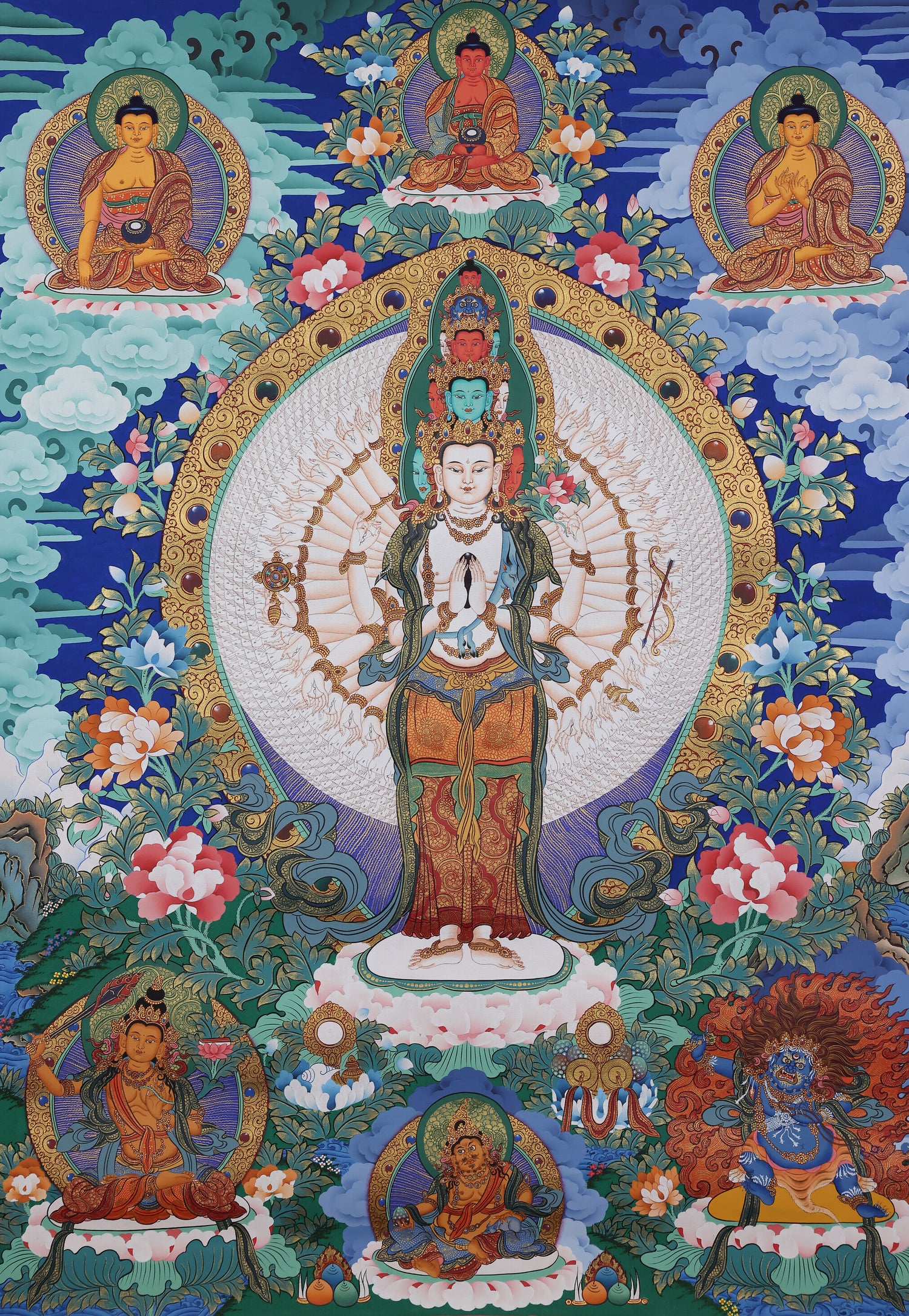
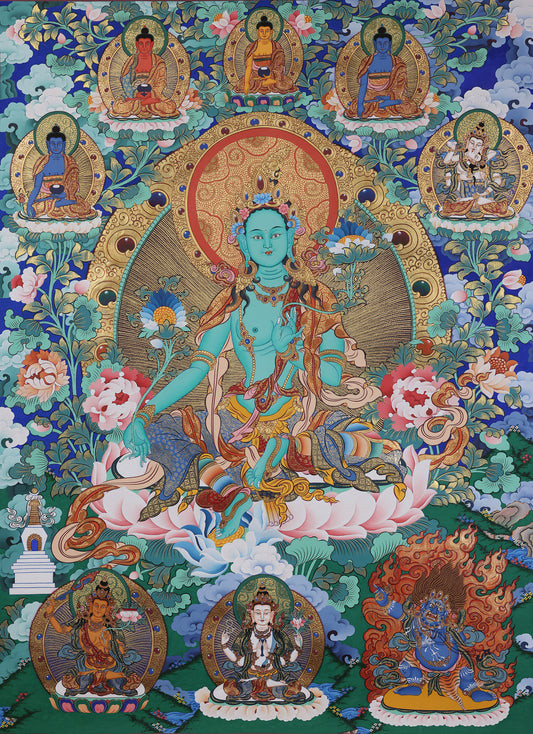
Hand-painted Guhyasamaja Mandala Thangka depicting the complete Vajrayana cosmology in Tibetan Buddhist art.
Guhyasamaja Mandala Thangka: Deep Exploration of Esoteric Order, Deity Hierarchy, and Traditional Craftsmanship
$499.00 USD

1. Core Theme: The “Ultimate Reality” Metaphor of the Guhyasamaja Mandala

At the heart of this Thangka is the Guhyasamaja Mandala (also known as the “Guhyasamaja Mandala of Intensification”), which serves as a visual representation of the Gelugpa school’s core esoteric practice, the Guhyasamaja Tantra. This mandala is not merely a decorative painting; it embodies the spatial manifestation of ultimate reality.

In Vajrayana Buddhism, the mandala is considered a microcosm of the Dharmadhatu, the true nature of all phenomena. The central square palace represents the emptiness of all dharmas, the surrounding circular rings symbolize the unity of time and space, and the nested layers metaphorically depict the practitioner’s gradual progression from worldly delusion to ultimate awakening.

Originating from the Guhyasamaja Tantra, the practice emphasizes “skillful means guided by wisdom”. By contemplating the mandala’s intricate layers, practitioners can “enter the Dharmadhatu within a single space,” realizing that afflictions are not separate from enlightenment. Thus, this Thangka functions both as a religious artwork and as a meditative visualization tool, embodying the core Vajrayana aspiration of “becoming a Buddha in this very body.”


2. Principal Deities: Guhyasamaja and Vajramama as the Yab-Yum Union

The central figures of the mandala are Guhyasamaja and his consort Vajramama, depicted in the Yab-Yum (father-mother) embrace, representing the inseparability of wisdom and skillful means:

  • Guhyasamaja: Deep blue in color, symbolizing the radiant Dharmadhatu, with six faces, six arms, and four legs. The six faces are colored blue, white, red, yellow, green, and black, representing the Six Paramitas. The six arms hold specific ritual implements: the first pair embraces the consort, symbolizing the unity of wisdom and compassion; other arms carry a vajra (to destroy afflictions), a dharmachakra (symbolizing the completeness of Dharma), a skull cup (representing non-duality of life and death), and a lasso (capturing sentient beings). The four legs step on the “Four Demons,” representing the subjugation of all obstacles.

  • Vajramama: Red in color, symbolizing wisdom heat energy, with one face and two arms. She holds an axe in her right hand (cutting through ignorance) and a skull cup filled with amrita in her left hand (symbolizing immortal wisdom). Though depicted in a Yab-Yum embrace, their union is not sexual; it symbolizes the ultimate unity of emptiness and luminosity, the core of the Guhyasamaja esoteric method of “using desire as a vehicle to enter Buddhic wisdom.”


3. Supporting Deities: The Progressive Network of Meditative Assistance

The mandala’s supporting deities are arranged in progressive concentric layers, forming a complete network from the core Dharmadhatu to worldly protector deities, guiding practitioners through successive levels of realization:

  • Inner Palace: Five Dhyani Buddhas and Eight Bodhisattvas
    Surrounding the central deities are the Five Dhyani Buddhas (Vairocana, Akshobhya, Ratnasambhava, Amitabha, Amoghasiddhi), representing the five wisdoms. Eight Bodhisattvas (Manjushri, Vajrapani, Avalokiteshvara, etc.) embody wisdom, power, and compassion, forming the mandala’s dharmic entourage and reminding practitioners that awakening is inseparable from sentient beings.

  • Middle Ring: Dakini and Heruka Protectors
    The middle layer features dakinis and heruka protectors. Dakinis are light-bodied, adorned in elegant garments, symbolizing freedom beyond worldly constraints. Herukas are powerful, holding ritual implements, safeguarding the mandala and practitioner. These figures do not represent external protection but the purity and power of the practitioner’s own mind.

  • Outer Decoration: Auspicious Symbols and Worldly Protectors
    The outermost band features the Eight Auspicious Symbols (Dharmachakra, conch, treasure vase, etc.), along with worldly protectors such as Kṣitigarbha, Green Tara, and Yellow Jambhala. This design ensures that the mandala serves both ultimate meditation purposes and practitioner’s worldly wishes, bridging the sacred and the worldly.


4. Painting Techniques: Material Sanctity and Traditional Craftsmanship

As a hand-painted Thangka, this piece strictly follows the “Three Sutras and One Commentary” ritual standards, embodying a union of artistic excellence and spiritual blessing:

Base and Pigments

  • Base: Pure cotton canvas, coated with a mixture of white lime and animal glue, polished to a mirror-like finish. The purity of the base is considered essential for the blessing power of the mandala.

  • Pigments: All pigments are natural minerals or plants: blue from lapis lazuli (ground over months), red from cinnabar, yellow from orpiment, and green from turquoise and malachite. These pigments not only maintain centuries-long color stability but also carry subtle spiritual energy, embodying faith through material form.

Technique and Detail

  • Linework: Drawn with fine wolf-hair brushes, with hairline precision, especially in deity garments, ritual implements, and geometric structures, strictly adhering to proportions defined in Sutra on Buddhist Iconometry.

  • Gold Application: 24K gold leaf or powder is applied using flat, layered, and engraved techniques, creating luminous palace walls, jewelry, and subtle relief effects. Gold symbolizes the radiance of the Dharmadhatu and shows reverence to the mandala.

  • Color Symbolism: Blue represents emptiness, red wisdom energy, yellow completeness, green growth. These colors are not decorative but visual representations of doctrinal principles, guiding meditators’ understanding of corresponding mental qualities.

Stylistic Origins

This Thangka reflects the Central Tibetan “refined style”, combining Nepalese precision with Tibetan solemnity. Common in Gelugpa monasteries, such mandalas require painters with over ten years of rigorous training to independently complete a piece.


5. Conclusion: Dual Nature of the Mandala Thangka

The Guhyasamaja Mandala Thangka embodies both artistic mastery and religious function:

  • Artistic Value: A pinnacle of Tibetan painting, showcasing vibrant colors, precise geometry, and elaborate goldwork.

  • Religious Function: Serves as a meditative tool for entering the Dharmadhatu, enabling the practitioner to experience unity of mind and ultimate reality.

Artists create these Thangkas under strict ritual observances, maintaining purity of body, speech, and mind, infusing the artwork with spiritual blessings. Practitioners, through prolonged visualization, gradually transform their mind and realize enlightenment, exemplifying the core Tibetan Buddhist principle that art is itself a path of spiritual practice.


#GuhyasamajaMandala #TibetanThangka #HandpaintedThangka #VajrayanaBuddhism #MeditationTool #VisualizationMandala #GelugpaThangka #TibetanArt #EsotericBuddhism #BuddhistArt #MandalaArt #SpiritualPractice #SacredArt #BuddhistMeditation #TraditionalCraftsmanship

Entdecken Sie das perfekte tibetisch-buddhistische Thangka, das zu Ihren Wünschen, Ihrem Lebensstil und Ihrem Raum passt. Jedes Thangka hat eine spirituelle Bedeutung und bringt Segen, wenn es richtig platziert wird.

1. Definieren Sie Ihre Absicht

Reichtum & Erfolg → Gelber Dzambhala (Gottheit des Reichtums)

Mitgefühl und Frieden → Avalokiteshvara, Grüne Tara

Weisheit & Lernen → Manjushri

Gesundheit & Heilung → Medizinbuddha

Langlebigkeit und Familienschutz → Weiße Tara

2. Wählen Sie nach Identität

Unternehmer und Geschäftsinhaber → Reichtumsgottheiten für Wohlstand.

Studenten und Gelehrte → Weisheitsgottheiten für Konzentration und Klarheit.

Heiler und Yoga-Praktizierende → Medizinbuddha für Energie und Gleichgewicht.

Familien und Hausfrauen → Tara-Gottheiten für Harmonie und Sicherheit.

Sammler und Kunstliebhaber → Seltene Mandalas oder Meisterwerk-Thangkas.

3. Passen Sie Ihren Raum an

Heimschrein / Meditationsraum → Mittlere Thangkas (60–80 cm).

Büro / Geschäftshalle → Große Thangkas für Wohlstand und Autorität.

Wohnzimmer / Arbeitszimmer → Dekorative Thangkas für Frieden und Schönheit.

4. Authentische Handwerkskunst

Jedes Thangka ist mit natürlichen Mineralpigmenten und feiner Leinwand handbemalt und spiegelt tibetische Kunstfertigkeit und spirituelle Kraft wider. Überprüfte Quellen gewährleisten Qualität und Respekt für die Tradition.

✨ Wählen Sie Ihr Thangka mit Herz – es ist nicht nur Kunst, sondern ein Segen für Ihr Leben.

Jeder Mensch hat unterschiedliche Bedürfnisse. Die Wahl des richtigen Thangkas kann spirituelle Unterstützung, Schutz, Glück und Segen bieten. Nachfolgend finden Sie Thangka-Empfehlungen für verschiedene Rollen:

1. Unternehmer

  • Bedürfnisse : Weisheit, Reichtum, Gesundheit, beruflicher Erfolg.
  • Empfohlene Thangkas :
    Manjushri : Verbessert die Entscheidungsfindung und Geschäftsweisheit.
    Gottheit des Reichtums : Bringt Reichtum und Wohlstand.
    Medizinbuddha : Unterstützt die Gesundheit und reduziert Stress.
    Mahakala : Schützt Unternehmen vor Konkurrenz und Herausforderungen.

2. Erfolgreiche Einzelpersonen

  • Bedürfnisse : Innerer Frieden, Familienharmonie, Langlebigkeit.
  • Empfohlene Thangkas :
    Amitabha Buddha : Bringt inneren Frieden und Ruhe.
    Avalokiteshvara (Guanyin) : Fördert Harmonie und Glück in der Familie.
    Amitayus (Langlebens-Buddha) : Betet für gute Gesundheit und ein langes Leben.
    Manjushri : Stärkt weiterhin die Weisheit.

3. Hausfrauen/Ehemänner

  • Bedürfnisse : Familienharmonie, Schutz, Gesundheit.
  • Empfohlene Thangkas :
    Avalokiteshvara : Steigert das Familienglück und die Harmonie.
    Schutzgottheiten : Beschützen die Familie vor äußeren Störungen.
    Weiße Tara : Segnet die Familie mit Gesundheit.

4. Studierende und Wissenschaftler

  • Bedürfnisse : Weisheit, Konzentration, akademischer Erfolg.
  • Empfohlene Thangkas :
    Manjushri : Fördert Lernfähigkeit, Gedächtnis und Weisheit.
    Shakyamuni Buddha : Hilft bei der Konzentration und spirituellen Praxis.
    Jixiang Tianmu : Bringt akademisches Glück und Prüfungserfolg.

5. Künstler und Kreativprofis

  • Bedürfnisse : Inspiration, Kreativität, künstlerische Leistung.
  • Empfohlene Thangkas :
    Manjushri : Regt kreatives Denken und Inspiration an.
    Vajrapani : Hilft, kreative Blockaden zu überwinden.
    Maitreya : Sorgt für eine entspannte und optimistische Einstellung und baut Stress ab.

6. Reisende und Abenteurer

  • Bedürfnisse : Schutz, Glück, Erfolg bei Abenteuern.
  • Empfohlene Thangkas :
    Hayagriva : Bietet starken Schutz auf Reisen und beseitigt Hindernisse.
    Mahakala : Bringt Glück und Schutz, insbesondere für Abenteurer.
    Vajrasattva : Hilft, Schwierigkeiten und Herausforderungen während der Reise zu überwinden.

7. Ältere Menschen

  • Bedürfnisse : Gesundheit, Langlebigkeit, spiritueller Frieden.
  • Empfohlene Thangkas :
    Amitayus : Betet für ein langes Leben und gute Gesundheit.
    Medizinbuddha : Fördert Heilung und körperliches Wohlbefinden.
    Avalokiteshvara : Bringt Mitgefühl und inneren Frieden in späteren Jahren.

8. Führungskräfte

  • Bedürfnisse : Führung, Weisheit, Teamarbeit und geschäftlicher Erfolg.
  • Empfohlene Thangkas :
    Manjushri : Verbessert Führungsqualitäten und Entscheidungsfindung.
    Gottheit des Reichtums : Bringt dem Unternehmen und dem Team Erfolg und Wohlstand.
    Avalokiteshvara : Fördert Harmonie und Gleichgewicht innerhalb des Teams.

9. Gesundheits- und Fitnessbegeisterte

  • Bedürfnisse : Gute Gesundheit, Vitalität, Energie.
  • Empfohlene Thangkas :
    Medizinbuddha : Verbessert die körperliche Gesundheit und Vitalität.
    Weiße Tara : Bringt Gesundheit und Verjüngung.
    Vajrasattva : Beseitigt gesundheitliche Probleme und steigert die Energie.

10. Politiker

  • Bedürfnisse : Führung, Weisheit, Frieden.
  • Empfohlene Thangkas :
    Manjushri : Verbessert Führungsqualitäten und Entscheidungsfindung.
    Vairocana Buddha : Hilft, inneren Frieden und Weisheit zu bewahren.
    Avalokiteshvara : Fördert den gesellschaftlichen Frieden und die Harmonie in der Familie.

Für alle Bestellungen über 100 USD ist der Versand kostenlos.

Rücksendungen werden bis zu 10 Tage nach Erhalt des Kaufbelegs bzw. der Sendungsnummer (bei ungetragenen Artikeln) akzeptiert. Sie als Kunde sind verpflichtet, uns vor der Rücksendung des Artikels per E-Mail zu informieren.

Andernfalls fallen die Standardversandkosten an. Weitere Informationen finden Sie in unseren Lieferbedingungen .

Rücksendungen werden bis zu 10 Tage nach Erhalt des Kaufbelegs oder der Sendungsnummer (bei ungetragenen Artikeln) akzeptiert. Sie als Kunde sind verpflichtet, uns vor der Rücksendung des Artikels per E-Mail zu informieren, nur in folgenden Fällen:

– Den falschen Artikel erhalten.
– Artikel kam nicht wie erwartet an (z. B. beschädigte Verpackung).
– Artikel hatte Mängel.
– Über die Lieferzeit hinaus.
– Der Spediteur gestattet keine Besichtigung der Ware vor der Bezahlung.

Die zurückgesendeten Produkte müssen in der Originalverpackung, sicher verpackt, unbeschädigt und ungetragen sein. Dies bedeutet, dass die Artikel zum Schutz während des Transports sicher in einem Karton verpackt sein müssen, möglichst im selben Karton, in dem sie an Sie als Kunde versendet wurden.

Kürzlich angesehen

Nicht vergessen! Die Produkte, die Sie angesehen haben, legen Sie jetzt in den Warenkorb.

Passt gut zu

Erweitern Sie Ihre Auswahl mit perfekt abgestimmtem Zubehör und ergänzenden Produkten.

Leute kauften auch

Hier sind einige unserer ähnlichsten Produkte, die die Leute kaufen. Klicken Sie hier, um den Trendstil zu entdecken.