Cultural Decoding of Hand-Painted Tibetan Thangka The Principal Deity, Retinue, and Sacred Craftsmanship of Guru Padmasambhava

$599.00 USD
Thangka Name: Padmasambhava
Size: 46*65
Orgin: Nepal
Eine Frage stellen

Beeil dich! Nur noch [Anzahl] auf Lager!

Geschätzte Lieferzeiten: 12–26 Tage (International), 3–6 Tage (USA).

Rückgabe innerhalb von 45 Tagen nach dem Kauf. Zölle und Steuern werden nicht erstattet.

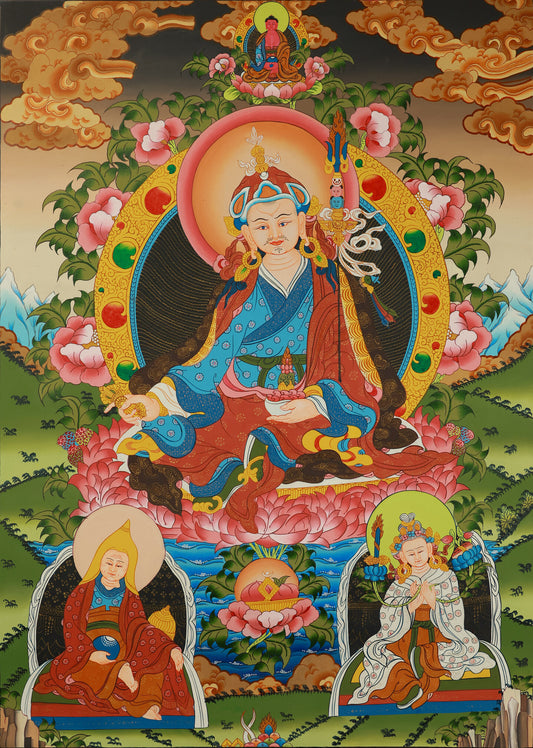
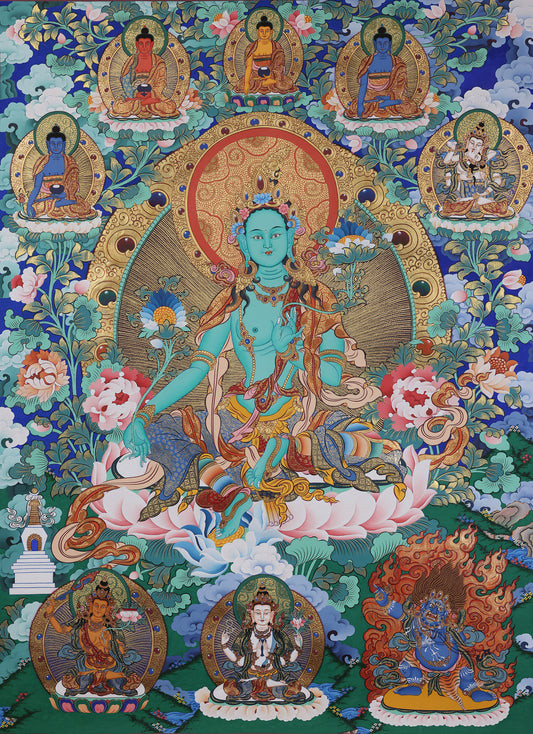
Padmasambhava meditating in lotus posture, traditional Tibetan Buddhist thangka painting.
Cultural Decoding of Hand-Painted Tibetan Thangka The Principal Deity, Retinue, and Sacred Craftsmanship of Guru Padmasambhava
$599.00 USD

In the artistic system of Tibetan Buddhism, a Thangka is far more than a visual artwork. It is a sacred support for practice — a consecrated image through which doctrine, lineage, and realization are transmitted. Through iconographic precision and mineral-based pigments, Tibetan Thangka painting transforms spiritual teachings into a visible, contemplative form, allowing faith to be preserved across generations.

This pure hand-painted Thangka of Guru Padmasambhava—the central enlightened figure of the Nyingma tradition—faithfully embodies Tibetan Buddhist cultural logic in its theme, iconography, and craftsmanship. It is a classical work that integrates religious lineage, ritual symbolism, and sacred aesthetics.


I. Core Theme: Guru Padmasambhava and the “Three Roots” of Nyingma Faith

The central theme of this Thangka is “The Manifestations of Guru Rinpoche”, which corresponds directly to the Three Roots of the Nyingma school:
Guru (Lama), Yidam (Meditational Deity), and Dharma Protector.

Guru Padmasambhava, the great Indian tantric master of the 8th century, was invited to Tibet by King Trisong Detsen. He founded Samye Monastery, ordained the first Tibetan monks, and successfully integrated Buddhist teachings with indigenous Tibetan spiritual traditions. For this reason, he is revered as the Founder of Tibetan Buddhism.

In Thangka iconography, Padmasambhava is not portrayed merely as a historical figure, but as a fully enlightened emanation of Buddhahood. Through the combined imagery of the principal deity, attendant figures, and symbolic surroundings, this Thangka establishes a dual spiritual function:

  • The central figure bestows guru blessings

  • The retinue provides protection and lineage continuity

  • The background elements recall Guru Rinpoche’s subjugation of negative forces and establishment of the Dharma


II. Iconography of the Principal Deity: The “Royal Minister Form” of Guru Rinpoche

At the center of the composition stands Guru Padmasambhava, rendered strictly according to the Iconometric Scriptures and Nyingma ritual standards.

1. Physical Appearance

The master is depicted with a square face and beard, presenting the dignified appearance of a middle-aged sovereign—a defining feature of the “Royal Minister Form.” This distinguishes him from the idealized Buddha marks or the gentle expressions of bodhisattvas.
The white urna at the brow symbolizes transcendent wisdom, while jeweled earrings represent his identity as a universal spiritual monarch.

2. Sacred Attire

Guru Rinpoche wears a blue inner robe adorned with golden patterns, over which rests a red monastic shawl draped over one shoulder:

  • Blue symbolizes emptiness and primordial wisdom

  • Red represents compassion and enlightened activity

  • A green sash decorated with miniature stupas signifies the eternal presence of the Dharma

This attire embodies the historical and spiritual bond between Indian tantric Buddhism and Tibetan monastic culture.

3. Ritual Implements

  • Skull Cup (Kapala) in the left hand, containing nectar, symbolizing the union of wisdom and skillful means

  • Khatvanga staff cradled in the arm, adorned with symbolic elements, representing mastery over negative forces

  • Vajra held in the right hand in the gesture of fearlessness, expressing the power to dispel ignorance and protect practitioners

4. Halo and Lotus Throne

The green head halo and gold-patterned body aura visually unite worldly authority with transcendent realization.
The double-layered lotus throne beneath the master signifies liberation from samsaric defilements and affirms his status as an enlightened emanation.


III. Retinue Deities: Lineage Transmission and Protective Structure

The accompanying figures in this Thangka are essential components of a complete doctrinal system, not decorative additions.

1. Left Attendant: Yeshe Tsogyal, the Dakini of Wisdom

Depicted in monastic form, Yeshe Tsogyal holds a treasure vase and symbolizes the pure transmission of esoteric teachings. As Guru Rinpoche’s foremost disciple in Tibet and an emanation of the Wisdom Dakini, her presence affirms the purity and continuity of the lineage.

2. Right Attendant: Devotional Disciple or Bodhisattva Figure

Shown in an attitude of reverent offering, this figure represents devoted discipleship and the future continuation of the Dharma through sentient beings.

3. Upper Deity: Amitabha Buddha

Above Guru Padmasambhava appears Amitabha Buddha, reinforcing the Nyingma understanding of Guru Rinpoche as an emanation of Amitabha and symbolizing the ultimate aspiration toward Pure Land rebirth.

4. Lower Offerings: Treasure Vessels and Auspicious Fruits

These offerings visualize the accumulation of merit and spiritual resources necessary for enlightenment.


IV. Sacred Painting Craftsmanship: Eternal Materials for Timeless Dharma

This Thangka is a pure hand-painted masterpiece, blending techniques from the Newari painting tradition of Nepal with the Tibetan Mentang school.

1. Canvas Preparation

Fine cotton canvas undergoes multiple applications of aged animal glue and chalk powder, creating a smooth, sacred foundation that ensures longevity and ritual purity.

2. Natural Mineral Pigments

  • Lapis Lazuli Blue for the robes, offering exceptional depth and lightfastness

  • Cinnabar Red for monastic garments, valued for both sanctity and preservation

  • 24K Gold applied as gold powder and burnished by hand, symbolizing the unchanging nature of Buddhahood

These pigments are chosen not merely for beauty, but for their symbolic alignment with eternal truth.

3. Traditional Techniques

  • Iron-wire line drawing for authority and clarity

  • Silk-thread line work for ornamental elegance

  • Layered shading (fenran) for three-dimensional form

  • Ultra-fine gold detailing, controlled to fractions of a millimeter

Each stroke reflects disciplined practice and devotional intent.

4. Eye-Opening and Consecration

The final stage involves the Eye-Opening Ceremony, in which the pupils are painted on an auspicious day accompanied by mantra recitation. Afterward, the Thangka is consecrated by a qualified lama, transforming it from an image into a living support for practice.


V. Living Dharma: The Thangka as a Sacred Teaching

The value of this Guru Padmasambhava Thangka extends far beyond artistic appreciation. It embodies the Tibetan Buddhist tradition of “teaching through image”, allowing practitioners to connect with the guru’s blessings through visualization and contemplation.

Every line, pigment, and ritual step reflects a commitment to purity, continuity, and timeless wisdom. In an age of industrial speed, this hand-painted Thangka preserves the spirit of slow practice and authentic lineage transmission.

It is not decoration—it is a silent yet ever-present spiritual guide.


#TibetanThangka
#GuruPadmasambhava
#GuruRinpoche
#TibetanBuddhistArt
#HandPaintedThangka
#AuthenticThangka

#NyingmaTradition
#TibetanBuddhism
#SpiritualArtwork
#MeditationSupport
#GuruBlessing
#TantricBuddhism

#MineralPigmentArt
#GoldThangka
#SacredArt
#BuddhistIconography
#ThangkaPainting
#HimalayanArt

#BuddhistArtCollection
#SacredBuddhistArt
#LuxuryThangka
#MindfulnessDecor
#SpiritualHomeDecor
Entdecken Sie das perfekte tibetisch-buddhistische Thangka, das zu Ihren Wünschen, Ihrem Lebensstil und Ihrem Raum passt. Jedes Thangka hat eine spirituelle Bedeutung und bringt Segen, wenn es richtig platziert wird.

1. Definieren Sie Ihre Absicht

Reichtum & Erfolg → Gelber Dzambhala (Gottheit des Reichtums)

Mitgefühl und Frieden → Avalokiteshvara, Grüne Tara

Weisheit & Lernen → Manjushri

Gesundheit & Heilung → Medizinbuddha

Langlebigkeit und Familienschutz → Weiße Tara

2. Wählen Sie nach Identität

Unternehmer und Geschäftsinhaber → Reichtumsgottheiten für Wohlstand.

Studenten und Gelehrte → Weisheitsgottheiten für Konzentration und Klarheit.

Heiler und Yoga-Praktizierende → Medizinbuddha für Energie und Gleichgewicht.

Familien und Hausfrauen → Tara-Gottheiten für Harmonie und Sicherheit.

Sammler und Kunstliebhaber → Seltene Mandalas oder Meisterwerk-Thangkas.

3. Passen Sie Ihren Raum an

Heimschrein / Meditationsraum → Mittlere Thangkas (60–80 cm).

Büro / Geschäftshalle → Große Thangkas für Wohlstand und Autorität.

Wohnzimmer / Arbeitszimmer → Dekorative Thangkas für Frieden und Schönheit.

4. Authentische Handwerkskunst

Jedes Thangka ist mit natürlichen Mineralpigmenten und feiner Leinwand handbemalt und spiegelt tibetische Kunstfertigkeit und spirituelle Kraft wider. Überprüfte Quellen gewährleisten Qualität und Respekt für die Tradition.

✨ Wählen Sie Ihr Thangka mit Herz – es ist nicht nur Kunst, sondern ein Segen für Ihr Leben.

Jeder Mensch hat unterschiedliche Bedürfnisse. Die Wahl des richtigen Thangkas kann spirituelle Unterstützung, Schutz, Glück und Segen bieten. Nachfolgend finden Sie Thangka-Empfehlungen für verschiedene Rollen:

1. Unternehmer

  • Bedürfnisse : Weisheit, Reichtum, Gesundheit, beruflicher Erfolg.
  • Empfohlene Thangkas :
    Manjushri : Verbessert die Entscheidungsfindung und Geschäftsweisheit.
    Gottheit des Reichtums : Bringt Reichtum und Wohlstand.
    Medizinbuddha : Unterstützt die Gesundheit und reduziert Stress.
    Mahakala : Schützt Unternehmen vor Konkurrenz und Herausforderungen.

2. Erfolgreiche Einzelpersonen

  • Bedürfnisse : Innerer Frieden, Familienharmonie, Langlebigkeit.
  • Empfohlene Thangkas :
    Amitabha Buddha : Bringt inneren Frieden und Ruhe.
    Avalokiteshvara (Guanyin) : Fördert Harmonie und Glück in der Familie.
    Amitayus (Langlebens-Buddha) : Betet für gute Gesundheit und ein langes Leben.
    Manjushri : Stärkt weiterhin die Weisheit.

3. Hausfrauen/Ehemänner

  • Bedürfnisse : Familienharmonie, Schutz, Gesundheit.
  • Empfohlene Thangkas :
    Avalokiteshvara : Steigert das Familienglück und die Harmonie.
    Schutzgottheiten : Beschützen die Familie vor äußeren Störungen.
    Weiße Tara : Segnet die Familie mit Gesundheit.

4. Studierende und Wissenschaftler

  • Bedürfnisse : Weisheit, Konzentration, akademischer Erfolg.
  • Empfohlene Thangkas :
    Manjushri : Fördert Lernfähigkeit, Gedächtnis und Weisheit.
    Shakyamuni Buddha : Hilft bei der Konzentration und spirituellen Praxis.
    Jixiang Tianmu : Bringt akademisches Glück und Prüfungserfolg.

5. Künstler und Kreativprofis

  • Bedürfnisse : Inspiration, Kreativität, künstlerische Leistung.
  • Empfohlene Thangkas :
    Manjushri : Regt kreatives Denken und Inspiration an.
    Vajrapani : Hilft, kreative Blockaden zu überwinden.
    Maitreya : Sorgt für eine entspannte und optimistische Einstellung und baut Stress ab.

6. Reisende und Abenteurer

  • Bedürfnisse : Schutz, Glück, Erfolg bei Abenteuern.
  • Empfohlene Thangkas :
    Hayagriva : Bietet starken Schutz auf Reisen und beseitigt Hindernisse.
    Mahakala : Bringt Glück und Schutz, insbesondere für Abenteurer.
    Vajrasattva : Hilft, Schwierigkeiten und Herausforderungen während der Reise zu überwinden.

7. Ältere Menschen

  • Bedürfnisse : Gesundheit, Langlebigkeit, spiritueller Frieden.
  • Empfohlene Thangkas :
    Amitayus : Betet für ein langes Leben und gute Gesundheit.
    Medizinbuddha : Fördert Heilung und körperliches Wohlbefinden.
    Avalokiteshvara : Bringt Mitgefühl und inneren Frieden in späteren Jahren.

8. Führungskräfte

  • Bedürfnisse : Führung, Weisheit, Teamarbeit und geschäftlicher Erfolg.
  • Empfohlene Thangkas :
    Manjushri : Verbessert Führungsqualitäten und Entscheidungsfindung.
    Gottheit des Reichtums : Bringt dem Unternehmen und dem Team Erfolg und Wohlstand.
    Avalokiteshvara : Fördert Harmonie und Gleichgewicht innerhalb des Teams.

9. Gesundheits- und Fitnessbegeisterte

  • Bedürfnisse : Gute Gesundheit, Vitalität, Energie.
  • Empfohlene Thangkas :
    Medizinbuddha : Verbessert die körperliche Gesundheit und Vitalität.
    Weiße Tara : Bringt Gesundheit und Verjüngung.
    Vajrasattva : Beseitigt gesundheitliche Probleme und steigert die Energie.

10. Politiker

  • Bedürfnisse : Führung, Weisheit, Frieden.
  • Empfohlene Thangkas :
    Manjushri : Verbessert Führungsqualitäten und Entscheidungsfindung.
    Vairocana Buddha : Hilft, inneren Frieden und Weisheit zu bewahren.
    Avalokiteshvara : Fördert den gesellschaftlichen Frieden und die Harmonie in der Familie.

Für alle Bestellungen über 100 USD ist der Versand kostenlos.

Rücksendungen werden bis zu 10 Tage nach Erhalt des Kaufbelegs bzw. der Sendungsnummer (bei ungetragenen Artikeln) akzeptiert. Sie als Kunde sind verpflichtet, uns vor der Rücksendung des Artikels per E-Mail zu informieren.

Andernfalls fallen die Standardversandkosten an. Weitere Informationen finden Sie in unseren Lieferbedingungen .

Rücksendungen werden bis zu 10 Tage nach Erhalt des Kaufbelegs oder der Sendungsnummer (bei ungetragenen Artikeln) akzeptiert. Sie als Kunde sind verpflichtet, uns vor der Rücksendung des Artikels per E-Mail zu informieren, nur in folgenden Fällen:

– Den falschen Artikel erhalten.
– Artikel kam nicht wie erwartet an (z. B. beschädigte Verpackung).
– Artikel hatte Mängel.
– Über die Lieferzeit hinaus.
– Der Spediteur gestattet keine Besichtigung der Ware vor der Bezahlung.

Die zurückgesendeten Produkte müssen in der Originalverpackung, sicher verpackt, unbeschädigt und ungetragen sein. Dies bedeutet, dass die Artikel zum Schutz während des Transports sicher in einem Karton verpackt sein müssen, möglichst im selben Karton, in dem sie an Sie als Kunde versendet wurden.

Kürzlich angesehen

Nicht vergessen! Die Produkte, die Sie angesehen haben, legen Sie jetzt in den Warenkorb.

Passt gut zu

Erweitern Sie Ihre Auswahl mit perfekt abgestimmtem Zubehör und ergänzenden Produkten.

Leute kauften auch

Hier sind einige unserer ähnlichsten Produkte, die die Leute kaufen. Klicken Sie hier, um den Trendstil zu entdecken.