Unveiling a Nepalese Hand-Painted Vaishravana Thangka: The Fusion of Tibetan Buddhist Beliefs and Himalayan Art

$599.00 USD
Thangka name: Caitang treasure king
size: 45cm×65
origin: Nepal
Eine Frage stellen

Beeil dich! Nur noch [Anzahl] auf Lager!

Geschätzte Lieferzeiten: 12–26 Tage (International), 3–6 Tage (USA).

Rückgabe innerhalb von 45 Tagen nach dem Kauf. Zölle und Steuern werden nicht erstattet.

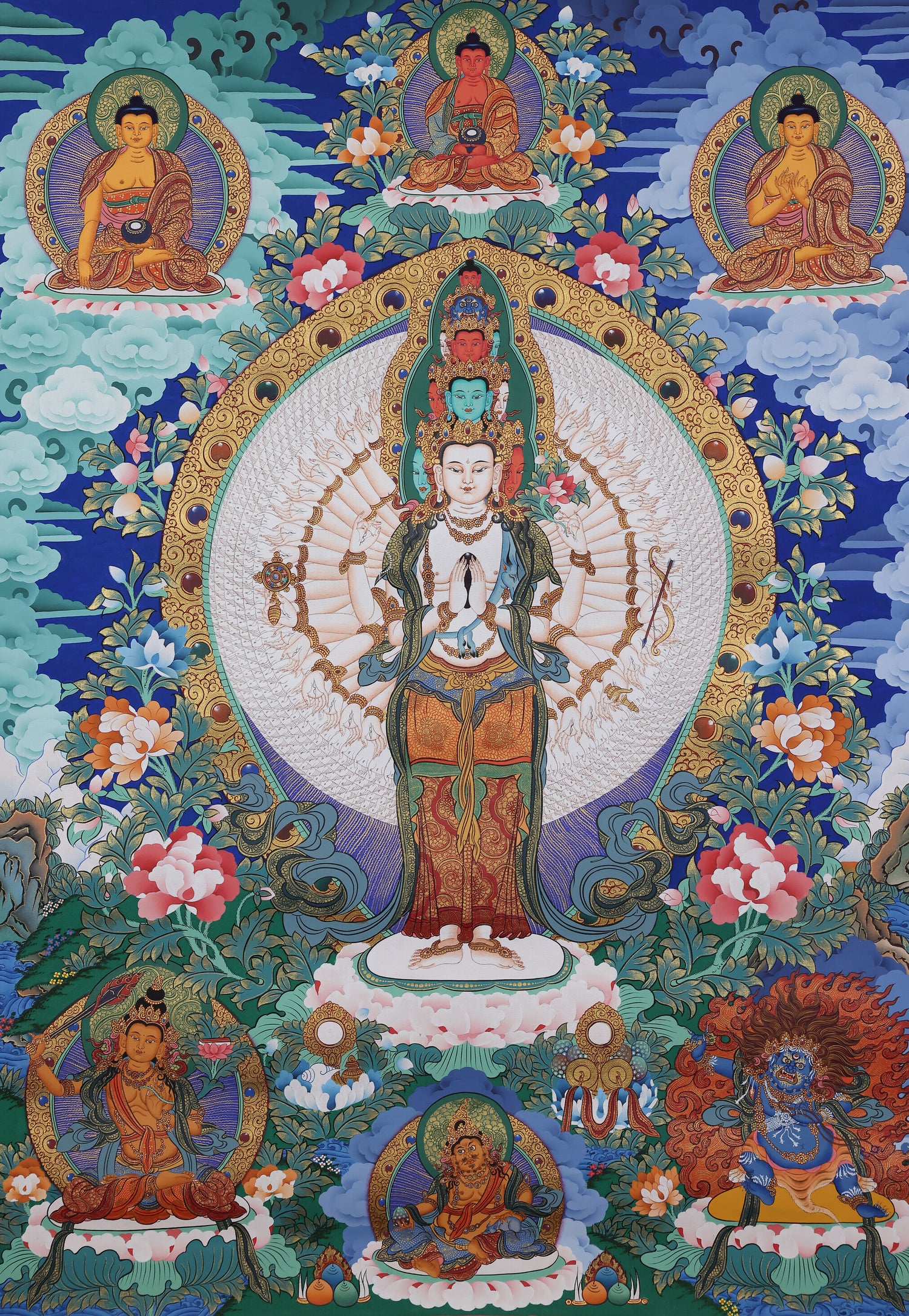
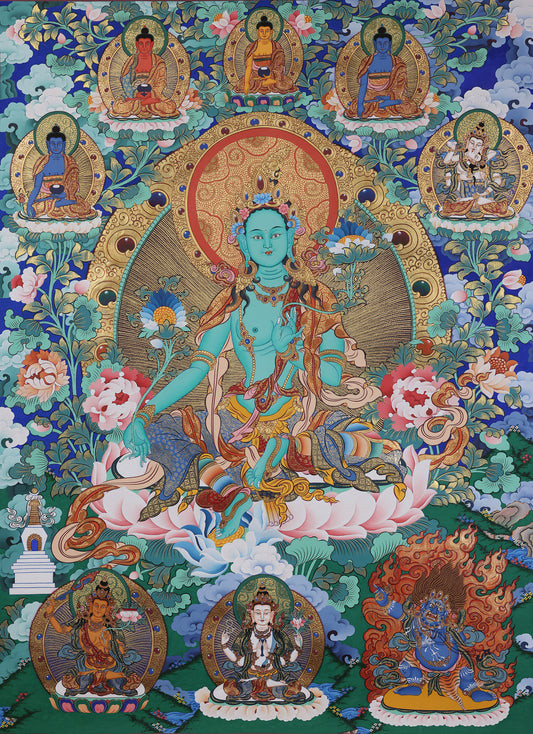
Hand-painted Tibetan Buddhist color thangka depicting Vaishravana, the guardian deity of wealth and prosperity
Unveiling a Nepalese Hand-Painted Vaishravana Thangka: The Fusion of Tibetan Buddhist Beliefs and Himalayan Art
$599.00 USD
In the Himalayan cultural sphere, a thangka is never "just a painting"—it is a visual vessel for faith, a symbiosis of craftsmanship and ritual. Today, we explore a 45×65cm hand-painted Nepalese Vaishravana thangka: a product of Tibetan Buddhist culture and Newari artistic 精髓,with mineral pigments as its "bones" and the belief in the Wealth Protector Deity as its "soul, condensing the doctrinal logic of Tibetan Buddhism and the aesthetic code of Himalayan art within its compact frame.

I. The Theme: Vaishravana’s Dual Divinity—Pragmatic Faith in Tibetan Buddhism

In Tibetan Buddhism, the belief in Vaishravana (Sanskrit: Vaishravana; Tibetan: Namthö Sé) balances "renunciate practice" and "worldly needs": he is both the Northern Dharma Protector among the Four Heavenly Kings, guarding the northern realm of Mount Meru and the transmission of the Dharma; and an emanation of Ratnasambhava Buddha (the Southern Buddha), commanding the Eight Horse-faced Wealth Gods to oversee worldly prosperity.

The core theme of this thangka is a precise visualization of this "dual divinity":

  • Dharma Protector Dimension: The main deity’s majestic, semi-wrathful visage and the victory banner (dhvaja) in his right hand symbolize the protection of the Dharma and subjugation of obstacles;
  • Wealth Deity Dimension: The treasure-spitting mongoose (marici) in his left hand and the treasure-bearing iconography of his retinue reflect Tibetan believers’ spiritual desire to "use worldly resources to support spiritual practice."

This "divine symbiosis" embodies Tibetan Buddhism’s pragmatic logic: "embrace worldly needs, yet return to transcendental liberation"—and Nepalese thangkas are the ideal medium for translating this logic into visual language.

II. The Main Deity: Divine Coding in Iconography (With Newari School Characteristics)

The central Vaishravana iconography adheres strictly to the Iconometric Canon ( Pratimālakṣaṇa ) while bearing distinct marks of the Nepalese Newari school:

1. Form: The Metaphor of Yellow Body and Lalita Asana

The main deity has a yellow body (corresponding to Ratnasambhava Buddha’s "precious hue") and sits in lalita asana (half-lotus pose) astride a white lion:

  • Yellow body: Symbolizes wealth and radiance, a direct visual marker of his "Wealth God" attribute;
  • Lalita asana: Unlike the full lotus pose of Buddhas, this posture reflects the divine trait of "guarding the Dharma with majesty while accommodating sentient beings’ needs";
  • White lion mount: The lion symbolizes "subjugating afflictions." In the Newari style, the white lion’s flowing mane softens its ferocity, emphasizing its "protective" warmth.

2. Ritual Implements: Each Is a "Faith Cipher"

  • Victory Banner (Dhvaja): Adorned with a jewel at the top, it symbolizes both "the accumulation of wealth" and "protective shelter"—in Tibetan Buddhism, the victory banner is often a sign of the Dharma’s flourishing;
  • Treasure-Spitting Mongoose (Marici): The mongoose spitting a continuous stream of jewels is the iconic implement of Vaishravana’s "wealth-overseeing" role, and the core focus of Tibetan believers’ devotion to this deity.

3. Newari School Details: From Visage to Adornment

Unlike the "flat ornamentation" of Tibetan thangkas, this main deity carries unique Newari artistic traits:

  • Visage: Squarish and rounded, with prominent brow ridges and wide-open eyes (not 狰狞,but "semi-wrathful"), aligning with Nepalese folk aesthetics of a "benevolent protector";
  • Adornment: Jeweled five-Buddha crown, pearl necklaces, and flowing green silk sashes—intricate but not cluttered. The Newari school excels at using ornate adornment to highlight divine "dignity," while dynamic lines avoid a sense of heaviness.

III. The Retinue Pantheon: A Protective System in Mandala Layout

This thangka uses a mandala-style symmetrical layout, with the retinue deities surrounding the main figure to form a complete "wealth protection network":

1. Upper Deities: The "Foundational Anchor" of the Dharma

  • Central upper Buddha: Typically Ratnasambhava Buddha (or Shakyamuni Buddha), seated in full lotus pose on a lotus throne—this clarifies that "Vaishravana is an emanation of the Buddha, and his divinity originates from the Dharma itself";
  • Flanking Bodhisattvas: Often White Tara and Green Tara (or Manjushri and Avalokiteshvara), representing "compassion" and "wisdom," echoing Vaishravana’s vow to "alleviate sentient beings’ suffering through wealth."

2. Eight Horse-Faced Wealth Gods: The "Executors" of Wealth

The eight retinue figures surrounding the main deity are the "Eight Horse-Faced Wealth Gods":

  • Iconographic traits: Each holds a treasure-spitting mongoose, with distinct body colors and implements (e.g., the Eastern Wealth God holds a jewel, the Western one a wish-fulfilling gem), and most ride horses (hence the "Eight Horse-Faced" name);
  • Cultural significance: Arranged to correspond to the "eight directions," they symbolize "wealth permeating the world"—the primary focus of Tibetan believers’ prayers for "abundant fortune." In the Newari style, these deities feature more ornate attire and dynamic poses, exuding a sense of "prosperity."

3. Lower Protectors: The "Removers" of Obstacles

The wrathful figures at the bottom (often Black Wealth God or Yaksha protectors) hold implements in fierce poses—their role is to "eliminate obstacles to wealth and practice," complementing the main deity’s semi-wrathful visage to form a complete system of "protecting the good Dharma and dispelling evil obstacles."

IV. Craftsmanship and Style: Eternal Faith in Mineral Pigments

Painted with natural mineral and earth pigments, this thangka epitomizes traditional Nepalese craftsmanship and Tibetan Buddhism’s principle that "material is faith":

1. Mineral Pigments: The "Faithful Base" That Endures for Millennia

Pigments include natural minerals such as cinnabar (red), lapis lazuli (blue), malachite (green), and orpiment (yellow), plus plant pigments like saffron and rhubarb:

  • Material significance: The lightfastness and durability of mineral pigments symbolize "the eternity of the Dharma"—a high-quality mineral-pigment thangka can retain its colors for centuries;
  • Color symbolism: Lapis lazuli blue corresponds to "sky and tranquility," cinnabar red to "majesty and vitality," and orpiment yellow to "radiance and wealth"—each hue is a "symbolic language" of Tibetan Buddhism.

2. Newari School Craftsmanship: Ritualized Creation

Painting a Nepalese thangka is itself a "spiritual practice":

  1. Base Preparation: Cotton fabric is coated with layers of chalk and animal glue, sanded repeatedly until "smooth as a mirror" (a 45×65cm thangka takes 2–3 days for this step);
  2. Outlining: Using charcoal, the design is sketched per the Iconometric Canon with a margin of error under 1mm—"precision" is an act of reverence for the deity;
  3. Coloring and Gradation: Base colors are applied first, followed by multiple layers of blending (the Newari school’s "gradient shading" differs from Tibetan thangkas’ "flat application"), and finally outlined in gold thread to enhance opulence;
  4. Consecration: After completion, a high lama writes the seed syllables "Om Ah Hum" on the back, endowing the thangka with the religious attribute of a "spiritual aid."

Final Thoughts: The Dual Value of the Thangka

This 45×65cm Vaishravana thangka is a prime example of "small but exquisite": it is both a ritual object suitable for temple display and a collectible Himalayan art masterpiece. From iconographic symbols to mineral pigments, from thematic logic to craft details, it tells a truth—thangkas are never "decorations," but a vivid practice of Tibetan Buddhist culture: "carrying faith through art, and integrating faith into life."

#NepaleseThangka #VaishravanaThangka #TibetanBuddhistThangka #NewariArtSchool #MineralPigmentThangka #HandPaintedThangkaAnalysis #TibetanBuddhistWealthDeity #HimalayanArt #ThangkaIconography #BuddhistProtectorThangka
Entdecken Sie das perfekte tibetisch-buddhistische Thangka, das zu Ihren Wünschen, Ihrem Lebensstil und Ihrem Raum passt. Jedes Thangka hat eine spirituelle Bedeutung und bringt Segen, wenn es richtig platziert wird.

1. Definieren Sie Ihre Absicht

Reichtum & Erfolg → Gelber Dzambhala (Gottheit des Reichtums)

Mitgefühl und Frieden → Avalokiteshvara, Grüne Tara

Weisheit & Lernen → Manjushri

Gesundheit & Heilung → Medizinbuddha

Langlebigkeit und Familienschutz → Weiße Tara

2. Wählen Sie nach Identität

Unternehmer und Geschäftsinhaber → Reichtumsgottheiten für Wohlstand.

Studenten und Gelehrte → Weisheitsgottheiten für Konzentration und Klarheit.

Heiler und Yoga-Praktizierende → Medizinbuddha für Energie und Gleichgewicht.

Familien und Hausfrauen → Tara-Gottheiten für Harmonie und Sicherheit.

Sammler und Kunstliebhaber → Seltene Mandalas oder Meisterwerk-Thangkas.

3. Passen Sie Ihren Raum an

Heimschrein / Meditationsraum → Mittlere Thangkas (60–80 cm).

Büro / Geschäftshalle → Große Thangkas für Wohlstand und Autorität.

Wohnzimmer / Arbeitszimmer → Dekorative Thangkas für Frieden und Schönheit.

4. Authentische Handwerkskunst

Jedes Thangka ist mit natürlichen Mineralpigmenten und feiner Leinwand handbemalt und spiegelt tibetische Kunstfertigkeit und spirituelle Kraft wider. Überprüfte Quellen gewährleisten Qualität und Respekt für die Tradition.

✨ Wählen Sie Ihr Thangka mit Herz – es ist nicht nur Kunst, sondern ein Segen für Ihr Leben.

Jeder Mensch hat unterschiedliche Bedürfnisse. Die Wahl des richtigen Thangkas kann spirituelle Unterstützung, Schutz, Glück und Segen bieten. Nachfolgend finden Sie Thangka-Empfehlungen für verschiedene Rollen:

1. Unternehmer

  • Bedürfnisse : Weisheit, Reichtum, Gesundheit, beruflicher Erfolg.
  • Empfohlene Thangkas :
    Manjushri : Verbessert die Entscheidungsfindung und Geschäftsweisheit.
    Gottheit des Reichtums : Bringt Reichtum und Wohlstand.
    Medizinbuddha : Unterstützt die Gesundheit und reduziert Stress.
    Mahakala : Schützt Unternehmen vor Konkurrenz und Herausforderungen.

2. Erfolgreiche Einzelpersonen

  • Bedürfnisse : Innerer Frieden, Familienharmonie, Langlebigkeit.
  • Empfohlene Thangkas :
    Amitabha Buddha : Bringt inneren Frieden und Ruhe.
    Avalokiteshvara (Guanyin) : Fördert Harmonie und Glück in der Familie.
    Amitayus (Langlebens-Buddha) : Betet für gute Gesundheit und ein langes Leben.
    Manjushri : Stärkt weiterhin die Weisheit.

3. Hausfrauen/Ehemänner

  • Bedürfnisse : Familienharmonie, Schutz, Gesundheit.
  • Empfohlene Thangkas :
    Avalokiteshvara : Steigert das Familienglück und die Harmonie.
    Schutzgottheiten : Beschützen die Familie vor äußeren Störungen.
    Weiße Tara : Segnet die Familie mit Gesundheit.

4. Studierende und Wissenschaftler

  • Bedürfnisse : Weisheit, Konzentration, akademischer Erfolg.
  • Empfohlene Thangkas :
    Manjushri : Fördert Lernfähigkeit, Gedächtnis und Weisheit.
    Shakyamuni Buddha : Hilft bei der Konzentration und spirituellen Praxis.
    Jixiang Tianmu : Bringt akademisches Glück und Prüfungserfolg.

5. Künstler und Kreativprofis

  • Bedürfnisse : Inspiration, Kreativität, künstlerische Leistung.
  • Empfohlene Thangkas :
    Manjushri : Regt kreatives Denken und Inspiration an.
    Vajrapani : Hilft, kreative Blockaden zu überwinden.
    Maitreya : Sorgt für eine entspannte und optimistische Einstellung und baut Stress ab.

6. Reisende und Abenteurer

  • Bedürfnisse : Schutz, Glück, Erfolg bei Abenteuern.
  • Empfohlene Thangkas :
    Hayagriva : Bietet starken Schutz auf Reisen und beseitigt Hindernisse.
    Mahakala : Bringt Glück und Schutz, insbesondere für Abenteurer.
    Vajrasattva : Hilft, Schwierigkeiten und Herausforderungen während der Reise zu überwinden.

7. Ältere Menschen

  • Bedürfnisse : Gesundheit, Langlebigkeit, spiritueller Frieden.
  • Empfohlene Thangkas :
    Amitayus : Betet für ein langes Leben und gute Gesundheit.
    Medizinbuddha : Fördert Heilung und körperliches Wohlbefinden.
    Avalokiteshvara : Bringt Mitgefühl und inneren Frieden in späteren Jahren.

8. Führungskräfte

  • Bedürfnisse : Führung, Weisheit, Teamarbeit und geschäftlicher Erfolg.
  • Empfohlene Thangkas :
    Manjushri : Verbessert Führungsqualitäten und Entscheidungsfindung.
    Gottheit des Reichtums : Bringt dem Unternehmen und dem Team Erfolg und Wohlstand.
    Avalokiteshvara : Fördert Harmonie und Gleichgewicht innerhalb des Teams.

9. Gesundheits- und Fitnessbegeisterte

  • Bedürfnisse : Gute Gesundheit, Vitalität, Energie.
  • Empfohlene Thangkas :
    Medizinbuddha : Verbessert die körperliche Gesundheit und Vitalität.
    Weiße Tara : Bringt Gesundheit und Verjüngung.
    Vajrasattva : Beseitigt gesundheitliche Probleme und steigert die Energie.

10. Politiker

  • Bedürfnisse : Führung, Weisheit, Frieden.
  • Empfohlene Thangkas :
    Manjushri : Verbessert Führungsqualitäten und Entscheidungsfindung.
    Vairocana Buddha : Hilft, inneren Frieden und Weisheit zu bewahren.
    Avalokiteshvara : Fördert den gesellschaftlichen Frieden und die Harmonie in der Familie.

Für alle Bestellungen über 100 USD ist der Versand kostenlos.

Rücksendungen werden bis zu 10 Tage nach Erhalt des Kaufbelegs bzw. der Sendungsnummer (bei ungetragenen Artikeln) akzeptiert. Sie als Kunde sind verpflichtet, uns vor der Rücksendung des Artikels per E-Mail zu informieren.

Andernfalls fallen die Standardversandkosten an. Weitere Informationen finden Sie in unseren Lieferbedingungen .

Rücksendungen werden bis zu 10 Tage nach Erhalt des Kaufbelegs oder der Sendungsnummer (bei ungetragenen Artikeln) akzeptiert. Sie als Kunde sind verpflichtet, uns vor der Rücksendung des Artikels per E-Mail zu informieren, nur in folgenden Fällen:

– Den falschen Artikel erhalten.
– Artikel kam nicht wie erwartet an (z. B. beschädigte Verpackung).
– Artikel hatte Mängel.
– Über die Lieferzeit hinaus.
– Der Spediteur gestattet keine Besichtigung der Ware vor der Bezahlung.

Die zurückgesendeten Produkte müssen in der Originalverpackung, sicher verpackt, unbeschädigt und ungetragen sein. Dies bedeutet, dass die Artikel zum Schutz während des Transports sicher in einem Karton verpackt sein müssen, möglichst im selben Karton, in dem sie an Sie als Kunde versendet wurden.

Kürzlich angesehen

Nicht vergessen! Die Produkte, die Sie angesehen haben, legen Sie jetzt in den Warenkorb.

Passt gut zu

Erweitern Sie Ihre Auswahl mit perfekt abgestimmtem Zubehör und ergänzenden Produkten.

Leute kauften auch

Hier sind einige unserer ähnlichsten Produkte, die die Leute kaufen. Klicken Sie hier, um den Trendstil zu entdecken.