Within the artistic and spiritual tradition of Tibetan Buddhism, the Kalachakra Mandala Thangka stands as one of the most complex, profound, and revered subjects. It is far more than a sacred painting—it is a visual embodiment of esoteric Buddhist scripture, integrating time, space, cosmic order, and the path to enlightenment into a single, meticulously structured mandala.
This Kalachakra Mandala Thangka is created strictly in accordance with Vajrayana ritual canons, combining refined Nepali and Central Tibetan painting traditions. From cosmological structure and deity iconography to sacred materials and technique, the thangka presents the full philosophical depth and artistic magnificence of the Kalachakra teachings.
I. Core Theme: A Cosmological Model of Time and Space from the Pure Land of Shambhala
At the heart of this thangka lies the Kalachakra Mandala, also known as the “Mandala of the Wheel of Time.” In Vajrayana Buddhism, the Kalachakra teachings assert that the universe is not static, but a dynamic continuum woven from time and space—the turning Wheel of Time itself.
The mandala functions as a microcosmic model of the universe, rendered through precise geometric nesting:
-
The central square palace represents the primordial Dharma realm and ultimate reality
-
Concentric circular layers symbolize the flow of time and stages of spiritual realization
-
The outer decorative zones signify the impure, conditioned world of ordinary existence
Beyond cosmology, the mandala also embodies the sacred vision of Shambhala, the enlightened kingdom described in the Kalachakra Root Tantra. Ruled by 25 successive Dharma Kings, beginning with King Suchandra, Shambhala is the pure land where the Kalachakra teachings are preserved and protected.
Each structural layer and deity within the mandala is a symbolic manifestation of Shambhala itself. To meditate upon this mandala is to enter Shambhala in consciousness, making it an essential support for realizing the “Kalachakra Body” and harmonizing inner and outer time.
II. Central Deities: Kalachakra and the Consort Vishvamata in Sacred Union
At the very center of the mandala resides the principal deity Kalachakra, united with his wisdom consort Vishvamata (the Great Seal of Emptiness and Form). Their embrace, known as yab-yum, represents the ultimate Vajrayana principle: the inseparable union of skillful means and wisdom.
● Kalachakra (Wheel of Time)
-
Deep blue in color, symbolizing the emptiness of ultimate reality
-
Four faces and twenty-four arms, standing with two legs
-
The four faces—blue, white, red, and yellow—correspond to the four enlightened activities: pacifying, increasing, magnetizing, and subjugating
-
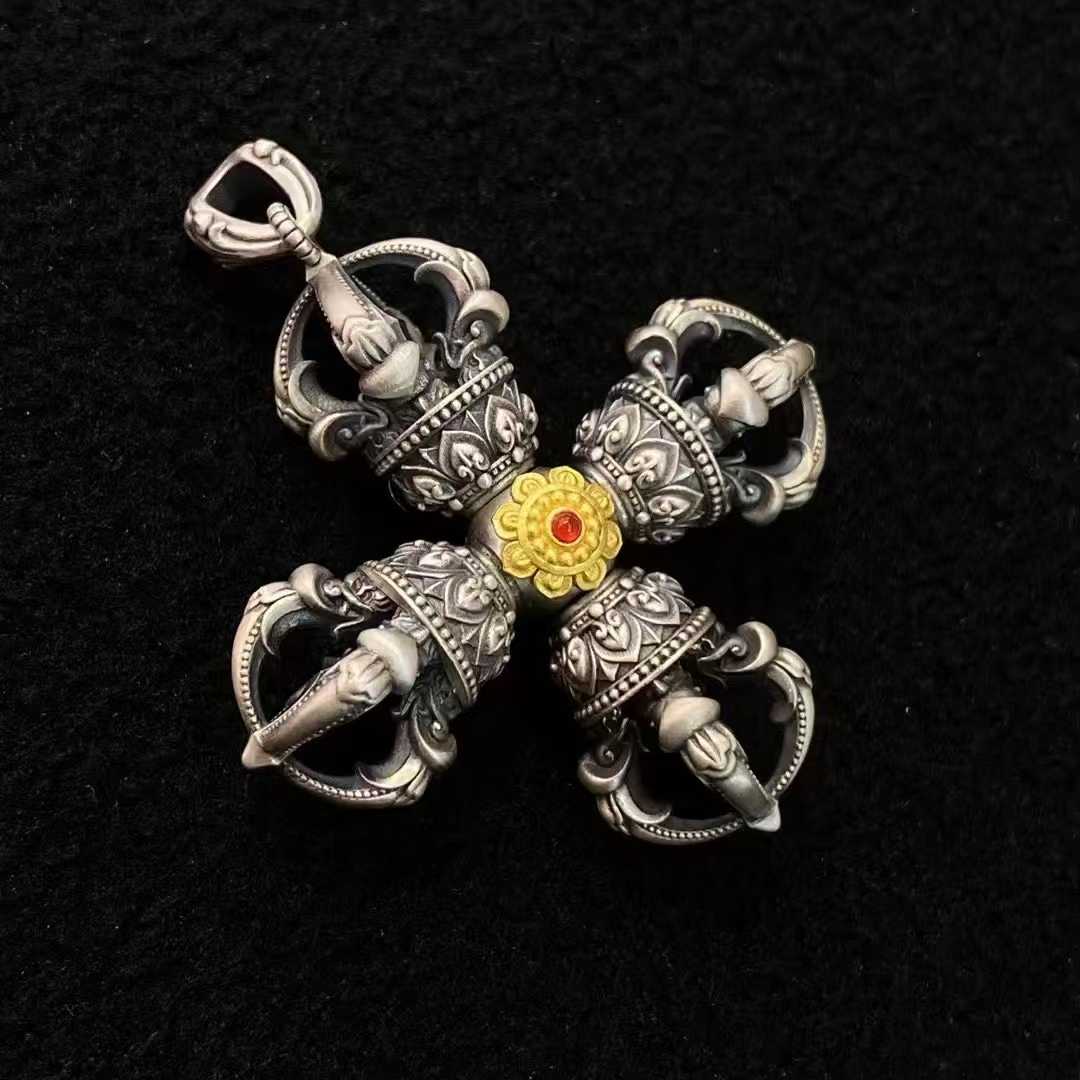
The twenty-four hands hold ritual implements such as the vajra, Dharma wheel, conch shell, and skull cup
-
Vajra: destruction of ignorance and afflictions
-
Dharma wheel: perfection and continuity of the Buddha’s teachings
-
White conch: proclamation of Dharma throughout the worlds
-
Skull cup: non-duality of samsara and nirvana
His left white and right red legs trample Mahadeva and his consort, symbolizing the complete subjugation of desire, anger, and ignorance.
● Vishvamata (Consort of Kalachakra)
-
Golden-yellow in color, representing luminous wisdom
-
Four faces and eight arms, mirroring Kalachakra’s iconography
-
Holds ritual objects such as the curved knife, drum, and wish-fulfilling jewel
-
Symbolizes the power of wisdom that embraces and perfects skillful means
Their union does not signify worldly desire, but rather the perfect integration of relative and ultimate truth, compassion and wisdom, embodying the Vajrayana ideal of enlightenment within one lifetime.
III. Retinue Deities: The Hierarchical Network within the Mandala
The Kalachakra Mandala presents a complete sacred universe through a multi-layered, concentric arrangement of deities, progressing from ultimate reality to worldly protection.
1. Inner Palace: Five Dhyani Buddhas and Bodhisattvas
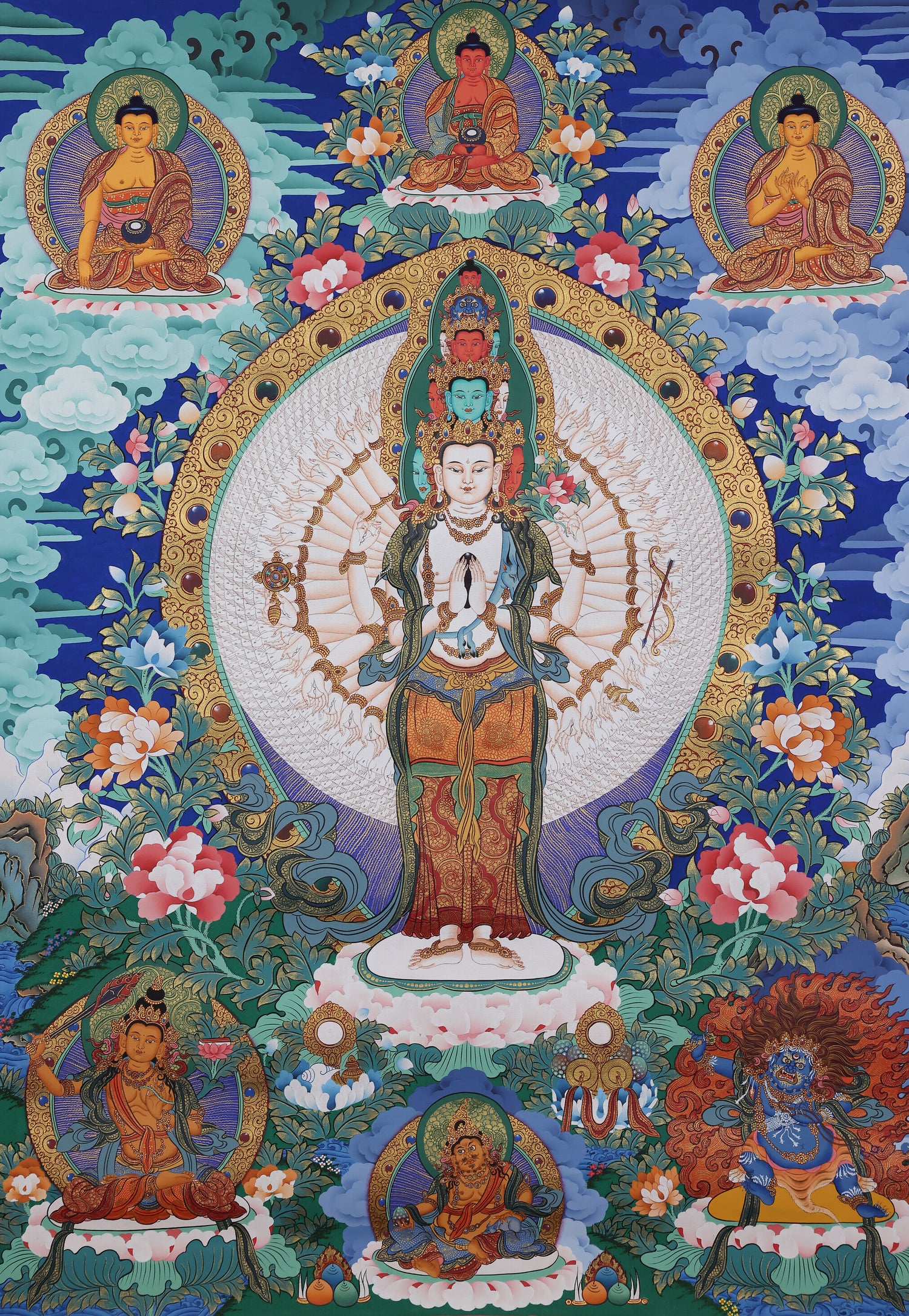
Surrounding the central deities are the Five Dhyani Buddhas—Vairocana, Akshobhya, Ratnasambhava, Amitabha, and Amoghasiddhi—representing the five transcendent wisdoms.
They are accompanied by major bodhisattvas such as Manjushri, Avalokiteshvara, and Vajrapani, embodying wisdom, compassion, and enlightened power—the core “Dharma retinue” of the mandala.
2. Middle Ring: Shambhala Kings and Dakas/Dakinis
The outer circular zone depicts the 25 Kings of Shambhala, the human lineage holders of the Kalachakra teachings.
Interspersed among them are dakinis and heroic protectors (dakas), dynamic guardian figures symbolizing freedom from worldly constraints and the active protection of practitioners and the mandala itself.
3. Outer Ornamentation: Auspicious Symbols and Worldly Protectors
The outermost decorative band features the Eight Auspicious Symbols, such as the Dharma wheel and treasure vase, signifying completeness and auspiciousness.
Subtle representations of deities like Green Tara, Ksitigarbha, and Yellow Jambhala appear as well, extending blessings to worldly life and completing the mandala’s bridge between ultimate truth and everyday existence.
IV. Painting Craftsmanship: Sacred Materials and Classical Techniques
● Base and Pigments: Nature United with Faith
-
Hand-stretched cotton canvas
-
Multiple layers of chalk and animal glue, polished to a mirror-like surface
-
All pigments derived from natural minerals and plants
-
Lapis lazuli blue, cinnabar red, orpiment yellow, malachite and turquoise green
-
Extensive use of 24K pure gold leaf and gold powder
These materials ensure lasting brilliance and are traditionally believed to carry spiritual blessing.
● Technique and Detail: Painting as Spiritual Practice
-
Line drawing executed with ultra-fine brushes, achieving hairline precision
-
Gold application using flat gilding, raised gold, and engraved gold techniques
-
Composition strictly follows the proportional instructions of the Kalachakra Tantra, ensuring both ritual accuracy and visual harmony
● Stylistic Origin: Nepali–Tibetan Artistic Synthesis
Judging from facial proportions and flowing garment lines, the painting aligns closely with the Newari style of Nepal, known for its vivid color saturation and elaborate gold ornamentation, combined with the strict iconographic discipline of Central Tibetan thangka painting.
Kalachakra mandalas of this caliber often require many months, sometimes over a year, to complete, with artists working in seclusion and ritual purity.
Conclusion: Art as a Tool for Awakening
This Kalachakra Mandala Thangka is fundamentally a work of functional sacred art. It serves simultaneously as a visual scripture of Tibetan Buddhist cosmology and a meditative instrument for advanced Vajrayana practice.
During creation, the artist observes vows, recites mantras, and maintains bodily, verbal, and mental purity to imbue the thangka with spiritual blessing. For the viewer or practitioner, sustained contemplation of the mandala’s layered structure facilitates a gradual inner journey—from the conditioned world toward ultimate realization.
Every color, line, and material is therefore not merely decorative, but a material expression of faith. This is the essential distinction between a Tibetan thangka and secular painting—and the timeless value that makes a Kalachakra Mandala Thangka both a sacred object and a profound work of art.
#KalachakraMandala
#KalachakraThangka
#TibetanBuddhistArt
#TibetanThangka
#VajrayanaBuddhism
#TantricBuddhism
#SacredMandala
#BuddhistCosmology
#Shambhala
#HandPaintedThangka
#NaturalMineralPigments
#24KGoldThangka
#SacredGeometry
#MeditationArt
#SpiritualArtwork
#BuddhistAltarArt
#ArtCollectors
#SacredArtCollection