Cultural Decoding of the Tibetan Green Tara Thangka The Visual and Spiritual Dimensions of Compassionate Liberation

$2,800.00 USD
Thangka Name: Colorful Tara (Green Tara)
Size: 42*58
Orgin: Tibet
Eine Frage stellen

Beeil dich! Nur noch [Anzahl] auf Lager!

Geschätzte Lieferzeiten: 12–26 Tage (International), 3–6 Tage (USA).

Rückgabe innerhalb von 45 Tagen nach dem Kauf. Zölle und Steuern werden nicht erstattet.

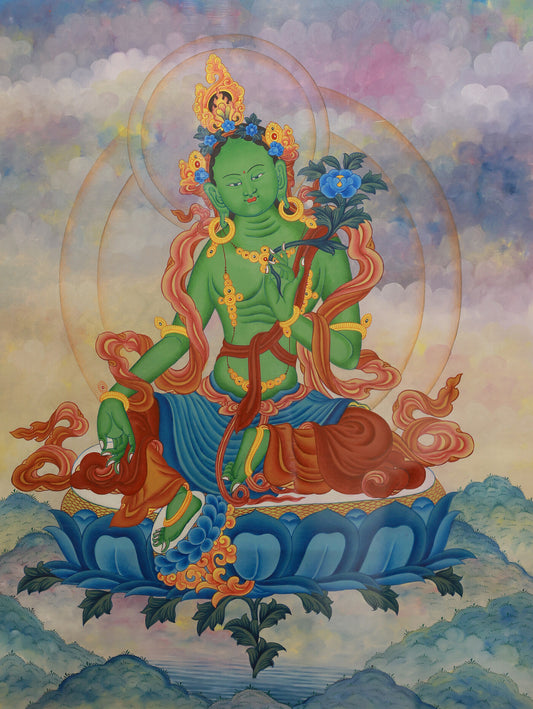
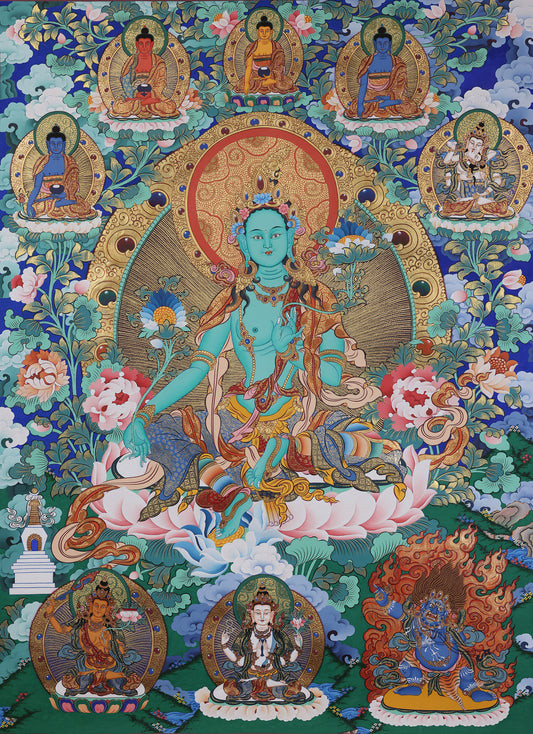
Colorful Green Tara thangka showing the Tibetan Buddhist goddess of compassion and protective blessings
Cultural Decoding of the Tibetan Green Tara Thangka The Visual and Spiritual Dimensions of Compassionate Liberation
$2,800.00 USD

Within the vast and refined spiritual system of Tibetan Buddhism, Green Tara (Sanskrit: Śyāmatārā, also known as The Swift Liberator) stands as one of the most compassionate and approachable deities. She embodies immediate compassionate response, fearless protection, and the perfected awakening of feminine wisdom.

This hand-painted Tibetan Green Tara color thangka is created around that core devotion. It is not merely a religious image, but a sacred visual embodiment of tantric ritual, a spiritual anchor suitable for shrine offerings, personal meditation, household blessings, and contemporary spiritual healing.


I. The Principal Deity: Iconography and Ritual Meaning of Green Tara

At the center of the composition sits Green Tara, rendered strictly according to the Iconometric Scriptures and traditional Tara Sadhana texts. Nothing here is arbitrary; every detail follows a precise ritual logic that serves her defining quality — swift liberation.

1. Sacred Form and Symbolic Attributes

Green Tara’s body is depicted in a vivid emerald green, symbolizing vitality, healing, and the ever-renewing force of awakened compassion. Within the Five Buddha system, green corresponds to the eastern direction and the quality of growth and increase.

Her youthful, celestial appearance — gently arched brows, downcast compassionate eyes, and a soft, serene smile — expresses both feminine grace and fearless resolve. At her crown rests Amitāyus Buddha, identifying her as an emanation of Avalokiteśvara’s boundless compassion.

She wears a utpala (blue lotus) mala at her neck, signifying discipline upheld through compassion. Her partially bare upper body is adorned with golden ornaments and jeweled garlands, symbolizing unobstructed compassion that embraces all beings without distinction.

2. Mudras and Sacred Implements

Her right hand extends gracefully over her knee in the Gesture of Supreme Generosity (Varada Mudra), palm outward, offering protection, fearlessness, and immediate aid.

Her left hand, held near the heart, gently holds the stem of a blooming utpala blue lotus, whose petals rise to her shoulder. The lotus represents purity arising within samsara, while the extending stem signifies that her compassionate activity reaches all realms without limitation.

3. Seat and Halo

Green Tara sits in a relaxed half-lotus posture upon a double-layered blue lotus throne, the lower petals accented with gold to symbolize compassion arising from suffering. Beneath the lotus lies a landscape of flowing green waters and gentle hills, evoking the pure realm described in Tara scriptures — the lotus-filled sanctuary where she abides.

Behind her form radiate dual halos: an inner ring of soft golden flame patterns symbolizing awakened power, and an outer ring of pink and violet auspicious clouds, expressing her gentle, nurturing mode of liberation.


II. The Hidden Pure Land: The Logic of the Single-Deity Thangka

This thangka adopts the traditional single-deity composition, with Green Tara as the sole figure supported by a symbolic environment. While no attendant deities are depicted, the composition subtly reveals a complete sacred cosmology.

1. Environment as Sacred Assembly

The surrounding pink-violet clouds and verdant waters are not decorative elements, but symbolic manifestations of Green Tara’s Pure Land. This approach, rooted in the Menthang School, uses sacred landscape to reveal divine presence, allowing the image to remain visually serene while spiritually complete.

2. The Viewer as Participant

In Tibetan visualization practice, the intentional openness of a single-deity thangka invites the practitioner to enter the Pure Land mentally and become one of the beings receiving liberation. The connection between deity and observer is direct and immediate — liberation is not distant or abstract, but occurs in the very moment of contemplation.


III. Painting Craftsmanship: The Compassionate Aesthetic of Menthang Color Thangka

This work represents a refined example of Menthang-style color thangka, where craftsmanship itself becomes a form of spiritual practice — an offering of body, speech, and mind.

1. Canvas Preparation

The painting is executed on hand-stretched cotton cloth, prepared through twelve traditional processes including soaking with yak-hide glue, repeated application of chalk ground, and polishing with river stones. The resulting surface is smooth, luminous, and resilient — considered a purified foundation capable of receiving the sacred image. Throughout this process, the artist recites Green Tara mantras to sanctify the support.

2. Natural Mineral Pigments

All pigments are derived from natural minerals, chosen for both symbolic and aesthetic resonance:

  • Green tones: finely ground malachite and turquoise, producing a living, botanical green that embodies healing vitality.

  • Blue lotus and throne: Afghan lapis lazuli, refined through traditional separation techniques to achieve a deep, transcendent blue associated with pure realms.

  • Gold detailing: 24K gold leaf ground into liquid gold, applied in layered gradients and burnished with agate to create a soft, radiant glow — noble yet gentle, echoing the nature of compassion itself.

3. Line Work and Consecration

Line drawing is executed with brushes made from sable hair, combining flowing “cloud lines” for garments with firm, disciplined strokes for halos and lotus petals. The deity’s subtle ritual markings, including the Seven Eyes of Tara, are rendered with extreme precision in accordance with iconographic tradition.

The final stage, known as “opening the face,” is performed after ritual purification, with each facial feature completed in a single, irrevocable stroke. Upon completion, the thangka undergoes traditional scriptural insertion, mantra sealing, and a seven-day consecration ceremony, transforming it from artwork into a living sacred object.


IV. Cultural Essence: Compassionate Liberation in Contemporary Life

This Green Tara thangka is more than a religious symbol; it is a living expression of Tibetan Buddhism’s philosophy of compassion. Her gesture dispels fear, her lotus rises unstained from suffering, and her vibrant green radiates renewal and healing — qualities deeply resonant with modern emotional and spiritual needs.

From an art historical perspective, the work reflects a harmonious integration of Chinese gongbi line refinement and Tibetan iconographic rigor, standing as a living testament to cross-cultural exchange. From a devotional standpoint, it affirms that compassion is not removed from daily life, but intimately present within it.

For expectant mothers seeking protection, women practitioners seeking spiritual guardianship, or anyone longing for calm, clarity, and inner strength, Green Tara offers a presence that is swift, gentle, and profoundly reassuring.

#GreenTara

#GreenTaraThangka

#TibetanThangka

#TibetanBuddhistArt

#BuddhistThangka#Compassion

#SpiritualProtection

#HealingEnergy

#MeditationArt

#SacredArt#HandPaintedThangka

#TraditionalThangka

#MineralPigmentArt

#MenthangStyle

#HimalayanArt#HomeAltar

#BuddhistDecor

#Mindfulness

#SpiritualHealing

#YogaMeditation
Entdecken Sie das perfekte tibetisch-buddhistische Thangka, das zu Ihren Wünschen, Ihrem Lebensstil und Ihrem Raum passt. Jedes Thangka hat eine spirituelle Bedeutung und bringt Segen, wenn es richtig platziert wird.

1. Definieren Sie Ihre Absicht

Reichtum & Erfolg → Gelber Dzambhala (Gottheit des Reichtums)

Mitgefühl und Frieden → Avalokiteshvara, Grüne Tara

Weisheit & Lernen → Manjushri

Gesundheit & Heilung → Medizinbuddha

Langlebigkeit und Familienschutz → Weiße Tara

2. Wählen Sie nach Identität

Unternehmer und Geschäftsinhaber → Reichtumsgottheiten für Wohlstand.

Studenten und Gelehrte → Weisheitsgottheiten für Konzentration und Klarheit.

Heiler und Yoga-Praktizierende → Medizinbuddha für Energie und Gleichgewicht.

Familien und Hausfrauen → Tara-Gottheiten für Harmonie und Sicherheit.

Sammler und Kunstliebhaber → Seltene Mandalas oder Meisterwerk-Thangkas.

3. Passen Sie Ihren Raum an

Heimschrein / Meditationsraum → Mittlere Thangkas (60–80 cm).

Büro / Geschäftshalle → Große Thangkas für Wohlstand und Autorität.

Wohnzimmer / Arbeitszimmer → Dekorative Thangkas für Frieden und Schönheit.

4. Authentische Handwerkskunst

Jedes Thangka ist mit natürlichen Mineralpigmenten und feiner Leinwand handbemalt und spiegelt tibetische Kunstfertigkeit und spirituelle Kraft wider. Überprüfte Quellen gewährleisten Qualität und Respekt für die Tradition.

✨ Wählen Sie Ihr Thangka mit Herz – es ist nicht nur Kunst, sondern ein Segen für Ihr Leben.

Jeder Mensch hat unterschiedliche Bedürfnisse. Die Wahl des richtigen Thangkas kann spirituelle Unterstützung, Schutz, Glück und Segen bieten. Nachfolgend finden Sie Thangka-Empfehlungen für verschiedene Rollen:

1. Unternehmer

  • Bedürfnisse : Weisheit, Reichtum, Gesundheit, beruflicher Erfolg.
  • Empfohlene Thangkas :
    Manjushri : Verbessert die Entscheidungsfindung und Geschäftsweisheit.
    Gottheit des Reichtums : Bringt Reichtum und Wohlstand.
    Medizinbuddha : Unterstützt die Gesundheit und reduziert Stress.
    Mahakala : Schützt Unternehmen vor Konkurrenz und Herausforderungen.

2. Erfolgreiche Einzelpersonen

  • Bedürfnisse : Innerer Frieden, Familienharmonie, Langlebigkeit.
  • Empfohlene Thangkas :
    Amitabha Buddha : Bringt inneren Frieden und Ruhe.
    Avalokiteshvara (Guanyin) : Fördert Harmonie und Glück in der Familie.
    Amitayus (Langlebens-Buddha) : Betet für gute Gesundheit und ein langes Leben.
    Manjushri : Stärkt weiterhin die Weisheit.

3. Hausfrauen/Ehemänner

  • Bedürfnisse : Familienharmonie, Schutz, Gesundheit.
  • Empfohlene Thangkas :
    Avalokiteshvara : Steigert das Familienglück und die Harmonie.
    Schutzgottheiten : Beschützen die Familie vor äußeren Störungen.
    Weiße Tara : Segnet die Familie mit Gesundheit.

4. Studierende und Wissenschaftler

  • Bedürfnisse : Weisheit, Konzentration, akademischer Erfolg.
  • Empfohlene Thangkas :
    Manjushri : Fördert Lernfähigkeit, Gedächtnis und Weisheit.
    Shakyamuni Buddha : Hilft bei der Konzentration und spirituellen Praxis.
    Jixiang Tianmu : Bringt akademisches Glück und Prüfungserfolg.

5. Künstler und Kreativprofis

  • Bedürfnisse : Inspiration, Kreativität, künstlerische Leistung.
  • Empfohlene Thangkas :
    Manjushri : Regt kreatives Denken und Inspiration an.
    Vajrapani : Hilft, kreative Blockaden zu überwinden.
    Maitreya : Sorgt für eine entspannte und optimistische Einstellung und baut Stress ab.

6. Reisende und Abenteurer

  • Bedürfnisse : Schutz, Glück, Erfolg bei Abenteuern.
  • Empfohlene Thangkas :
    Hayagriva : Bietet starken Schutz auf Reisen und beseitigt Hindernisse.
    Mahakala : Bringt Glück und Schutz, insbesondere für Abenteurer.
    Vajrasattva : Hilft, Schwierigkeiten und Herausforderungen während der Reise zu überwinden.

7. Ältere Menschen

  • Bedürfnisse : Gesundheit, Langlebigkeit, spiritueller Frieden.
  • Empfohlene Thangkas :
    Amitayus : Betet für ein langes Leben und gute Gesundheit.
    Medizinbuddha : Fördert Heilung und körperliches Wohlbefinden.
    Avalokiteshvara : Bringt Mitgefühl und inneren Frieden in späteren Jahren.

8. Führungskräfte

  • Bedürfnisse : Führung, Weisheit, Teamarbeit und geschäftlicher Erfolg.
  • Empfohlene Thangkas :
    Manjushri : Verbessert Führungsqualitäten und Entscheidungsfindung.
    Gottheit des Reichtums : Bringt dem Unternehmen und dem Team Erfolg und Wohlstand.
    Avalokiteshvara : Fördert Harmonie und Gleichgewicht innerhalb des Teams.

9. Gesundheits- und Fitnessbegeisterte

  • Bedürfnisse : Gute Gesundheit, Vitalität, Energie.
  • Empfohlene Thangkas :
    Medizinbuddha : Verbessert die körperliche Gesundheit und Vitalität.
    Weiße Tara : Bringt Gesundheit und Verjüngung.
    Vajrasattva : Beseitigt gesundheitliche Probleme und steigert die Energie.

10. Politiker

  • Bedürfnisse : Führung, Weisheit, Frieden.
  • Empfohlene Thangkas :
    Manjushri : Verbessert Führungsqualitäten und Entscheidungsfindung.
    Vairocana Buddha : Hilft, inneren Frieden und Weisheit zu bewahren.
    Avalokiteshvara : Fördert den gesellschaftlichen Frieden und die Harmonie in der Familie.

Für alle Bestellungen über 100 USD ist der Versand kostenlos.

Rücksendungen werden bis zu 10 Tage nach Erhalt des Kaufbelegs bzw. der Sendungsnummer (bei ungetragenen Artikeln) akzeptiert. Sie als Kunde sind verpflichtet, uns vor der Rücksendung des Artikels per E-Mail zu informieren.

Andernfalls fallen die Standardversandkosten an. Weitere Informationen finden Sie in unseren Lieferbedingungen .

Rücksendungen werden bis zu 10 Tage nach Erhalt des Kaufbelegs oder der Sendungsnummer (bei ungetragenen Artikeln) akzeptiert. Sie als Kunde sind verpflichtet, uns vor der Rücksendung des Artikels per E-Mail zu informieren, nur in folgenden Fällen:

– Den falschen Artikel erhalten.
– Artikel kam nicht wie erwartet an (z. B. beschädigte Verpackung).
– Artikel hatte Mängel.
– Über die Lieferzeit hinaus.
– Der Spediteur gestattet keine Besichtigung der Ware vor der Bezahlung.

Die zurückgesendeten Produkte müssen in der Originalverpackung, sicher verpackt, unbeschädigt und ungetragen sein. Dies bedeutet, dass die Artikel zum Schutz während des Transports sicher in einem Karton verpackt sein müssen, möglichst im selben Karton, in dem sie an Sie als Kunde versendet wurden.

Kürzlich angesehen

Nicht vergessen! Die Produkte, die Sie angesehen haben, legen Sie jetzt in den Warenkorb.

Passt gut zu

Erweitern Sie Ihre Auswahl mit perfekt abgestimmtem Zubehör und ergänzenden Produkten.

Leute kauften auch

Hier sind einige unserer ähnlichsten Produkte, die die Leute kaufen. Klicken Sie hier, um den Trendstil zu entdecken.