Hand-Painted Tibetan Thangka “Four-Faced Mahavairocana”: A Visualized Vehicle for Vajrayana Dharma Practice

$1,499.00 USD
Thangka Name: Caitang Great Sun Tathagata
Size: 50*70
Orgin: Tibet
Eine Frage stellen

Beeil dich! Nur noch [Anzahl] auf Lager!

Geschätzte Lieferzeiten: 12–26 Tage (International), 3–6 Tage (USA).

Rückgabe innerhalb von 45 Tagen nach dem Kauf. Zölle und Steuern werden nicht erstattet.

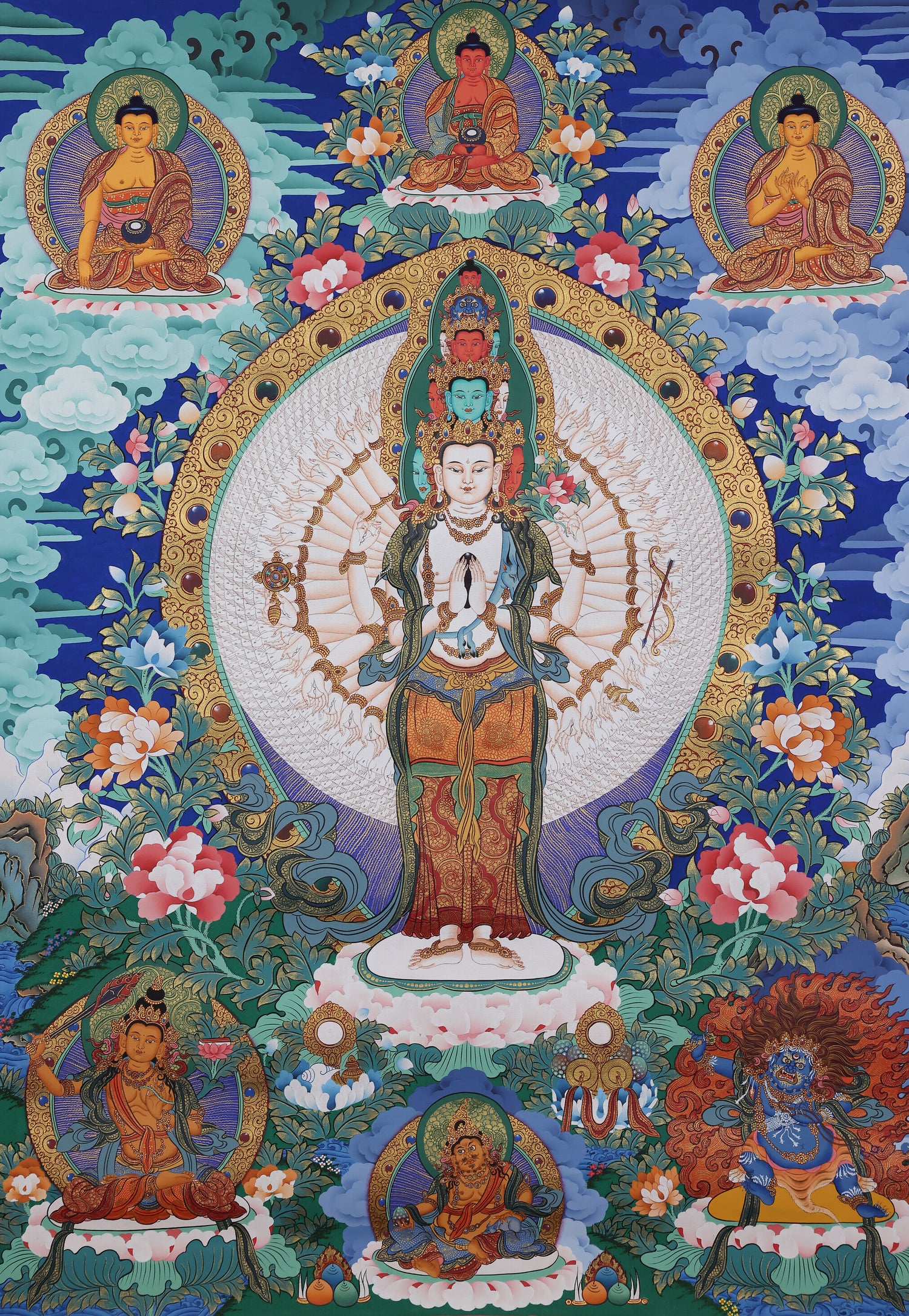
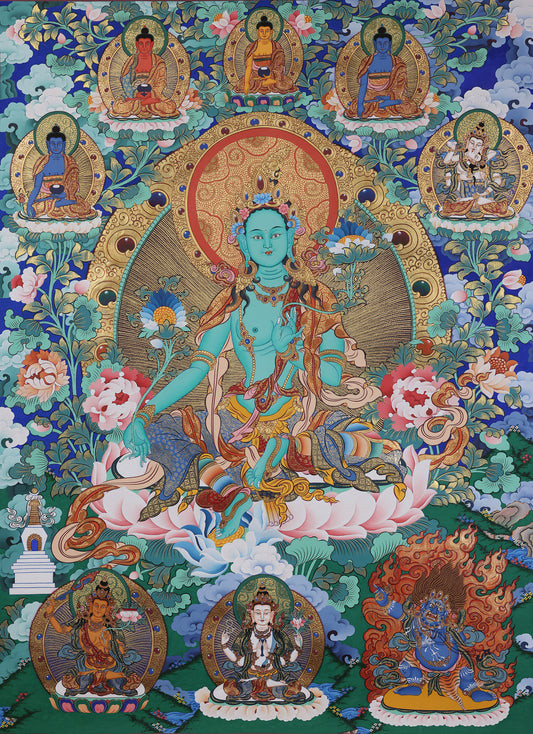
Hand-painted colorful thangka of Four-Faced Vairocana Buddha, depicting the central deity of Tibetan Vajrayana Buddhism.
Hand-Painted Tibetan Thangka “Four-Faced Mahavairocana”: A Visualized Vehicle for Vajrayana Dharma Practice
$1,499.00 USD

In the Tibetan Buddhist art tradition, thangka paintings are not merely aesthetic objects; they serve as sacred media, “reliances of the body,” for practitioners. The “Four-Faced Mahavairocana” colorful thangka is rooted in the Vajrayana “Mandala of the Womb and Diamond Realms” (Kum-Tai and Kan-Tai) philosophy, translating the Dharmadhātu Wisdom (Dharmadhātu-Svabhāva-jñāna) of Mahavairocana into a visual, meditational form. This thangka embodies the tantric principle of “manifesting the dharma through form” and exemplifies the artistic and devotional synthesis of the Rebgong (Gyarong) school. Every detail of the iconography, color, and technique conveys profound religious symbolism, emphasizing the tantric core teaching that all sentient beings inherently possess Buddha-nature.


I. Central Theme and Deity: Symbolism of the “Five Wisdoms” of Four-Faced Mahavairocana

The central figure of this thangka is Four-Faced Mahavairocana, representing the core of the Five Dhyani Buddhas in Vajrayana Buddhism and serving as the visual expression of Dharmadhātu Wisdom.

  • Iconographic Features:
    The deity is depicted in pure white, symbolizing the innate purity of Dharmadhātu Wisdom. He wears a five-Buddha crown, representing the Buddhas of the four directions: Akshobhya (East), Ratnasambhava (South), Amitabha (West), and Amoghasiddhi (North). Each of the four faces exhibits the “Peaceful Countenance” (low brows, downward gaze, gentle smile), embodying both compassion and authority. The deity’s hands are positioned in the meditation mudra, holding an eight-spoked dharmachakra or a vase, seated on an eight-petaled lotus throne—the petals symbolizing the Eight Enclosures of the Womb Realm Mandala and the inherent bodhicitta of all beings. The dharmachakra represents the aspiration to turn the Wheel of Dharma and liberate all sentient beings.

  • Tantric Symbolism of the Four Faces:
    The four faces do not represent physical multiplicity but signify the omnipresence of wisdom-body (jñāna-rūpa):

    • East: Akshobhya Buddha, “Mirror-like Wisdom” (reflects reality, eliminates anger)

    • South: Ratnasambhava Buddha, “Wisdom of Equality” (equal merit, eliminates pride)

    • West: Amitabha Buddha, “Discriminating Awareness Wisdom” (compassionate discernment, eliminates attachment)

    • North: Amoghasiddhi Buddha, “All-Accomplishing Wisdom” (beneficial activity, eliminates jealousy)

This visual system transforms the abstract “Five Wisdoms” into observable symbols, embodying the tantric logic of “form is truth” and guiding practitioners in meditation and realization.

  • Philosophical Meaning of the Name:
    “Mahavairocana” (Vairochana) literally means “Illuminator of All Directions.” The white body and radiant golden halo symbolize wisdom light illuminating the Dharmadhātu, reflecting the teaching that “the light of the Tathagata pervades all realms, enabling sentient beings to cultivate wholesome roots and accomplish worldly and spiritual endeavors” (Mahavairocana Sutra Commentary).


II. Attendant Deities: The Mandala as a “Cosmic Landscape”

The background and decorative motifs of the thangka are not merely aesthetic; they represent the attendant deities and symbolic elements of the Womb Realm Mandala, presenting a holistic vision of the dharma:

  • Implicit Attendants:
    Although no explicit bodhisattvas are painted beside the central deity, the Four Paramita Bodhisattvas—representing Vajra, Jewel, Dharma, and Karma Paramitas—are symbolically integrated in the four faces. These bodhisattvas manifest Mahavairocana’s fourfold wisdom in compassionate action, transforming the “Five Wisdoms” into beneficial activities for sentient beings.

  • Religious Symbolism in the Environment:

    • Lotus and Auspicious Flowers: Pink lotus and decorative flowers correspond to the Lotus Section of the Womb Realm, symbolizing “defilements as enlightenment”—purity emerging from the mud, reflecting the potential for all beings to awaken amidst samsara.

    • Auspicious Clouds and Mount Sumeru Base: The golden clouds atop the painting and mountains with jewel motifs at the base represent the outer Vajra realm, symbolizing the unity of sacred and secular realms. All beings and landscapes are manifestations of Mahavairocana’s universal presence.

    • Halo and Aura: The deity’s golden radiating body light and yellow-white gradient head halo symbolize the illumination of wisdom—gold signifies the indestructible dharmakaya, while yellow-white gradient represents the transition from mundane to sacred.


III. Painting Technique: Rebgong Thangka as a Devotional Practice

This thangka is a hand-painted Rebgong-style thangka, with each step of creation serving as a form of spiritual practice:

  1. Canvas Preparation (Base):

    • Linen is coated with 3 layers of cowhide glue (5%-7%) and polished with white clay to form a non-absorbent, durable base, considered a ritual purification of karmic obstacles.

    • The painter recites sutras while preparing the base, embodying the principle: “A pure mind is the foundation of practice.”

  2. Pigment System:

    • Only natural mineral and plant pigments are used:

      • White: from native Tibetan white stone, symbolizing purity

      • Yellow: orpiment or gold powder, symbolizing nobility and wisdom

      • Red: cinnabar or saffron, symbolizing compassion and vitality

      • Green: malachite, symbolizing growth and great compassion

    • Pigments are applied in thin, layered coats, allowing crystal structures to resist UV light, ensuring that colors remain vibrant for centuries, symbolizing the eternity of Dharma.

  3. Gold Detailing:

    • Crowns, dharmachakras, and halos are decorated with 24K gold leaf, meticulously ground and applied with precision brushes.

    • This multi-day process demands focus and a pure mind. Gold not only decorates but represents the pure and indestructible nature of dharmakaya, a central symbol in Tibetan Buddhism.

  4. Eye-Opening Ceremony:

    • The final step is opening the eyes of the deity, performed by a master painter or lama after seven days of retreat, fasting, and recitation.

    • Butter lamps are offered, mantras recited, and the deity’s divine presence is invoked. This transforms the thangka from artwork into a sacred object, suitable for meditation and devotional practice.

    • As a Rebgong master says: “Opening the face is not a technical act; it is practice. At that moment, the hand is guided by a power beyond itself.”


IV. Cultural Value: The Symbiosis of Doctrine, Art, and Devotion

This thangka exemplifies the integration of doctrinal, artistic, and devotional dimensions:

  • For Practitioners:

    • It serves as a meditation aid for visualizing Mahavairocana. Observing the four faces and serene countenance helps internalize the Five Wisdoms and cultivate bodhicitta.

  • For Art Connoisseurs:

    • The thangka demonstrates Rebgong style: rich yet solemn colors, precise but flowing lines, adhering to canonical proportions while allowing artistic creativity.

  • For Cultural Appreciation:

    • It represents the Tibetan Buddhist tradition of “propagating Dharma through art”, enabling viewers to grasp profound teachings without textual explanation.

    • Acting as a portable Buddha hall, this thangka allows the essence of the dharma to be carried, viewed, and venerated anywhere.


V. Conclusion

The “Four-Faced Mahavairocana” hand-painted colorful thangka is more than art; it is a microcosm of the dharmadhātu, a visualized vehicle for tantric practice, a sacred reliquary for devotion, and a cultural treasure for collectors. From the deity’s four faces to symbolic attendants, from mineral pigments to gold detailing, every aspect embodies “manifesting dharma through form, conveying teachings through art.”

Through contemplation and veneration, practitioners can connect with the enlightened mind, realizing the union of wisdom and compassion. This thangka is not merely a painting—it is a portable Dharmadhātu, bringing the luminous presence of Mahavairocana into daily life and practice.


#TibetanBuddhism #ThangkaPainting #Mahavairocana #FourFacedBuddha #VajrayanaArt #HandPaintedThangka #MeditationAid #BuddhistArt #SacredArt #MandalaArt #RebgongThangka #PortableBuddhaHall #FiveWisdoms #Dharmadhatu #SpiritualPractice #TibetanArtCollector #SacredWallArt #BuddhistMeditation #TantricBuddha #EnlightenmentSymbolism
Entdecken Sie das perfekte tibetisch-buddhistische Thangka, das zu Ihren Wünschen, Ihrem Lebensstil und Ihrem Raum passt. Jedes Thangka hat eine spirituelle Bedeutung und bringt Segen, wenn es richtig platziert wird.

1. Definieren Sie Ihre Absicht

Reichtum & Erfolg → Gelber Dzambhala (Gottheit des Reichtums)

Mitgefühl und Frieden → Avalokiteshvara, Grüne Tara

Weisheit & Lernen → Manjushri

Gesundheit & Heilung → Medizinbuddha

Langlebigkeit und Familienschutz → Weiße Tara

2. Wählen Sie nach Identität

Unternehmer und Geschäftsinhaber → Reichtumsgottheiten für Wohlstand.

Studenten und Gelehrte → Weisheitsgottheiten für Konzentration und Klarheit.

Heiler und Yoga-Praktizierende → Medizinbuddha für Energie und Gleichgewicht.

Familien und Hausfrauen → Tara-Gottheiten für Harmonie und Sicherheit.

Sammler und Kunstliebhaber → Seltene Mandalas oder Meisterwerk-Thangkas.

3. Passen Sie Ihren Raum an

Heimschrein / Meditationsraum → Mittlere Thangkas (60–80 cm).

Büro / Geschäftshalle → Große Thangkas für Wohlstand und Autorität.

Wohnzimmer / Arbeitszimmer → Dekorative Thangkas für Frieden und Schönheit.

4. Authentische Handwerkskunst

Jedes Thangka ist mit natürlichen Mineralpigmenten und feiner Leinwand handbemalt und spiegelt tibetische Kunstfertigkeit und spirituelle Kraft wider. Überprüfte Quellen gewährleisten Qualität und Respekt für die Tradition.

✨ Wählen Sie Ihr Thangka mit Herz – es ist nicht nur Kunst, sondern ein Segen für Ihr Leben.

Jeder Mensch hat unterschiedliche Bedürfnisse. Die Wahl des richtigen Thangkas kann spirituelle Unterstützung, Schutz, Glück und Segen bieten. Nachfolgend finden Sie Thangka-Empfehlungen für verschiedene Rollen:

1. Unternehmer

  • Bedürfnisse : Weisheit, Reichtum, Gesundheit, beruflicher Erfolg.
  • Empfohlene Thangkas :
    Manjushri : Verbessert die Entscheidungsfindung und Geschäftsweisheit.
    Gottheit des Reichtums : Bringt Reichtum und Wohlstand.
    Medizinbuddha : Unterstützt die Gesundheit und reduziert Stress.
    Mahakala : Schützt Unternehmen vor Konkurrenz und Herausforderungen.

2. Erfolgreiche Einzelpersonen

  • Bedürfnisse : Innerer Frieden, Familienharmonie, Langlebigkeit.
  • Empfohlene Thangkas :
    Amitabha Buddha : Bringt inneren Frieden und Ruhe.
    Avalokiteshvara (Guanyin) : Fördert Harmonie und Glück in der Familie.
    Amitayus (Langlebens-Buddha) : Betet für gute Gesundheit und ein langes Leben.
    Manjushri : Stärkt weiterhin die Weisheit.

3. Hausfrauen/Ehemänner

  • Bedürfnisse : Familienharmonie, Schutz, Gesundheit.
  • Empfohlene Thangkas :
    Avalokiteshvara : Steigert das Familienglück und die Harmonie.
    Schutzgottheiten : Beschützen die Familie vor äußeren Störungen.
    Weiße Tara : Segnet die Familie mit Gesundheit.

4. Studierende und Wissenschaftler

  • Bedürfnisse : Weisheit, Konzentration, akademischer Erfolg.
  • Empfohlene Thangkas :
    Manjushri : Fördert Lernfähigkeit, Gedächtnis und Weisheit.
    Shakyamuni Buddha : Hilft bei der Konzentration und spirituellen Praxis.
    Jixiang Tianmu : Bringt akademisches Glück und Prüfungserfolg.

5. Künstler und Kreativprofis

  • Bedürfnisse : Inspiration, Kreativität, künstlerische Leistung.
  • Empfohlene Thangkas :
    Manjushri : Regt kreatives Denken und Inspiration an.
    Vajrapani : Hilft, kreative Blockaden zu überwinden.
    Maitreya : Sorgt für eine entspannte und optimistische Einstellung und baut Stress ab.

6. Reisende und Abenteurer

  • Bedürfnisse : Schutz, Glück, Erfolg bei Abenteuern.
  • Empfohlene Thangkas :
    Hayagriva : Bietet starken Schutz auf Reisen und beseitigt Hindernisse.
    Mahakala : Bringt Glück und Schutz, insbesondere für Abenteurer.
    Vajrasattva : Hilft, Schwierigkeiten und Herausforderungen während der Reise zu überwinden.

7. Ältere Menschen

  • Bedürfnisse : Gesundheit, Langlebigkeit, spiritueller Frieden.
  • Empfohlene Thangkas :
    Amitayus : Betet für ein langes Leben und gute Gesundheit.
    Medizinbuddha : Fördert Heilung und körperliches Wohlbefinden.
    Avalokiteshvara : Bringt Mitgefühl und inneren Frieden in späteren Jahren.

8. Führungskräfte

  • Bedürfnisse : Führung, Weisheit, Teamarbeit und geschäftlicher Erfolg.
  • Empfohlene Thangkas :
    Manjushri : Verbessert Führungsqualitäten und Entscheidungsfindung.
    Gottheit des Reichtums : Bringt dem Unternehmen und dem Team Erfolg und Wohlstand.
    Avalokiteshvara : Fördert Harmonie und Gleichgewicht innerhalb des Teams.

9. Gesundheits- und Fitnessbegeisterte

  • Bedürfnisse : Gute Gesundheit, Vitalität, Energie.
  • Empfohlene Thangkas :
    Medizinbuddha : Verbessert die körperliche Gesundheit und Vitalität.
    Weiße Tara : Bringt Gesundheit und Verjüngung.
    Vajrasattva : Beseitigt gesundheitliche Probleme und steigert die Energie.

10. Politiker

  • Bedürfnisse : Führung, Weisheit, Frieden.
  • Empfohlene Thangkas :
    Manjushri : Verbessert Führungsqualitäten und Entscheidungsfindung.
    Vairocana Buddha : Hilft, inneren Frieden und Weisheit zu bewahren.
    Avalokiteshvara : Fördert den gesellschaftlichen Frieden und die Harmonie in der Familie.

Für alle Bestellungen über 100 USD ist der Versand kostenlos.

Rücksendungen werden bis zu 10 Tage nach Erhalt des Kaufbelegs bzw. der Sendungsnummer (bei ungetragenen Artikeln) akzeptiert. Sie als Kunde sind verpflichtet, uns vor der Rücksendung des Artikels per E-Mail zu informieren.

Andernfalls fallen die Standardversandkosten an. Weitere Informationen finden Sie in unseren Lieferbedingungen .

Rücksendungen werden bis zu 10 Tage nach Erhalt des Kaufbelegs oder der Sendungsnummer (bei ungetragenen Artikeln) akzeptiert. Sie als Kunde sind verpflichtet, uns vor der Rücksendung des Artikels per E-Mail zu informieren, nur in folgenden Fällen:

– Den falschen Artikel erhalten.
– Artikel kam nicht wie erwartet an (z. B. beschädigte Verpackung).
– Artikel hatte Mängel.
– Über die Lieferzeit hinaus.
– Der Spediteur gestattet keine Besichtigung der Ware vor der Bezahlung.

Die zurückgesendeten Produkte müssen in der Originalverpackung, sicher verpackt, unbeschädigt und ungetragen sein. Dies bedeutet, dass die Artikel zum Schutz während des Transports sicher in einem Karton verpackt sein müssen, möglichst im selben Karton, in dem sie an Sie als Kunde versendet wurden.

Kürzlich angesehen

Nicht vergessen! Die Produkte, die Sie angesehen haben, legen Sie jetzt in den Warenkorb.

Passt gut zu

Erweitern Sie Ihre Auswahl mit perfekt abgestimmtem Zubehör und ergänzenden Produkten.

Leute kauften auch

Hier sind einige unserer ähnlichsten Produkte, die die Leute kaufen. Klicken Sie hier, um den Trendstil zu entdecken.