In the Tibetan Buddhist art system, a Yellow Dzambhala Thangka is far more than a mere “wealth image.” It is a visual mandala encapsulating the full logic of spiritual practice. This thangka centers on Yellow Dzambhala (Tibetan: Dzambhala Serpo), the most influential deity among the Five Dzambhalas, fully embodying the Tibetan Buddhist dialectic between wealth, practice, and enlightenment: wealth is a supportive means, not an end; wisdom is fundamental, not attachment.
In Tibetan Buddhism, material resources are considered the “boat” for practice. Without them, spiritual practice is difficult to sustain; excessive attachment, however, becomes an obstacle. Thus, Yellow Dzambhala is venerated as a dual protector of both material abundance and spiritual awakening — safeguarding practitioners from poverty while guiding them to transcend greed and delusion. This thangka embodies this principle visually: wealth ceases to be worldly pursuit and becomes a means toward liberation.
Main Deity Yellow Dzambhala: Dharma Symbolism in Form
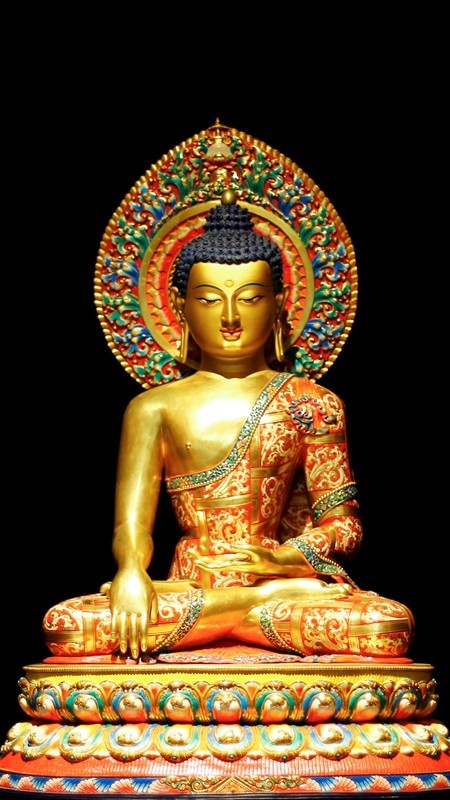
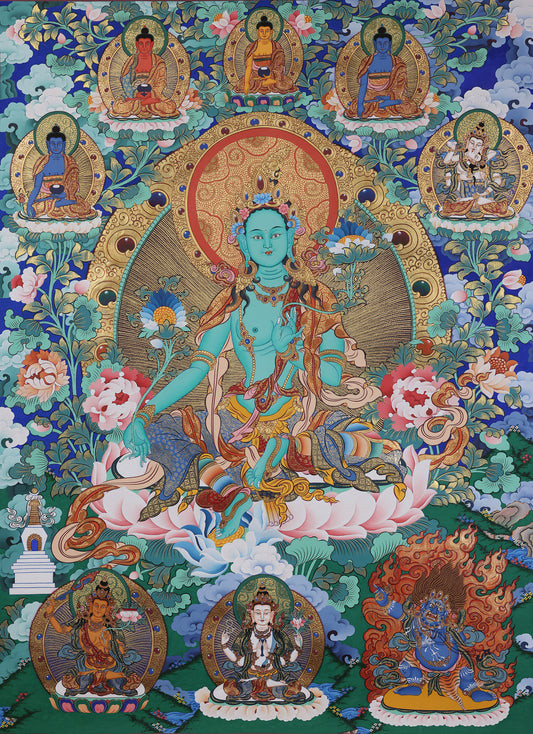
At the center of the thangka, Yellow Dzambhala appears in the form of Vaisravana-Bhaisajyaguru fusion, drawn according to the Sutra on Measurement of Sacred Images and traditional Dzambhala ritual texts. His warm orange body represents the “Wisdom of Equality” (from the Five Dhyani Buddhas), implying that in the realm of awakening, distinctions of rich and poor or gain and loss do not exist.
The deity’s full, open-chested posture symbolizes abundance while also teaching the principle of generosity without attachment. In his left hand, a treasure-spouting mongoose (symbolizing transformed greed) continuously releases precious gems, illustrating the Tibetan Buddhist teaching: afflictions can be transformed into spiritual fuel. The right hand forms a varada mudra or holds a mani jewel, representing the granting of peace and fearlessness — all wealth ultimately arising from pure wisdom.
Yellow Dzambhala wears a five-Buddha crown, signifying the blessings of the Five Dhyani Buddhas, while his jeweled ornaments, resplendent but not clung to, demonstrate mastery over worldly treasures with a pure heart. Seated in half-lotus on a thousand-petaled red lotus, the imagery conveys that worldly wealth can remain pure; the lotus rests on a Mount Meru base, emphasizing that true wealth is grounded in the Bodhicitta of altruism.
Attendant Deities: Guardians of Prosperity
The thangka’s attendants are not mere decorations but functional extensions of Dzambhala’s wealth-protecting activities.
-
Left Attendant: The Child of Wealth (or Treasure-Bearing Female Deity) holds a treasure plate, symbolizing wealth accumulation through ethical means, diligence, and devotion, reflecting the Tibetan principle of earning honestly and ethically.
-
Right Attendant: The Treasure Protector or Black Dzambhala appears in a wrathful form, wielding a vajra and treasure bag, representing the force that subdues theft, loss, and obstacles caused by greed, anger, and ignorance. Wealth must be both accumulated and protected, reflecting practical and spiritual wisdom.
Above, a jeweled parasol with auspicious clouds signifies the pure protection of wealth; below, a pile of seven treasures embodies both worldly riches and transcendent wisdom, symbolizing that only wealth aligned with virtue becomes true spiritual resource.
Handcrafted Mastery: Material and Ritual
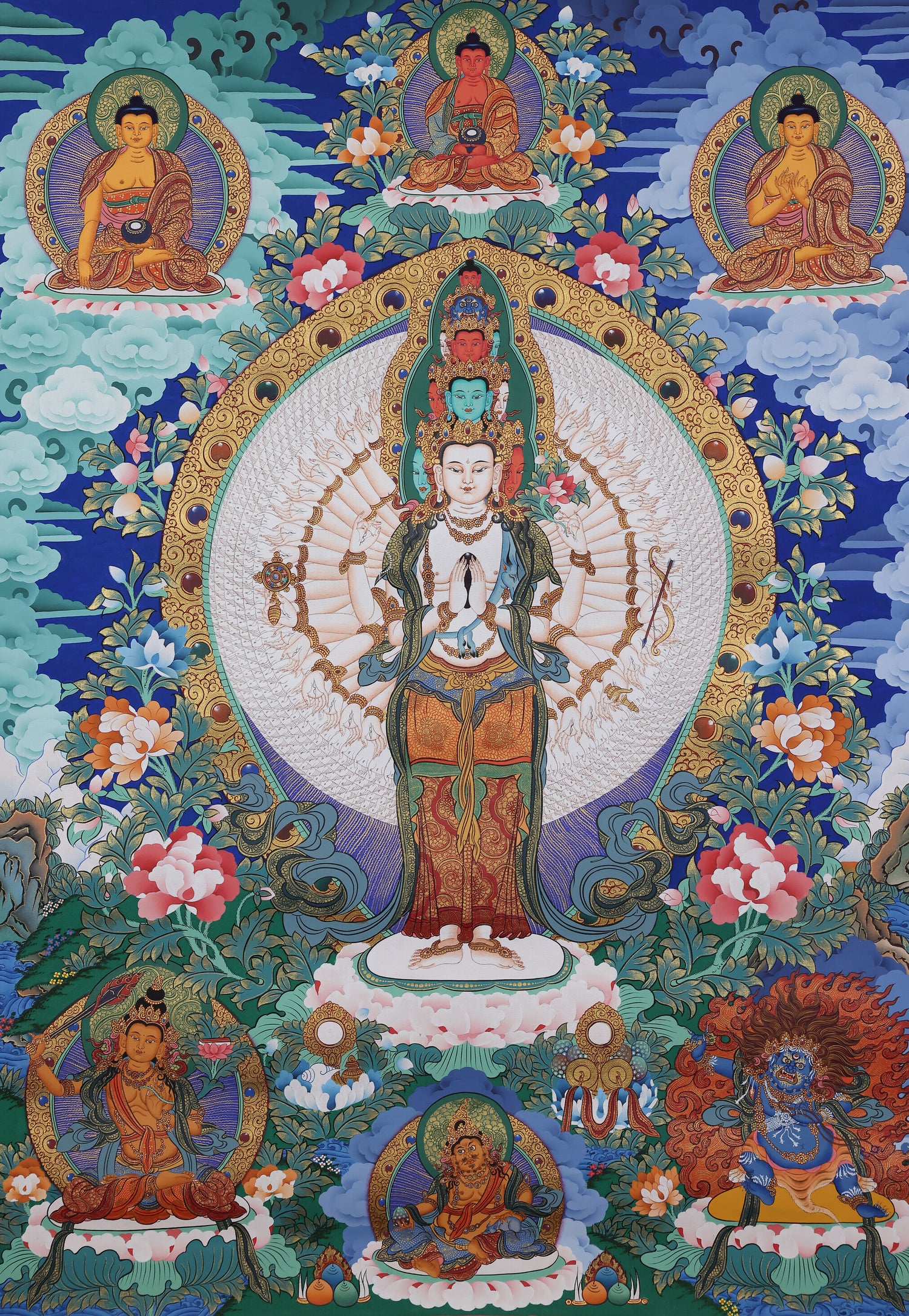
This thangka is a hand-painted masterpiece from the Rebgong school, where artistry and spiritual practice converge.
-
Materials: The warm orange of the deity is made from processed orpiment, ochre, and 24K gold powder; blues from lapis lazuli; greens from turquoise and wormwood; reds from cinnabar and safflower. Pigments are aged for years to ensure color permanence, symbolizing the enduring nature of Dharma.
-
Process: Canvas preparation involves multiple layers of cowhide glue and Tibetan paper over cotton, scraped and dried repeatedly, symbolizing the purification of the mind. Proportions follow sacred canons to ensure every feature is precise. Eyes are painted in an auspicious ceremony with blessings, transforming the image into a living spiritual presence.
-
Ritual Empowerment: The thangka’s back contains a heart mantra scroll, relic powder, and blessed substances, consecrated by high lamas to establish body, speech, and mind empowerment.
Lines are drawn with iron-wire technique for strong features and fine filament lines for hair and jewels; gold detailing enhances majesty while symbolizing illuminating wisdom.
A Thangka of Wealth and Wisdom
In Tibetan practice, this Yellow Dzambhala Thangka is not a charm but a mediator for practitioners to align with the deity’s wisdom. Meditation involves visualizing the deity, the treasure-spouting mongoose, and the mani jewel, contemplating the proper use of wealth: whether it is earned ethically, used for the benefit of others, and free of attachment.
This thangka condenses Tibetan Buddhist philosophy, artistry, and ritual into a single sacred image. It is perfect for home altars, business spaces, or as a collector’s masterpiece. True wealth here transcends material gold and silver: it is the integration of compassion and wisdom, the “fuel” for both worldly well-being and spiritual awakening.
#TibetanBuddhistArt #YellowDzambhala #HandpaintedThangka #BuddhistThangka #SpiritualWealth #WisdomAndProsperity #TibetanCulture #SacredArt #HomeAltarDecor #MindfulWealth #DharmicArt #RebgongThangka #TibetanBuddhism #MeditationArt #BlessedArtwork