In the spiritual universe of Tibetan Buddhism, a Thangka is far more than a painting; it is a portable mandala and a visualized tool for spiritual practice. Each Thangka carries ritual significance, philosophical symbolism, and craftsmanship wisdom. Its value lies not only in visual aesthetics but also in spiritual practice and energetic blessings.
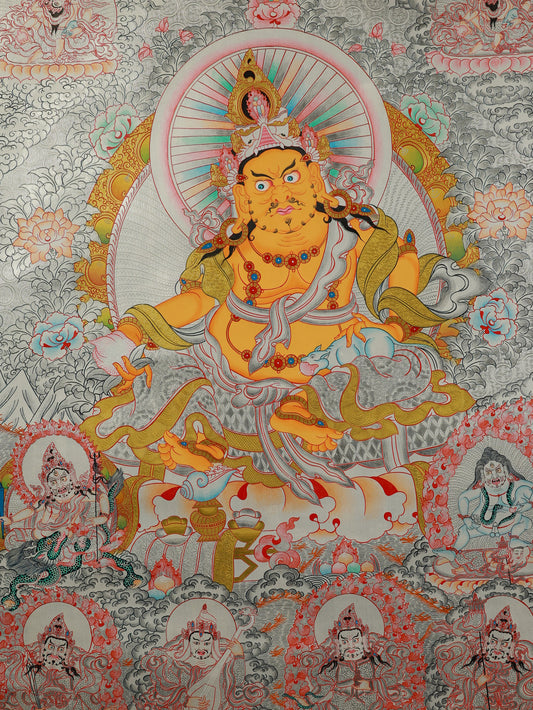
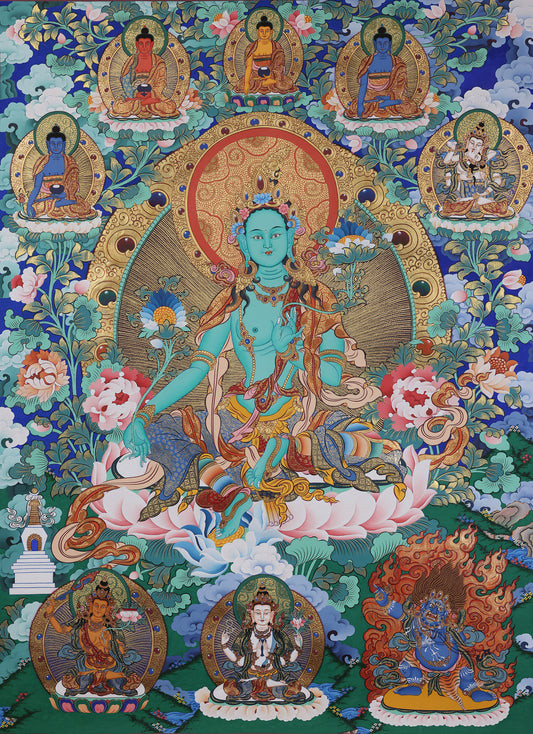
This hand-painted Yellow Jambhala (Wealth Deity) Mandala Thangka centers around the Yellow Jambhala and constructs a complete treasure-protecting mandala. It represents the exquisite skill of the Rebgong school of Tibetan painting and visually embodies the Tibetan Buddhist concept of “using wealth as a path to enlightenment,” offering both worldly and spiritual benefits for collectors and practitioners.
I. Core Theme: The Dual Significance of the "Treasure Mandala" — Worldly Wishes and Spiritual Transcendence
The main theme of this Thangka is the Yellow Jambhala Mandala (Tibetan: Zanglin). Its essence is a manifestation of the Tibetan Buddhist philosophy of skillful means and wisdom as inseparable.
-
Cosmic layout and symbolism: The mandala’s geometric design follows the “Five Directions and Five Elements” cosmology. The central Yellow Jambhala represents the root vow and core wisdom, while the surrounding deities symbolize supportive conditions and protective forces. Together, they form a closed loop from cosmic order → spiritual energy → worldly support.
-
Worldly dimension: Enhances wealth, removes obstacles, and fulfills devotees’ desires for material abundance and stable life.
-
Spiritual dimension: Integrates wealth into practice and reduces attachment. By visualizing wealth, practitioners realize its impermanent nature, transforming desire into bodhicitta through generosity, ultimately achieving both material and spiritual fulfillment. This reflects the Vajrayana principle of “not abandoning the world while seeking transcendence.”
II. Central Deity Analysis: Symbolism of Yellow Jambhala — Each Detail Encodes Wisdom
At the heart of the mandala sits Yellow Jambhala (Tibetan: Zhambala Sero), the chief among the five wealth deities. His iconography strictly follows the Iconometric Sutra, with every detail bearing religious and philosophical significance.
1. Form and Color: Stability and Compassion of the "Earth Element Deity"
-
Golden yellow body: Corresponds to the element of Earth, symbolizing the foundation for growth and accumulation of wealth, as well as nourishment and stability. Just as the earth supports all beings, Jambhala’s blessings turn wealth into a foundation for life and spiritual practice.
-
Wrathful expression: Raised eyebrows, wide-open eyes, slightly open mouth, a wrathful appearance symbolizes the manifestation of wisdom to overcome inner greed, laziness, and external obstacles. Beneath the wrath lies stillness, embodying strength with compassion, merging protective wisdom with benevolent care.
2. Attire and Attributes: Harmony of Worldly Wealth and Spiritual Purity
-
Five-Buddha crown and jewelry: The crown represents the wisdom of the Five Dhyani Buddhas (Vairocana, Akshobhya, Ratnasambhava, Amitabha, Amoghasiddhi). Jewelry and celestial robes display opulence while symbolizing the unity of worldly prosperity and spiritual purity.
-
Key attributes:
-
Right hand holding the wish-fulfilling jewel: Symbolizes blessings of both material abundance and spiritual peace, not limited to monetary wealth.
-
Left hand holding the treasure-spitting mongoose: Represents flowing wealth and altruistic giving. Wealth is meant to circulate, not hoard, reinforcing the Buddhist perspective that true wealth is generosity in action.
3. Posture and Lotus Base: Practice Guidance for “Wisdom in Wealth”
-
Royal half-lotus posture: Right leg extended, left leg folded, symbolizing freedom and dignity, allowing Jambhala’s blessings to align with the practitioner’s capacity.
-
Right foot on white conch: In Buddhism, the conch represents the spread of Dharma. Here it symbolizes that acquiring wealth must follow righteous principles, just as one navigates the ocean with a conch as a guide.
III. Attendant Deities: Functional “Protective Ecology” for Wealth and Practice
The deities surrounding Yellow Jambhala are not decorative; they form a system of protective forces, ensuring the integrity of material and spiritual gains.
1. Upper Manifestations: “Precise Obstacle Removal”
-
Two wrathful deities above the central deity represent Jambhala’s career manifestations (Tibetan: Karmapa transformation).
-
Red form aids growth of merit and legitimate accumulation of wealth.
-
Black form destroys negative karmic ties, protecting against loss and deceit.
-
Together, they ensure the precise manifestation of blessings.
2. Lower and Side Deities: “Comprehensive Wealth Protection”
-
Dragon-riding Vaisravana (Dharmapala): Governs terrestrial treasures, combining with Jambhala’s human wealth domain to create a complete system of abundance.
-
Five or Eight Directional Wealth Deities: Each holds instruments like the lute, sword, or victory banner, representing wealth attraction, purification, and continuation.
-
Protective Eight Classes (Dharmapalas): Wrathful figures at the mandala edges dispel laziness, jealousy, and disasters, ensuring an unobstructed environment for prosperity and practice.
IV. Artistic Craftsmanship: Sacred Rebgong Thangka — Material and Spiritual Integration
This Thangka belongs to the Rebgong school (Tongren, Qinghai), a top Tibetan painting lineage. Its craftsmanship is both artistic technique and ritual practice, transforming material into a field of spiritual energy.
1. Materials: Infusion of Sacred Natural Energy
-
Canvas preparation: Thick cotton canvas is stretched, coated, plastered, and polished to a mirror-smooth surface, symbolizing a pure mind capable of receiving blessings.
-
Natural pigments: Cinnabar, lapis lazuli, malachite, and orpiment, durable and vibrant, are believed to contain earth and cosmic energy, creating a tangible energy field.
-
Gold application: 24K gold powder and foil highlight crowns, attributes, and clouds, symbolizing eternity, wisdom, and illumination, enhancing sacredness and awe.
2. Technique: Ritualized Precision and Devotion
-
Linework: Main deity robes use Lan-Leaf lines for softness, wrathful protectors use iron-wire lines for strength, all adhering to precise iconometric proportions.
-
Color layering: The gold body requires 5–7 layered washes, creating a natural gradient from light to deep gold, symbolizing gradual growth of wealth and wisdom.
-
Background motifs: Clouds (emptiness) and lotus scrolls (purity) remind practitioners to view wealth with emptiness and cultivate it with a pure heart.
V. Conclusion: A “Portable Mandala” — Unity of Art, Faith, and Practice
The Yellow Jambhala Mandala Thangka is a three-dimensional embodiment of Tibetan Buddhist culture:
-
For practitioners, it is a tool for practice. Visualizing Jambhala transforms desire for wealth into altruistic intention, achieving material and spiritual fulfillment.
-
For collectors, it is a cultural window, revealing the wisdom of integrating worldly wealth into spiritual practice. Wealth becomes a tool to nourish life, benefit others, and elevate the mind.
Its value lies not only in masterful hand-painted craftsmanship but also as a concrete representation of Tibetan Buddhist philosophy, bridging daily life and spiritual transcendence.
#TibetanBuddhistThangka
#ThangkaArt
#SacredThangka
#HandPaintedThangka
#RebgongThangka
#TibetanSacredArt
#YellowJambhala
#JambhalaThangka
#WealthDeityThangka
#BuddhistWealthDeity
#ProsperityThangka
#MandalaThangka
#VajrayanaBuddhism
#TantricBuddhism
#BuddhistMandala
#MeditationArt
#WealthAndProsperity
#AbundanceAndGenerosity
#RemoveObstacles
#MeritAndWisdom
#SpiritualAbundance
#HomeShrine
#MeditationSpace
#BusinessBlessing
#SpiritualDecor
#ThangkaCollectors