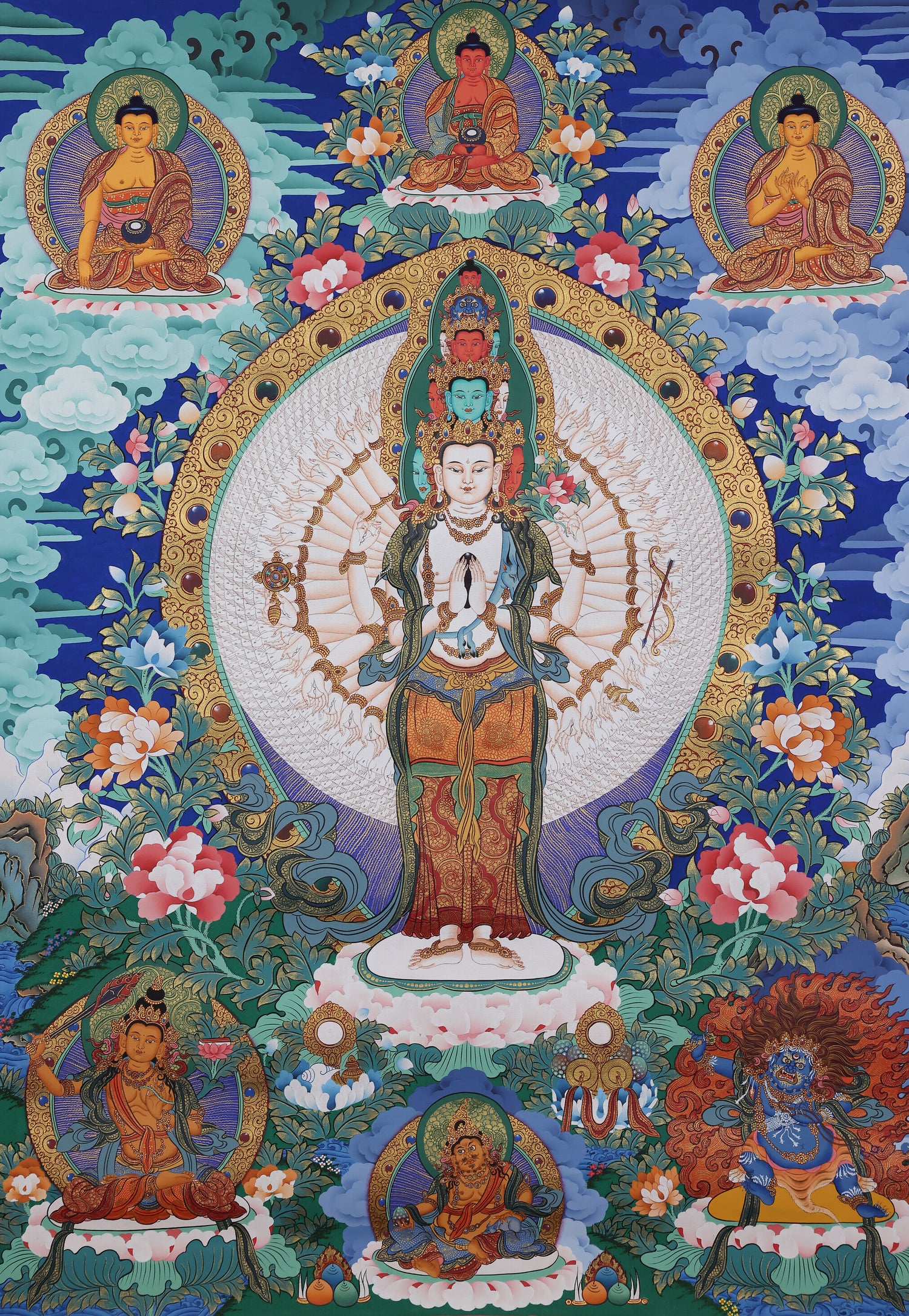
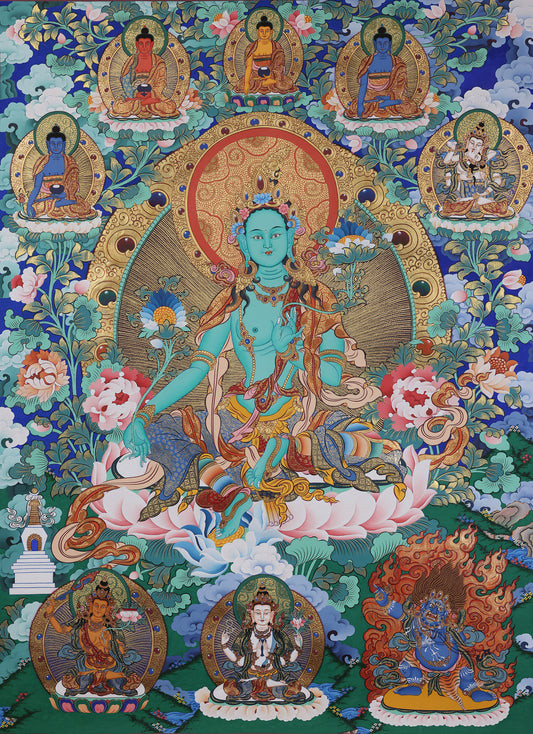
In the Tibetan Buddhist visual and devotional system, Thangka paintings are not only works of art but also tools for meditation, prayer, and cultural preservation. This hand-painted Thangka features the “Four-Armed Avalokiteshvara Main Deity with Retinue Mandala” theme from the renowned Regong school, embodying the Tibetan Buddhist teaching of “compassion as the core, merit and wisdom as wings”. It preserves centuries of Avalokiteshvara devotion in Tibet while condensing the Regong Thangka’s hallmark craftsmanship of “ritual as structure, artistry as soul.”
1. Core Theme: Tibetan Buddhist Practice of Compassion Integrating Merit and Wisdom
The central theme of this Thangka is the “Four-Armed Avalokiteshvara Compassionate Empowerment System”, rooted in the localized reconstruction of Avalokiteshvara faith in Tibet. Revered as the “Protector of the Snowy Land”, the Four-Armed Avalokiteshvara embodies great compassion. Depicting the deity alongside retinue figures illustrates a practice path of compassion as the core, with wisdom and power as supporting wings, aligning with the “principal deity - retinue” mandala structure, and meeting devotees’ spiritual aspiration for “liberation from suffering and enhancement of merit and wisdom.”
Doctrinal Significance
-
Four Arms Represent Four Immeasurable Minds: Pacifying suffering, increasing merit, gathering sentient beings, and subduing obstacles.
-
Retinue Arrangement: Teachers, bodhisattvas, and protector deities represent spiritual guidance, support, and protection.
-
Thangka as Visualization Tool: Devotees can focus on the image to recall Avalokiteshvara’s compassionate vows, achieving the practice goal of “mind aligned with the deity.”
2. Principal Deity: Four-Armed Avalokiteshvara as Embodiment of Compassion and Purity
The central deity, Four-Armed Avalokiteshvara (Tibetan: Chimey Gyal), is depicted according to the Sutra of Proportions and the Avalokiteshvara Rituals, with each detail conveying doctrinal meaning.
Body and Symbolism
-
Pure White Body: Symbolizes innate purity, untouched by defilements and obstacles.
-
Five-Buddha Crown: Represents wisdom blessings from the Five Buddhas.
-
Topknot with Black Hair: Topped by Amitabha Buddha, signifying the source of Avalokiteshvara’s lineage and pointing toward rebirth in the Pure Land.
Hand Gestures and Attributes
-
Central Hands in Prayer Mudra Holding a Mani Jewel: Combining wisdom and skillful means to perceive reality and liberate sentient beings.
-
Right Upper Hand Holding Crystal Mala: Each bead represents saving a sentient being from samsara, symbolizing unending compassionate activity.
-
Left Upper Hand Holding Eight-Petaled White Lotus: Signifies purity and the deity’s pristine manifestation in the world.
Posture and Lotus Throne
The deity is seated in Vajra Cross-Legged Pose on a thousand-petal lotus and moon disk throne, representing:
-
Meditative Stability: Cross-legged posture.
-
Freedom from Affliction: Lotus symbolism.
-
Cool Compassion: Moon disk represents the soothing, peaceful nature of compassion.
Together, this embodies “abiding in purity amid suffering.”
3. Retinue Deities: Compassion System of Protection and Support
Upper Deities
Small figures above the main deity include Amitabha Buddha (root teacher) and Tara (manifestation of Avalokiteshvara), symbolizing transmission and extension of compassionate vows.
Lower Protectors
-
Yellow Jambhala: Guardian of wealth and merit, reinforcing the Tibetan Buddhist view that material support can facilitate spiritual practice.
-
Wrathful Protector: E.g., Blue Wrathful Deity, subduing obstacles and afflictions, balancing Avalokiteshvara’s serenity with wise force.
Side Attendants
-
Manjushri Bodhisattva: Embodying wisdom.
-
Vajrapani Bodhisattva: Representing power.
-
Together with Avalokiteshvara, they form the “Three Refuge Masters”, illustrating the three essential elements of practice: compassion, wisdom, and skillful power.
4. Painting Craftsmanship: Regong Hand-Painting Integrating Ritual and Artistry
This Thangka represents the Regong school’s meticulous ritually-informed hand-painting, combining spiritual devotion with material precision across five major stages.
Canvas Preparation
The sacred canvas uses three-year-aged pure cotton, treated for preservation, then coated, plastered, and polished to a mirror-like finish. This not only ensures pigment adhesion but embodies “a pure foundation to carry sacred imagery.”
Sketching
Using red string tools, artists determine central lines and proportions following strict measurements: e.g., face length 12 fingers, shoulder width 18 fingers, lotus petals 1000. Tolerance is within 1mm, reflecting Tibetan belief that inaccurate proportions diminish blessing power.
Coloring
Natural mineral pigments, including cinnabar (red), lapis lazuli (blue), malachite (green), and gold leaf, are ground manually for 7 days and mixed with Tibetan glue.
-
The deity’s white body is layered with pearl powder and chalk, producing a moonlit soft texture.
-
Background clouds and lotus motifs employ contrasting flat colors, creating visual richness while symbolizing compassion pervading the world.
Outlining
Using signature iron-line and gold-line techniques, garment lines are drawn in one continuous stroke, thicker on raised areas, thinner on recessed parts. Each square inch may include over 2,000 gold lines, emphasizing divine radiance and the power of wisdom dispelling darkness.
Eyes Opening
The final “compassionate eye-opening” is performed in seclusion. Eyebrows, gently lowered eyes, and soft smile convey merciful observation of beings and joyful presence amidst suffering.
5. Conclusion: Beyond Art—A Vessel of Compassion
This Thangka transcends being a mere painting:
-
Four-Armed Avalokiteshvara: Embodiment of compassion.
-
Retinue Deities: Supportive network for compassionate action.
-
Regong Craftsmanship: Vehicle of sacred devotion.
It serves as a meditation and practice tool while exemplifying Tibetan culture’s principle of “carrying faith through artistry.” Observers experience not only exquisite artistry but also the Tibetan ethos of “facing suffering with compassion and transcending afflictions with wisdom.”
#FourArmedAvalokiteshvara #TibetanThangka #RegongThangka #BuddhistArt #MeditationTool #SpiritualArt #HandPaintedThangka #Avalokiteshvara #Compassion #TibetanBuddhistArt #HomeShrineDecor #MindfulnessArt #BuddhistMeditation #SacredArt #ArtForSpiritualPractice