In the Tibetan Buddhist thangka tradition, the “black-gold thangka” is renowned for its solemn black background and intricate gold lines, making it a classic medium for conveying the theme of “life salvation.” This meticulously hand-painted piece features Medicine Buddha as the principal deity. It serves both as a sacred object for Tibetan practitioners to visualize for health and longevity and as a crystallization of artistic devotion, rooted in tantric teachings and traditional craft techniques.
1. Core Theme: “Disaster Elimination and Longevity” for Worldly Salvation and Ultimate Liberation
The central theme of this thangka is Medicine Buddha’s role as the “guardian of life.” Known in Sanskrit as Bhaisajyaguru, Medicine Buddha’s full title is “Bhīṣajyaguru Lapis Lazuli Light Tathāgata.” Among the “Three Buddhas of Time,” he represents the present—unlike Dipankara Buddha of the past or Maitreya Buddha of the future. His vows focus on the physical and spiritual well-being of sentient beings in the here and now. According to the Bhaisajyaguru Vows Sutra, he made twelve great vows, including “eliminating the suffering of sentient beings,” “protecting from untimely death,” and “providing endless treasures to the poor.” These vows not only address devotees’ desires for health and prosperity but also guide them toward ultimate liberation through “purity of body and mind.”
In the Tibetan plateau, Medicine Buddha devotion is deeply connected to the harsh environment: high altitudes, cold climates, and limited oxygen increase vulnerability to illness and accidents. Medicine Buddha thus became one of the deities most intimately associated with human needs. In this thangka, the black background symbolizes the “suffering and ignorance of life,” while the gold lines represent the “radiant compassionate vows of Medicine Buddha.” The figure itself visually embodies the concept of “providing salvation amid adversity.”
2. Principal Deity Iconography: The “Healing Code” in Ritual Detail
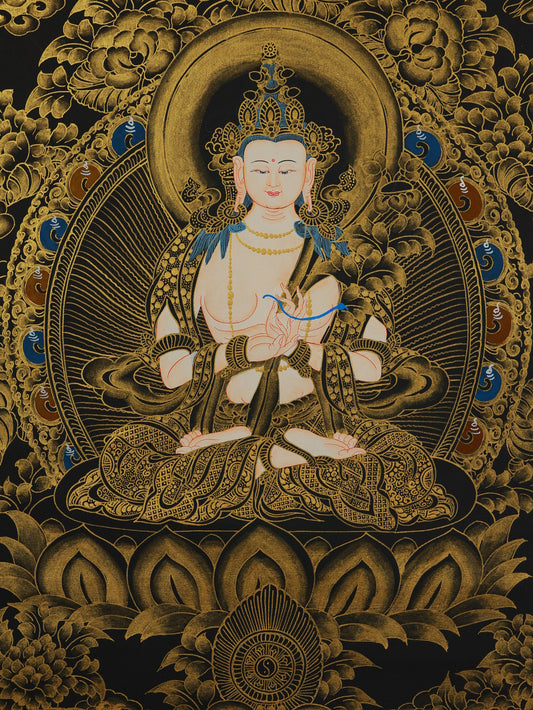
The figure of Medicine Buddha in this thangka strictly follows the Buddha Image Measurement Sutra and the ritual prescriptions of the Medicine Buddha Sutra. Every detail carries symbolic meaning related to salvation and healing.
Coloration and Features
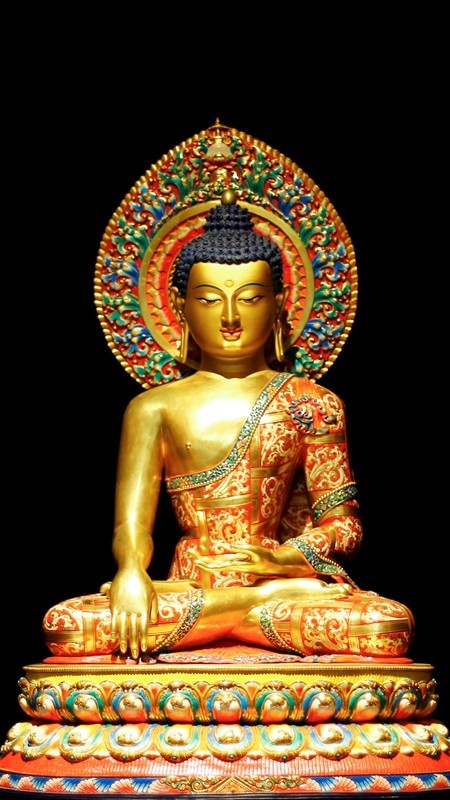
The principal deity’s body is painted in milky white (or light gold), representing “lapis lazuli light,” a signature trait of Medicine Buddha, symbolizing immaculate healing power. The face includes the “32 marks and 80 minor characteristics,” with a white urna at the brow radiating a “cooling light.” His slightly lowered compassionate eyes convey the equal-hearted care for all beings, while faintly red lips suggest nurturing through compassion.
Attributes and Mudras
Medicine Buddha’s hands form the medicine mudra (or dhyana mudra), holding a medicine stupa or vase of nectar, filled with healing amrita. The amrita represents curing disease and removing negative karma, while the mudra signifies guiding beings with his vows. In some depictions, he holds a medicine pestle, but in this thangka, the stupa emphasizes “ultimate healing”—beyond material medicine, pointing toward spiritual liberation.
Attire and Posture
The deity wears a five-Buddha crown (symbolizing the merits of the five Dhyani Buddhas to heal sentient beings), draped in ornate robes and jewelry, leaving the right shoulder bare—a hallmark of serene Buddhas. Seated on a double-layer lotus throne, the lower petals are semi-open, symbolizing the “unawakened Buddha nature of beings,” while the upper petals are fully open, representing Medicine Buddha’s perfected healing power. The wheel at the lotus base signifies the spread of salvific power throughout all realms.
3. Attendant Deities: The “Healing Assembly” Hidden in Symbolism
The thangka’s attendant deities are subtly integrated into the background motifs, a hallmark of black-gold thangkas that use minimal visual elements to convey complex meaning.
Background Ritual Objects
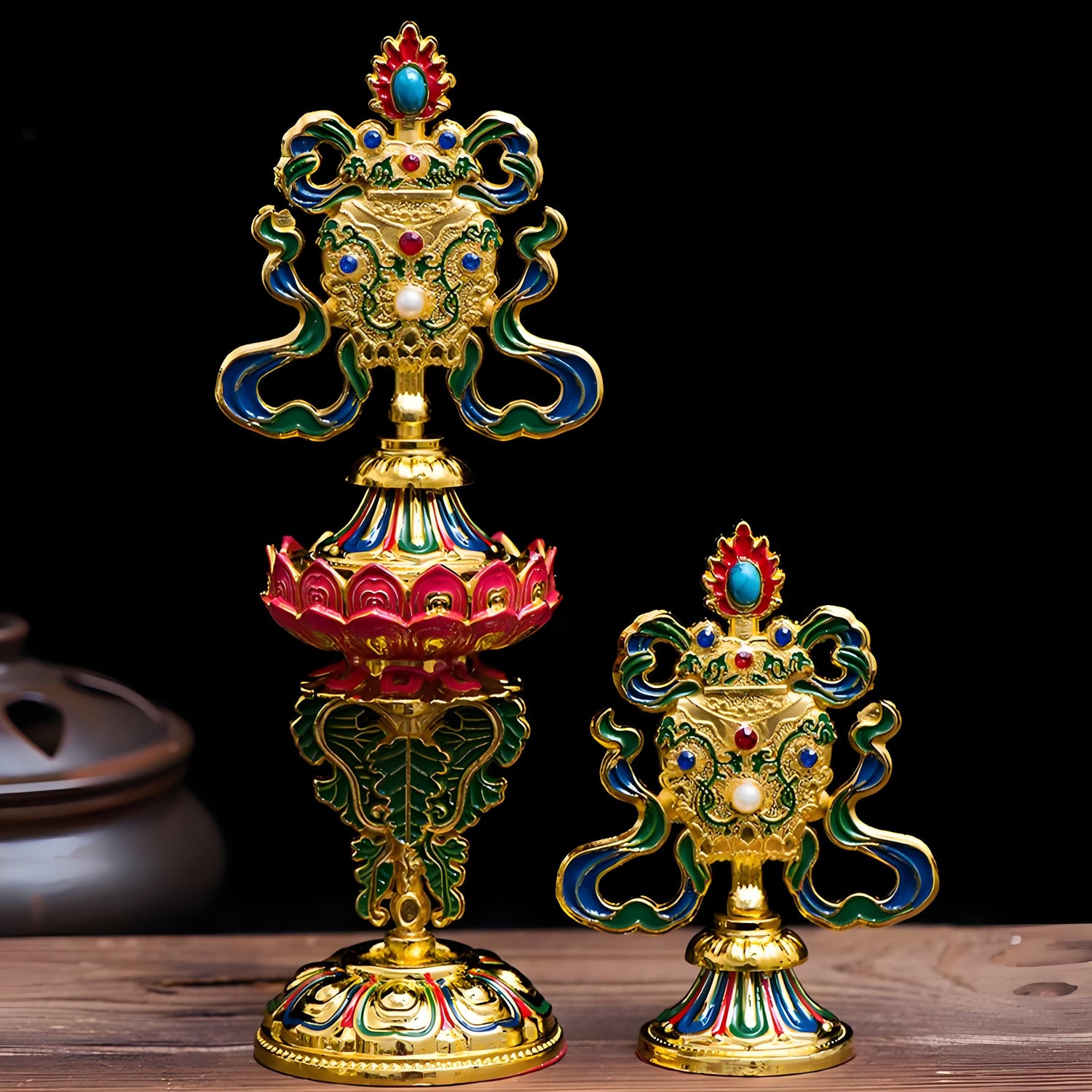
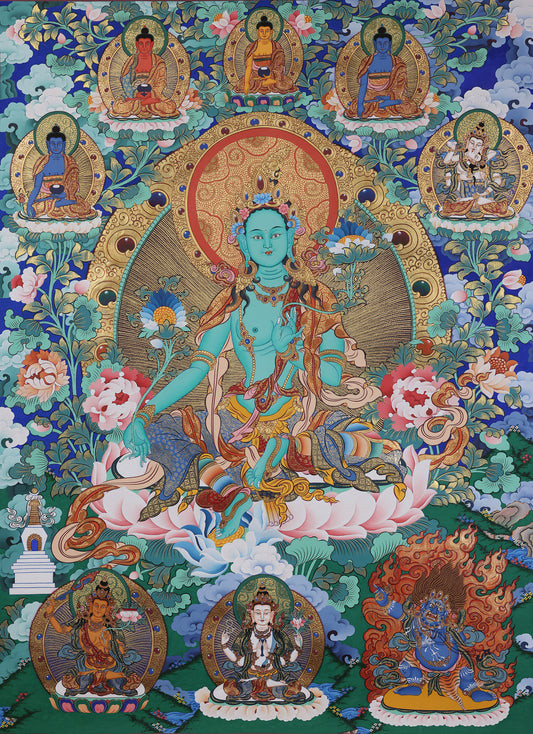
Surrounding the halo are symbols of the “Seven Buddhas of Medicine” hidden within cloud motifs, along with the “Eight Auspicious Symbols.” These are not decorative—e.g., the treasure vase corresponds to Medicine Buddha’s nectar vessel, and the dharma wheel signifies turning the wheel of healing. These elements symbolically invoke the presence of his retinue, such as the Sun and Moon Bodhisattvas and the twelve Yaksha generals.
Seed Syllables and Clouds
Scattered seed syllables like “Hum” and “Om” represent the deity’s mantra, aligning body, speech, and mind to receive healing. Flowing auspicious clouds symbolize the manifestation of Dharma protectors, suggesting that Medicine Buddha’s healing power is omnipresent.
This “hidden-attendant” design maintains the thangka’s simplicity and solemnity while adhering to tantric principles: the principal deity is the source of healing, and the attendants extend his compassionate vows.
4. Painting Technique: The “Healing Practice” of Black-Gold Thangkas
This thangka employs the highly demanding Na-Thangka (Black-Gold Thangka) technique, where the creation process itself mirrors the act of healing.
Base and Pigments
The canvas is Tibetan cotton, ritualistically prepared with cowhide glue and white clay, polished to a mirror-like finish—symbolizing the removal of mental impurities. The black base combines magnetite powder with deer antler ash: magnetite’s weight conveys the solidity of suffering, and antler ash ensures adhesion, symbolizing unwavering protection. Gold is 24K, ground for 36 hours on agate stone and mixed with five-year-aged cowhide glue, representing the imperishable nature of Buddha’s vows. The meticulous grinding process requires breath control and meditative focus, mirroring Medicine Buddha’s serene and attentive healing.
Line Drawing and Embossed Gold
The thangka’s essence is iron-line drawing, made with cat-hair brushes. Robe lines are as fine as hair yet deeply engraved into the canvas, creating both fluidity and majesty. Radiating gold lines behind the deity simulate the “lapis lazuli light,” contrasting sharply with the black background, a metaphor for salvation shining through suffering. Raised gold techniques along lotus petals and motifs add a three-dimensional effect, symbolizing the deity’s adaptive healing power responding to each viewer’s needs.
Facial Opening and Ritual Consecration
The “face opening” is central to the creation: after ritual purification and three days of meditative visualization, the artist paints the features with delicate strokes—eyebrows and eyes soft yet precise, lips gentle yet full of compassion. A high lama then consecrates the thangka, inscribing the Medicine Buddha mantra on the back and stamping with hand seals. The thangka thus transforms from art into a spiritual vessel, receiving and transmitting healing energy.
5. Cultural Significance: From Survival Needs to Spiritual Salvation
The black-gold Medicine Buddha thangka is both an artistic reflection of Tibetan survival experiences and a tangible manifestation of tantric “compassion-wisdom integration.”
-
Connected to the Highland Environment: Medicine Buddha’s healing and longevity vows directly address the harsh Tibetan plateau, while the black-gold design reinforces the sacredness of his protection.
-
From Mundane to Ultimate: While focusing on health and longevity, the stupa and radiant light also signify ultimate liberation. Healing is not limited to the body but purifies the mind as well.
With its stark black-and-gold contrast, this thangka creates a spiritual space where suffering and salvation coexist: the black background represents sentient beings’ pain, the gold lines embody the Buddha’s illuminating vows, and the figure signifies hope amid adversity. This work is not merely art—it is a cultural crystallization of Tibetan Buddhism, transmitting healing through visual form and embodying vow through meticulous craftsmanship.
#TibetanBuddhistThangka #MedicineBuddhaThangka #BlackGoldThangka #HealingArt #LongevityPrayer #SpiritualArt #TantricBuddhism #HandpaintedThangka #SacredArt #MeditationThangka #BuddhistHealing #TibetanArt #BuddhistShrineArt #ArtAndSpirituality #CompassionAndWisdom