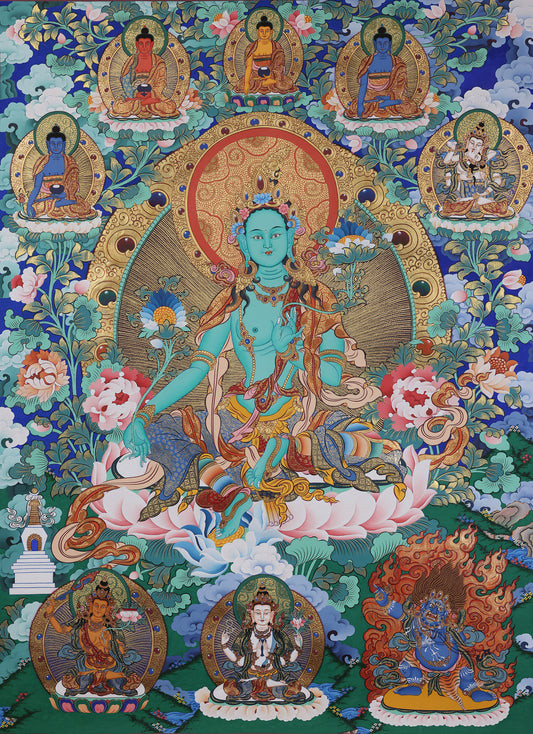
The Tibetan Yellow Jambhala Thangka represents one of the most revered spiritual artworks in the Tibetan Buddhist pantheon. Known in Tibetan as “Zang-la Serbo”, Yellow Jambhala is a central deity in the Five-Color Jambhala lineage, embodying the dual aspects of material prosperity and spiritual wisdom. Unlike common perceptions of wealth deities as merely symbols of financial gain, Yellow Jambhala in Tibetan culture is the guardian of both worldly resources and enlightened insight, reflecting a sophisticated Buddhist philosophy that integrates wealth as a supportive tool for spiritual cultivation.
I. Core Theme: The Interplay of Wealth and Wisdom
At its essence, this Thangka conveys the principle of “Fortune and Wisdom in Harmony”. Tibetan Buddhist teachings emphasize that wealth is a means for spiritual practice rather than an end in itself. Material resources are necessary to maintain spiritual discipline, yet attachment to wealth leads to greed, ignorance, and suffering. The Yellow Jambhala Thangka functions as a visual ritual map, illustrating the accumulation of resources for spiritual development.
-
The central deity represents the power to dispel poverty and generate opportunity.
-
Accompanying figures provide protective support for wealth and spiritual growth.
-
The composition symbolizes using material abundance as a vessel toward liberation, balancing worldly needs with spiritual detachment.
This Thangka resonates with both practical life and contemplative practice, guiding devotees to cultivate wealth without attachment, integrating prosperity and ethical responsibility.
II. Central Deity: Iconography and Esoteric Meaning
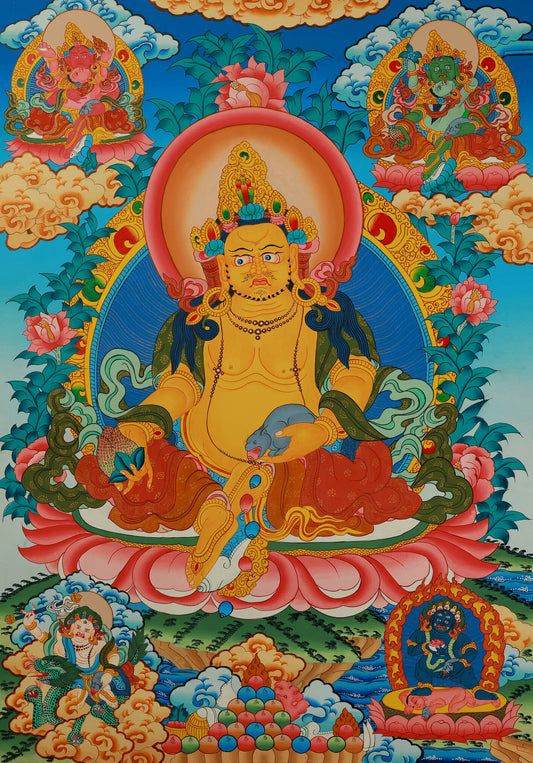
The central figure is the manifestation of Jambhala as Ratnasambhava, meticulously following the proportions and rituals outlined in the Tibetan Canon of Iconometry and Jambhala Ritual Texts. Every detail communicates tantric Buddhist philosophy.
Symbolic Colors and Form
-
Earth Yellow Body: Reflects Ratnasambhava of the Five Dhyani Buddhas, representing equanimity and impartial wisdom. Wealth is seen without discrimination, dissolving the dichotomy of rich and poor.
-
Full, Exposed Abdomen: Symbolizes abundance and generosity, implying freedom from greed and hoarding.
Implements and Mudras
-
Left Hand Holding the Wealth-Mouse (Nyule): The mouse continuously spits out treasures, representing unceasing flow of resources. Symbolically, the mouse represents attachment, and its treasure-spitting gesture indicates transforming desire into spiritual opportunity, a visual embodiment of the Buddhist teaching: “Affliction itself becomes enlightenment.”
-
Right Hand in Giving Mudra (or holding Mani Jewel): Confers protection, fearlessness, and fulfillment of pure wishes, showing that true wealth is inseparable from wisdom.
-
Wish-Fulfilling Vase at the Side: Filled with nectar and precious jewels, it represents the union of material abundance and spiritual virtue, emphasizing that wealth must be purified through ethical conduct to become a spiritual resource.
Headdress and Ornaments
-
Five-Buddha Crown: Integrates the blessings of all Five Dhyani Buddhas, indicating that wealth protection is the collective manifestation of Buddha wisdom.
-
Precious Jewelry (Gold, Jade, Gemstones): Depicts the deity’s nobility while embodying non-attachment, demonstrating the practice of controlling wealth with a pure mind.
Posture and Lotus Throne
-
Half-Lotus Pose on a Thousand-Petal Red Lotus: Suggests that worldly wealth, though born in mundane conditions (mud), can remain spiritually pure (lotus).
-
Mount Meru Base: Signifies that the foundation of wealth is Bodhicitta, and resources gained altruistically constitute pure spiritual capital.
III. Attendant Figures: Wealth Guardians and Supporters
The attendants are functional, not decorative. Each fulfills a role aligned with Tibetan tantric practice:
-
Left Attendant – Wealth Child or Treasure Goddess: Holds a plate of treasures, representing skillful and diligent accumulation of resources. Emphasizes that wealth must come from ethical actions and virtuous intention.
-
Right Attendant – Dharma Protector or Black Jambhala: Dark blue wrathful form wielding a vajra and treasure bag, symbolizing removing obstacles to wealth. Illustrates the principle that wealth requires accumulation and protection, defending against greed, theft, and misuse.
Background and Elemental Symbols
-
Auspicious Cloud Umbrella Above: Purifies and safeguards wealth from negative influences.
-
Seven Treasure Piles Below: Represent both worldly resources and transcendent wisdom, aligned with the Seven Accumulations: faith, effort, mindfulness, concentration, wisdom, shame, and remorse. These highlight that wealth is essentially a tool for spiritual practice, requiring ethical alignment.
IV. Artistic Craftsmanship: Ritualized Hand-Painting
This Yellow Jambhala Thangka is a masterpiece of Rebgong or Menri painting schools, where artistic technique embodies religious devotion.
Materials
-
Yellow Pigment: Realgar and 24K gold powder, processed over 12 steps, achieving a rich earth yellow symbolic of Buddha light illuminating the world.
-
Blue Pigment: Lapis lazuli and malachite, ground to micro-fine particles to produce void-blue, representing vast wisdom.
-
Red Pigment: Cinnabar and safflower juice, symbolizing compassionate generosity and ethical accumulation of wealth.
Process
-
Canvas Preparation: Layers of cowhide glue and Tibetan paper, scraped and dried seven times, forming a foundation of purity.
-
Sketching Proportions: Charcoal outlines using the 37:25 golden ratio, ensuring 32 physical marks and 80 virtues of the deity.
-
Eyes and Face: Painted by a qualified master at an auspicious time with protective mantras, granting the Thangka living sacred presence.
-
Consecration: Heart mantra scrolls, relic powders, and nectar balls are enshrined and blessed by a lama, transforming the painting into a body-speech-mind reliquary.
Style and Technique
-
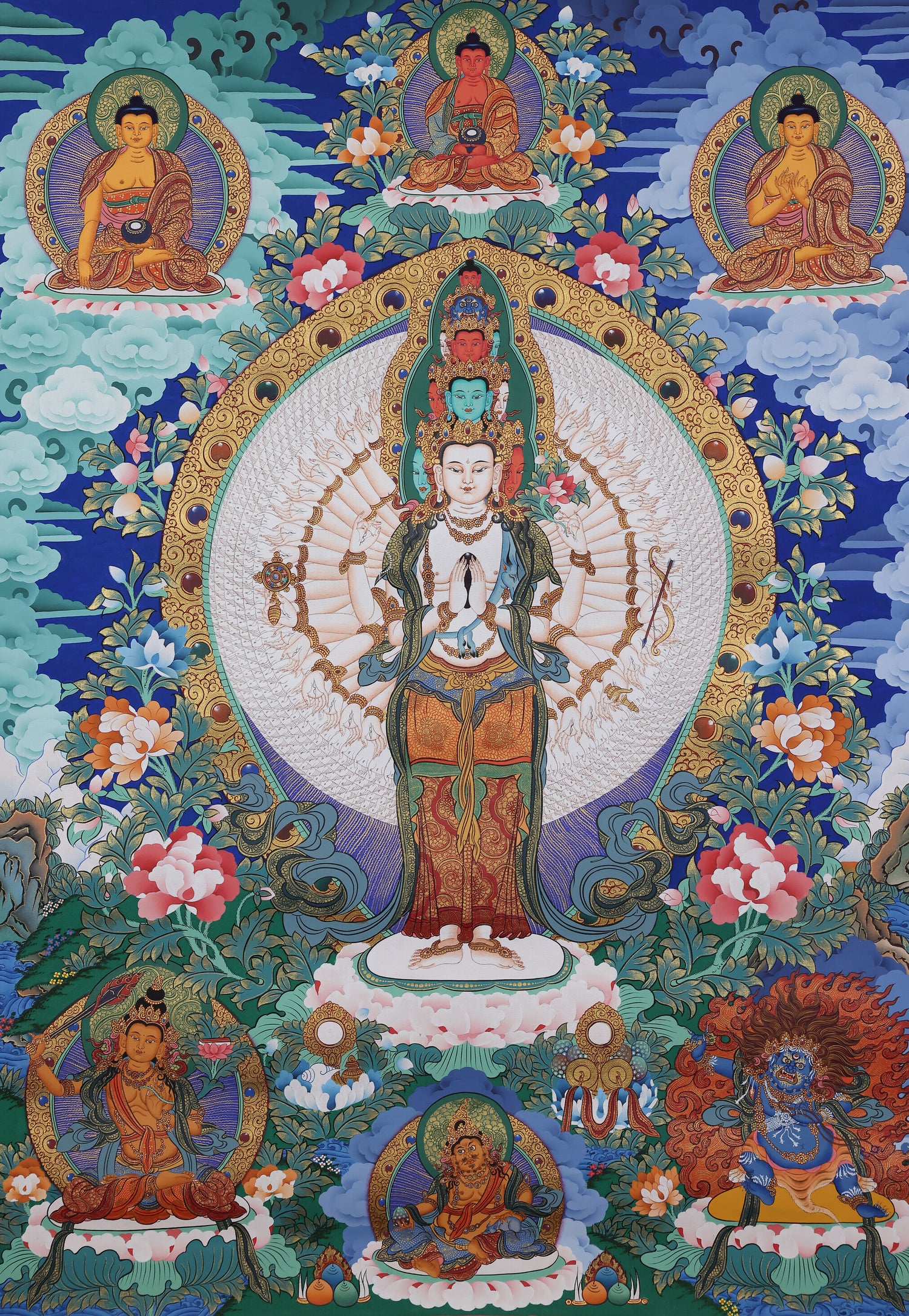
Composition: Symmetrical, hierarchical layout emphasizing central deity as focal point.
-
Linework: Bold iron lines for robes and implements; delicate flying silk lines for hair and jewelry.
-
Coloring: High-saturation, multi-layer washes; yellow layered seven times; blue-green gradient backgrounds evoke all-encompassing space.
-
Gold Application: Fine gold lines and gilded details, polished to radiance, symbolize Buddha-light illumination.
V. Cultural Significance: Thangka as Medium of Wealth and Wisdom
In Tibetan Buddhist practice, this Thangka is not merely a talisman for wealth. It is a ritual communication tool between the practitioner and the deity:
-
Meditative Focus: Devotees visualize the deity, the wealth-mouse, and the jewel, transforming external form into internal wisdom.
-
Offerings: Adhere to the “Three Purities” (water, flowers, incense) and perform charitable acts on auspicious dates, aligning with Yellow Jambhala’s principle of generosity.
-
Spiritual Meaning: The wealth-mouse symbolizes turning attachment into spiritual resource, reflecting the Buddhist teaching: “Affliction is the path to enlightenment.”
This Thangka condenses Tibetan Buddhist perspectives on wealth into a compact, visual, and philosophical medium. It serves as a household altar centerpiece for prosperity cultivation, while simultaneously exemplifying the integration of art and philosophy. Here, wealth transcends materialism, becoming a conduit for compassionate action and enlightened insight.
#TibetanBuddhistArt 00# 0WealthDeityThangka #HandPaintedThangka #TibetanThangka #BuddhistMeditationArt #SpiritualWealth #BuddhistHomeAltar #TantricArt #RebgongPainting #MenriPainting #ProsperityAndWisdom #SacredArt #TibetanCulture #BuddhistRitualArt