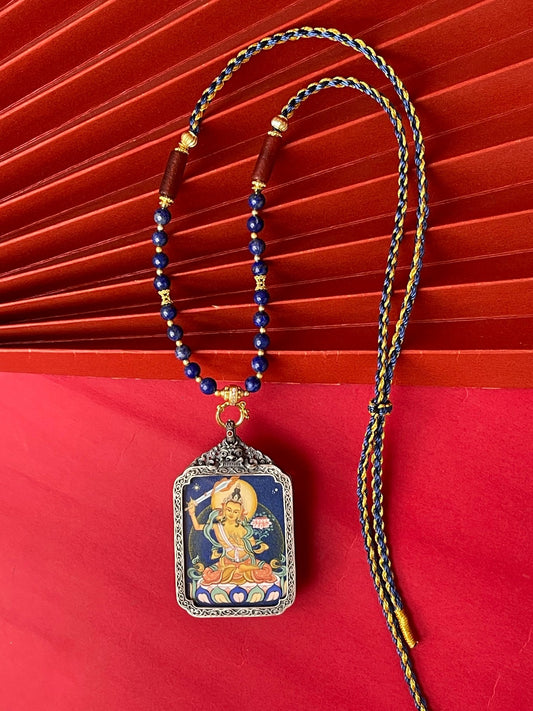
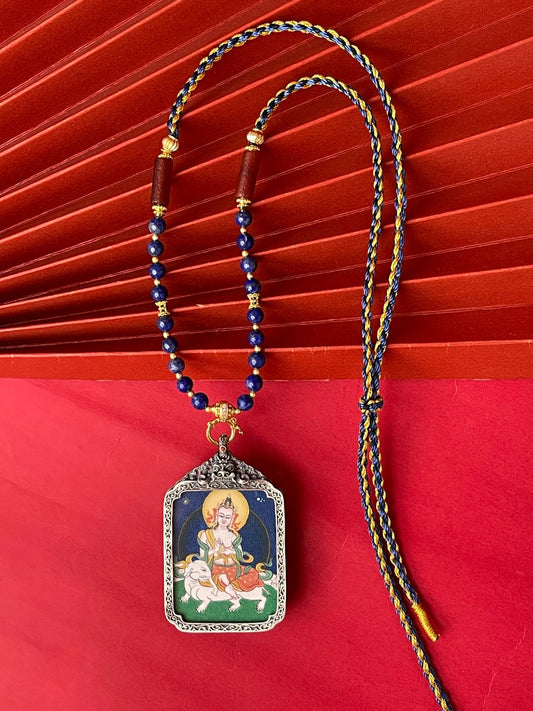
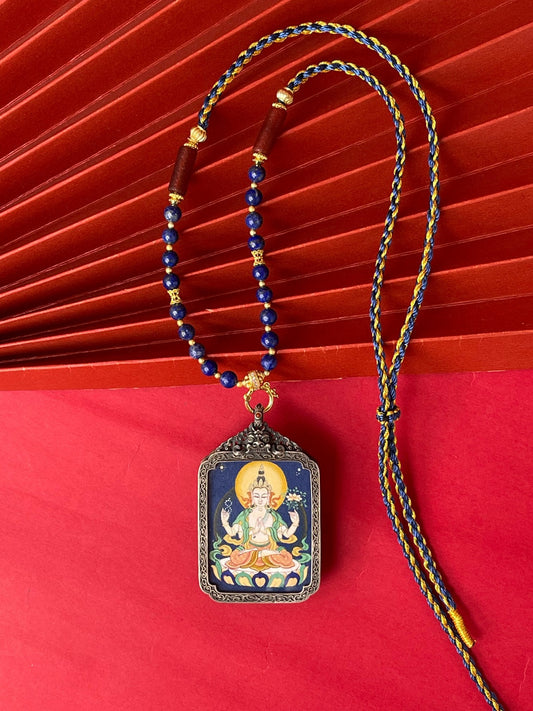
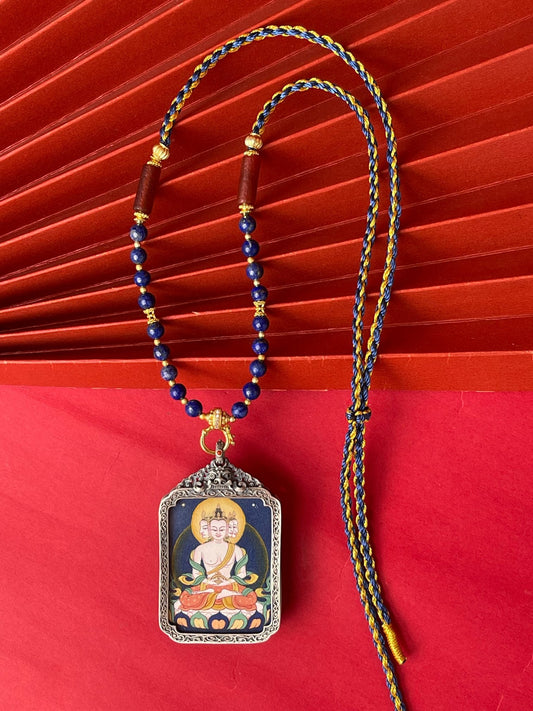
Yamantaka Thangka Pendant: Wearable Wisdom of the "Conqueror of Death" (Regong Craft)

Discover the 4×5cm Yamantaka (Vajrabhairava) thangka pendant— a masterpiece of Regong art, a UNESCO Intangible Cultural Heritage. Crafted with 100% natural mineral pigments and a black-gold copper gau case, this tiny pendant embodies Tibetan tantric wisdom, compassionate protection, and exceptional collectible value. It’s more than jewelry; it’s a portable shrine to overcoming fear and a high-growth Himalayan art asset.
Introduction: Unveiling the Power of Yamantaka in Miniature
In the realm of Tibetan Vajrayana Buddhism and Himalayan art, few deities carry the profound symbolism of Yamantaka—also known as Vajrabhairava, the "Conqueror of Death." This wrathful Dharma Protector, a manifestation of Manjushri (the Buddha of Wisdom), is revered for his ability to vanquish both inner and outer obstacles. Now, this sacred energy is condensed into a 4×5cm pendant, crafted by fifth-generation Regong artisans using time-honored techniques and natural mineral pigments.
Unlike mass-produced spiritual accessories, this Yamantaka pendant is a product of 1,000 years of Regong thangka tradition, where every line, color, and detail serves a ritual and spiritual purpose. For tantric practitioners, art collectors, and anyone seeking courage in daily life, it’s a rare fusion of cultural heritage, spiritual tool, and investment potential. Let’s explore the deity’s significance, the craftsmanship behind the piece, and why it stands out in the world of collectible Tibetan art.
Who Is Yamantaka? The "Conqueror of Death" in Tibetan Tantra
Yamantaka, or Vajrabhairava, holds a unique position in Tibetan Vajrayana Buddhism as the most powerful wrathful manifestation of Manjushri. His fearsome appearance—12 faces, 24 arms, and a commanding stance—belies a core of compassionate wisdom, designed to protect practitioners and help them overcome the greatest "death" of all: ignorance and attachment.
Symbolism in Form: Beyond Wrath to Wisdom
Every element of Yamantaka’s form is steeped in tantric symbolism, making this pendant a visual guide to overcoming life’s fears and obstacles:
-
12 Faces (3 Tiers of 4): These represent mastery over the 12 zodiac signs, which are believed to bring astrological obstacles in Tibetan tradition. Each face, from the fierce central visage to the smaller auxiliary faces, symbolizes the ability to confront and transcend different forms of fear.
-
24 Arms & Ritual Tools: Each of the 24 arms wields a unique tantric tool, each with a specific purpose:
-
The vajra (thunderbolt) shatters ignorance and delusion, the root of all suffering.
-
The skull cup (kapala) transmutes anxiety about death and impermanence into spiritual awareness.
-
Other tools, such as swords and lotus flowers, represent the balance of strength and compassion needed to overcome obstacles.
-
-
Deep Blue Skin: Symbolizes the transcendent void (shunyata), the Buddhist concept of emptiness that allows practitioners to let go of fear—especially the fear of death—by recognizing its impermanent nature.
Regong Art’s Unique Interpretation of Yamantaka
What sets this pendant apart is its Regong thangka craftsmanship, a UNESCO-listed tradition renowned for its precision and vibrancy. Regong artisans bring Yamantaka’s complex form to life with meticulous linework and vivid colors, ensuring every detail—from the expressions of the 12 faces to the intricate tools in the 24 arms—adheres to the strict guidelines of the Tantra Art Measurement Sutra, a 1,000-year-old text that preserves the deity’s spiritual power through accurate representation.
For tantric practitioners, invoking Yamantaka is a practice of courage: facing inner demons (ego, attachment) and outer harms (physical danger, karmic obstacles) with wisdom. This pendant transforms that practice into a wearable reminder, accompanying you through daily life as a symbol of resilience.
Craftsmanship: Natural Mineral Pigments – The Legacy of Regong Durability
The true soul of this Yamantaka pendant lies in its craftsmanship—specifically, the 100% natural mineral pigments that define collectible Regong thangka art. These pigments are not just chosen for their beauty; they are a testament to the art form’s longevity and spiritual significance.
Sourcing & Processing: A Labor of Devotion
Regong artisans reject synthetic dyes, instead harvesting pigments from the mineral-rich Tibetan plateau. The process is labor-intensive and reverent, passed down through five generations of craftspeople:
-
Mineral Sourcing: Lapis lazuli (for Yamantaka’s blue skin) and cinnabar (for vibrant red accents) are hand-mined for their purity. Gold leaf, used for decorative details, is sourced from traditional Tibetan goldsmiths to ensure authenticity.
-
Ultra-Fine Grinding: Each mineral is ground by hand over 14 days to particles 5–10μm in size—finer than paper fibers. This meticulous process ensures the pigments bond seamlessly to the pendant’s surface, creating a luminous, smooth finish that withstands the test of time.
-
Gold Leaf Application: Using squirrel-hair brushes (the only tool delicate enough for the task), artisans apply gold leaf to accent Yamantaka’s features. This technique requires steady hands and years of practice, making each piece a true labor of skill.
Longevity: A Heirloom for Generations
According to a 2025 conservation report from the Tibet Museum, these natural mineral pigments retain their vibrancy for 120+ years—compared to just 5–10 years for synthetic dyes. This means the pendant is not a temporary accessory; it’s a heirloom that can be passed down through families, preserving both its beauty and spiritual significance for decades to come.
Every detail of the pendant, from the 12 faces’ expressions to the placement of each ritual tool, follows the Tantra Art Measurement Sutra. This adherence to tradition isn’t just about aesthetics—it ensures the deity’s form carries the spiritual power intended by tantric teachings, making the pendant a valid ritual tool for practitioners.
Case Design: Black-Gold Copper Gau – A Portable Shrine for Daily Wear
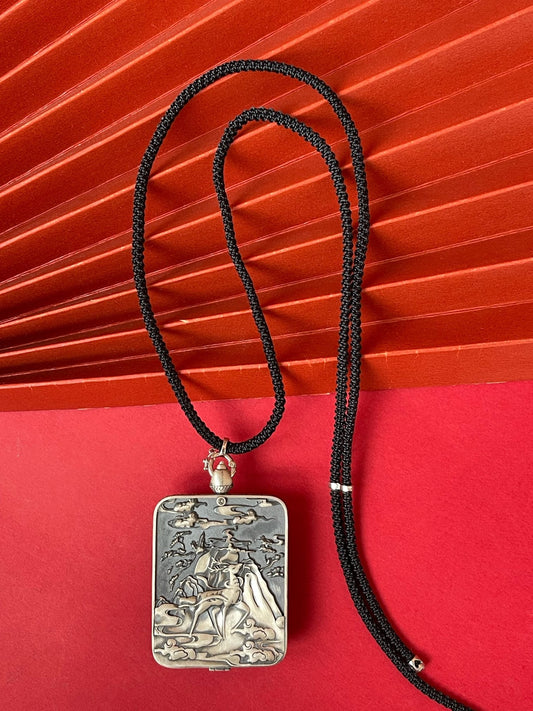
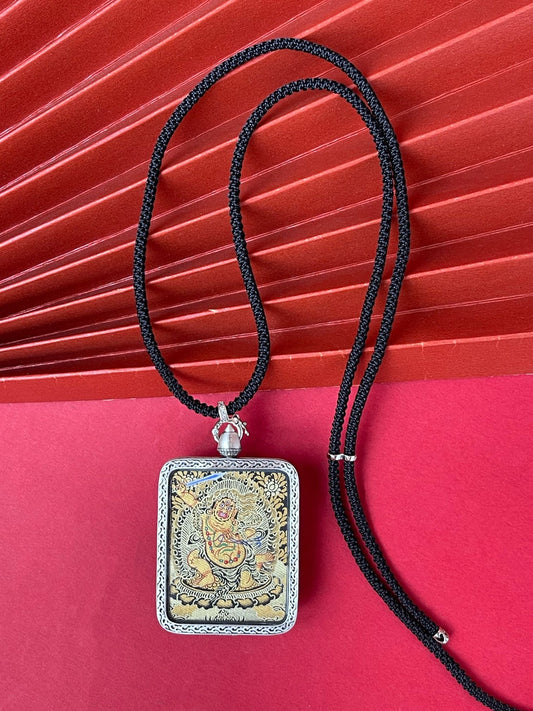
The pendant’s black-gold double-sided copper case is more than a protective covering—it’s a traditional Tibetan gau, a portable shrine designed to integrate spiritual practice into daily life. Every element of the case is intentional, balancing functionality, symbolism, and sacred aesthetics.
Dual-Sided Utility: Merging Visual & Auditory Practice
Unlike single-sided pendants, this design embraces Regong traditions of dual spiritual focus:
-
One side displays the meticulously crafted Yamantaka thangka, serving as a visual anchor for meditation and reflection.
-
The other side holds a miniature tantric mantra scroll (included with the pendant), inscribed with the Yamantaka Mantra. This allows practitioners to combine visual devotion (gazing at the thangka) with auditory practice (chanting the mantra), deepening their spiritual connection.
Material Symbolism & Practical Durability
The case’s materials are chosen for both their symbolic meaning and everyday functionality:
-
Blackened Copper: Represents Yamantaka’s wrathful energy—protective, powerful, and unyielding in the face of harm. Copper’s natural corrosion resistance makes it ideal for daily wear, even in humid climates.
-
Gold Inlay: Echoes the gold leaf accents in the thangka, symbolizing Manjushri’s wisdom—the underlying force behind Yamantaka’s wrath. The gold inlay adds a touch of elegance while reinforcing the pendant’s spiritual duality (strength and wisdom).
-
Carved Kalinga Scrollwork: The case’s intricate kalinga (swirling scrollwork) symbolizes boundless spiritual strength, wrapping the pendant in a protective aura that extends beyond its physical form.
The case’s design ensures the delicate thangka is safe for daily wear, making this sacred piece accessible beyond ritual settings. It’s a shrine you can carry with you to work, travel, or daily activities—turning every moment into an opportunity for mindfulness.
Collectible Value: Why This Mini Yamantaka Pendant Is a High-Growth Asset
Regong Yamantaka thangkas have emerged as the fastest-appreciating segment of Himalayan art, and this miniature pendant stands out as a rare, high-potential collectible. Its value stems from three key factors: rarity, market demand, and cultural relevance.
Rarity: Limited Production by Master Artisans
Due to the complexity of Yamantaka’s 12 faces and 24 arms, artisans can only produce 12–18 of these pendants annually. Each piece requires weeks of meticulous work, and 80% are sold to private collectors before public release. This extreme limited production ensures exclusivity—a critical driver of collectible value in the Himalayan art market.
Market Growth: Outpacing Larger Thangkas
The 2025 Regong Thangka Market Report highlights a clear trend: miniature Yamantaka pieces are outperforming larger thangkas in price growth. With a 37.2% annual appreciation rate, these miniatures surpass the 29.5% growth of full-sized thangkas, thanks to their portability, accessibility, and deep tantric significance. For collectors, this means the pendant is not just a beautiful piece—it’s a tangible asset with strong long-term growth potential.
Cultural Relevance: Resonating with Modern Audiences
As Tibetan tantric art gains global recognition, Yamantaka’s symbolism—overcoming fear, embracing impermanence, and finding courage in wisdom—resonates deeply with modern audiences. In a world filled with anxiety and uncertainty, the "Conqueror of Death" offers a timeless message of resilience. This cultural relevance drives demand for authentic, lineage-made pieces like this pendant, as collectors and spiritual seekers alike seek to own a piece of living tradition.
Spiritual Significance: Wearing Yamantaka as a Daily Practice
While the pendant’s craftsmanship and collectibility are impressive, its true power lies in its role as a spiritual tool. For practitioners, wearing Yamantaka is more than wearing a "protection charm"—it’s a daily practice of mindfulness, courage, and cultural reverence.
-
Fear Transmutation: When faced with stress, anxiety, or fear, a glance at Yamantaka’s form serves as a reminder: fear (like death) is a mental construct that can be overcome with wisdom. The pendant encourages you to face challenges with courage, not avoidance.
-
Mindful Reflection: The 24 arms invite daily self-inquiry: Am I using my own "tools"—skills, compassion, wisdom—to overcome the obstacles in my life? It’s a gentle nudge to align your actions with tantric principles of balance and purpose.
-
Cultural Preservation: Wearing this pendant is an act of honoring Regong artisans’ 1,000-year heritage. It’s a way to keep a sacred art form alive, turning a piece of jewelry into a statement of respect for Tibetan culture and Buddhism.
Final Thoughts: A Pendant That Transcends Jewelry
The 4×5cm Yamantaka thangka pendant is a masterpiece of duality: wrathful yet compassionate, ancient yet modern, a spiritual tool yet a collectible asset. It condenses 1,000 years of Regong craftsmanship, the profound wisdom of Tibetan tantra, and the enduring power of Yamantaka into a piece small enough to carry close to your heart.
For those who value authenticity over mass production, meaning over novelty, and heritage over trend, this pendant is more than an accessory—it’s a companion. It’s a reminder to face fear with wisdom, to honor tradition in daily life, and to invest in pieces that enrich both the soul and the collection.
Whether you’re a tantric practitioner, a Himalayan art collector, or someone seeking courage in uncertain times, the Yamantaka thangka pendant is a work of art that will inspire, protect, and endure for generations.
Tags
#YamantakaThangka #Vajrabhairava #TibetanTantricArt #RegongThangka #NaturalMineralPigment #CollectibleTibetanPendant #TibetanDharmaProtector #HimalayanArtCollectible #PortableGauShrine #TibetanBuddhistJewelry
Schlagwörter:
Vorherige
Regong Blue Cloud Six-Armed Mahakala Pendant: A Wearable UNESCO Heritage & Spiritual Guardian
Nächste
Palden Lhamo Thangka Pendant: Wearable Guardian of Tibetan Buddhism (Regong Craft)