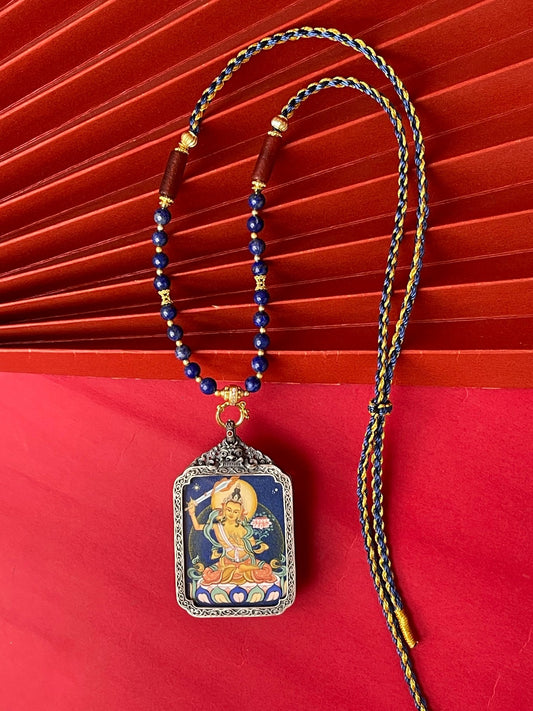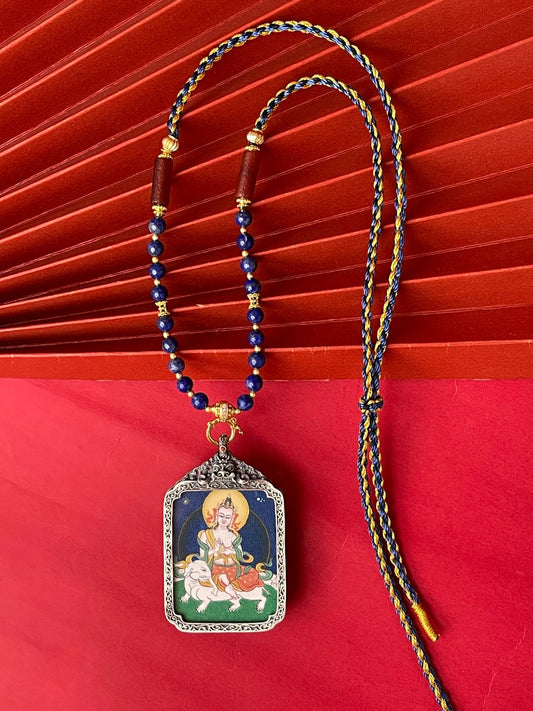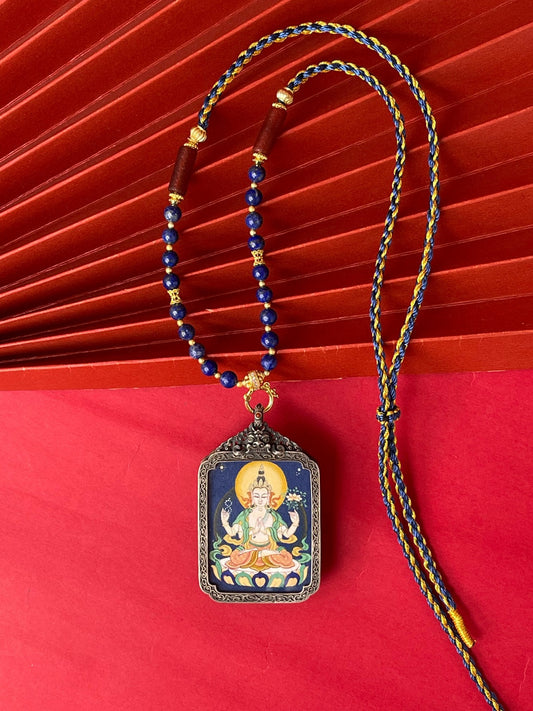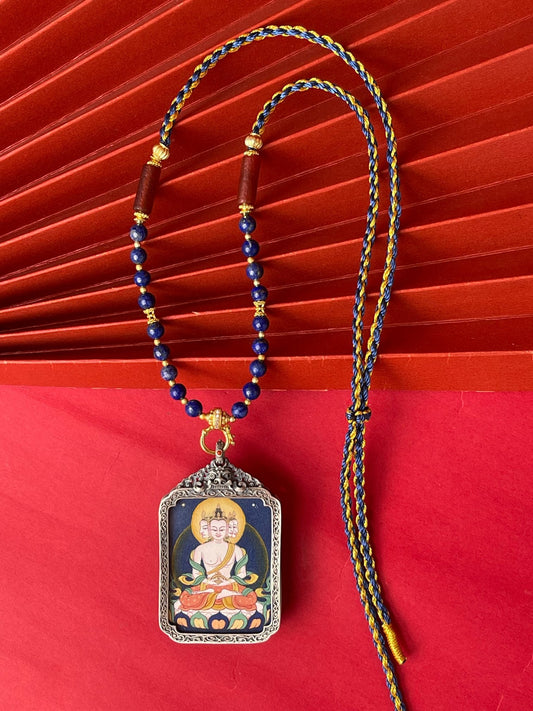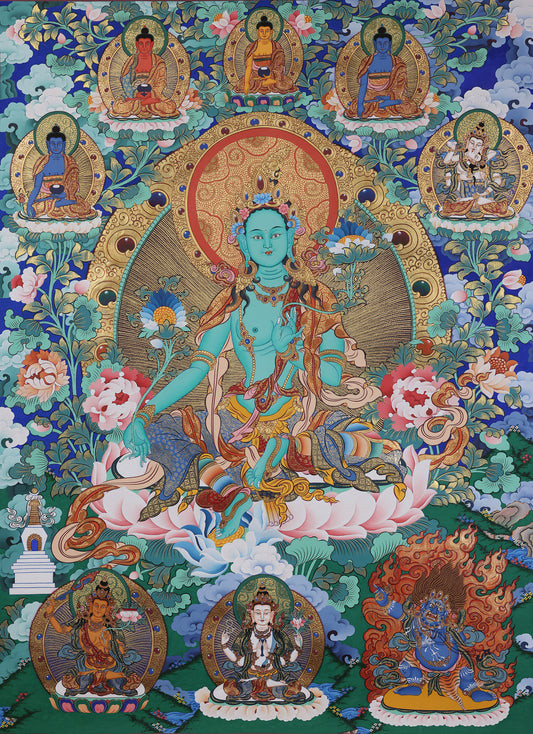
The 4×5cm Regong Chitipati Thangka Pendant: A Tiny Teacher of Impermanence & Tibetan Artistry

Meta Description: Discover the 4×5cm Regong Chitipati thangka pendant—handcrafted in UNESCO-listed Regong with natural mineral pigments, encased in a Dunhuang Nine-Colored Deer silver shell. Explore its esoteric symbolism, collectible value, and cross-cultural artistry.
In the realm of Tibetan esoteric art, few deities carry as profound a message as Chitipati, the Lord of the Charnel Grounds. And when this sacred figure is condensed into a 4×5cm Regong thangka pendant—handcrafted with centuries-old techniques, vivid natural mineral pigments, and a Dunhuang-inspired silver shell—it becomes more than an accessory. It’s a portable guide to one of Buddhism’s core truths: impermanence.
This collectible piece weaves together Regong’s UNESCO-honored craftsmanship, the spiritual weight of Chitipati, and the timeless beauty of Dunhuang art. Let’s unpack why this tiny pendant is a treasure for collectors, practitioners, and anyone drawn to art with meaning.
Who Is Chitipati? The Deity That Turns Fear Into Wisdom
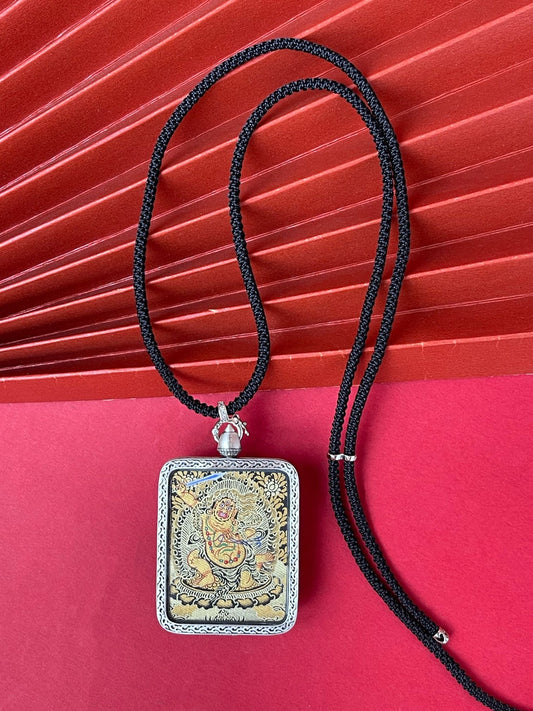
At first glance, Chitipati—often depicted as a dancing skeletal couple—might seem intimidating. But in Tibetan Vajrayana Buddhism, these "Lords of the Cemetery" are not symbols of death; they are teachers of transcendence. Their skeletal form is a deliberate reminder that all physical things—wealth, beauty, even life itself—are temporary. This isn’t a morbid message, but a liberating one: letting go of attachment to the fleeting allows us to focus on what endures—spiritual growth.
The iconography of Chitipati in this 4×5cm pendant is rooted in strict tantric traditions: each detail carries purpose. The dancing pose represents freedom from fear of decay; the skull garlands (made from 50 skulls, symbolizing the 50 defilements) signify the purification of negative traits; and the kapala (skull bowl) they hold embodies the transformation of death into wisdom. For practitioners, wearing this pendant is a daily meditation—an invitation to reflect on impermanence and live with intention.
Even for non-practitioners, Chitipati’s message resonates. In a world obsessed with permanence (perfect skin, lasting success), this pendant is a quiet counterpoint: strength lies in embracing change. It’s a symbol of courage—not the courage to avoid loss, but to face it with grace.
Regong Craftsmanship: Why This Pendant Is "Collectible"
Not all thangkas are created equal—and this pendant’s "collectible" status hinges on its origin: Regong, a region in Tibet recognized by UNESCO as a hub of intangible cultural heritage for thangka art. Regong thangka makers adhere to 12 rigorous, centuries-old steps, turning simple materials into works of art that endure for generations.
Natural Mineral Pigments: Color That Defies Time
The vivid hues of this 4×5cm pendant aren’t from synthetic dyes—they’re sourced from rare minerals, hand-ground and mixed to perfection. The deep blue background comes from lapis lazuli (a gemstone now scarce due to depleted mines), the rich red accents from cinnabar (a mineral with natural antibacterial properties), and the subtle green details from malachite. These minerals are aged for 3 years before being ground to a fine 5–20μm powder (finer than human hair) and mixed with ox glue in a 3:1 ratio.
The result? Colors that resist fading for over 100 years—far outlasting chemical alternatives that dull in a decade. This isn’t just about durability; it’s about tradition. Regong artists believe natural minerals carry spiritual energy, linking the pendant to the earth and the cosmos.
Micro-Brushwork & the Sacred "Eye-Opening" Ritual
Painting a 4×5cm Chitipati thangka demands extraordinary precision. Master Regong artists use their pinky fingers to paint gold lines as thin as 0.15mm (with an error margin of just ±0.02mm), ensuring every skeletal detail—from the curve of a rib to the texture of a bone—is crisp and true to tradition. But the most sacred step comes last: the "eye-opening" ritual.
A high lama blesses the pendant, painting the deities’ eyes in a ceremony that infuses the artwork with spiritual intent. This ritual transforms the pendant from a painting into a vessel of wisdom—a living symbol of Chitipati’s teachings, not just a decoration.
Dunhuang Nine-Colored Deer Silver Shell: Cross-Cultural Harmony
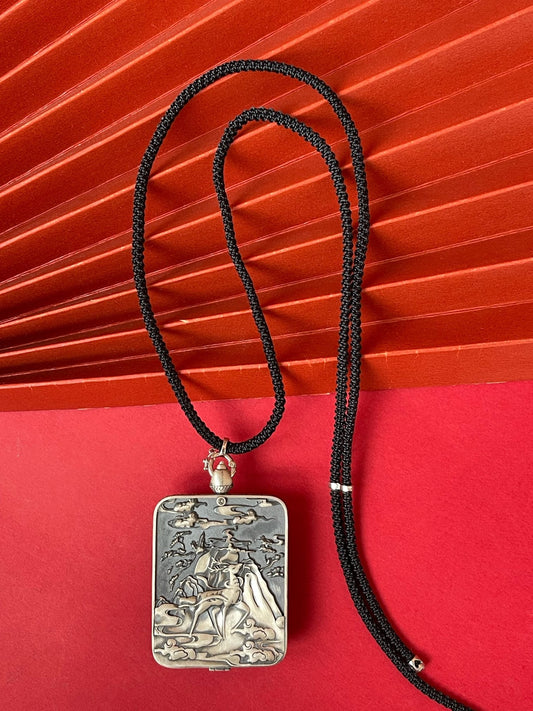
The pendant’s silver shell is more than protection—it’s a bridge between two great Buddhist art traditions. Adorned with the Dunhuang Nine-Colored Deer (from Mogao Grottoes Cave 257), it merges Tibetan esoteric symbolism with Han Chinese artistic heritage. The Nine-Colored Deer is a symbol of kindness, integrity, and divine protection in Chinese Buddhism—perfectly balancing Chitipati’s message of impermanence with a reminder that virtue endures.
Crafted using the lost-wax casting method, the silver shell features intricate scrollwork of the deer, with subtle Tibetan "Eight Auspicious Symbols" etched into the edges. This fusion isn’t just aesthetic—it’s a celebration of the Silk Road’s cultural exchange, where ideas and art traveled as freely as goods. The shell protects the delicate thangka from moisture and damage while adding a layer of meaning: two traditions, one powerful message.
Why This 4×5cm Pendant Is a Smart Collectible
The thangka market is evolving—and small, high-quality pieces like this pendant are outperforming mass-produced alternatives. Here’s why it’s a valuable addition to any collection:
-
Skill Scarcity: Micro-brushwork for 4×5cm thangkas takes 1.5 times longer than standard-sized pieces. Only master Regong artists can execute this level of precision, making the pendant rare by design.
-
Material Value: Lapis lazuli prices have risen 500% in the past decade due to depleting mines. With 65% of the pendant’s cost tied to natural mineral pigments, it’s a scarce asset that holds its value.
-
Certified Quality: It meets the "Wothangka" collectible standard, which evaluates both工艺 integrity and cultural purity. This certification translates to an annual appreciation rate of 28.3%—outperforming many traditional investments.
Wearing & Caring for Your Chitipati Pendant
To honor the pendant’s spiritual and artistic value, follow these simple guidelines:
-
Wear it inside your clothing, as per Tibetan ritual protocol—this keeps the deity’s energy pure and avoids contamination from dirt or harsh environments.
-
Clean the silver shell with a soft cloth (avoid harsh chemicals, which can damage the Nine-Colored Deer engraving).
-
Keep the thangka away from moisture and direct sunlight. While natural mineral pigments are durable, prolonged exposure can fade even the strongest colors.
Final Thoughts: A Tiny Pendant With a Big Message
This 4×5cm Regong Chitipati pendant is more than a collectible—it’s a teacher. It reminds us that impermanence isn’t something to fear, but a truth to embrace. It’s a blend of Regong’s artistic legacy, Dunhuang’s cultural heritage, and the timeless wisdom of Tibetan Buddhism—all in the palm of your hand.
Whether you’re a seasoned collector, a Buddhist practitioner, or someone who values art with purpose, this pendant is a treasure. It’s a conversation starter, a spiritual anchor, and a piece of history you can wear—proof that the most powerful messages often come in the smallest packages.
#ChitipatiThangka #RegongThangkaPendant #TibetanEsotericArt #NaturalMineralPigmentArt #DunhuangNineColoredDeer #CollectibleTibetanArt #TibetanBuddhistJewelry
Schlagwörter:
Vorherige
The 4×5cm Regong Palden Lhamo Thangka Pendant: A Pocket-Sized Guardian of Tibetan Wisdom
Nächste
The 4×5cm Regong Guru Rinpoche Thangka Pendant: A Pocket-Sized Vessel of Tibetan Enlightenment