Blog Post: The Meaning & Art of a Hand-Painted Tibetan Medicine Buddha Thangka
wudimeng-Dec 04 2025-
0 Kommentare
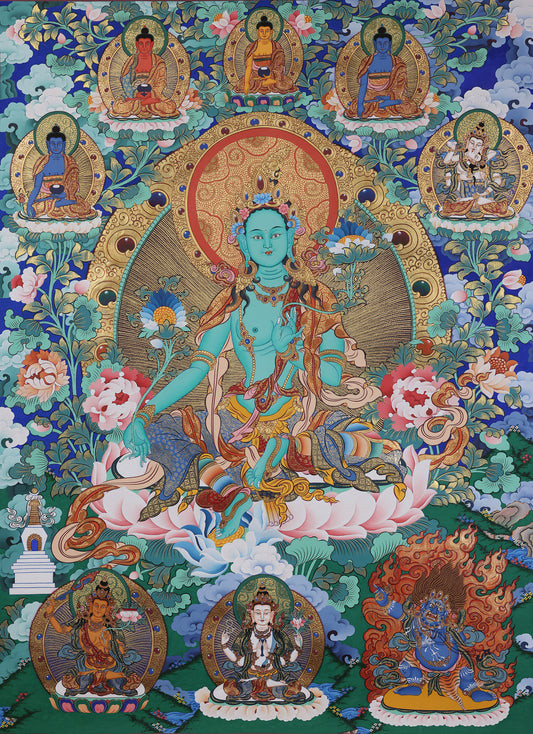
Tibetan Thangkas are more than art—they’re sacred spiritual tools, and this hand-painted piece dedicated to the Medicine Buddha (Bhaisajyaguru) is a perfect example of that fusion.
At the center sits Bhaisajyaguru, the "Healing Buddha" of the Eastern Pure Land of Vaiḍūryanirbhāsa. His deep indigo-blue skin symbolizes the pure, luminous energy of his realm; he holds a medicine bowl (filled with healing nectar) in one hand and offers blessings with the other—embodying his vow to cure physical and spiritual suffering.
Surrounding him is a carefully structured spiritual retinue:
-
Upper small Buddhas: Part of the "Seven Medicine Buddhas," they represent collective healing protection.
-
Lower deities: Compassionate bodhisattvas (like Sun/Moon Bodhisattvas) and fierce guardians (dharma protectors) work together to shield devotees from harm.
Crafted entirely by hand, this Thangka follows age-old Tibetan techniques:
-
Materials: Stretched cotton canvas prepped with natural glue, and mineral/plant pigments (plus real gold leaf) for vibrant, fade-resistant color.
-
Process: Painted to strict iconometric rules (per Tibetan Buddhist texts), with layers of detail—from delicate floral backgrounds to precise deity features—culminating in the sacred "eye-opening" ritual to infuse spiritual energy.
This Thangka isn’t just decor: it’s a symbol of healing, protection, and the rich cultural legacy of Tibetan Buddhism.
#TibetanThangkaArt #MedicineBuddha #TibetanBuddhism #HandPaintedThangka #SacredArtCraftsmanship #Bhaisajyaguru