Vajrasattva Thangka Pendant: The Purifier of All Karma as a Wearable Sacred Object Summary: An introduction to the Vajrasattva Thangka p

Why Focus on “Purification” in Buddhist Practice?
In Tibetan Buddhism, purifying negative karma and defilements is seen as the foundation for all higher practice. Vajrasattva is the principal deity of this purification. Known as the “Diamond Being” or “Vajra Being,” he embodies the purified state of all Buddhas and is invoked to purify negative karma, repair broken vows, and remove obstacles. A Thangka pendant of Vajrasattva brings this symbolism into daily life: it can remind you to practice confession, recite his mantra (such as the 100-syllable mantra), and renew your intention for a clear mind. This article covers his place in the tradition, the meaning of his image, materials and craftsmanship, and how to wear and respect the pendant.
Vajrasattva: From “Vajra Being” to “Lord of Purification”
The name Vajrasattva combines “vajra” (indestructible, like a diamond) with “sattva” (being, mind). He represents the indestructible nature of reality and the possibility of purifying all stains. In Vajrayana Buddhism, his practice is often given before more advanced teachings so that students clear karmic and vow obstacles first. Wearing his image can support two aims: reminding yourself to practice purification and inviting his blessing. The pendant thus works both as a reminder and as a support for devotion.
The Image: White Form, Vajra, and Bell
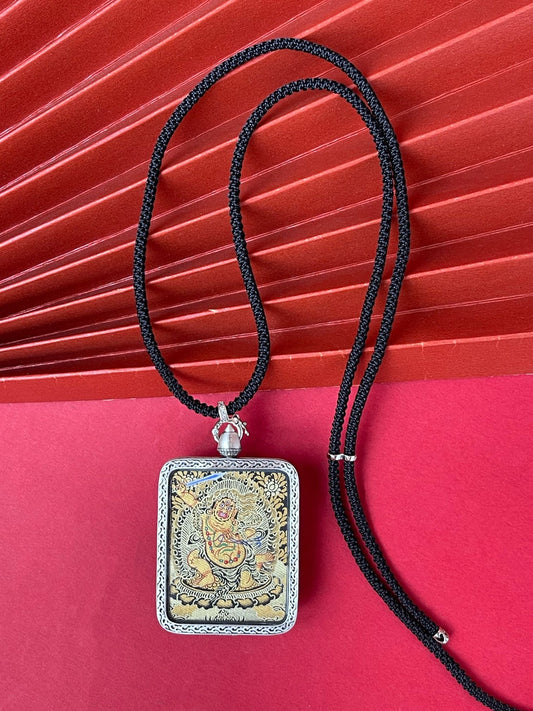
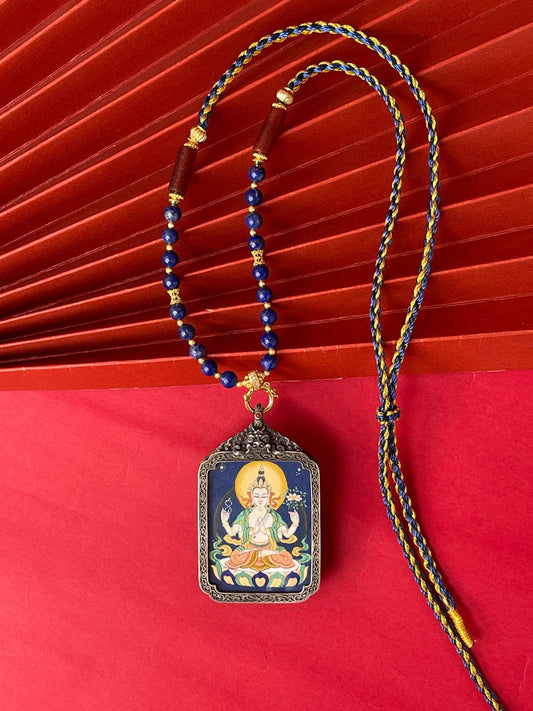
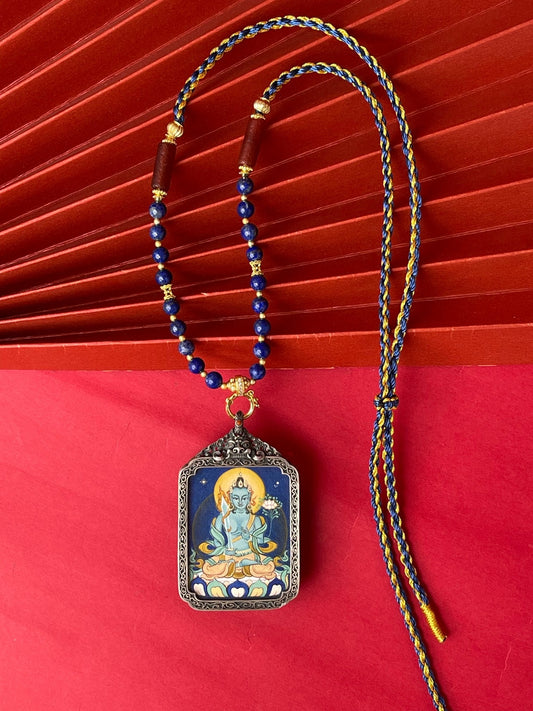
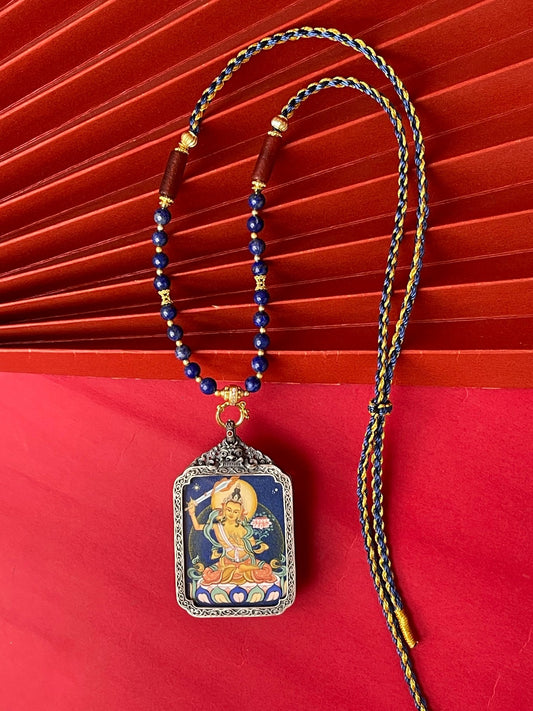
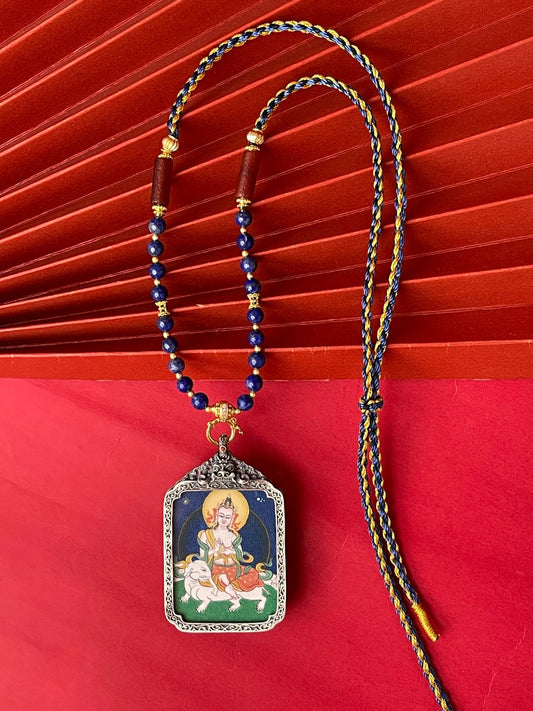
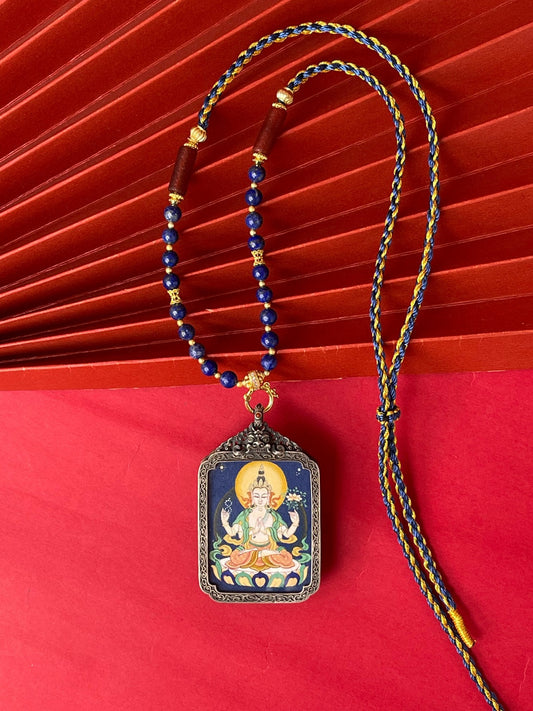
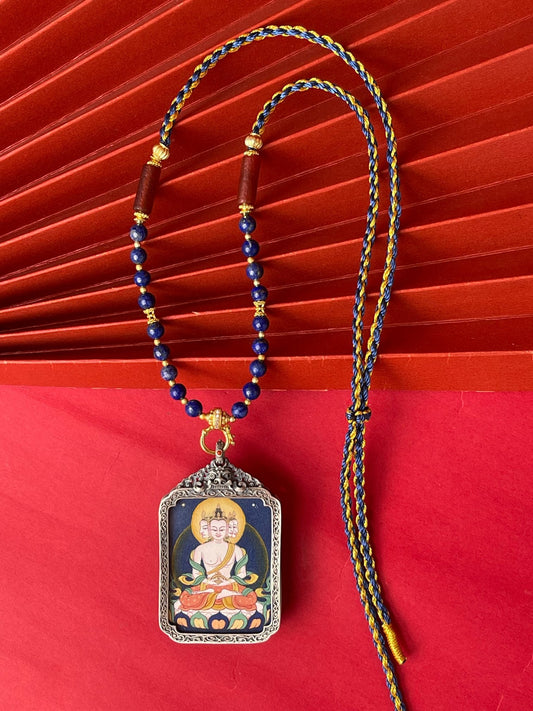
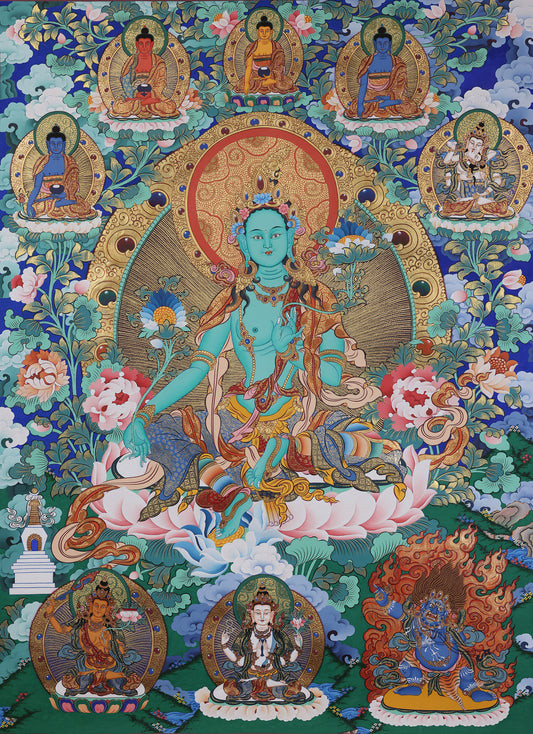
In standard Thangka iconography, Vajrasattva is shown with a brilliant white body (symbolizing purity), seated in the vajra posture. He holds a vajra (ritual implement) at his heart in his right hand and a bell in his left—together they represent the union of method and wisdom. His robes and ornaments are detailed in gold and mineral pigments. When this is painted on a small pendant, the artist must keep the proportions and hand implements accurate. A good Vajrasattva pendant should be clearly recognizable and convey a sense of clarity and calm. When choosing one, look for a clean white body, clear vajra and bell, and careful gold linework.
Why “100-Year” Mineral Pigments Matter
Authentic Tibetan Thangkas use natural mineral pigments—lapis lazuli, malachite, cinnabar, gold—ground and mixed with traditional binders. These are chemically stable and, with proper care, can last over a hundred years without fading or cracking. For a deity like Vajrasattva, whose theme is purification and lasting purity, durable pigments also carry symbolic meaning: the blessing and the artwork can endure. When selecting a Vajrasattva Thangka pendant, ask whether mineral pigments were used and whether the painter belongs to a recognized lineage; this helps you assess both authenticity and longevity.
Silver Setting and Daily Wear
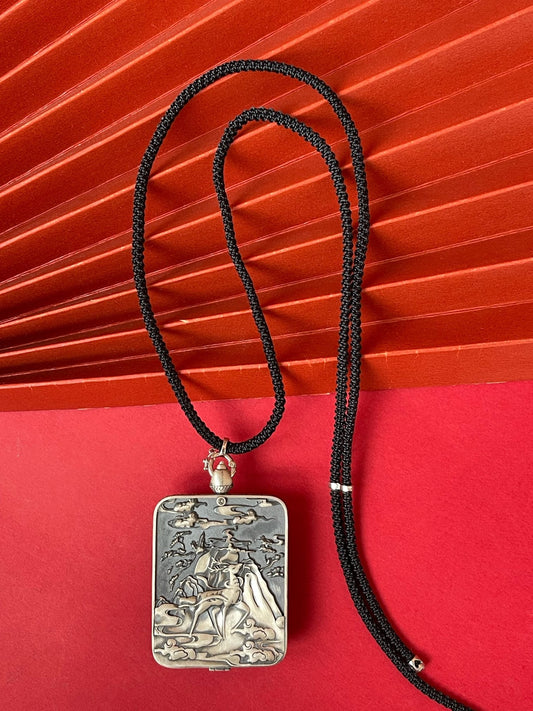
The painted canvas is fragile and should be protected from moisture, sweat, and knocks. A 925 silver setting provides this protection and, in Tibetan culture, is linked with purity and auspiciousness. For daily wear, avoid wearing the pendant in the shower, while swimming, or during intense exercise. When not wearing it, store it in a soft pouch or a clean place. You can also use the pendant as a support for practice: glance at it in the morning or before meditation as a reminder to practice purification and maintain a clear, repentant attitude.
Wearing and Honoring the Pendant
Wearing a Vajrasattva Thangka pendant does not require elaborate ritual; what matters is respect and the intention to connect with purification practice. You can treat it as a support for reciting the 100-syllable mantra or Vajrasattva’s heart mantra. If you have a shrine, you can keep the pendant there when not worn, alongside other sacred objects. The main point is to relate to it as a support for your spiritual aim—purification and renewal—rather than as a mere ornament.
Conclusion
A Vajrasattva Thangka pendant is both a symbol of purification in Tibetan Buddhism and a durable sacred object when made with mineral pigments and a silver setting. From the deity’s role and iconography to materials and care, each aspect affects its religious meaning and its lifespan. If you are looking for a wearable support for purification practice, start by understanding Vajrasattva and his mantra, then choose a pendant that reflects solid craftsmanship and a clear lineage.
#Vajrasattva #TibetanThangka #KarmaPurification #DiamondBeing #925Silver #BuddhistArt #PurificationAmulet #SacredJewelry #TibetanBuddhism #ThangkaPendant
Tags:
Previous
Amitabha Buddha Thangka Pendant: The Buddha of Infinite Light as a Wearable Sacred Object
Next
Vajrasattva Thangka Pendant and Daily Practice: Bringing Purification Into Modern Life