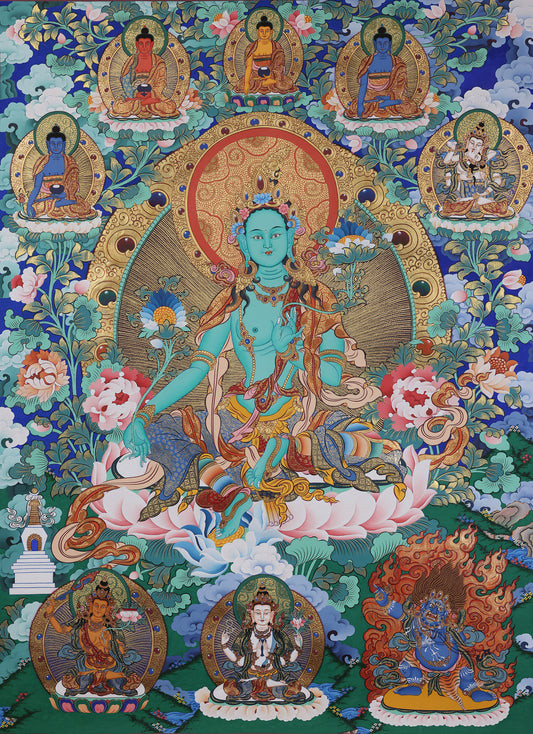
The Sacred Tibetan Buddhist Ritual of Gilding Buddha Statues: Blessings Through Gold
Discover the Spiritual Significance, Ritual Process, and Cultural Meaning Behind Applying Gold to Buddha Statues in Tibetan Buddhism
In Tibetan Buddhism, the practice of gilding Buddha statues—also called gold application, gold leafing, or “liújīn” (鎏金)—is a sacred and highly revered act of devotion. Far beyond mere decoration, it is a profound spiritual offering that embodies both merit accumulation and inner purification.
Core Significance: The Golden Bridge of Merit
- Highest Form of Offering
Gold symbolizes purity, brilliance, eternity, and sacredness in Buddhist practice. Adorning the Buddha with gold is regarded as one of the most sincere offerings, generating tremendous merit and spiritual blessings. - Purifying Karma and Cultivating Mind
By offering precious materials, practitioners counteract attachment and greed, cleanse past karmic obstacles—especially those related to wealth—and nurture a compassionate Bodhicitta mind. - Venerating the Buddha Image to Inspire Faith
The radiant, golden Buddha naturally evokes reverence and devotion in observers, serving as a skillful means to guide beings and ensuring the Dharma thrives in the world.
Ritual Process: A Sacred and Complete Cycle
The gilding ceremony follows strict religious protocols:
- Choosing an Auspicious Date and Purifying the Altar
Monks select a propitious date according to the Tibetan calendar and purify all tools, gold leaf, and the sacred space with mantra recitation. - Inviting Buddha’s Presence Through Chanting
Monks recite mantras such as the Pratītyasamutpāda Mantra and blessing chants, inviting the wisdom and blessings of the Buddha to infuse the statue. - Applying Gold in a Devotional Manner
Qualified practitioners or monks carefully adhere gold leaf to the statue while chanting and meditating. Observers may participate mentally through visualization and offering thoughts. - Consecration and Dedication
After gilding, a consecration ceremony is performed, invoking Buddha’s blessings and dedicating the merit to all sentient beings.
Common Contexts for Participation
- Making vows and prayers: for health, career, or disaster relief.
- Merit for the deceased: generating blessings for favorable rebirths.
- Joyful participation: community sponsorship and collective practice.
- Statue creation or restoration: final step for new statues or rejuvenating old sacred images.