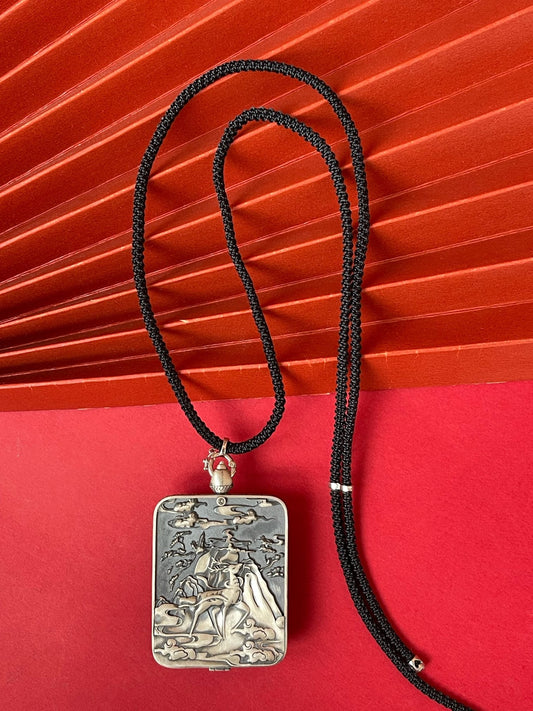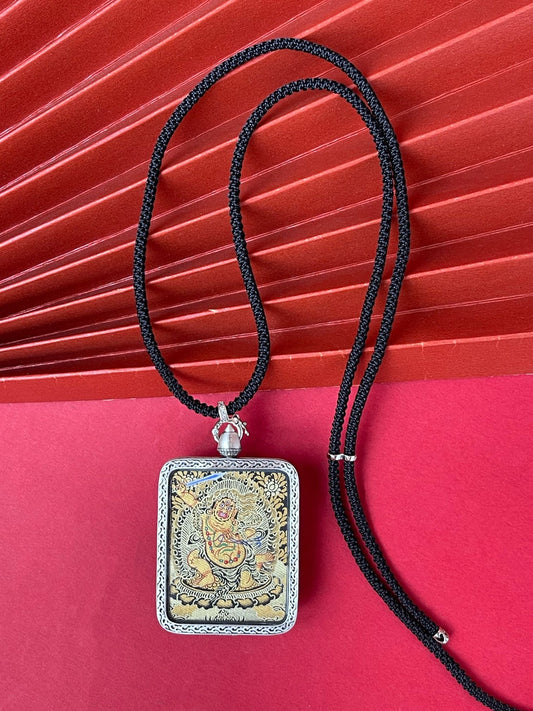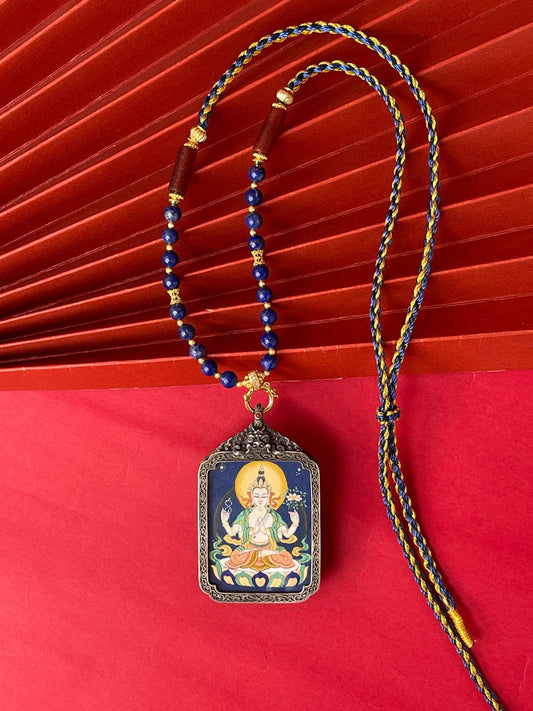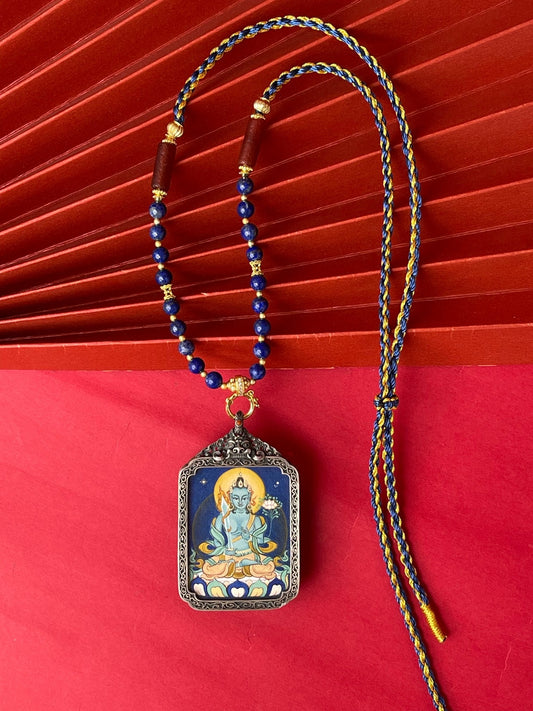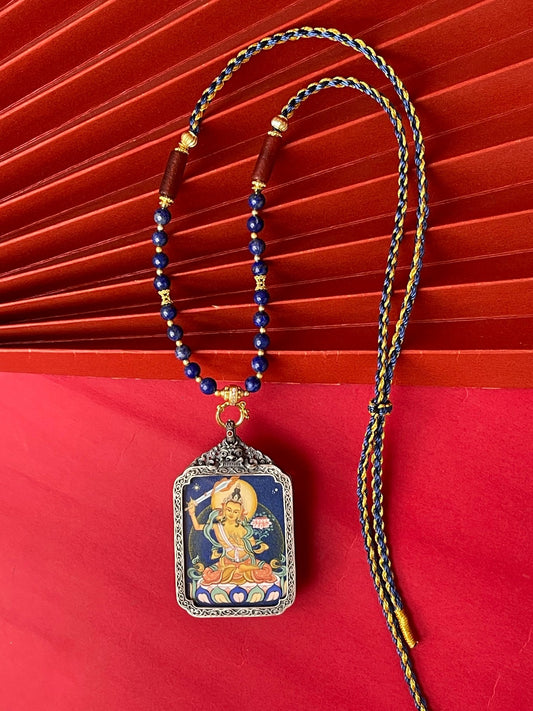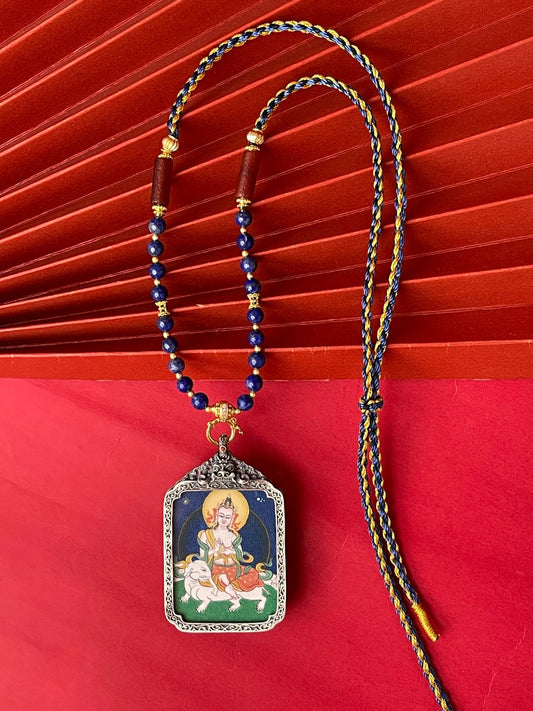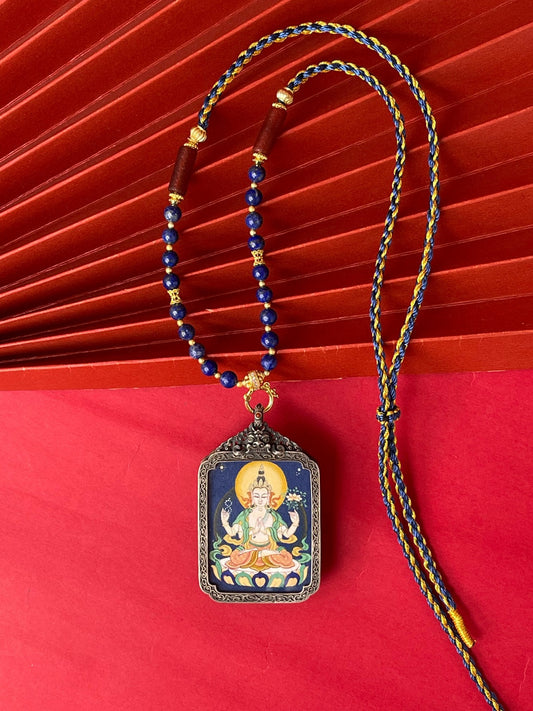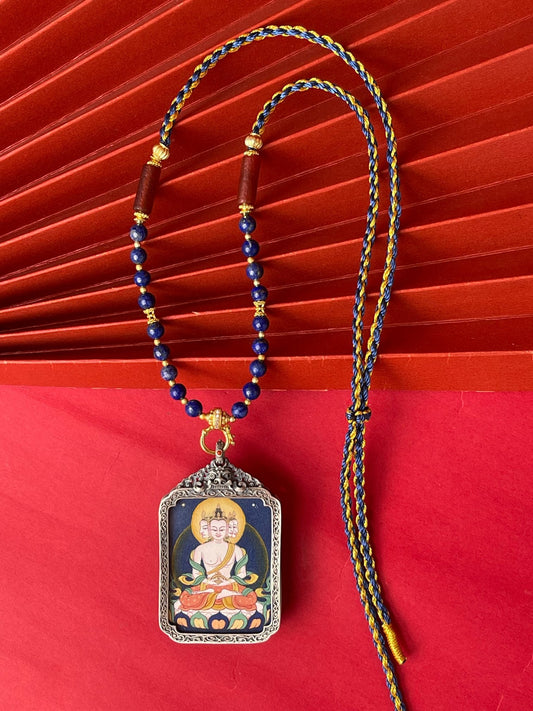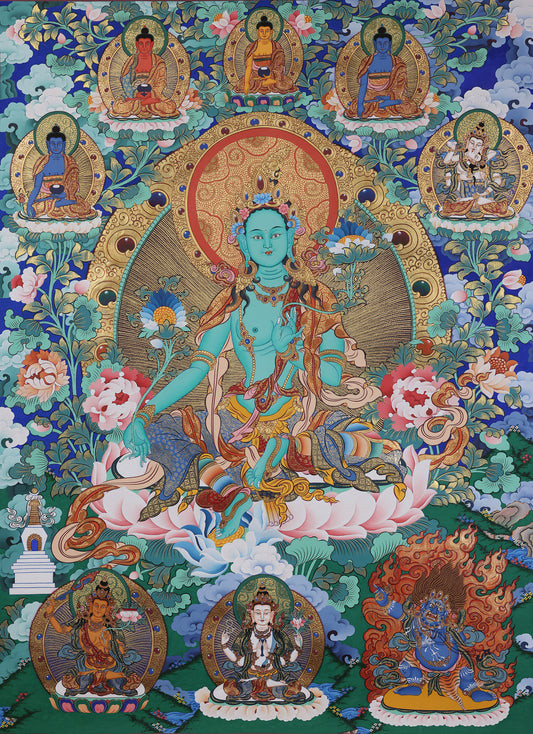
Vajrasattva Thangka Pendant and Daily Practice: Bringing Purification Into Modern Life

The Pendant as a Practice Support, Not Just an Ornament
When people consider a Vajrasattva Thangka pendant, they often ask: “Does wearing it purify karma?” The answer depends on how you use it. If you treat it only as jewelry, its effect may be mostly psychological. If you treat it as a practice support—a reminder to recite the mantra, confess, and visualize the deity—then a well-made Thangka pendant can bridge daily life and formal practice. This article is for readers who already know a little about Vajrasattva and want practical ways to wear, use, and care for the pendant so it supports their purification practice.
From Amulet to Practice Support: Shifting Your Attitude
In Tibetan Buddhism, deity images and Thangkas can serve both as protective symbols and as supports for visualization and devotion. A Vajrasattva pendant can do both: when you wear it, it can remind you to purify and renew your intention each day; when you sit in meditation or recite the mantra, you can place it where you can see it and use it as a support for visualization. The key is whether you are willing to bring purification into your daily intentions and actions. For example, look at the pendant in the morning and set an intention to avoid harmful actions and to confess; when emotions run high, use it as a cue to recite a few rounds of the 100-syllable mantra. In this way, the pendant becomes a practice support, not only an amulet.
Why Lineage and Authentic Thangka Matter
Tibetan Thangkas are not ordinary paintings; they follow iconometric and ritual guidelines, and painters are trained within a lineage. The deity’s form, hand implements, colors, and proportions are specified so that the image can serve as a proper support for practice. A “correct” Vajrasattva Thangka pendant should be clearly recognizable and convey a sense of purity and dignity. If proportions or implements are wrong, it is harder to use it as a support for visualization or devotion. When choosing a pendant, prefer artists or sources that can explain their lineage and the use of mineral pigments; this helps you align the object with authentic practice and durability.
Mineral Pigments and the Idea of “Inheritance”
Traditional Thangkas use natural mineral pigments (lapis, malachite, cinnabar, gold) with traditional binders. These pigments are stable and, when protected from light and moisture, can last for generations without fading or cracking. For practitioners, “inheritance” means both physical longevity and the continuity of blessing—a Vajrasattva pendant made this way can be passed down as a support for family or personal practice. Where possible, choose a pendant that is explicitly made with mineral pigments and within a recognized tradition so that it can serve both as a sacred object and as a long-lasting support.
Silver Setting: Protecting the Painting and Wearing It Safely
The painted canvas is delicate and should not be exposed to sweat, humidity, or impact. A 925 silver setting protects it and is widely used in Tibetan and modern sacred jewelry for its durability and cultural association with purity. To avoid damaging the painting or the setting, do not wear the pendant in the shower, while swimming, or during heavy exercise. When not wearing it, keep it in a soft pouch or a clean place, and if you have a shrine, you can place it there. If you also want to use the pendant as a visualization support during meditation, choose a setting that is sturdy and allows the image to face outward, and a size that is easy to place or hang in your line of sight.
When and Where to Wear and Use the Pendant
A Vajrasattva Thangka pendant is suitable for everyday wear—at work, on the go, or during light activity. If you already recite the 100-syllable mantra or Vajrasattva’s heart mantra, you can glance at the pendant and recite a few rounds in the morning, evening, or in spare moments, linking “purification” with “remembering the deity.” If you have a home shrine, you can keep the pendant there when not worn and put it on when you go out, so that it is both respected and integrated into your daily life.
Conclusion
The value of a Vajrasattva Thangka pendant lies not only in its image and craftsmanship but in whether you use it to support purification and remembrance of the deity in daily life. From your attitude and intention to lineage, materials, and care, each aspect affects how well it serves as a practice support. If you already understand Vajrasattva’s role and want a pendant you can wear long-term and possibly pass on, start with lineage and craftsmanship, then wear and honor it in a way that fits your practice.
#Vajrasattva #TibetanThangka #KarmaPurification #DailyPractice #925Silver #PurificationAmulet #SacredJewelry #TibetanBuddhism #ThangkaPendant #Mindfulness
Tags:
Previous
Vajrasattva Thangka Pendant: The Purifier of All Karma as a Wearable Sacred Object Summary: An introduction to the Vajrasattva Thangka p
Next
Palden Lhamo Thangka Pendant: The Fierce Protector Goddess of Wealth and Fortune