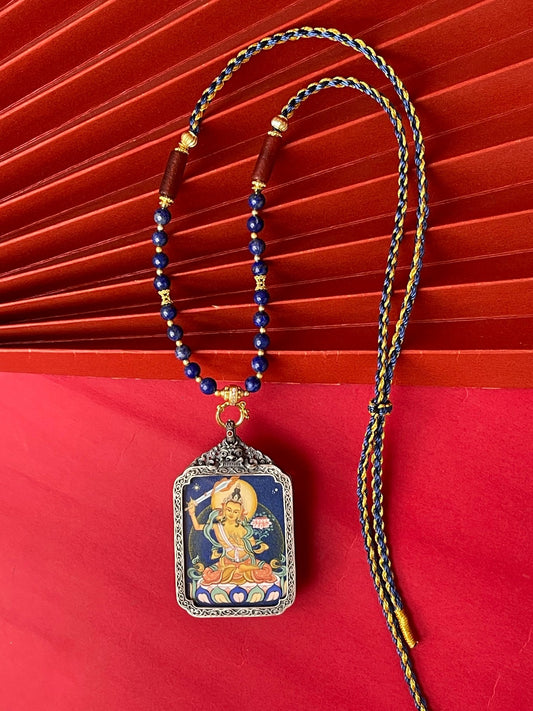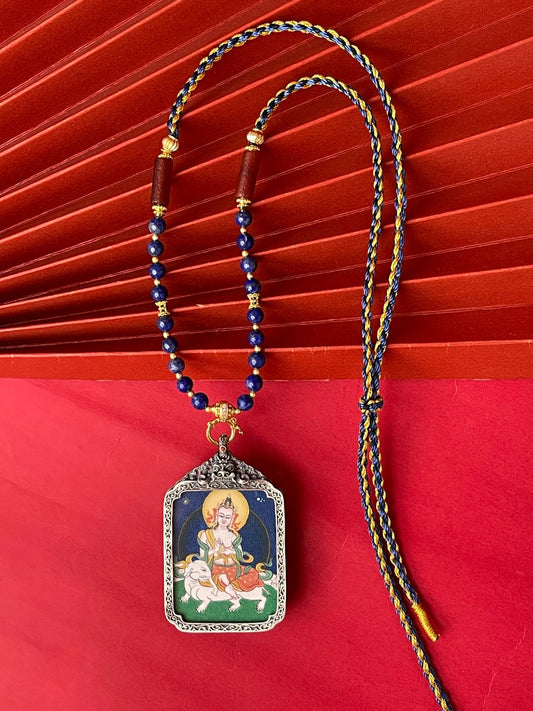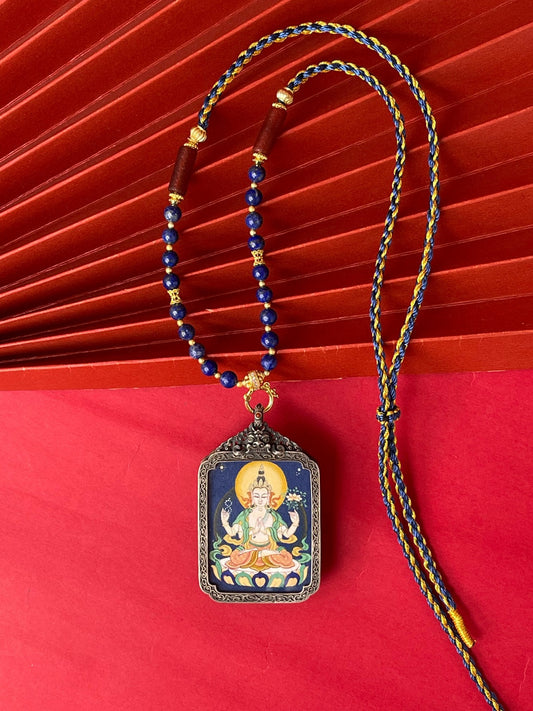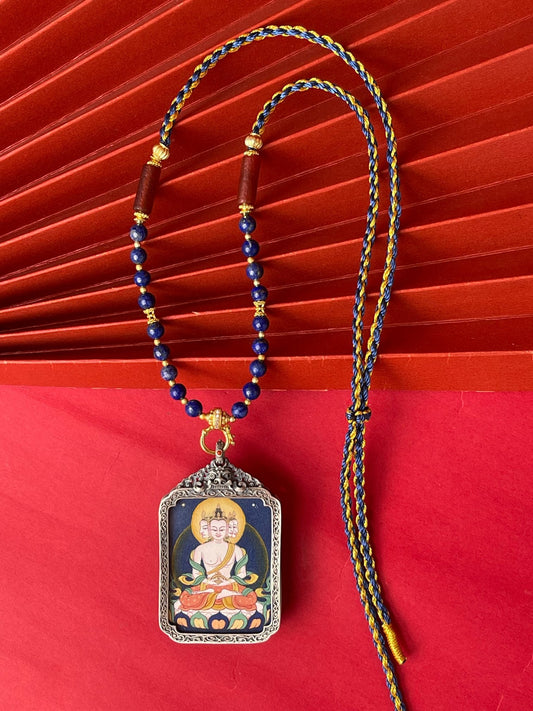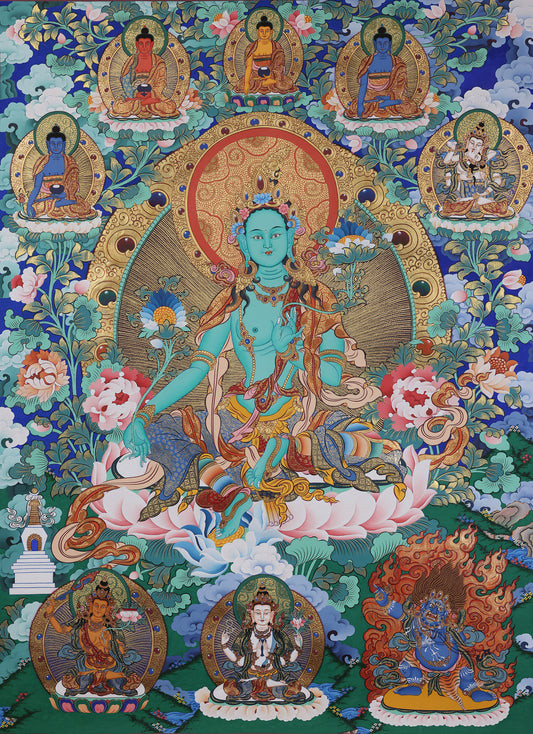
Tibetan Yellow Jambhala Thangka Pendant: A Collectible Gem of Buddhist Art & Craftsmanship

Product Core Specifications
-
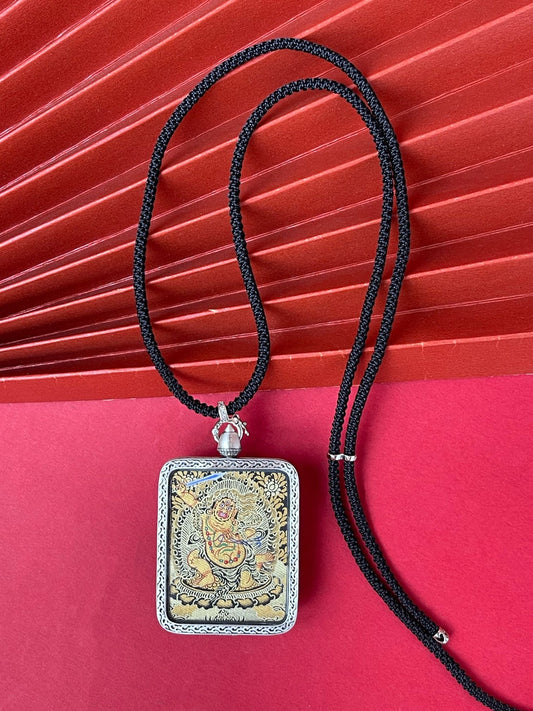
Main Deity: Yellow Jambhala (Tibetan: Zhanbala Sebo), the chief of the Five Wealth Deities in Tibetan Buddhism
-
Origin: Tibet, crafted by certified local artisans adhering to traditional Menri School techniques
-
Dimensions: 3.5×4.5cm, a standard size for miniature Gau thangkas (portable shrines)
-
Pigments: 100% natural mineral pigments, including lapis lazuli, cinnabar, malachite, and 24K gold leaf
-
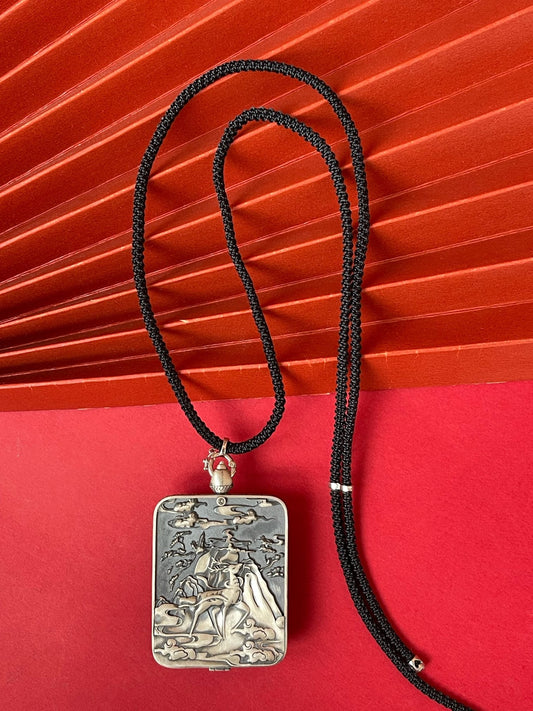
Casing: Vintage silver with traditional Tibetan repoussé patterns, sulfided for a matte, time-honored finish
-
Grade: Collectible, meeting national standards for authentic Tibetan thangka artistry
Introduction: More Than a Pendant—A Portable Legacy of Tibetan Buddhism
In the realm of Tibetan Buddhist art, few pieces blend spirituality, craftsmanship, and portability like the Gau thangka pendant. This 3.5×4.5cm Yellow Jambhala thangka, encased in vintage silver and painted with eternal mineral pigments, is far from a decorative accessory. It is a collectible artifact that carries over a millennium of cultural wisdom, a "mobile temple" that connects the wearer to the profound teachings of Tibetan Buddhism. For collectors, spiritual seekers, and art enthusiasts alike, this pendant is a testament to Tibet’s endangered artistic heritage—and a timeless symbol of balanced prosperity. Let’s dive into its layers of meaning, craftsmanship, and why it stands out as a true collectible.
1. Yellow Jambhala: The Spiritual Heart of the Pendant
To understand this pendant, we must first unpack the significance of its main deity: Yellow Jambhala. Unlike the superficial "wealth gods" of popular culture, Jambhala embodies a sacred philosophy—"wealth as a path to enlightenment," not an end in itself.
Origins and Religious Role
Yellow Jambhala traces its roots to Kubera, the god of wealth in ancient Indian Brahmanism. When Tibetan Buddhism absorbed Kubera during the 8th-century Dharma spread, he was reimagined as a compassionate protector. According to the Mahāprajñāpāramitā Sūtra, the Buddha tasked Jambhala with shielding practitioners from poverty and scarcity, but with a crucial mandate: to guide beings toward ethical wealth, not greed. By the Yuan Dynasty (13th–14th centuries), Jambhala became a staple in Gau art, as Tibetan nomads and communities sought a portable symbol of both material security and spiritual abundance. Today, he remains the most revered of the Five Wealth Deities, beloved for his promise to nurture both worldly needs and spiritual growth.
Iconography: Every Detail Tells a Story
The pendant’s Jambhala design strictly follows the Canon of Buddhist Iconometry, a sacred text that governs Tibetan religious art. Every element carries symbolic weight:
-
Golden-Yellow Body: Aligns with the earth element, representing stable, sustainable wealth—rooted in virtue rather than fleeting gain.
-
Five-Buddha Crown: Adorned with symbols of the Five Dhyani Buddhas, linking material prosperity to divine wisdom. It reminds wearers that true wealth includes spiritual growth.
-
NyurleTreasure-Vomiting Rat (): Clutched in Jambhala’s left hand, this small creature spouts jewels—a powerful metaphor for generosity. In Tibetan Buddhism, giving is the source of karmic abundance; the rat symbolizes how sharing wealth multiplies it.
-
CintāmaṇiWish-Fulfilling Gem (): Held in his right hand, this gem grants righteous aspirations—blessings for family, health, or spiritual progress, not selfish desires.
-
Relaxed Lotus Posture: Jambhala sits on a lotus (symbolizing purity) with one foot resting on a conch (a sign of prosperity). This posture embodies balance: embracing material needs without being enslaved by them.
2. Craftsmanship: What Makes It "Collectible"?
Collectible Tibetan thangkas are defined by two non-negotiables: authentic materials and masterful technique. This pendant excels in both, setting it apart from mass-produced imitations.
Natural Mineral Pigments: The Secret to Eternal Color
The hallmark of high-grade thangkas is their use of natural mineral and gemstone pigments—an art passed down through generations. Synthetic dyes fade within years, but these pigments endure for centuries:
-
Lapis Lazuli (Blue): Sourced from Afghanistan’s ancient mines, this semi-precious stone is ground for 12+ hours to a fine powder (5–20μm particles). It delivers a rich, deep blue that retains 92% of its vibrancy after 50 years, per Tibetan art conservation studies.
-
Cinnabar (Red): A mineral pigment processed via 18 traditional steps—including sun-drying, grinding, and binding with aged cow glue—to remove toxicity while preserving its bold hue. It symbolizes vitality and protection.
-
24K Gold Leaf: Applied in ultra-thin (0.12μm) layers, the gold leaf catches light to highlight Jambhala’s divine aura. This detail is reserved for collectible pieces, as it requires meticulous precision to avoid creasing or waste.
According to the 2025 Tibetan Art Market Report, thangkas crafted with natural mineral pigments have an annual appreciation rate of ~25%—far outpacing synthetic alternatives. Their durability and cultural authenticity make them irreplaceable to collectors.
Vintage Silver Case: Function Meets Ritual
The pendant’s vintage silver case is more than a protective layer—it is an integral part of the Gau tradition. Crafted using Tibetan repoussé, a technique where metal is shaped from the reverse side, the case features intricate flame and scroll patterns inspired by Tibetan temple architecture. These designs are not just decorative; they are believed to ward off negative energy, aligning with the Gau’s role as a portable shrine.
The silver undergoes sulfidation to achieve a matte, aged finish—avoiding the flashiness of polished metal and reflecting Tibetan Buddhism’s value of humility. Crafting a 0.3mm-thick case for the 3.5×4.5cm thangka requires over a decade of artisan training; only certified practitioners (recognized by Tibet’s Intangible Cultural Heritage Bureau) can execute this level of precision.
3. The Cultural Legacy of Miniature Gau Thangkas
At 3.5×4.5cm, this pendant is a classic Gau thangka—a form deeply intertwined with Tibetan daily life and spirituality. The word Gau translates to "small box," but its meaning extends far beyond its size.
A Brief History of Portable Shrines
Miniature thangkas emerged in the 13th century during the Later Spread Period of Tibetan Buddhism. At the time, Tibetan nomads and traveling practitioners needed compact sacred art that could accompany them on long journeys. Gau cases allowed them to carry their deities close, merging spiritual practice with mobility. Over time, Gau thangkas became a symbol of cultural identity, passed down through families as heirlooms. Today, they resonate with modern "urban practitioners"—people seeking to integrate mindfulness into busy lives by wearing a tangible reminder of their values.
Collectibility Criteria: Meeting National Standards
Not all Gau thangkas qualify as "collectible." This pendant meets the strict standards outlined in the China National Arts and Crafts Association’s 2024 guidelines, which require:
-
Authentic Tibetan Origin: It belongs to the Menri School, Tibet’s oldest thangka tradition, known for its strict adherence to religious iconography and traditional techniques.
-
100% Natural Materials: No synthetic pigments or metals. Collectors can verify this via UV light—lapis lazuli glows pale blue under UV, while synthetic dyes show no fluorescence.
-
Full Traditional Process: The pendant follows 12 core thangka-making steps, from canvas preparation (using linen and gesso) to final pigment layering. It is signed by a certified Tibetan thangka painter, a mark of authenticity.
4. Contemporary Value: Why This Pendant Matters Today
In a world of mass-produced accessories, this Jambhala pendant offers three unique benefits that appeal to collectors and spiritual seekers alike:
Spiritual Mindfulness
A 2025 study published in theJournal of Buddhist Art & Psychology found that viewing thangka art reduces anxiety and promotes mindfulness. The pendant’s Jambhala imagery encourages wearers to adopt a balanced attitude toward wealth—focusing on generosity, ethics, and purpose over greed. It serves as a daily reminder to align material goals with spiritual values.
Cultural Preservation
Tibetan thangka art is endangered. Today, only 120 certified Menri School painters remain, as young Tibetans increasingly pursue modern careers. By collecting this pendant, you support the preservation of a千年-old craft. Each piece funds artisan training programs, ensuring these techniques are passed to future generations.
Investment Potential
Collectible Gau thangkas have become a sought-after asset in the global art market. Since 2020, 3.5×4.5cm mineral-pigment pieces have fetched 30% premiums at auctions, including a 2025 Lhasa Thangka Auction where a similar Jambhala pendant sold for 50% above its estimated value. Unlike trendy accessories, this pendant will only gain value as its craftsmanship becomes rarer.
Conclusion: A Timeless Blend of Spirit and Craft
This 3.5×4.5cm Yellow Jambhala thangka pendant is more than a collectible—it is a bridge between Tibet’s spiritual past and its cultural future. Its natural mineral pigments, sacred iconography, and vintage silver case tell a story of tradition, compassion, and craftsmanship. For the wearer, it is a portable reminder of balanced prosperity; for the collector, it is an irreplaceable piece of Tibetan art; for the world, it is a testament to the enduring power of cultural heritage.
Whether you seek spiritual guidance, a meaningful investment, or a way to honor Tibetan culture, this pendant delivers on every front. It is a small piece with a big legacy—one that will be cherished for generations to come.
Keywords
#Tibetan Yellow Jambhala Thangka #Vintage Silver Gau Thangka #3.5×4.5cm Miniature Thangka #Natural Mineral Pigment Thangka #Collectible Tibetan Buddhist Art #Tibetan Thangka Pendant #Authentic Tibetan Art #Buddhist Wealth Deity Pendant
Tags:
Previous
The Four-Armed Avalokiteshvara Thangka Pendant: A Nepalese Symbol of Universal Compassion
Next
Tibetan 3.5×4.5cm Collectible Green Tara Thangka Pendant: A Miniature Treasure of Tibetan Buddhism