
Why Ksitigarbha?
In Tibetan Buddhism, Ksitigarbha (Earth Store Bodhisattva) is revered as the Bodhisattva who descends into the hell realms to liberate suffering beings. His name means “Earth Store” or “Earth Womb.” He made the great vow not to attain Buddhahood until all hells are empty. He is invoked for protection of the deceased, filial devotion, removing obstacles, and liberating beings from suffering. A Thangka pendant of Ksitigarbha brings his blessing into daily life for protection and liberation. This article covers his role, his image in Thangka art, materials and care, and how to wear the pendant.
Ksitigarbha: The Compassionate Liberator
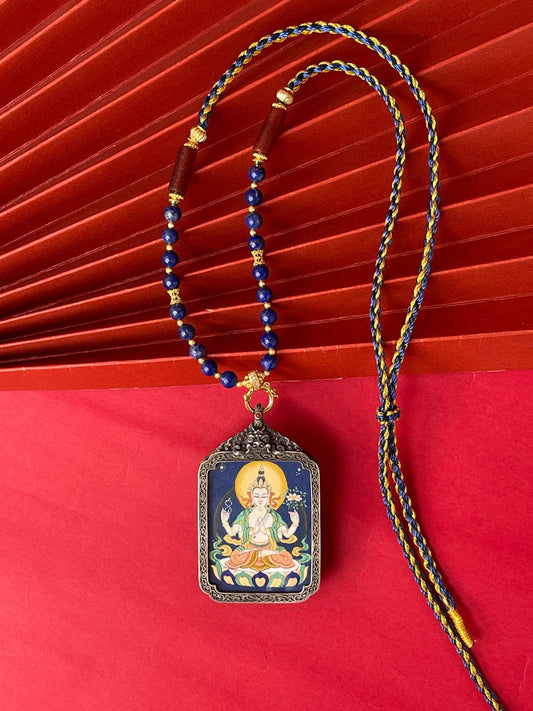
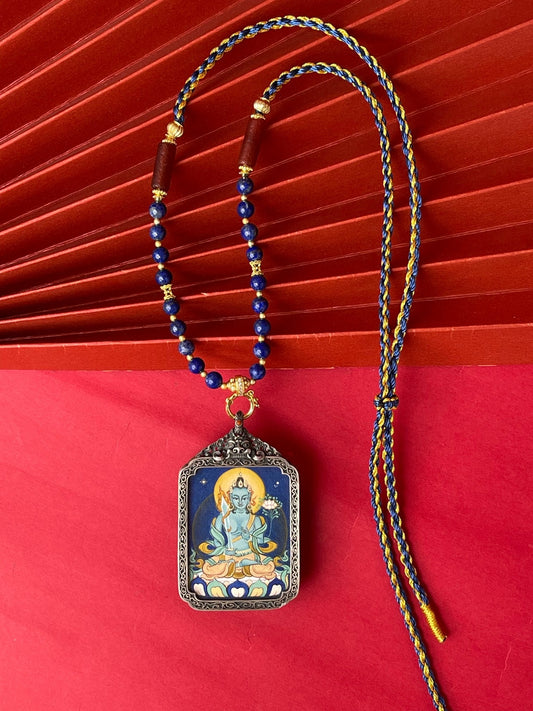
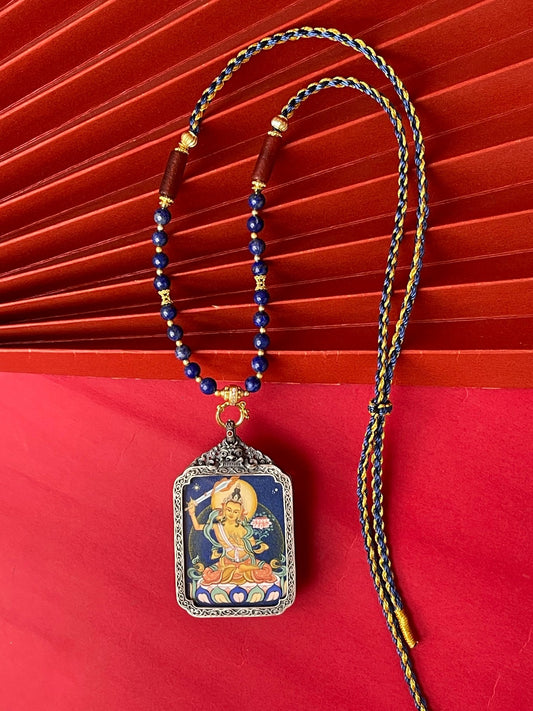
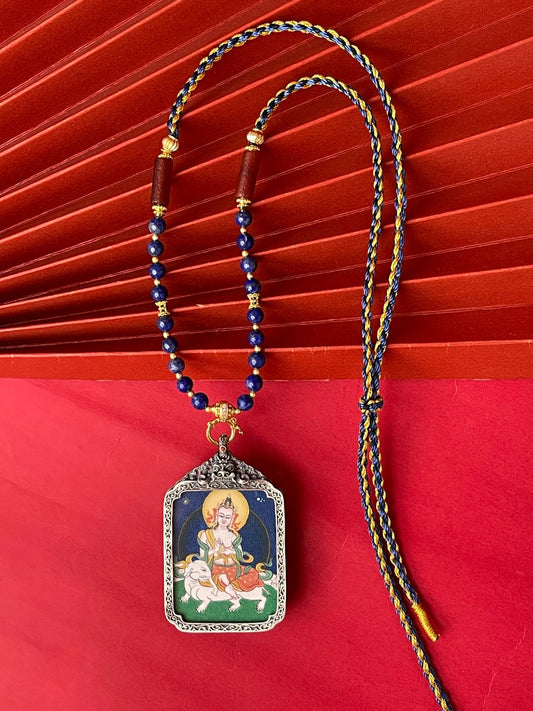
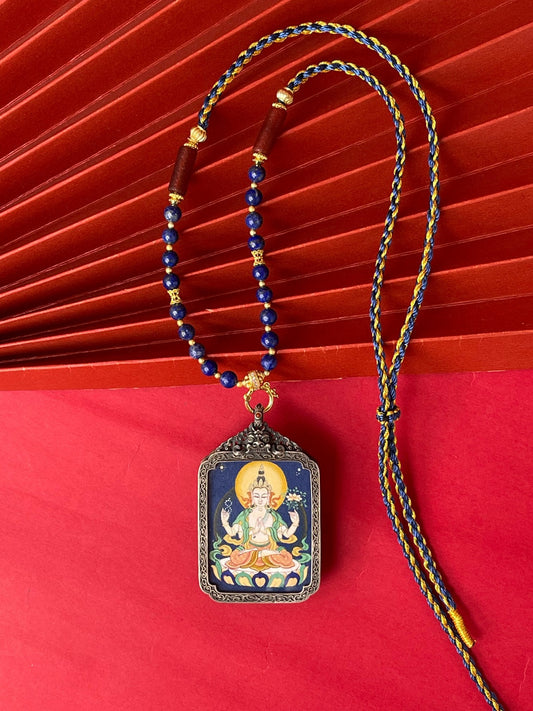
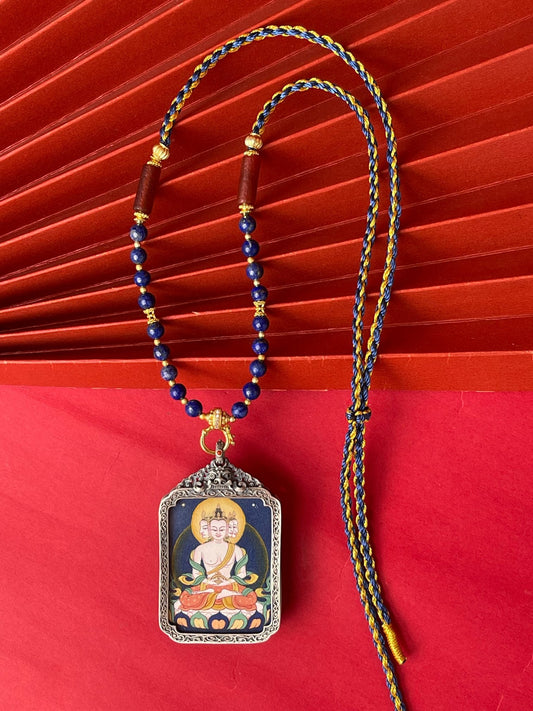
Ksitigarbha is typically depicted as a monk with a shaved head, holding a staff (khakkhara) to open the gates of hell and a wish-fulfilling jewel (cintamani) to illuminate the darkness. His simple robes and serene expression convey his boundless compassion and unwavering vow. Practitioners invoke him for filial devotion and to create merit for departed loved ones. Wearing his image is a way to connect with that compassion and to remind yourself of the possibility of liberation for all beings.
The Image: What to Look For in a Ksitigarbha Pendant
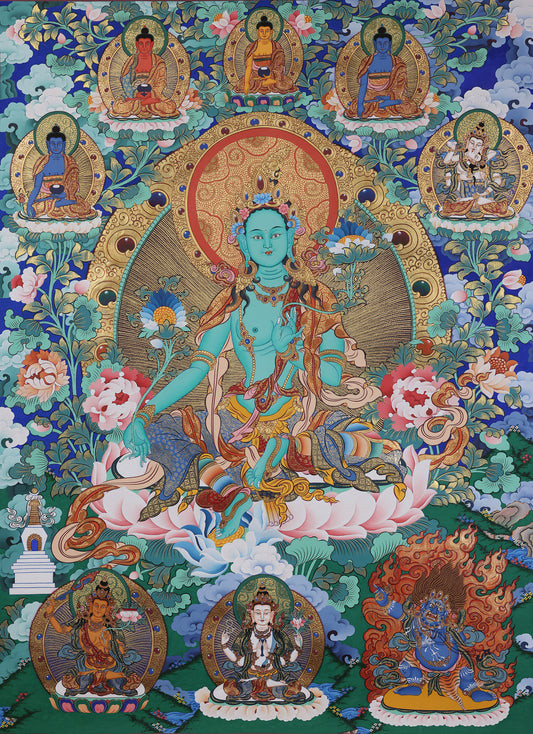
In authentic Thangka iconography, Ksitigarbha should be clearly recognizable: monk form, staff, wish-fulfilling jewel, and serene expression. When painted on a small pendant, the artist must keep proportions and iconography correct. A good pendant should convey compassion and steadfastness—the essence of the Bodhisattva of the Hell Beings. When choosing one, look for clear staff and jewel, balanced composition, and careful mineral pigments and gold linework.
Mineral Pigments and 925 Silver
Authentic Tibetan Thangkas use natural mineral pigments (lapis, malachite, cinnabar, gold) with traditional binders. These are chemically stable and can last over a hundred years with proper care. The pendant is typically mounted in 925 sterling silver, which protects the painting from moisture and impact. When buying a Ksitigarbha pendant, ask about mineral pigments and the painter’s lineage; this helps you assess both authenticity and longevity.
Wearing and Caring for Your Ksitigarbha Pendant
A Ksitigarbha Thangka pendant is suitable for daily wear as a support for liberation and protection. Respect and clear intention matter more than elaborate ritual. Avoid wearing it in the shower, while swimming, or during heavy exercise. When not worn, keep it in a soft pouch or a clean place. The pendant can serve as a reminder of the Bodhisattva’s vow and the possibility of liberation for all beings.
Conclusion
A Ksitigarbha Bodhisattva Thangka pendant is both a symbol of liberation and compassion in Tibetan Buddhism and a durable sacred object when made with mineral pigments and silver. From his role and iconography to materials and care, each aspect affects its meaning and its lifespan. If you are looking for a wearable support for liberation and filial devotion, start by understanding Ksitigarbha’s role, then choose a pendant that reflects solid craftsmanship and a clear lineage.
#Ksitigarbha #EarthStoreBodhisattva #TibetanThangka #Bodhisattva #925Silver #BuddhistArt #LiberationAmulet #SacredJewelry #TibetanBuddhism #ThangkaPendant
Tags:
Previous
Yellow Jambhala Thangka Pendant: The Wealth Bestowing Deity
Next
Six-Armed Mahakala Dharmapala Thangka Pendant: The Great Black Protector