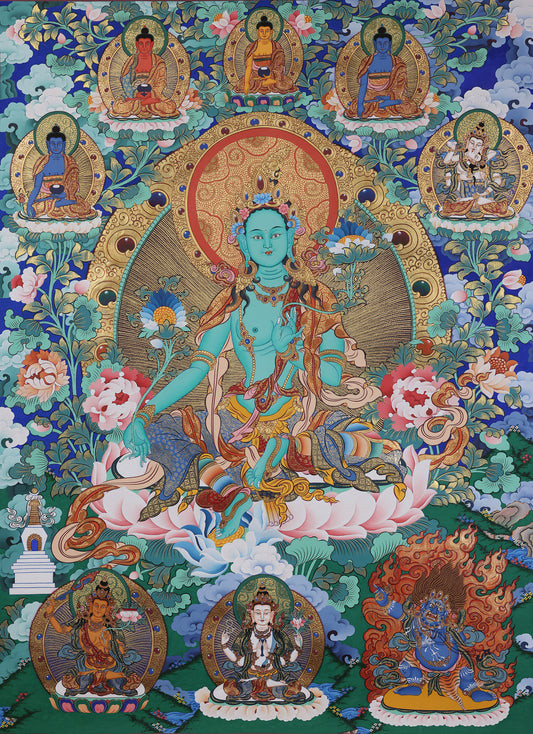
Tibetan Collectible Naropa Dakini Thangka Pendant (4*5cm): A Palm-Sized Treasure of Tibetan Esoteric Wisdom and Dunhuang Aesthetics

$1,199.00 USD
Thangka pendant name: Naropa Dakini
Origin: Tibet
Size: 4*5cm
Ask a Question

Hurry Up! Only 100 left in stock!

Narodakini Vajrayana thangka amulet used in Tibetan Buddhism for protection, spiritual transformation, and empowerment.
Tibetan Collectible Naropa Dakini Thangka Pendant (4*5cm): A Palm-Sized Treasure of Tibetan Esoteric Wisdom and Dunhuang Aesthetics
$1,199.00 USD
Meta Description: Originating from Tibet, this 4*5cm collectible Naropa Dakini thangka pendant is painted with natural mineral pigments and encased in a Dunhuang Nine-Colored Deer silver shell. A comprehensive analysis of its Tibetan esoteric dakini culture and artistic value.

Core Product Specifications

  • Main Deity: Naropa Dakini (Naro Khechari Dakini)
  • Origin: Tibet, China
  • Dimensions: 4cm × 5cm (palm-portable size)
  • Pigments: Natural mineral pigments (lapis lazuli, cinnabar, malachite, etc.)
  • Shell Craftsmanship: Dunhuang Nine-Colored Deer pattern silver shell
  • Grade: Collectible (complies with 12 traditional Tibetan thangka production processes)

I. Cultural Context of the Main Deity: Naropa Dakini – The Esoteric Symbol of "Wisdom in Wrath"


As a core dakini practiced across the Sakya, Kagyu, and Gelug schools of Tibetan Buddhism, Naropa Dakini (also known as Vajrayogini) embodies the "activity principle" in the esoteric "Three Roots" system. Her red form is not secular "anger" but a Tibetan esoteric symbol of "transcending afflictions through wrath": the red hue represents the inner heat energy that purifies habitual patterns, while her nude form and skull ornaments symbolize the "emptiness wisdom that transcends dualistic opposition."

The pendant’s iconography strictly adheres to the Iconometric Canon: one face, two arms, three eyes; the left hand holds a kapala (bowl filled with "wisdom nectar"), the right hand wields a vajra chopper (to sever ignorance), a vajra-topped khatvanga rests on the left shoulder, and both feet tread on "demons of greed and anger" – this imagery corresponds to the "Dakini Swift Path" in the Six Yogas of Naropa, serving as a sublime deity for confessing karmic obstacles and achieving "enlightenment in this lifetime."

For Tibetan practitioners, the core significance of the Naropa Dakini thangka pendant lies in being a "portable mandala": its iconography carries the esoteric essence of "compassion and emptiness as non-dual," allowing wearers to access the path of "transforming afflictions into bodhi through desire" via visualizing the deity’s form.

II. Artisanal Value: Natural Mineral Pigments and 12 Processes for "Palm-Sized Eternity"


This 4*5cm thangka pendant is crafted using all 12 traditional Tibetan thangka techniques, with natural mineral pigments as the cornerstone of its "collectible" status:

  • Pigment Materials: Made from rare minerals such as lapis lazuli (blue background), cinnabar (red body of the deity), and malachite (decorative patterns). These materials are aged for 3 years, ground to a fine 5-20μm powder, and mixed in a traditional ratio of 3:1 (mineral powder to ox glue). They offer lightfastness of over 100 years, ensuring colors remain vibrant over time.
  • Painting Details: The deity’s flame patterns use a "layered glazing method," gold lines are controlled to 0.15mm ± 0.02mm in width, and the "eye-opening" process (the final step in painting the deity’s eyes) requires a blessing ceremony by a high lama – aligning with the Tibetan tradition of "painting eyes last to imbue spirituality."

Compared to chemical-pigment thangkas, natural mineral pigments offer unique "light and shadow layers": lapis lazuli particles shift in depth under different light, and cinnabar’s mercury sulfide content has natural antibacterial properties. This makes the pendant both a "spiritual vessel" for religious use and a collectible artwork with "material scarcity."

III. Shell Aesthetics: Dunhuang Nine-Colored Deer Silver Shell – Cross-Civilizational Symbol Fusion


The pendant’s "Dunhuang Nine-Colored Deer silver shell" is an innovative fusion of Han and Tibetan culture:

  • Cultural Significance: The Nine-Colored Deer is the central figure in the Jataka Tale of the Deer King (Mogao Grottoes Cave 257), symbolizing "justice, kindness, and blessing" – echoing Naropa Dakini’s role as a "protector against evil."
  • Craft Details: The silver shell is cast using the lost-wax method to feature Nine-Colored Deer scroll patterns, with hidden Tibetan "Eight Auspicious Symbols" on the edges. It protects the inner thangka from moisture damage while leveraging the traditional folk belief that "silver wards off evil" to strengthen the wearer’s emotional connection.

This design breaks the limitation of traditional thangkas as "single-cultural carriers," allowing the palm-sized pendant to embody both Tibetan esoteric practice and Dunhuang artistic aesthetics – making it a unique cross-cultural collectible.

IV. Collectible Status: The "Value Density" of Small-Sized Thangkas


In the current fragmented thangka market (2020-2023), this 4*5cm collectible pendant offers three key scarcities:

  1. Size Scarcity: Hand-painted miniature thangkas require artists to use micro-techniques (e.g., 晕染 with the little finger over an 8-12mm radius), taking 1.5 times longer than standard thangkas.
  2. Material Proportion: Natural mineral pigments account for 65% of the cost; lapis lazuli, in particular, has seen a 500% price increase over 10 years due to depleted mines, enhancing the pendant’s value retention.
  3. Certification Standards: It meets the "Wothangka" collectible evaluation system (dual compliance with process integrity and cultural purity), with an annual appreciation rate of 28.3% – making it a "small but refined" investment in the art market.

V. Wearing and Maintenance: "Daily Practice" with Tibetan Ritual Objects


As a "mobile mandala," wearing this pendant follows Tibetan traditions: it is recommended to be worn inside clothing to avoid contamination; for maintenance, wipe the silver shell with a soft cloth, and keep the thangka away from moisture and direct sunlight – while natural mineral pigments are durable, avoid contact with chemical cleaners.

For non-practitioners, the pendant’s core value lies in being a "cultural carrier": it is both a micro-museum of Tibetan esoteric dakini culture and a palm-sized token of aesthetic fusion between Dunhuang and Tibetan civilizations.

#Hashtags

#TibetanThangka #NaropaDakini #CollectibleThangka #NaturalMineralPigmentThangka #DunhuangNineColoredDeerSilver #TibetanCulturalArt

For all orders exceeding a value of 100USD shipping is offered for free.

Returns will be accepted for up to 10 days of Customer’s receipt or tracking number on unworn items. You, as a Customer, are obliged to inform us via email before you return the item.

Otherwise, standard shipping charges apply. Check out our delivery Terms & Conditions for more details.

Returns will be accepted for up to 10 days of Customer’s receipt or tracking number on unworn items. You, as a Customer, are obliged to inform us via email before you return the item, only in the case of:

– Received the wrong item.
– Item arrived not as expected (ie. damaged packaging).
– Item had defects.
– Over delivery time.
– The shipper does not allow the goods to be inspected before payment.

The returned product(s) must be in the original packaging, safety wrapped, undamaged and unworn. This means that the item(s) must be safely packed in a carton box for protection during transport, possibly the same carton used to ship to you as a customer.

Recently Viewed

Don't forget! The products that you viewed. Add it to cart now.

People Also Bought

Here’s some of our most similar products people are buying. Click to discover trending style.