Nepalese Hand-Painted Vajrasattva Mandala Thangka: A Mineral Pigment Epic of Tibetan Esoteric Cosmology

$499.00 USD
Thangka name: Mandala
size: 50cm×50cm
origin: Nepal
Ask a Question

Hurry Up! Only 100 left in stock!

Estimate delivery times: 12-26 days (International), 3-6 days (United States).

Return within 45 days of purchase. Duties & taxes are non-refundable.

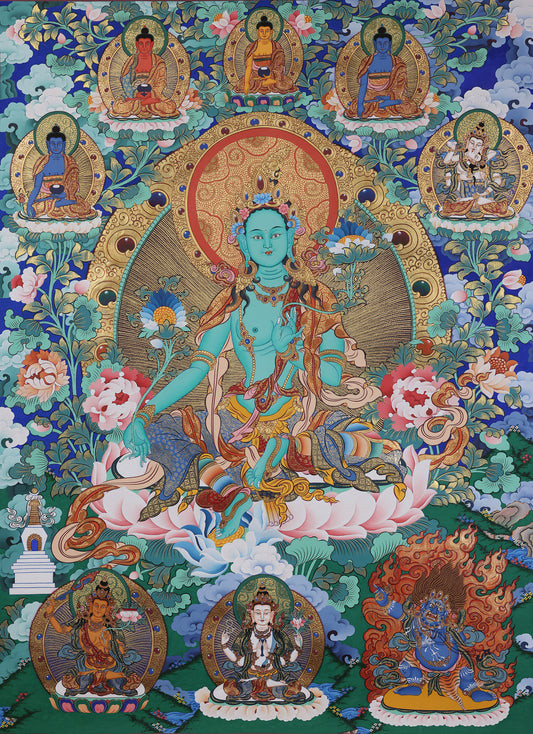
Tibetan Buddhist mandala thangka depicting a sacred cosmic palace with symmetrical geometry, representing the enlightened universe in Vajrayana Buddhism, used for meditation, spiritual awakening, and inner purification.
Nepalese Hand-Painted Vajrasattva Mandala Thangka: A Mineral Pigment Epic of Tibetan Esoteric Cosmology
$499.00 USD
537 Products
192 Products
46 Products
11 Products

A Microcosm of Tibetan Esoteric Cosmos: The Cultural Code of a Nepalese Mandala Thangka


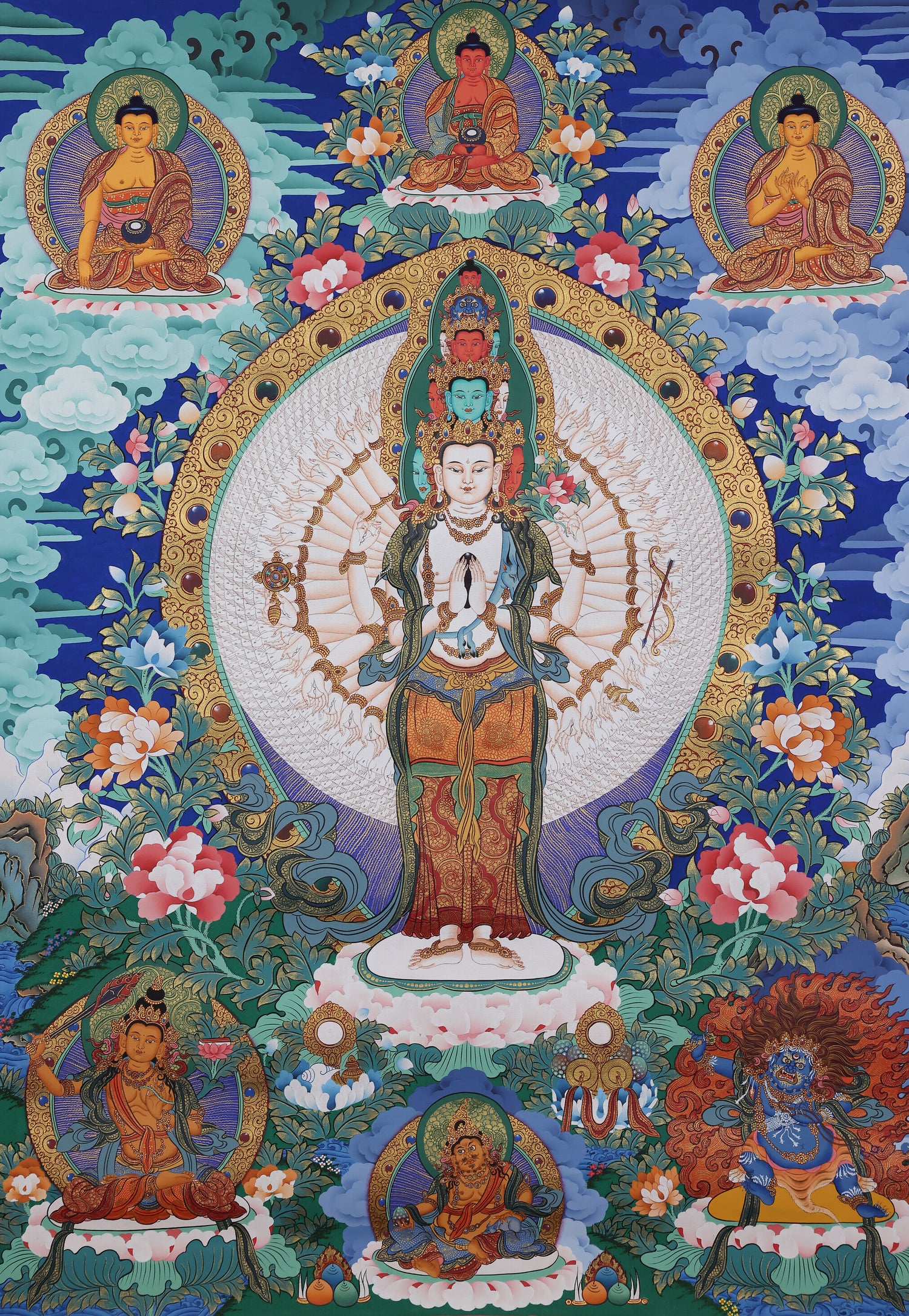
When you gaze at a 50×50cm hand-painted mandala thangka from Nepal, you are not looking at ordinary art—it is a tool for the unification of "body, speech, and mind" in Tibetan esoteric Buddhism, a cosmic order solidified in mineral pigments, and a living epic of Himalayan cultural fusion. Today, we take Tibetan Buddhism as our backdrop to dissect this Vajrasattva mandala thangka from Nepal, uncovering its esoteric and artistic DNA through its theme, deities, craftsmanship, and style.

I. Theme: The Vajrasattva Mandala—Tibetan Esotericism’s "Enlightenment Cosmic Model"


The mandala (Sanskrit for "attaining essence") is a visual vehicle for Tibetan esotericism to translate "cosmic structure" and "practice logic" into form. The core theme of this thangka is the Vajrasattva Mandala—it is both the pure-land abode of Vajrasattva (symbolizing the "primordially pure bodhicitta") and a visualization medium for practitioners to "purify karmic obstacles and align with the main deity."

Structurally, the thangka’s "outer circle, inner square" layout epitomizes Tibetan esoteric cosmology: the outer ring, with flowing patterns, symbolizes the "impermanence of samsaric existence," while the central square fortress represents the "solidity of the Buddha’s pure land"; the four T-shaped gates correspond to the "Four Noble Truths," serving as passages for practitioners to transcend afflictions and enter the state of enlightenment. The 50×50cm square dimension itself aligns with the Tibetan esoteric concept of "equality of the four directions and perfection of merit and wisdom"—in the Nepalese Sakya tradition, this mandala embodies the "Path and Fruit" practice logic: visualizing each layer of the mandala is a process of purifying the three karmas of body, speech, and mind.

II. The Pantheon: The Esoteric Order of Vajrasattva and Attendants


Every figure in the mandala is a precise projection of the Tibetan esoteric pantheon, with no extraneous strokes:

  • Main Deity: Vajrasattva—Symbol of Primordial Purity

    In the innermost layer of the eight-petaled lotus at the mandala’s center sits Vajrasattva: his white body (corresponding to "primordial purity"), five-leaf crown, left hand holding a vajra bell (representing emptiness wisdom), right hand grasping a vajra scepter (symbolizing unshakable bodhicitta), and full-lotus posture on a lotus-moon seat (the lotus signifies liberation from samsara, the moon seat purity). In the Nepalese Sakya tradition, this "peaceful-form" Vajrasattva corresponds to "pacifying and increasing" practices, serving as the core deity for "confessing karmic obstacles and purifying the mind."

  • Attendant Divinities: A Protective Network from Direction Guardians to Dakinis

    Inside the four gates of the square fortress stand direction guardians (e.g., Indra in the East, Yama in the South), corresponding to the "Eight Direction Guardians" ritual in the Mahāvairocana Sūtra, tasked with safeguarding the mandala’s purity; in each of the eight lotus petals outside the fortress sits an ultramundane dakini (three-faced, six-armed, holding a curved knife and skull bowl), an "wisdom incarnation" of Vajrasattva, symbolizing cutting through afflictions with wisdom; the small figures and "Eight Auspicious Symbols" in the outermost ring subtly align with the practice goal of "perfection of merit and wisdom."


Notably, the "makara (mythical sea creature) motifs" (derived from Indian mythology) in the outer ring are a hallmark of Nepalese thangkas—they symbolize "the essence of water," here representing "purification of karmic obstacles," a microcosm of Indian-Tibetan cultural fusion.

III. Craftsmanship: "Eternal Practice" in Mineral Pigments


Half the value of this thangka lies in "esoteric doctrine," the other in "craftsmanship"—the traditional Nepalese hand-painted mandala embodies "sacredness" in every step:

  • Base: The Pure Foundation of Cotton and White Clay

    Using organic cotton as a carrier, a "base layer" of mixed natural glue and white clay is applied, then polished repeatedly with marble flakes until smooth as a mirror, and sun-dried for 3 days—this corresponds to the esoteric meaning of "purifying the mandala’s foundation," symbolizing the need to purify body and mind before practice.

  • Pigments: "Indestructible Colors" of Minerals and Earth Materials

    All pigments are natural minerals or earth materials: lapis lazuli (ultramarine) and malachite (verdigris) symbolize emptiness and vitality; cinnabar (vermilion) and hematite (ochre) represent compassion and energy; 24K pure gold (applied only by master artists) symbolizes "the eternal light of Buddha-nature." These pigments can remain vibrant for centuries, aligning with the concept of "perpetual Dharma transmission"—for example, the gilded vajra scepter at the mandala’s center, each stroke a visual expression of "unshakable bodhicitta."

  • Painting: Ritualized Hand-Practice

    Painting strictly follows the Iconographic Measurements Scripture: first, the geometric framework is sketched with charcoal, with an error margin of less than 1mm (corresponding to "precision in visualization"); colors are layered 5–7 times to create depth; finally, details are outlined with gold paint, and the thangka is "consecrated" by a Sakya master—at this point, it transforms from "artwork" to a "blessed spiritual practice tool." According to Nepalese workshop records, this 50×50cm mandala requires 2–3 months of work by a master, who paints no more than 4 hours daily (to avoid mental and physical fatigue compromising the "mandala’s purity").


IV. Style: The Legacy of the Nepalese Sakya Order Ngor Monastery Style


This thangka’s style belongs to the "Nepalese-influenced Sakya Order Ngor Monastery style" (post-15th century), with distinct core characteristics:

  • Composition: Symmetrical Cosmic Order

    Strictly centered on "main deity—square fortress—lotus petals—outer ring," each layer’s patterns and number of divinities follow esoteric numerology (4, 8, 12, etc.)—e.g., the four gates and eight lotus petals correspond to the "Four Means of Attraction and Six Perfections" and "Eightfold Path," making the thangka a "microcosm of cosmic order."

  • Color: Balance of Vibrancy and Solemnity

    Based on ultramarine, verdigris, and vermilion, paired with bright gold, it aligns with the ritual of "colors corresponding to the Five Dhyani Buddhas" (white for Vairocana) while embodying Nepalese art’s "vibrant character"—unlike the understated tones of Tibetan local thangkas, this visual impact symbolizes "the majesty and abundance of the Buddha’s pure land."

  • Motifs: Living Specimens of Cultural Fusion

    The "curved tongue arches" (derived from Indian temples) at the fortress gates and "Tibetan-style scrolling lotus patterns" in the outer ring reflect Nepal’s role as a "Himalayan cultural hub"—this fusion is not an aesthetic choice, but a projection of the Tibetan esoteric concept of "embracing worldly virtues."


Conclusion: The Mandala Thangka—A Visual Dharma Gate of "Liberation Upon Seeing"


This 50×50cm Nepalese mandala thangka is never just "wall decor": it is a visualization tool for Tibetan esoteric practitioners, a cosmic order solidified in mineral pigments, and a living epic of Himalayan cultural fusion. Every color and line is an esoteric practice of "unifying body, speech, and mind"—as a Nepalese thangka master puts it: "Painting a mandala is a practice in itself; the moment you gaze at it, you are already connected to enlightenment."

#NepaleseMandalaThangka #VajrasattvaMandala #TibetanEsotericThangka #NaturalMineralPigmentThangka #SakyaOrderThangka #ThangkaCraftsmanship #HimalayanArt #EsotericCosmology #HandPaintedMandalaThangka #ThangkaCulturalHeritage

Discover the perfect Tibetan Buddhist Thangka that matches your wishes, lifestyle, and space. Each Thangka carries spiritual meaning and brings blessings when placed correctly.

1. Define Your Intention

Wealth & Success → Yellow Dzambhala (Wealth Deity)

Compassion & Peace → Avalokiteshvara, Green Tara

Wisdom & Learning → Manjushri

Health & Healing → Medicine Buddha

Longevity & Family Protection → White Tara

2. Choose by Identity

Entrepreneurs & Business Owners → Wealth Deities for prosperity.

Students & Scholars → Wisdom Deities for focus and clarity.

Healers & Yoga Practitioners → Medicine Buddha for energy and balance.

Families & Homemakers → Tara Deities for harmony and safety.

Collectors & Art Lovers → Rare Mandalas or Masterpiece Thangkas.

3. Match Your Space

Home Shrine / Meditation Room → Medium Thangkas (60–80 cm).

Office / Business Hall → Large Thangkas for prosperity and authority.

Living Room / Study → Decorative Thangkas for peace and beauty.

4. Authentic Craftsmanship

Hand-painted with natural mineral pigments and fine canvas, each Thangka reflects Tibetan artistry and spiritual power. Verified sources ensure quality and respect for tradition.

✨ Choose your Thangka with heart — it’s not just art, but a blessing for your life.

Different people have different needs, and choosing the right Thangka can provide spiritual support, protection, good fortune, and blessings. Below are Thangka recommendations for various roles:

1. Entrepreneurs

  • Needs: Wisdom, wealth, health, career success.
  • Recommended Thangkas:
    Manjushri: Enhances decision-making and business wisdom.
    Wealth Deity: Brings wealth and prosperity.
    Medicine Buddha: Supports health and reduces stress.
    Mahakala: Protects business from competition and challenges.

2. Successful Individuals

  • Needs: Inner peace, family harmony, longevity.
  • Recommended Thangkas:
    Amitabha Buddha: Brings inner peace and tranquility.
    Avalokiteshvara (Guanyin): Promotes family harmony and happiness.
    Amitayus (Long Life Buddha): Prays for good health and long life.
    Manjushri: Continues to enhance wisdom.

3. Housewives/Husbands

  • Needs: Family harmony, protection, health.
  • Recommended Thangkas:
    Avalokiteshvara: Increases family happiness and harmony.
    Protector Deities: Safeguards the family from external disturbances.
    White Tara: Blesses the family with health.

4. Students and Scholars

  • Needs: Wisdom, focus, academic success.
  • Recommended Thangkas:
    Manjushri: Boosts learning, memory, and wisdom.
    Sakyamuni Buddha: Helps with concentration and spiritual practice.
    Jixiang Tianmu: Brings academic good luck and exam success.

5. Artists and Creative Professionals

  • Needs: Inspiration, creativity, artistic achievement.
  • Recommended Thangkas:
    Manjushri: Stimulates creative thinking and inspiration.
    Vajrapani: Helps overcome creative blocks.
    Maitreya: Brings a relaxed and optimistic attitude, easing stress.

6. Travelers and Adventurers

  • Needs: Protection, good luck, success in adventures.
  • Recommended Thangkas:
    Hayagriva: Provides strong protection during travels and clears obstacles.
    Mahakala: Brings good fortune and protection, especially for adventurers.
    Vajrasattva: Helps overcome difficulties and challenges during the journey.

7. Elderly Individuals

  • Needs: Health, longevity, spiritual peace.
  • Recommended Thangkas:
    Amitayus: Prays for long life and good health.
    Medicine Buddha: Promotes healing and physical well-being.
    Avalokiteshvara: Brings compassion and inner peace in later years.

8. Corporate Executives

  • Needs: Leadership, wisdom, teamwork, and business success.
  • Recommended Thangkas:
    Manjushri: Enhances leadership skills and decision-making.
    Wealth Deity: Brings success and prosperity to the business and team.
    Avalokiteshvara: Promotes harmony and balance within the team.

9. Health and Fitness Enthusiasts

  • Needs: Good health, vitality, energy.
  • Recommended Thangkas:
    Medicine Buddha: Enhances physical health and vitality.
    White Tara: Brings health and rejuvenation.
    Vajrasattva: Clears health challenges and boosts energy.

10. Politicians

  • Needs: Leadership, wisdom, peace.
  • Recommended Thangkas:
    Manjushri: Enhances leadership abilities and decision-making.
    Vairocana Buddha: Helps maintain inner peace and wisdom.
    Avalokiteshvara: Promotes societal peace and family harmony.

For all orders exceeding a value of 100USD shipping is offered for free.

Returns will be accepted for up to 10 days of Customer’s receipt or tracking number on unworn items. You, as a Customer, are obliged to inform us via email before you return the item.

Otherwise, standard shipping charges apply. Check out our delivery Terms & Conditions for more details.

Returns will be accepted for up to 10 days of Customer’s receipt or tracking number on unworn items. You, as a Customer, are obliged to inform us via email before you return the item, only in the case of:

– Received the wrong item.
– Item arrived not as expected (ie. damaged packaging).
– Item had defects.
– Over delivery time.
– The shipper does not allow the goods to be inspected before payment.

The returned product(s) must be in the original packaging, safety wrapped, undamaged and unworn. This means that the item(s) must be safely packed in a carton box for protection during transport, possibly the same carton used to ship to you as a customer.

Recently Viewed

Don't forget! The products that you viewed. Add it to cart now.

Pairs well with

Enhance your selection with perfectly matched accessories and complementary products..

People Also Bought

Here’s some of our most similar products people are buying. Click to discover trending style.