1. Theme: The Cosmic Order of the Vajradhatu Mandala
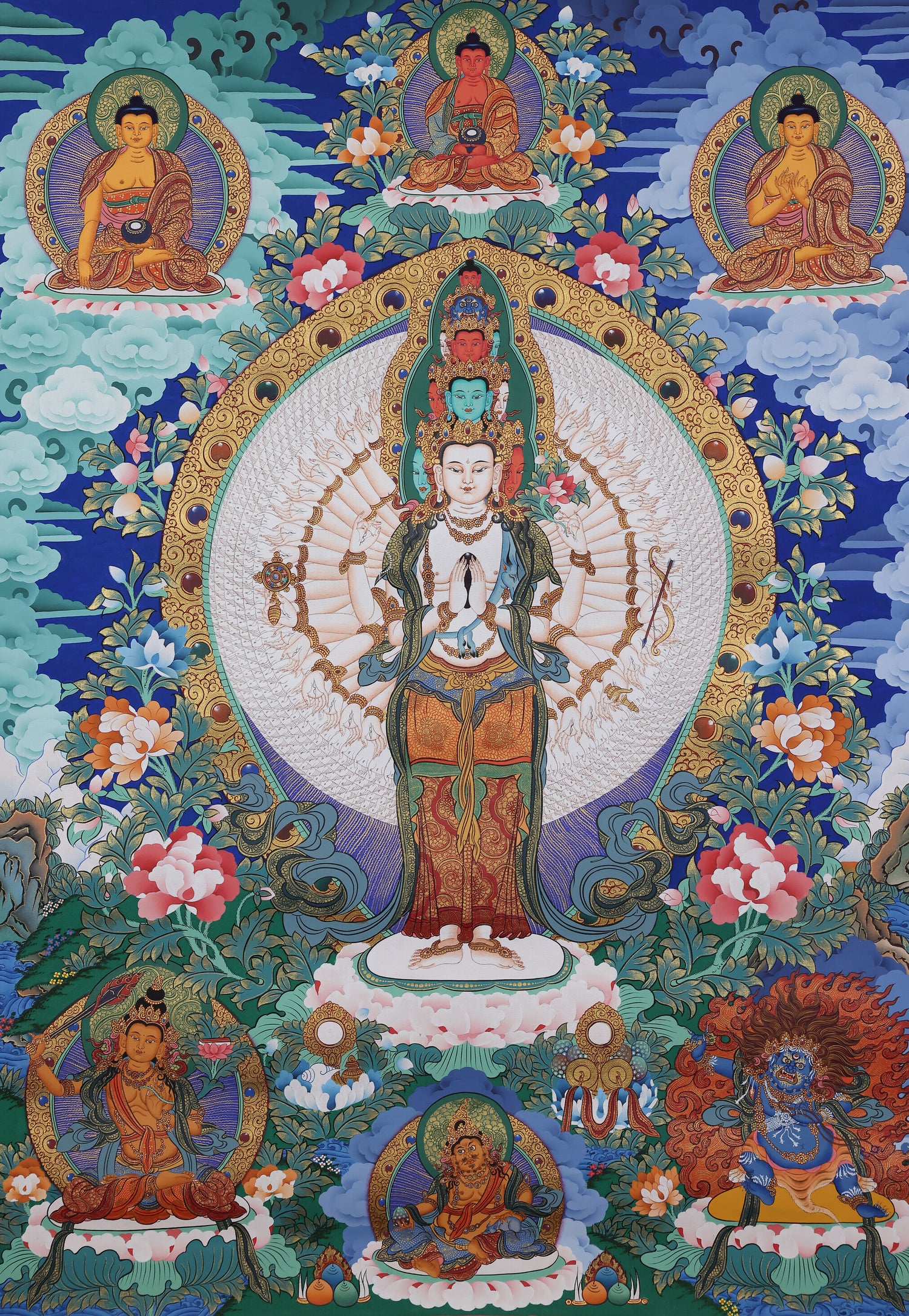
This thangka centers on Vairocana Buddha and presents a complete Diamond Realm (Vajradhatu) Mandala, a quintessential representation of Tibetan Buddhist esoteric practices that illustrate cosmic truths through imagery. In Vajrayana Buddhism, Vairocana (Sanskrit: Vairochana) is not an ordinary Buddha but the embodiment of Dharmakaya, representing all-pervading light and the essence of the Dharma. He is the central deity of both the Diamond Realm and Womb Realm mandalas.
Through the structure of the mandala, this thangka visualizes the Five Wisdom Buddhas and 37 attendant deities. In Tibetan faith, mandalas are not mere decorative patterns but microcosms of the Buddha’s wisdom universe. Practitioners contemplate this thangka to enter the “luminous Dharmadhatu of Vairocana” through visual meditation, experiencing the transformative power of wisdom and achieving alignment with the Buddha’s intelligence.
The thematic logic reflects the Tibetan Vajrayana tradition of “art as a vehicle of Dharma”: abstract truths of the Dharmadhatu are rendered into images suitable for worship and visualization, allowing practitioners to gain both spiritual insight and meditative blessings.
2. Principal Deity: Four-Faced Vairocana and Symbolism
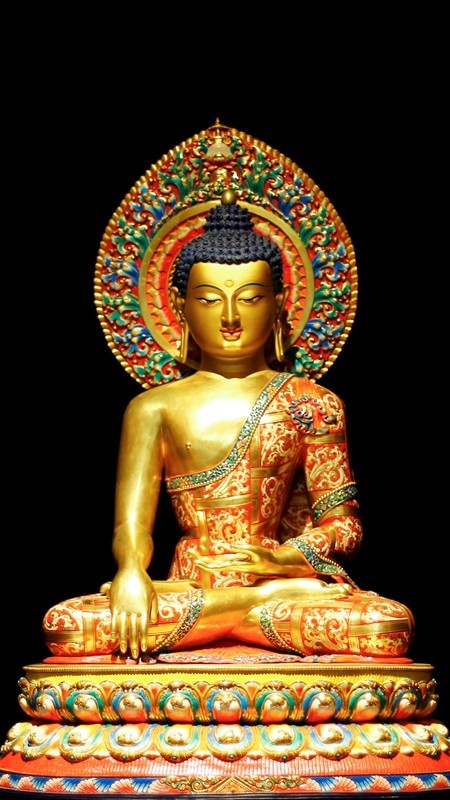
The central figure is Four-Faced, Two-Armed Vairocana, meticulously following the iconometric guidelines of the Vajra Peak Sutra and the Sutra on Measurement of Sacred Images, with each detail imbued with esoteric meaning.
Physical Features
-
Four Faces and Two Arms: The frontal face faces east, symbolizing “wisdom light dispelling ignorance,” while the other three faces look south, west, and north, representing the pervasion of Dharmakaya wisdom in all directions.
-
White Skin: Moonlike and pure, consistent with the central Buddha of the Five Wisdom Buddhas, representing intrinsic purity.
-
Crown and Ornaments: Five-leaf jeweled crown, adorned with necklaces, armlets, anklets, and red-green silk robes, symbolizing the perfection of wisdom and merit.
Mudra and Attributes
-
Samadhi Mudra: Both hands placed palm-up over the abdomen, representing meditative absorption in ultimate reality.
-
Dharma Wheel or Vajra: Held between the hands, symbolizing the unstoppable power of the Buddha’s teaching in dispelling delusions and benefiting sentient beings.
Lotus Throne and Aura
-
Multi-Layer Lotus + Moon Throne: Lotus petals symbolize liberation from cyclic existence; the moon denotes the serene nature of Dharma.
-
Halo and Nimbus: Head halo with green and pink base, overlaid with gold scrollwork; body aura with deep blue background and golden rays symbolizing Vairocana’s all-pervading light.
-
The color palette follows the luxurious Regong thangka style, reflecting the Vajrayana teaching that “light and Dharmadhatu are one.”
3. Attendant Deities: Five Wisdom Buddhas and the 37 Deities
The attendant deities are arranged in a central-surround mandala configuration, forming the “enlightened universe under Vairocana.”
Top and Cardinal Deities: Five Wisdom Buddhas
-
East: Akshobhya (Blue), “Mirror of Equality Wisdom.”
-
South: Ratnasambhava (Yellow/Green), “Wisdom of Equanimity and Generosity.”
-
West: Amitabha (Red), “Discriminating Wisdom.”
-
North: Amoghasiddhi (Blue), “Accomplishing Wisdom.”
-
Center: Vairocana, embodiment of Dharmadhatu wisdom.
This arrangement reflects the totality of the Five Wisdoms, covering the entire spectrum from self-realization to benefiting all beings.
Lower Attendants: Bodhisattvas and Protectors
-
Four Bodhisattvas of the Paramitas: Represent the flow of Vairocana’s wisdom and compassion as a bridge between Dharmakaya and sentient beings.
-
Wrathful Protectors: (e.g., Vaisravana) positioned near the lotus base, symbolizing the removal of obstacles and the complementary nature of peaceful central deity and fierce protectors.
4. Artistic Craftsmanship: Minerals and Gold in Regong Thangka
This is a Regong-style thangka, combining the Buddhist art of “Crafted Wisdom” (Shig-Kyung) with Tibetan aesthetics. Every step reflects the philosophy of using eternal materials to express the permanence of Dharma.
Canvas and Sketching
-
Base Layer: Pure cotton cloth coated with bone glue and white clay, polished with a pebble to mirror smoothness, providing a stable surface for mineral pigments.
-
Precise Measurements: Central line marked, proportions of the principal deity defined by finger widths; mandala framework sketched with charcoal—ensuring the mandala visually represents cosmic order.
Pigments: Nature and Faith
-
Natural Minerals and Gem Pigments:
-
White: Renbu white powder, pure and reflective of intrinsic clarity.
-
Blue: Lapis lazuli, deep and layered.
-
Red: Cinnabar or coral powder.
-
Yellow: Orpiment and natural stone yellow.
-
Main deity’s white skin mixed with fine pearl powder, soft glow symbolizes purity of self-nature.
Gold Techniques
-
24K Gold Leaf Work: Includes gilding, outlining, and incising.
-
Gilding: Applied to halo and lotus throne to form a radiant base, representing Vairocana’s all-pervading light.
-
Outlining: Cat-tail hair brush used to define garments and ritual objects; delicate lines convey majesty and indestructibility of Dharma.
-
Incising: Agate stylus creates scroll patterns in gold, adding dimensionality and showcasing Regong artisans’ mastery.
Face and Finishing
-
Facial Rendering (“Opening the Face”): Curved brows, gentle eyes, smiling lips; each face gazes in a different direction, fulfilling ritual requirements and expressing universal compassion.
-
Background Clouds and Flora: Flat-color and gradient techniques depict ethereal skies and vibrant lotuses or peonies, expressing the inseparability of Dharma and worldly life.
5. Conclusion: Thangka as a Medium of Enlightenment
This thangka is not merely an artwork but a triple unity of faith, philosophy, and craftsmanship.
-
Theme: Visualization of cosmic order
-
Principal Deity: Embodiment of truth
-
Craftsmanship: Eternal materials conveying the permanence of Dharma
In Tibetan culture, it serves both as a sacred object for the temple or home shrine and as a meditative tool. Observing the four-faced Vairocana allows practitioners to contemplate the all-pervasive Dharmadhatu; touching the gold details enables them to feel the luminosity and majesty of Dharma.
Ultimately, the thangka embodies the Vajrayana principle of “art as a path to realization”, transforming abstract truths into tangible visual experiences. It is both the Regong artist’s life offering and the spiritual bridge connecting practitioners to Buddha wisdom.
#TibetanBuddhistThangka #VairocanaThangka #DiamondRealmMandala #HandPaintedThangka #RegongThangka #MineralPigmentsThangka #GoldLeafThangka #FiveWisdomBuddhas #BuddhistMandalaArt #VajrayanaArt #MeditationTool #HomeShrineDecor #SpiritualArt #EsotericBuddhism #SacredArt