In the visual system of Tibetan Buddhism, Bodhisattva Thangkas are not only carriers of religious faith but also tangible expressions of compassion in practice. Each Thangka conveys the integration of wisdom and compassion through iconographic rituals, attendant deities, and artistic techniques, guiding practitioners from enlightenment to altruistic action.
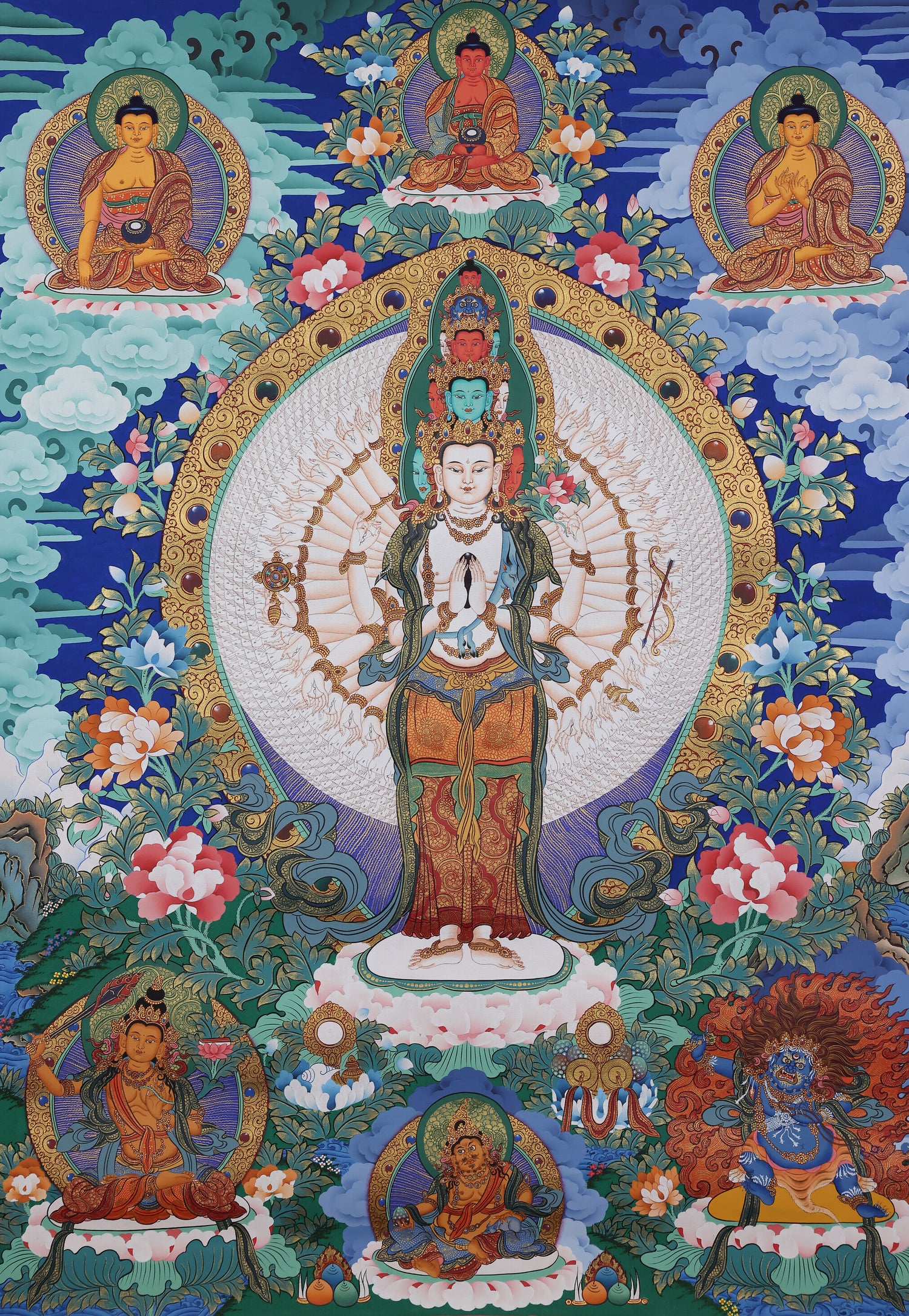
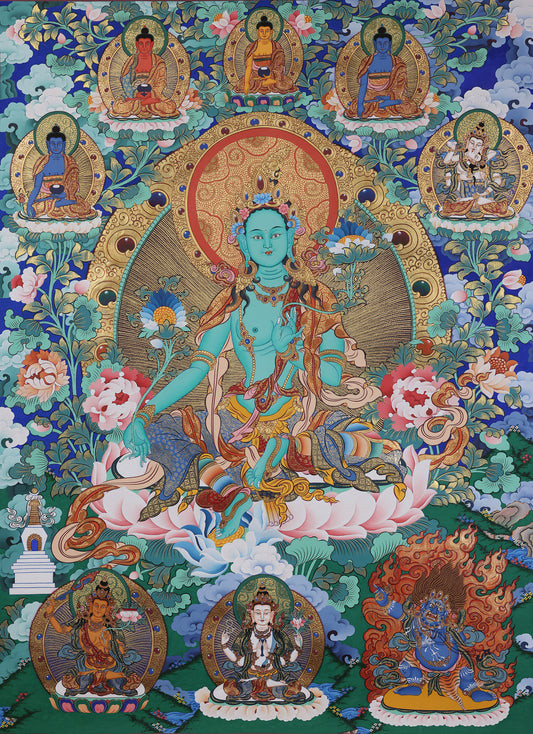
This hand-painted Samantabhadra Thangka centers on the theme of “Samantabhadra’s Vows and the Protection of the Dharma Realm.” It strictly follows the iconometric guidelines in the Statues and Images of Bodhisattvas Sutra and incorporates the unique artistic features of the Rebgong (Gyanak) School, making it a representative work of the Huayan (Avatamsaka) lineage in Tibetan Buddhist art. This Thangka is suitable for devotional practice, meditation, home or temple display, and high-end art collection.
1. Core Theme: The Huayan Spirit of Perfect Vows
In Tibetan Buddhism, Samantabhadra embodies the practice of vows, representing the teachings of the Avatamsaka Sutra – The Samantabhadra Vows Chapter. The theme of this Thangka is structured into three layers of spiritual narrative:
-
Core Layer: The main deity, Samantabhadra, is depicted seated on a six-tusked white elephant, symbolizing unwavering and fearless practice of vows.
-
Extended Layer: Attendant deities illustrate the supportive forces for the fulfillment of vows, including Buddhas representing cosmic blessings and attendants representing practical application.
-
Symbolic Layer: Lotus throne, ritual implements, and offerings transform worldly defilements into merit, forming a complete faith circle.
This arrangement reflects the Tibetan Buddhist emphasis on balancing cultivation of mind and active practice, consistent with the Huayan teaching that “the Dharma realm is one, and vows are infinite.”
2. Main Deity Analysis: The Vowed Form of Samantabhadra
At the center of the Thangka, Samantabhadra (Tibetan: Khenrig Jangchub) follows strict iconometric rules for Bodhisattva depiction. Every detail conveys religious meaning.
Physical Features
-
Complexion: Pure and radiant white, symbolizing purity and boundless compassion.
-
Five Buddha Crown: Embedding images of the Five Dhyani Buddhas, representing wisdom supporting the fulfillment of vows.
-
Eight Ornaments: Necklaces, bracelets, and jeweled adornments represent transforming worldly beauty into tools for altruism.
Hand Mudras and Implements
-
Samantabhadra Samadhi Mudra: Hands crossed, palms together, holding a wish-fulfilling banner or lotus, symbolizing perfect and irreversible vows, reflecting the teaching “as space is limitless, so are my vows.”
-
In some depictions, a wisdom sword may be held, but in this Thangka, the banner emphasizes the accomplishment of vows.
Mount and Lotus Throne
-
Six-Tusked White Elephant: Represents stability in practice; the six tusks correspond to the Six Perfections (Paramitas) – generosity, discipline, patience, diligence, meditation, and wisdom.
-
Thousand-Petaled White Lotus: Symbolizes purity in vow practice, complementing the white elephant and reflecting the integration of wisdom and disciplined action.
Aura (Halo) System
-
Inner Green Aura: Represents fearless and unchanging vow practice, aligned with the Eastern immovable Buddha color scheme.
-
Outer Lotus Pattern Gold Foil Aura: Symbolizes the eternal merit of vows and aligns with the luxurious Rebgong painting style.
3. Attendant Deities: Visual Support for Vow Practice
The attendants are essential for representing the supportive forces for Samantabhadra’s vows, divided into three categories:
Upper Buddhas: Sources of Cosmic Blessing
-
Central Red Buddha: Vairocana, representing the Dharmakaya, the essence of vow practice.
-
Left Bodhisattva: Manjushri, embodying wisdom.
-
Right Bodhisattva: Avalokiteshvara, embodying compassion.
Together with Samantabhadra, they form a complete circuit of wisdom and compassion in practice.
Lower Attendants: Embodiment of Practical Vows
-
Left Red Deity: Vajrapani, symbolizing the power to overcome obstacles in practice.
-
Right White Deity: Samantabhadra Exorcist (or Kilesha-removing Bodhisattva), symbolizing purification and clarity in practice.
Offerings and Symbolism
-
Offerings at the base, including vases, banners, flowers, and fruits, symbolize resources for vow fulfillment.
-
Eight Auspicious Symbols (wheel, conch, etc.) symbolize the completeness and auspiciousness of the practice.
4. Artistic Craftsmanship: Precision of the Rebgong School
This Thangka is a pure hand-painted work from the Rebgong School, where artistic skill is inseparable from religious devotion – “each brushstroke is a vow.”
Canvas Preparation: A Pure Foundation
-
Double-layer white cotton canvas, coated and polished with Rebgong plant-based glue for 5–7 days.
-
Symbolizes purification of the material world before divine imagery is depicted.
Preliminary Sketch: Ritual Precision
Pigments: Eternal Vow Colors
-
Main deity’s white is mixed with white clay and pearl powder for purity and radiance.
-
Background blues and greens are layered for gemstone-like depth, symbolizing accumulation and stability of vow practice.
-
White elephant tusks are highlighted with subtle gold tones to enhance sacredness.
Gold Detailing: Supreme Ornamentation
-
Five Buddha crown, banner, and lotus-pattern halo combine gold leaf and gold paint, providing richness and subtlety.
-
Elephant tusks and jewelry are accented with cold gold, balancing wisdom and compassion visually.
Eye-Opening Ceremony and Mounting
-
“Eye-opening” ritual activates the Thangka, transforming it from an image into the dwelling of Samantabhadra.
-
Mounted with crimson silk borders and wooden top-bottom rods engraved with mantras, reinforcing the protective and supportive power of vows.
5. Cultural Significance: Vow Practice as Art
This Samantabhadra Thangka embodies religious, artistic, and spiritual values:
-
Religious: Visualization encourages practitioners to cultivate the Six Perfections with confidence.
-
Artistic: Represents Rebgong school precision, layered pigments, and luxurious gold, blending tradition with contemporary aesthetics.
-
Spiritual: Every brushstroke is a vow in action; each viewing is an extension of practice, merging art seamlessly with faith.
#SamantabhadraThangka #HandPaintedThangka #TibetanBuddhistArt #RebgongSchool #SixTuskedWhiteElephant #BodhisattvaThangka #MeditationArt #TibetanArt #ReligiousArt #HomeShrine #SpiritualDecor #BuddhistDeity#VowPractice #HuayanLineage #ThangkaCollection