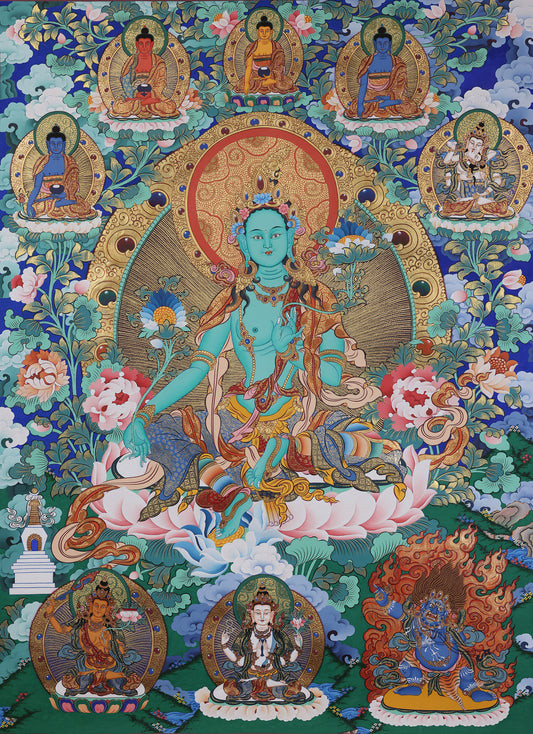
4×5cm Guru Rinpoche – Standing Form Thangka Pendant Qinghai
$1,099.00 USD

Core Product Specifications Main Deity: Guru Rinpoche (Padmasambhava) – Standing Form Origin: Qinghai Dimensions: 4cm × 5cm (palm-portable size) Pigments: Natural mineral pigments (lapis lazuli, cinnabar, malachite) Shell Craftsmanship: Dunhuang Nine-Colored Deer silver shell Grade: Collectible (complies with 12 traditional Regong thangka processes) I. Guru Rinpoche’s Standing Form: Symbolism of Active Compassion In Tibetan Vajrayana Buddhism, Guru Rinpoche’s standing form carries distinct spiritual meaning—differing from his seated counterpart in its emphasis on active compassion (engaging with the world to alleviate suffering).
This piece is described through Tibetan Buddhist cultural symbolism. Any references to blessings, protection, wisdom, or abundance are presented as traditional devotional associations rather than guaranteed outcomes.
What is this item?
It is a Buddhist art product intended for devotional practice, collecting, gifting, or display.
Is each piece identical?
Handmade and hand-painted items can show natural differences in detail, tone, and finish.
How should it be cared for?
Keep it dry, avoid direct impact and prolonged strong sunlight, and store it carefully when not in use.
For all orders exceeding a value of 100USD shipping is offered for free.
Returns will be accepted for up to 10 days of Customer’s receipt or tracking number on unworn items. You, as a Customer, are obliged to inform us via email before you return the item.
Otherwise, standard shipping charges apply. Check out our delivery Terms & Conditions for more details.
Returns will be accepted for up to 10 days of Customer’s receipt or tracking number on unworn items. You, as a Customer, are obliged to inform us via email before you return the item, only in the case of:
– Received the wrong item.
– Item arrived not as expected (ie. damaged packaging).
– Item had defects.
– Over delivery time.
– The shipper does not allow the goods to be inspected before payment.
The returned product(s) must be in the original packaging, safety wrapped, undamaged and unworn. This means that the item(s) must be safely packed in a carton box for protection during transport, possibly the same carton used to ship to you as a customer.
Here’s some of our most similar products people are buying. Click to discover trending style.