Hand-Painted Tibetan Buddhist Mahavairocana Thangka: Mandala of the Dharmadhatu and Artistic Decoding

I. Theme: The Cosmic Order of the "Vajradhatu Abhisheka Mandala"
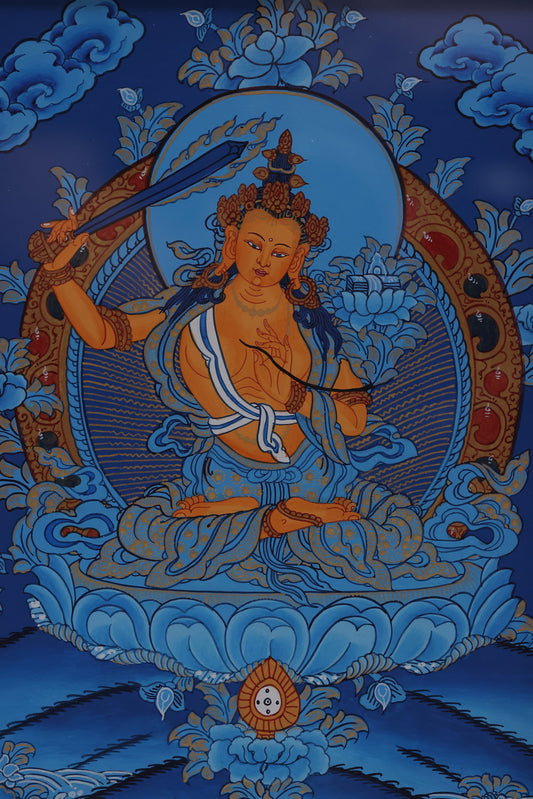
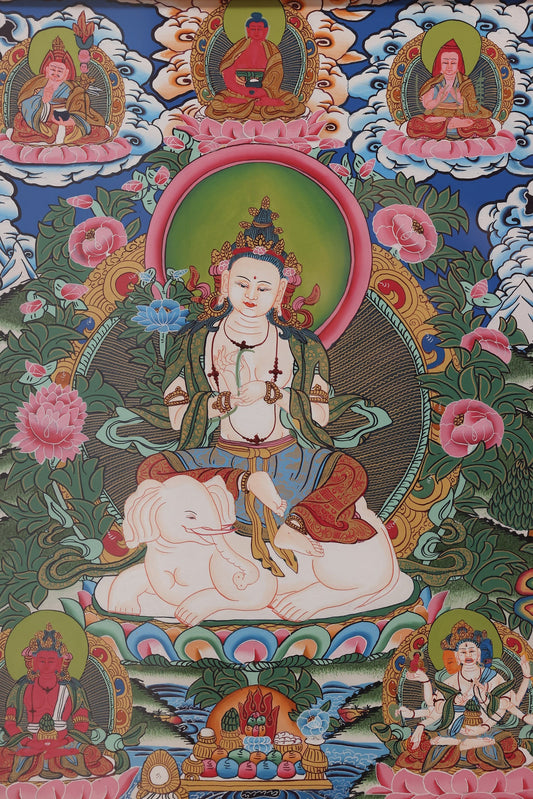
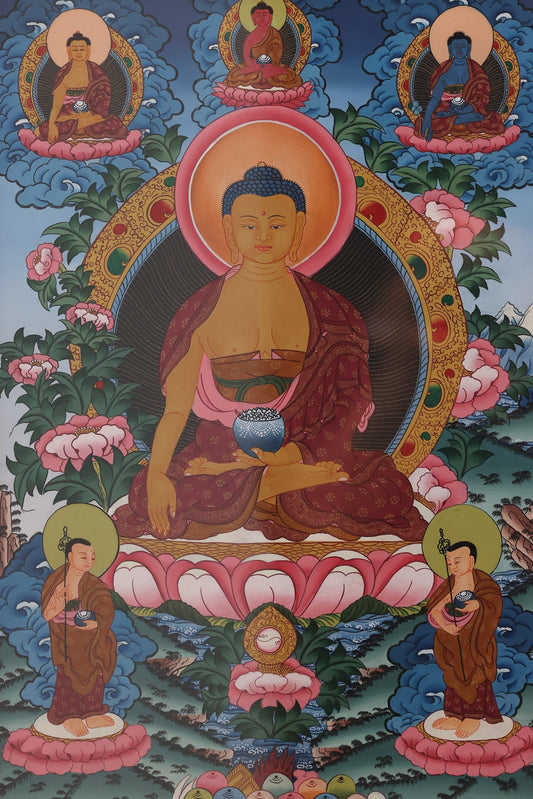
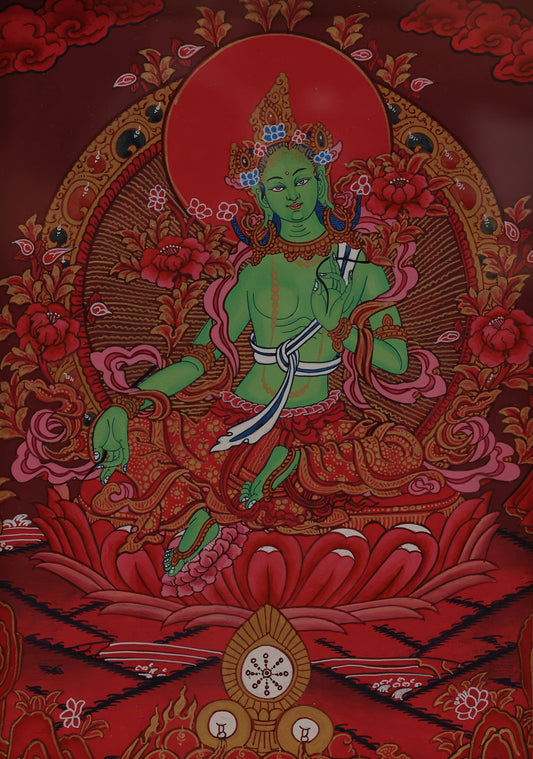
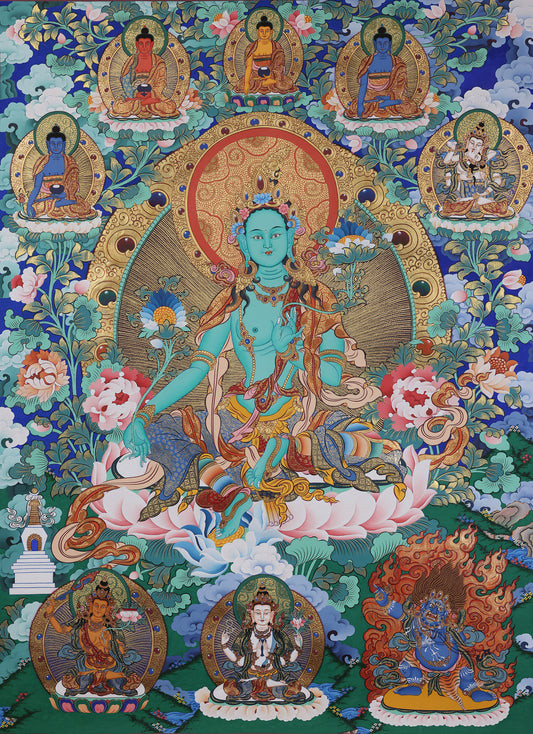
In Tibetan Vajrayana art, thangkas are not merely visual artworks—they are miniature models of the cosmic universe for meditation and contemplation. This Mahavairocana thangka centers on the Vajradhatu Abhisheka Mandala, visually representing the cosmic order of esoteric Buddhism. In the Vajrayana system, Mahavairocana (Sanskrit “Vairochana”) is not an ordinary Buddha but the embodiment of the Dharmakaya, symbolizing all-pervasive light and the essence of the Dharmadhatu, and serving as the principal deity of the two great mandalas: Vajradhatu and Garbhadhatu.
This thangka uses the Abhisheka Mandala framework to visualize the cosmic hierarchy of the “Five Wisdom Buddhas and thirty-seven deities.” In Tibetan belief, a mandala is far more than decorative—it is a microcosm of the Buddha’s wisdom universe. Contemplating this thangka allows practitioners to enter Mahavairocana’s radiant Dharmadhatu visually, using the image as a medium to perceive the wisdom of the Dharmadhatu, ultimately achieving resonance with the Buddha’s intelligence. The cultural logic behind this theme reflects the Tibetan Vajrayana tradition of “art as a vehicle for dharma”, transforming abstract truths of the Dharmadhatu into images that can be offered, visualized, and meditated upon, enabling practitioners to dispel ignorance and manifest innate wisdom.
II. Central Deity: Iconography of Four-Faced Mahavairocana
The central figure of this thangka is Four-Faced Mahavairocana, meticulously crafted according to the ritual texts Vajraśekhara Sūtra and Proportions of Sacred Images. Every detail embodies profound Vajrayana philosophy.
Physical Features
-
Four faces, two arms: The central face looks east, symbolizing “the light of wisdom that dispels ignorance,” while the other three faces look south, west, and north, representing the Dharmadhatu’s wisdom illuminating all directions.
-
Moon-white complexion: Conforming to the iconography of the central Buddha of the Five Dhyani Buddhas, symbolizing pure, undefiled nature.
-
Ornaments and robes: Wears a five-leaf jeweled crown, adorned with necklaces, armlets, and anklets; robes in red and green silk signify complete wisdom and abundant merit, not mere decoration.
Hand Gestures and Implements
-
Dharmachakra Mudra: Both hands form the Samadhi mudra with palms upward, stacked at the abdomen, representing meditative absorption in the true nature of the Dharmadhatu.
-
Wheel of Dharma or Vajra: Held between the hands, symbolizing the Buddha’s teaching wheel, dispelling obstacles and liberating sentient beings.
Lotus Throne and Halo
-
Lotus and moon base: Multi-layered lotus petals signify liberation from samsaric suffering, the moon represents cool, serene dharmic nature.
-
Halo and aura: Head halo features green and pink tones with gilded floral scrolls; the body aura has a deep blue background with golden rays, symbolizing Mahavairocana’s light pervading all realms. The colors follow the rich style of Hokoku (Rebgong) thangkas, reflecting the tantric doctrine of unity of light and the Dharmadhatu.
III. Retinue Deities: Five Wisdom Buddhas and Thirty-Seven Deities
The surrounding deities are arranged in a central-to-peripheral mandala structure, forming the “enlightened universe under Mahavairocana’s leadership.”
Top and Four-Directional Deities: Five Wisdom Buddhas
-
Five Dhyani Buddhas:
-
East: Akshobhya
-
South: Ratnasambhava
-
West: Amitabha (red, representing Discriminating Wisdom)
-
North: Amoghasiddhi (blue, representing All-Accomplishing Wisdom)
-
Center: Mahavairocana (white, representing Dharmadhatu wisdom)
-
-
Significance: The Five Wisdom Buddhas encompass all aspects of enlightenment, converting Mahavairocana’s Dharmadhatu wisdom into the four complementary wisdoms: Mirror-like, Equality, Discriminating, and All-Accomplishing, covering both personal realization and benefiting sentient beings.
Lower Retinue: Bodhisattvas and Protectors
-
Colorful bodhisattvas: Represent the Four Paramitas (Perfections), channeling Mahavairocana’s wisdom and compassion into the world as a bridge between Dharmakaya and sentient beings.
-
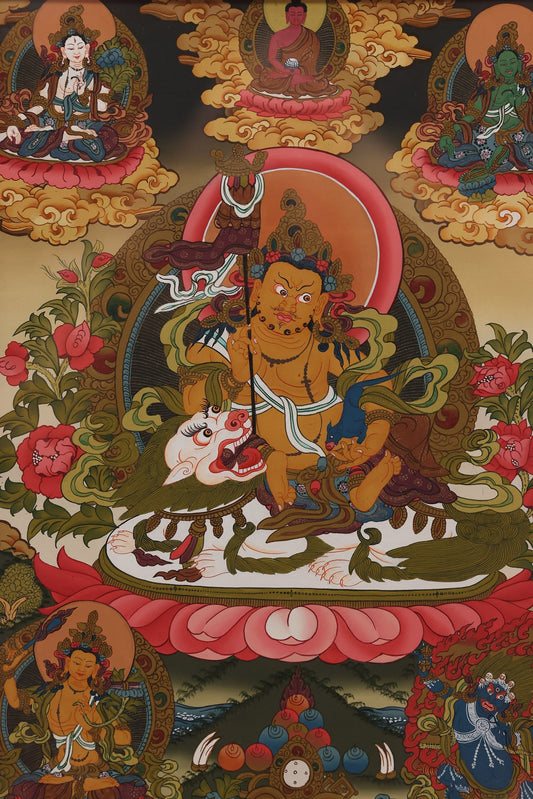
Wrathful protectors: E.g., Vaisravana, symbolize removal of obstacles, reflecting the Vajrayana principle of tranquil deity complemented by wrathful guardians, combining light and power for the practitioner’s benefit.
IV. Artistic Techniques: Minerals and Gold in Rebgong Thangka
This thangka belongs to the Rebgong Thangka tradition (Qinghai, China), integrating Buddhist craftsmanship and Tibetan aesthetics, with each step reflecting the principle of “eternal materials representing eternal dharma.”
Base and Drafting
-
Pure cotton cloth is prepared with cowhide glue and chalk mixture, polished with pebbles to a mirror-like smoothness—ensuring pigment adhesion and durability for centuries of lasting color.
-
Drafting follows canonical proportions; charcoal lines mark the mandala frame, with measurements in finger-width units for precise deity proportions, guaranteeing visual correspondence between the mandala and cosmic order.
Pigments: Nature Meets Faith
-
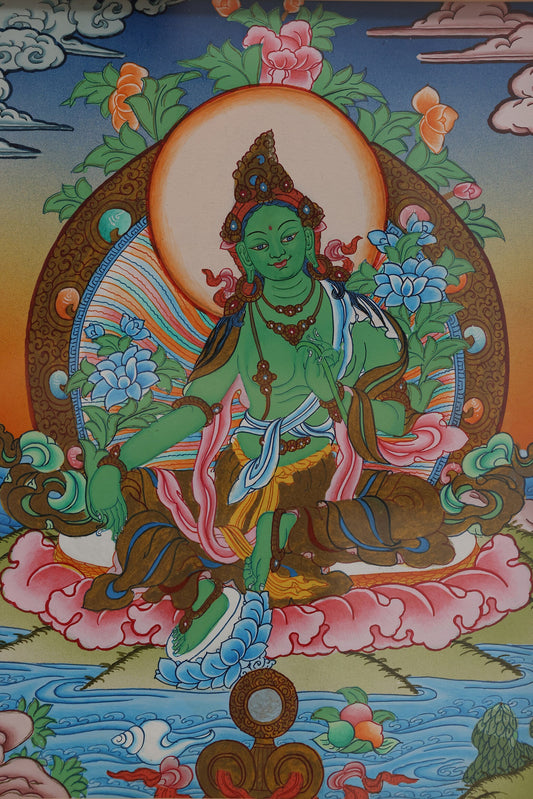
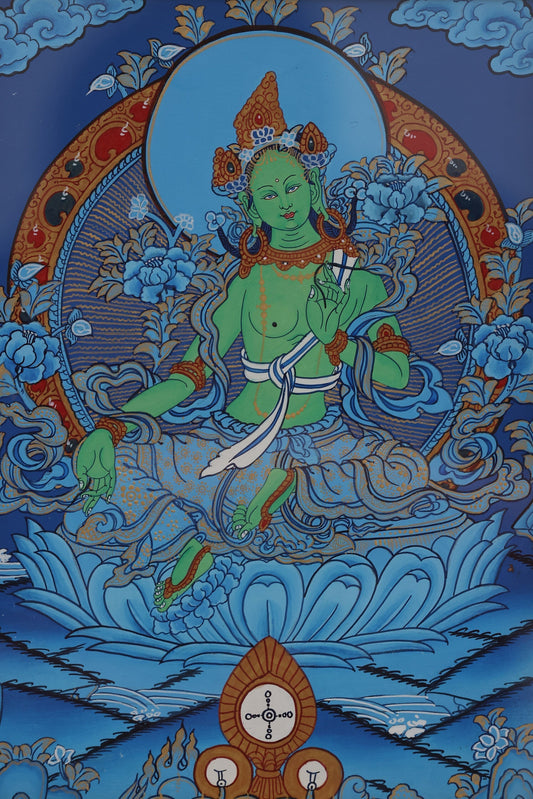
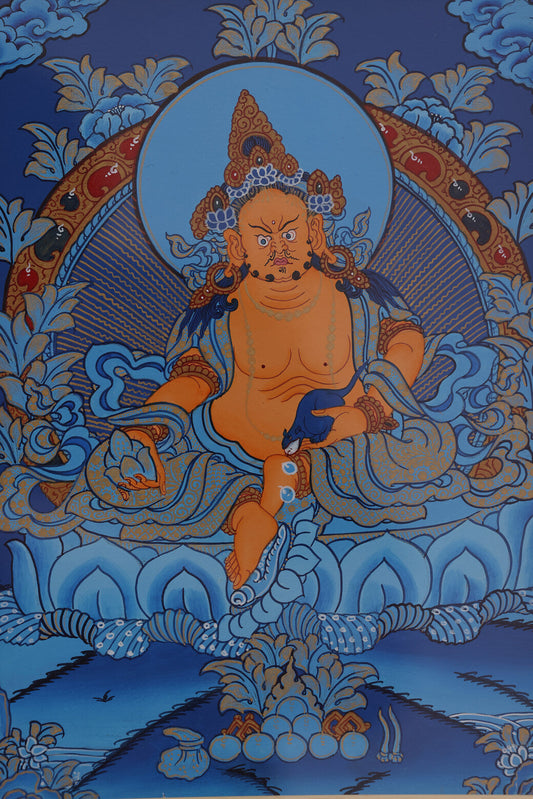
All pigments are natural minerals or gemstones: white from chalk, blue from lapis lazuli, red from cinnabar or coral, yellow from orpiment.
-
The weighty texture and stable hues convey doctrinal meaning: minerals symbolize the eternality of dharma, gemstones symbolize the preciousness of wisdom.
-
Mahavairocana’s white complexion includes pearl powder, providing luster while representing pure intrinsic nature.
Goldwork: Manifestation of Light
-
Gilding, line gilding, and incising: Gold leaf applied to halos and lotus seats, fine lines drawn with cat-tail brushes dipped in gold ink, floral scrolls incised with agate tools.
-
This layering creates matte and reflective contrasts, enhancing depth and conveying sublime radiance.
Facial Detailing and Final Touches
-
Each face has arched brows, delicate eyes, and a gentle smile, eyes gazing in different directions to symbolize illuminating all realms.
-
Background clouds and flowers use flat color and gradation, with blue-white clouds representing celestial space, peonies in pink and green symbolizing vitality of the Dharmadhatu, illustrating Vajrayana’s teaching that dharma is inseparable from the world.
V. Conclusion: Thangka as a Medium of Enlightenment
This Mahavairocana thangka is not merely an artwork; it embodies a triple unity of faith, philosophy, and craftsmanship:
-
Theme: Visualization of cosmic order under Mahavairocana.
-
Central Deity: Embodiment of ultimate truth, four-faced Mahavairocana radiating wisdom.
-
Craftsmanship: Mineral pigments and gold foil express eternal dharma through eternal materials.
In Tibetan culture, it serves both as a sacred offering in a shrine and a meditative tool. Observing the four-faced Mahavairocana allows practitioners to perceive the all-pervasive nature of the Dharmadhatu; touching the gilded details conveys the light and majesty of the Buddha’s teaching. By transforming abstract truths into tangible imagery, this thangka makes enlightenment accessible through vision and touch. It is the culmination of Rebgong artists’ devotion and the spiritual bridge connecting Tibetan practitioners to the Buddha’s wisdom.
#TibetanThangka #Mahavairocana #VajradhatuMandala #HandPaintedThangka #BuddhistArt #VajrayanaBuddhism #RebgongThangka #MineralPigments #GoldThangka #MeditationArt #FourFacedBuddha #FiveWisdomBuddhas #SacredArt #SpiritualDecor #TibetanBuddhism
Etiquetas:
Anterior
Hand-Painted Tibetan Buddhist Thangka: Faith and Artistic Analysis of the Long Life Trinity
Próximo
Hand-Painted Tibetan Buddhist Yellow Jambhala Thangka Decoding the Sacred Art of Wealth and Spiritual Protection