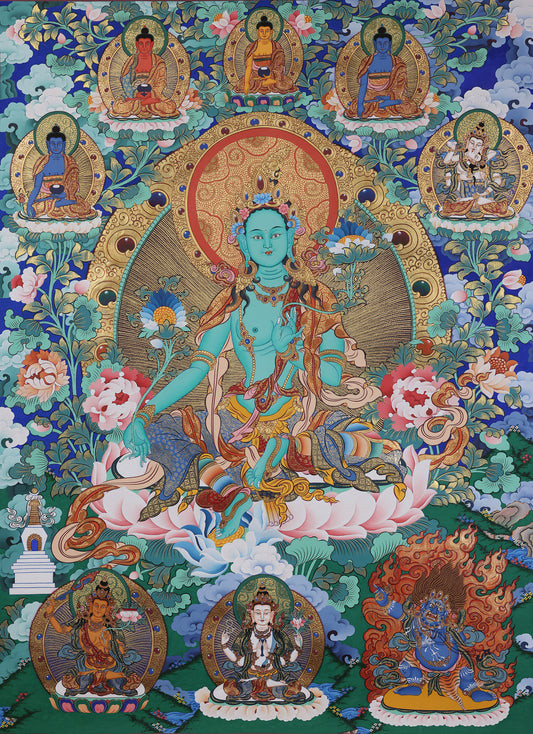
Tibetan Buddhist Hand-Painted Yellow Jambhala Thangka: Decoding the Art of Wealth and Wisdom Blessings

Tibetan Buddhist Thangka paintings, as a unique form of religious art in Tibet, not only convey Buddhist teachings and meditation practices but also reflect the profound cultural heritage and aesthetic traditions of the region. Among the various Thangka themes, the Yellow Jambhala (Tibetan: “Zang La Sepo”) wealth-protection Thangka holds a special place. The Yellow Jambhala is not only the foremost among the Five Jambhalas but also represents the dual blessings of material wealth and spiritual wisdom, reflecting the Tibetan Buddhist concept of cultivating both merit and wisdom. This article explores this hand-painted Yellow Jambhala Thangka from four dimensions: theme, main deity, attendant deities, and painting craftsmanship, revealing its cultural, religious, and artistic significance.
1. Theme: Dual Blessings of Wealth and Wisdom
In Tibetan Buddhism, the Yellow Jambhala is considered the head of the Five Jambhalas (white, yellow, red, green, and black). The core theme of this Thangka is:
Enhancing merit, eliminating poverty, and supporting practitioners in accumulating spiritual and material wealth.
This theme emphasizes that the Thangka is not merely a symbol of material wealth but conveys the spiritual message of “using wealth mindfully on the path”. Wealth, in Tibetan Buddhism, is regarded as an essential resource for practice and benefiting others. Therefore, this Thangka serves as both a spiritual aid and a guide, helping devotees balance material stability with spiritual growth.
The mandala structure of the Thangka reinforces this theme. The central Yellow Jambhala represents core blessings, while the surrounding attendant deities and protector gods form a comprehensive wealth-protection system, symbolizing:
-
Wealth must be maintained and used wisely;
-
Accumulated wealth should align with compassion and merit;
-
Through proper devotion and visualization, wealth becomes an instrument for practice rather than an object of attachment.
Through this dual protection concept, devotees gain both worldly stability and the means to cultivate merit and wisdom.
2. Main Deity: Iconography and Symbolism of Yellow Jambhala
The central figure of Yellow Jambhala strictly follows the iconographic guidelines of the Five Jambhalas in Tibetan Buddhism. Every detail carries deep symbolic meaning and tantric significance.
2.1 Physical Features
-
Color: Bright yellow, symbolizing the radiance, abundance, and auspiciousness of wealth.
-
Posture: Exposed chest and abdomen, plump and dignified, representing abundant wealth and complete merit.
-
Ornaments: Crown, jewelry, earrings, bracelets, and other adornments, signifying respect, prosperity, and the fullness of the Dharma.
This iconography embodies the Tibetan Buddhist principle of unity of power and compassion, projecting both the power to overcome poverty and the benevolent protection of sentient beings.
2.2 Attributes and Mudras
-
Right Hand – Cintamani (Flaming Jewel): Symbolizes “blessing all beings with light and merit,” representing the distribution of wealth and merit through compassion.
-
Left Hand – Treasure-Weasel (Nyur-le): Holding jewels in its mouth, symbolizing “unceasing distribution of wealth and elimination of poverty,” a core identifier of Yellow Jambhala.
-
Seated Posture: Majestic seated posture on a lotus throne, where the lotus signifies purity and liberation from defilements, emphasizing the deity’s dignity and sanctity.
-
Aura and Background: Circular halo and body light in red and gold, decorated with clouds and flowers to enhance sacredness and visual depth.
This combination of posture, hand implements, and sacred symbolism conveys material protection and spiritual blessing simultaneously.
3. Attendant Deities: Supporting and Protective Divine Network
The surrounding deities in the Thangka form a systematic protective network that reinforces the Yellow Jambhala’s blessings, ensuring devotees’ wealth and spiritual progress.
3.1 Top Deities: Source of Blessing
-
Top Central Red Figure: Often depicts Amitabha Buddha or a lineage master, symbolizing the primordial blessings of Yellow Jambhala and reminding devotees that wealth protection stems from the compassionate vows of the Buddha.
-
Top Side Figures: Other four Jambhalas (green, white, red, black) represent the five elements and directions, creating a comprehensive protection system for wealth and prosperity.
3.2 Peripheral and Bottom Deities: Protectors and Helpers
-
Bottom Left Wrathful Protector (Black Jambhala): Destroys obstacles, negative karma, and external interference in wealth.
-
Bottom Right Blue Attendant or Sudhana (Youthful Wealth-Deity): Guides the ethical use of wealth, emphasizing that wealth should benefit all beings.
-
Central Treasure Pile (Vase, Coins): A tangible manifestation of wealth blessings, reinforcing the mandala theme and tantric symbolism.
This hierarchical arrangement (Main Deity – Attendants – Protectors) exemplifies the systematic and layered logic of Tibetan Thangka composition, merging practical wealth protection with spiritual empowerment.
4. Painting Craftsmanship: Traditional Style and Natural Materials
This Yellow Jambhala Thangka belongs to the Bemba School (New Bemba style) of Tibetan painting, renowned for its exquisite artistry that blends religious meaning with visual expression.
4.1 Materials
-
Canvas Base: White cotton cloth, processed through multiple steps (washing, stretching, coating) to ensure flatness and durability.
-
Pigments: Natural minerals and plant-based pigments (e.g., cinnabar for red, orpiment for yellow, turquoise powder for green), offering vibrant colors that can last centuries.
-
Gold Embellishments: 24K gold outlining and filling on halos, background, implements, and garments, sometimes layered and polished with agate brushes for a shimmering effect.
4.2 Techniques
-
Composition: Strict “central main deity + surrounding attendants” layout, following proportions in the Sutra on Measuring Deities (Zao Xiang Du Li Jing).
-
Linework: Smooth, precise lines; deities’ faces appear powerful yet compassionate, embodying the unity of force and kindness.
-
Shading and Layering: Mineral pigments applied in layers for natural transitions, creating three-dimensionality and divine aura for the main deity.
The craftsmanship not only enhances aesthetic appeal but also materializes the tantric concepts of wealth, merit, and protection, making the Thangka both a religious and artistic masterpiece.
5. Cultural and Spiritual Significance
-
Wealth Protection: The Thangka’s layout systematizes wealth blessings, reflecting the Tibetan Buddhist philosophy of combining worldly success with spiritual liberation.
-
Merit and Wisdom Accumulation: Focuses not only on material wealth but also on cultivating merit for spiritual practice and benefiting sentient beings.
-
Artistic Value: Mineral pigments and 24K gold detailing exemplify the Bemba style, making it a highly valued collectible.
-
Meditation Aid: Devotees can visualize the deity and interact with the Thangka as part of practice, transforming wealth into a tool for spiritual growth.
-
Cultural Heritage: Integrates tantric teachings, painting techniques, and Tibetan aesthetics, making it a treasured spiritual and cultural artifact.
6. Conclusion
The Yellow Jambhala Thangka is more than a visually stunning hand-painted artwork; it is a manifestation of Tibetan Buddhist perspectives on wealth and practice. It enables devotees to achieve both material stability and spiritual development, embodying the principle of “cultivating merit and wisdom simultaneously.” Whether for home shrine, meditation practice, or art collection, this Thangka carries profound religious, cultural, and aesthetic value.
Through visualization of the treasure-weasel, flaming jewel, and attendant deities, practitioners not only receive wealth blessings but also cultivate compassion and wisdom, transforming material abundance into a vehicle for spiritual practice.
#YellowJambhalaThangka #TibetanBuddhistThangka #WealthDeityThangka #TantricDeities #BuddhistArt #BembaSchoolThangka #HandPaintedThangka #WealthProtection #MeditationArt #TibetanCulture #BuddhistCollectibles #SacredArt #FiveJambhalas #SpiritualArt #TibetanThangka
Schlagwörter:
Vorherige
Yellow Jambhala Thangka: Cultural Significance and Artistic Craftsmanship in Tibetan Buddhism
Nächste
The Emerald Compassion in Blue Thangka: The Saving Light and Millennium Faith of Green Tara in Tibetan Buddhism