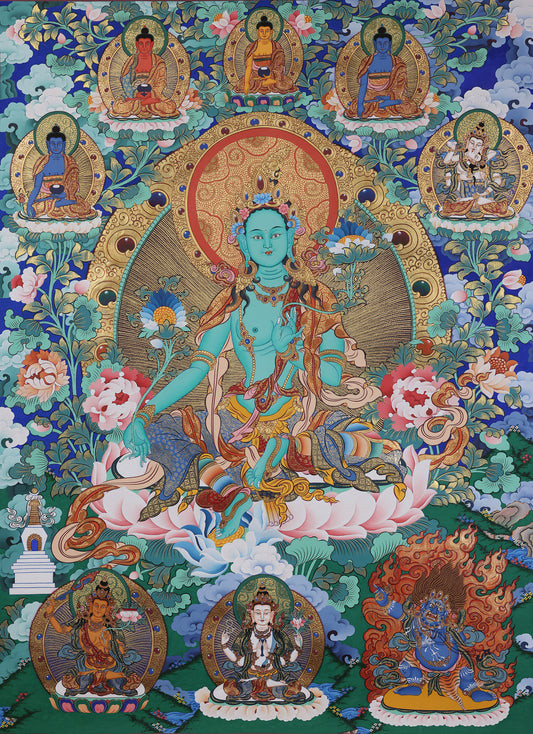
In the visual system of Tibetan Buddhism, a “Bodhisattva Thangka” serves not only as a carrier of religious faith but also as a tangible embodiment of “compassionate practice.” Centered on the dual qualities of wisdom and compassion, it conveys a spiritual path from enlightenment to altruism through precise iconographic rituals, attendant deity arrangements, and exquisite painting techniques. This hand-painted Samantabhadra Thangka focuses on “the vows and cosmic protection of Samantabhadra” and represents a typical example of the Huayan (Avatamsaka) school in Tibetan Thangka art. It strictly follows the ritual guidelines of the Sutra on Measurements for Bodhisattva Images (Zao Xiang Liang Du Jing·Bodhisattva Section) while reflecting the distinct artistic style of the Qinghai Rebgong painting school.
I. Core Theme: The Huayan Spirit of “Perfect Vows”
Samantabhadra, in Tibetan Buddhism, symbolizes the practice of vows, with core teachings derived from the Avatamsaka Sutra: The Chapter on Samantabhadra’s Vows. This Thangka’s theme does not merely depict the Bodhisattva’s figure but constructs a three-layered spiritual narrative based on “Samantabhadra’s vows”:
-
Core Layer: The central Samantabhadra is depicted seated on a six-tusked white elephant, symbolizing the stability and fearlessness of his vows.
-
Extended Layer: The arrangement of attendant deities represents supportive conditions for fulfilling vows—Buddhas provide cosmic blessings, while attendants represent practical enactment.
-
Symbolic Layer: Lotus seat, ritual implements, and offerings complete the cycle of transforming defilements into spiritual merit.
This thematic structure aligns with the Tibetan Buddhist tradition emphasizing both cultivation and practice, reflecting the Huayan concept of “the One True Dharma Realm with endless vows.”
II. Central Deity: Iconography and Symbolism of Samantabhadra’s Vows
The central figure, Samantabhadra (Tibetan: Khenjok Gyaltsen), adheres strictly to the proportional standards outlined in the Sutra on Measurements for Bodhisattva Images, with each detail imbued with religious significance.
1. Physical Attributes
-
Skin Tone: Radiant white, symbolizing purity and unblemished compassion.
-
Crown: Wears the five-Buddha crown, embedded with images of the Five Dhyani Buddhas, signifying mastery of wisdom to uphold vows.
-
Ornaments: Adorned with the “Eight Auspicious Decorations” (necklaces, armlets, and jewelry), representing both ceremonial splendor and transformation of worldly beauty into tools for altruism.
2. Mudras and Ritual Implements
-
Hands: Form the Samantabhadra Samadhi Mudra (palms facing, fingers interlaced), holding a wish-fulfilling banner or lotus, symbolizing perfect and irreversible vows, resonating with the sutra’s teaching: “Though the universe ends, my vows are limitless.”
-
Optional Weapon: While some depictions hold a Wisdom Sword, this Thangka emphasizes the banner to highlight fulfillment of vows.
3. Mount and Lotus Seat
-
Mount: Six-tusked white elephant, symbolizing unwavering stability; six tusks correspond to the Six Paramitas (generosity, morality, patience, diligence, meditation, wisdom), the core practices of Samantabhadra’s vows.
-
Lotus Seat: Thousand-petal white lotus, symbolizing purity of practice, harmonizing with the elephant to illustrate the practice of the Six Paramitas with a pure heart.
4. Aura (Prabhamandala)
-
Inner Halo: Green aura, representing fearlessness and immutability, associated with the Eastern Akshobhya Buddha.
-
Outer Halo: Gold foil with scrolling lotus pattern, reflecting both the luxurious Rebgong style and the precious, eternal merit of vows.
III. Attendant Deities: Visual Support for the Vow System
Attendants in the Thangka are not mere decoration—they represent supportive conditions for Samantabhadra’s vows, divided into three categories:
1. Upper Buddhas: Sources of Cosmic Blessing
Three Buddhas above the central figure represent a simplified Huayan Trinity or Five Dhyani Buddhas:
-
Central Red Buddha: Vairocana (Dharmakaya Buddha), representing the fundamental nature of vows—the manifestation of Samantabhadra’s vows in the Dharmakaya.
-
Left Colored Buddha: Manjushri, representing wisdom.
-
Right Colored Buddha: Avalokiteshvara, representing compassion.
Together with Samantabhadra, they form a complete “wisdom-compassion-practice” loop.
2. Lower Attendants: Embodiment of Practical Vows
-
Left Red Attendant: Vajrapani Bodhisattva, symbolizing the power to overcome obstacles in fulfilling vows.
-
Right White Attendant: Removing-Coverage Bodhisattva, symbolizing purification, eliminating defilements and obscurations during practice.
3. Offerings and Symbols: Visualization of Merit
-
Vase: Amrita (nectar) water, nourishing sentient beings’ virtuous roots.
-
Flowers and Fruits: Symbolize ultimate fruition of vows.
-
Eight Auspicious Symbols: Represent blessing and completeness of vow practice.
IV. Painting Techniques: The Rebgong School’s “Vow-Oriented” Precision
This Thangka, from the Qinghai Rebgong school, exemplifies the philosophy of “practicing devotion through meticulous craftsmanship.”
1. Canvas Preparation
-
Double-layered cotton canvas, treated with soaking, plastering, and polishing in 3–4 layers.
-
Wolf’s bane plant glue, blended with white chalk, prevents insects and symbolizes purification of the canvas.
-
Polishing to a mirror-like surface takes 5–7 days, embodying patience as a form of practice.
2. Drafting: Absolute Iconographic Accuracy
-
Eight-head-body proportion strictly observed; central axis, crown ratio, and six tusks must be within 0.5 mm tolerance.
-
Symmetry of tusks ensures balance of the Six Paramitas; errors require repainting to maintain the sanctity of vows.
3. Pigmentation: Longevity of Vows in Mineral Colors
-
Samantabhadra’s white complexion is made from chalk and pearl powder, symbolizing precious, pure vows.
-
Background blues and greens are layered for gemstone-like depth, symbolizing accumulation and solidity of practice.
-
Slight gold tint in the elephant’s white enhances sacredness and reflects the brilliance of merit.
4. Gilding: Supreme Splendor of Vows
-
Five-Buddha crown, banner, and halo patterns combine gold leaf application and gold paint, blending weight and delicacy.
-
Elephant tusks and jewelry are accented with cold gold, symbolizing harmony of wisdom and compassion.
5. “Opening the Eyes” and Mounting
-
The “eye-opening” ritual activates the Thangka as a divine object, using a brush dipped in gold and cinnabar powder.
-
Mounting in crimson silk with inscribed mantra rods reinforces protection and alignment with the Bodhisattva’s energy.
V. Cultural Significance: “Vows as Art” in Faith Practice
This Thangka embodies the dual unity of religion and art:
-
Religious Dimension: Observing Samantabhadra’s elephant and mudra inspires confidence in practicing the Six Paramitas; attendants remind practitioners that vows are supported by cosmic forces.
-
Artistic Dimension: The Rebgong school’s meticulous layering, precise ritual proportions, and gilded decoration maintain Tibetan Thangka traditions while expressing contemporary aesthetic reverence for vows.
-
Spiritual Dimension: Each painting step is a practice of vows, each viewing a continuation of practice, seamlessly integrating art and devotion.
#SamantabhadraThangka #TibetanBuddhism #HandPaintedThangka #BodhisattvaArt #RebgongPainting #BodhisattvaThangka #TibetanArt #SpiritualArt #CompassionAndWisdom #SixParamitas #TibetanThangkaForSale #BuddhistDeityArt #VowPractice #MeditationArt #TibetanCulture