Hand-Painted Shakyamuni Buddha Thangka: In-Depth Analysis of Theme, Deity, and Craftsmanship

In the spiritual universe of Tibetan Buddhism, Thangkas are considered “portable Buddhist shrines.” They are not only visual carriers of Buddhist teachings but also crystallizations of faith and artistry. As an essential form of Tibetan cultural art, Thangkas convey Buddhist philosophy while embodying rich cultural, historical, and artisanal value.
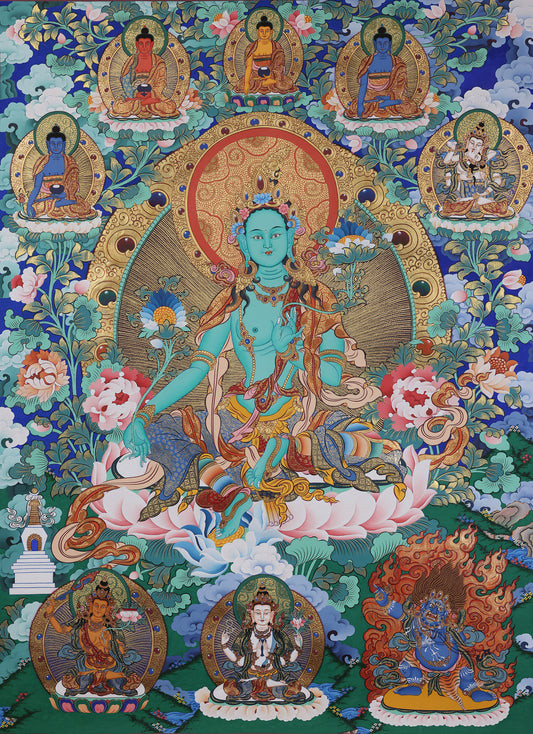
This hand-painted Shakyamuni Buddha Thangka centers on the theme of “Shakyamuni Buddha’s Enlightenment and Dharma Transmission.” It integrates Tibetan Buddhist iconographic rituals, symbolic systems, and the exquisite craftsmanship of the Rebgong School (a branch of the Men-Tang style). It exemplifies contemporary Thangka art that harmoniously blends religious significance with aesthetic appeal. This article provides a comprehensive analysis of its thematic core, main deity, attendant deities, painting techniques, and cultural significance, revealing the spiritual and artistic charm of this masterpiece.
I. Thematic Core: Sacred Narrative of Enlightenment and Protection
Thangka themes are never isolated visual collections; they represent a complete religious logic visualized. The central theme of this Shakyamuni Buddha Thangka is “the Buddha’s fundamental teachings and protection by attendant deities,” following the Tibetan Buddhist tripartite structure: Main Deity – Attendants – Dharmadhatu (Realm of Dharma).
-
Central Narrative: The main deity, Shakyamuni Buddha, is depicted in his “Enlightened Form,” symbolizing the Buddha’s fundamental awakening.
-
Spatial Narrative: The Buddhas above represent the perfection of the Dharma realm, while disciples and offerings below symbolize the human transmission of the teachings.
-
Spiritual Narrative: Symbols such as the lotus throne, aura, and ritual implements complete the “Affliction – Awakening – Protection” cycle of faith.
This thematic arrangement adheres to the “main deity as core, attendants as auxiliary” ritual guidance in the Sutra on Measurements of Iconography and aligns with the Tibetan Buddhist principle of taking refuge in the Three Jewels (Buddha, Dharma, Sangha).
II. Main Deity Analysis: Shakyamuni Buddha’s Enlightened Form and Symbolism
The central deity, Shakyamuni Buddha (Tibetan: Gautama Siddhartha), is depicted strictly according to the Sutra on Measurements of Iconography’s “one-length-six-body” standard, with every detail carrying deep religious meaning.
Physical Characteristics
-
Skin Color: Sandlewood gold, representing one of the “32 marks of a great being,” signifying divine transcendence.
-
Head Features: Right-spiraled ushnisha and white urna between eyebrows (Ursa Nisa), hallmark traits of the Buddha’s “80 auspicious marks,” symbolizing complete wisdom and compassion.
Mudras and Ritual Implements
-
Right Hand – Bhumisparsha Mudra (Earth Touching / Subduing Mara): Palm facing down, symbolizing the Buddha’s victory over Mara at the moment of enlightenment.
-
Left Hand – Dhyana Mudra: Holding a bowl of nectar, representing the Dharma as a purifying elixir that dispels ignorance.
Lotus Throne and Aura
-
Lotus Throne: Thousand-petaled red lotus, full and vibrant, symbolizes purity and the Buddha’s freedom from worldly defilements.
-
Aura: Inner radiating gold lines signify the Buddha’s wisdom light; the outer floral gold foil reflects Rebgong School’s ornate style and symbolizes the perfection of the Dharma realm.
III. Attendant Deities: Visualizing the Dharma Realm
Attendant deities are not mere decoration; they form the core protective system of the Dharma. This Thangka includes three categories:
1. Upper Buddhas
The three Buddhas above the main deity represent a simplified depiction of the “Three Times Buddhas” or “Five Dhyani Buddhas”:
-
Left – Blue Buddha: Medicine Buddha or Amoghasiddhi, symbolizing healing, longevity, and the removal of suffering.
-
Center – Red Buddha: Amitabha, symbolizing the compassionate guidance of sentient beings to the Pure Land.
-
Right – Light Yellow Buddha: Dipankara Buddha (past Buddha), symbolizing the origin and continuity of the Dharma teachings.
They reflect the timeless and spaceless nature of the Buddhist cosmos, illustrating that Shakyamuni Buddha’s teachings embody the perfection of the Dharma realm.
2. Lower Disciples
Two monks flanking the main deity represent Shakyamuni Buddha’s principal disciples:
-
Left – Sariputra: Holding a staff and alms bowl, symbolizing the propagation of the Dharma through wisdom.
-
Right – Maudgalyayana: Holding an alms bowl, symbolizing protection of the teachings through spiritual powers.
This pairing completes the “Buddha (awakened) – Sangha (transmitter)” chain of faith, highlighting the Tibetan Buddhist tradition of relying on the monastic community.
3. Offerings and Symbols
Offerings at the lotus base (mirror, fruit plate, conch) symbolize the Five Perfections of Desire:
-
Mirror = sight, fruit plate = taste, conch = sound, representing the transformation of worldly desires into causes of awakening.
-
The Eight Auspicious Symbols at the lotus base (e.g., pair of fish, golden wheel) represent the auspiciousness and completeness of the Dharma.
IV. Painting Craftsmanship: Devotion and Exquisite Rebgong Technique
This Thangka is a pure hand-painted work of the Rebgong School (Men-Tang branch), following traditional ritual guidelines while showcasing contemporary aesthetic refinement. The process consists of five main stages:
1. Canvas Preparation
-
Fine white cotton fabric is stretched, coated with glue, and polished.
-
Bone glue or skin glue mixed with chalk powder is applied repeatedly to create a smooth, pure base, symbolizing “removing worldly roughness to achieve a pure vessel.”
-
This stage takes 3–5 days, reflecting the Rebgong principle of meticulous craftsmanship.
2. Drafting
-
Strict adherence to the Three Courts, Five Eyes standard ensures central placement of the main deity.
-
Proportions of the body, mudras, and implements have a maximum deviation of 1 mm, reflecting the belief that “proper iconography brings blessings.”
3. Coloring
-
Mineral pigments provide lasting color: Sandlewood gold for the Buddha’s body, layered blues and greens for the background, offering jewel-like brilliance.
-
Shading technique: Gradient colors on robes add dimensionality while preserving the traditional flat aesthetic.
4. Gilding
-
Lotus-patterned aura is gilded with 24K gold foil, engraved with a nine-eyed stone stylus.
-
Main deity’s ushnisha and ritual implements are highlighted with gold paste (gold powder mixed with glue), emphasizing sacredness and devotion.
5. Opening the Eyes & Mounting
-
Opening the eyes ritual: the artist bathes, chants sutras, and paints the pupils with a fine brush, transforming the Thangka from an image into a living embodiment of the Buddha.
-
Mounting: Silk brocade borders with top and bottom rods, facilitating display and worship, maintaining the “portable shrine” function.
V. Cultural Value: Dual Role of Faith and Art
The value of this Thangka lies in its dual function as a religious artifact and art treasure:
-
Religious: Visualizes refuge in the Three Jewels and reliance on the Dharma; devotees gain spiritual blessing by meditating on the main deity and attendants.
-
Artistic: Exemplifies Rebgong School’s meticulous, ornate, and ritual-accurate style, blending classical iconographic standards with modern aesthetic innovation.
-
Cultural: Demonstrates the Tibetan Buddhist principle of “expressing the Dharma through art,” with each process and symbol embodying the transformation of faith into artistry.
It is suitable for meditation, home worship, high-end interior decoration, and Thangka collection, combining spiritual significance and aesthetic appeal.
Conclusion
This hand-painted Shakyamuni Buddha Thangka, centered on “Enlightenment and Dharma Transmission,” integrates ritual iconography, symbolic meaning, and masterful craftsmanship. Every line, color, and gold detail carries devotion and wisdom, inspiring viewers’ spiritual awakening while showcasing the unique charm of Tibetan Buddhist art. Whether for practice, blessing, or collection, it stands as a timeless masterpiece embodying both religious and artistic value.
#ShakyamuniBuddha #TibetanBuddhism #HandPaintedThangka #RebgongSchool #BuddhaArt #MeditationArt #SacredArt #BuddhistThangka #SpiritualDecor #FaithAndArt #HomeAltar #BuddhaIconography #TibetanArt #ThangkaCollection #ReligiousArt
Schlagwörter:
Vorherige
Emerald Light Calms the Eight Perils: Green Tara in Tibetan Buddhism—Compassion and Deliverance Through Red Thangka Art
Nächste
Hand-Painted Samantabhadra Thangka in Tibetan Buddhism: In-Depth Analysis of Theme, Deity, and Craftsmanship